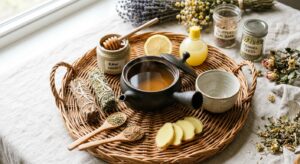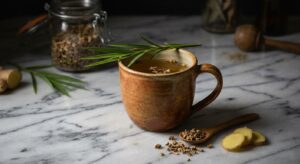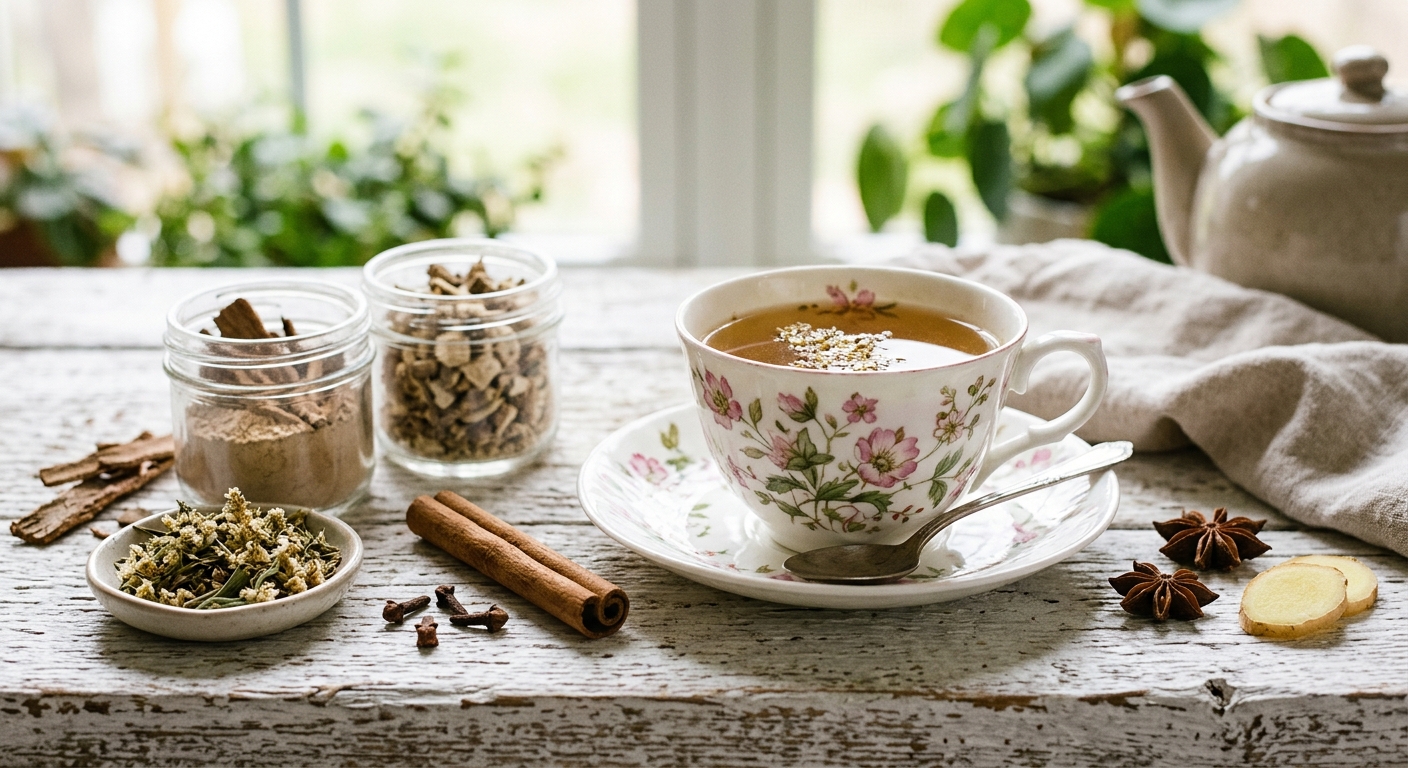
Long before pharmaceutical antacids and proton pump inhibitors existed, herbalists relied on a handful of mucilaginous and anti-inflammatory plants to heal the gut from the inside out. Slippery elm bark, harvested from the inner bark of Ulmus rubra, was used by Indigenous North American peoples as both a food and a medicine, particularly for soothing inflamed or irritated mucous membranes throughout the digestive tract. Marshmallow root (Althaea officinalis) carries an equally ancient pedigree, appearing in ancient Egyptian and Greek medical texts as a remedy for throat irritation and intestinal inflammation. Together, these two plants form the mucilaginous backbone of this healing blend.
Meadowsweet (Filipendula ulmaria) rounds out the formula with its gentle aspirin-like compounds, known as salicylates, that reduce inflammation in the gut wall without the harsh side effects of synthetic anti-inflammatories. Revered in Celtic and Anglo-Saxon herbal traditions, meadowsweet was strewn across floors of great halls for its honey-almond fragrance and brewed into tonics for gastric complaints. The plant is also rich in tannins and flavonoids that help tighten and tone irritated intestinal tissue, making it a perfect complement to the softening, coating action of slippery elm and marshmallow root.
This tea is crafted specifically to support the small intestine, where much of nutrient absorption takes place and where conditions like leaky gut syndrome, food sensitivities, and low-grade inflammation often take root. The blend works best when consumed consistently over several weeks, ideally between meals, so the mucilaginous compounds can coat the intestinal wall without competing with food for surface area. Whether you are recovering from a course of antibiotics, managing a chronic digestive condition, or simply looking to give your gut some extra care, this tea offers a warm, practical, and evidence-informed place to start.
2
cups
Ingredients
- 1 tspslippery elm bark powder (or 2 tsp cut and sifted bark)
- 1 tspdried marshmallow root
- 1 tspdried meadowsweet flowers and leaves
- 480 mlwater (85°C / 185°F)
- —raw honey to taste (optional)
- —a thin slice of fresh ginger (optional, for warming support)
How to Brew
Click on an item below to shop for the recommended items for this recipe on Amazon.
As an Amazon Associate, we earn from qualifying purchases.
- Measure 1 tsp slippery elm bark powder (or 2 tsp cut and sifted bark), 1 tsp dried marshmallow root, and 1 tsp dried meadowsweet into a tea infuser or muslin bag. If using slippery elm powder, place it directly into your mug and whisk with a small amount of cool water first to prevent clumping before adding the other herbs to the infuser.
- Heat 480 ml of filtered water to 80 to 85°C (176 to 185°F). If you do not have a temperature-controlled kettle, bring water to a full boil and then allow it to rest for 3 to 4 minutes before pouring.
- Place the infuser in your mug and, if using slippery elm powder, pour the hot water over the pre-mixed powder slurry and the infuser together. Stir gently to integrate.
- Cover the mug with a small saucer or lid to trap volatile aromatic compounds from the meadowsweet. Steep for 10 to 15 minutes, allowing the mucilage to fully release into the water.
- Remove the infuser and stir the tea thoroughly, as slippery elm powder can settle. The liquid should appear slightly thick and have a soft, silky mouthfeel.
- Drink warm, ideally 20 to 30 minutes before a meal or between meals for maximum surface contact with the intestinal lining. Add raw honey if desired, but avoid adding dairy or plant milks, which can bind to the mucilage and reduce its coating effectiveness.
- Combine 1.5 tsp dried marshmallow root and 1.5 tsp dried meadowsweet in a glass jar. Because slippery elm powder can become very gelatinous during a long cold steep and is harder to strain, use cut and sifted slippery elm bark (1.5 tsp) in this method rather than powder.
- Pour 480 ml of filtered water at room temperature over the herbs. Do not use warm or hot water. Stir briefly to ensure all plant material is submerged.
- Seal the jar with a lid or cover it with a small plate. Allow the jar to sit at room temperature for 1 hour to initiate the extraction process, then transfer to the refrigerator.
- Let the infusion steep in the refrigerator for 8 to 12 hours, or overnight. The longer it steeps, the more viscous and gel-like the liquid will become due to the high polysaccharide content of marshmallow root.
- Strain the infusion through a fine-mesh strainer lined with cheesecloth, pressing the herbs gently to express all liquid. The resulting tea may appear slightly cloudy and feel distinctly silky on the tongue.
- Pour into a glass over a small amount of ice if desired, or drink at room temperature. This cold-brewed version keeps in the refrigerator for up to 48 hours. Shake or stir before each serving as the mucilage may settle.
- Place 2 tsp dried marshmallow root pieces and 2 tsp cut and sifted slippery elm bark into a small saucepan. Add 600 ml of cold filtered water. Starting with cold water allows for a slow, even extraction as the temperature rises.
- Bring the water slowly to a gentle simmer over medium-low heat. Watch carefully and adjust the heat so the water never reaches a rolling boil. A few small bubbles rising intermittently is the correct level of activity. Boiling can destroy beneficial mucilaginous compounds and make the tea bitter.
- Once a gentle simmer is reached, add 1 tsp dried meadowsweet. Meadowsweet is more delicate than the roots and benefits from being added later in the process so its volatile aromatic compounds and salicylate content are preserved rather than cooked off.
- Maintain the gentle simmer for 20 to 25 minutes, stirring occasionally. The liquid will reduce and deepen in color to a warm amber-tan. You may notice the liquid thickening slightly as more mucilage is extracted.
- Remove the saucepan from heat, cover with a lid, and allow the decoction to rest for an additional 10 minutes. This rest period allows the cooler temperature to further encourage mucilage release without degrading heat-sensitive compounds.
- Strain through a fine-mesh strainer into two mugs, pressing the spent herbs firmly with the back of a spoon. The yield should be approximately 400 ml after reduction. Sweeten lightly with raw honey if desired, and serve warm. This decoction can be stored in the refrigerator for up to 24 hours and reheated gently below simmering temperature before drinking.
Health Benefits
The mucilaginous polysaccharides from slippery elm and marshmallow root form a protective gel layer over the small intestinal mucosa, reducing friction, irritation, and the passage of inflammatory antigens through a compromised gut barrier. This mechanism is central to traditional herbalist use of these plants for conditions ranging from irritable bowel syndrome to inflammatory bowel disease.
Meadowsweet contributes salicylates and flavonoids that actively inhibit pro-inflammatory prostaglandin production along the gut wall. Research published in phytomedicine journals has confirmed meadowsweet’s significant anti-ulcer and anti-inflammatory activity, making it a clinically relevant complement to the coating action of the mucilaginous herbs in this blend.
The combination of polysaccharides from slippery elm and marshmallow root with the tannins and flavonoids from meadowsweet addresses leaky gut from multiple angles: coating and protecting the epithelium, tightening loose tight junctions, and reducing the inflammatory signals that drive ongoing permeability. Slippery elm in particular has been studied in clinical settings for its ability to modulate gut barrier function.
Marshmallow root has demonstrated antispasmodic properties in preclinical studies, helping to relax smooth muscle in the intestinal wall and reduce the uncomfortable cramping and gas that often accompany gut inflammation or dysbiosis. The gentle mucilage also helps normalize intestinal transit by lubricating the mucosal surface.
The arabinogalactan polysaccharides present in slippery elm bark have been identified as prebiotic compounds that selectively feed beneficial bacteria in the gut, particularly Lactobacillus and Bifidobacterium species. A healthier microbial balance contributes to reduced intestinal permeability and improved immune regulation along the gut-associated lymphoid tissue.
🧪 Key Bioactive Compounds
The Science Behind Slippery Elm
The therapeutic action of this small intestine healing tea begins with its mucilaginous compounds, primarily arabinogalactan polysaccharides derived from slippery elm bark and marshmallow root. When these long-chain carbohydrates come into contact with water, they swell and form a viscous, gel-like substance. Upon ingestion, this gel coats the mucosal surface of the esophagus, stomach, and small intestine, creating a physical barrier that shields irritated epithelial tissue from digestive acids, bile, and partially digested food particles. Peer-reviewed studies have confirmed that Althaea officinalis root extract significantly increases mucosal thickness in gastrointestinal tissue, and slippery elm’s arabinogalactans have demonstrated prebiotic activity by selectively stimulating the growth of beneficial Bifidobacterium species in the colon.
Meadowsweet (Filipendula ulmaria) contributes a sophisticated anti-inflammatory chemistry to the blend. Its key phenolic compounds, including spiraein and methyl salicylate, are closely related to salicylic acid, the precursor to aspirin. Unlike synthetic NSAIDs, however, meadowsweet’s natural salicylate compounds appear to act more gently and may even offer gastroprotective rather than gastro-damaging effects, as demonstrated in a study published in the journal Phytomedicine showing significant ulcer-inhibiting activity. Additionally, the flavonoid quercetin found in meadowsweet has been extensively researched for its ability to stabilize intestinal mast cells, reduce histamine release, and modulate the tight junction proteins that govern intestinal permeability, directly addressing one of the key mechanisms underlying leaky gut syndrome.
Taken together, the compounds in this blend address intestinal healing through three complementary mechanisms: physical coating and barrier reinforcement via mucilaginous polysaccharides, active reduction of inflammatory signaling pathways via salicylates and flavonoids, and microbiome modulation via prebiotic arabinogalactans. This multi-target approach aligns well with current integrative medicine perspectives on gut health, which recognize that true intestinal healing requires simultaneous attention to the mucosal barrier, the immune environment of the gut wall, and the microbial ecosystem that lives within it. Consistent use of this tea over a period of four to eight weeks, combined with dietary changes that reduce gut irritants, is where the evidence most strongly supports meaningful therapeutic benefit.
Brewing Tips
- Always drink this tea between meals rather than with food. Mucilaginous herbs coat everything they contact, including your food, which can slow nutrient absorption if consumed simultaneously with a meal.
- If using slippery elm powder, pre-mix it with a small amount of cool water into a smooth paste before adding hot water. This prevents the powder from forming stubborn lumps and ensures the mucilage disperses evenly throughout the cup.
- Store dried marshmallow root in an airtight container away from moisture. Marshmallow root is highly hygroscopic and will begin to rehydrate and degrade in humid conditions, reducing the concentration of active mucilaginous compounds available for brewing.