Long before antacids and digestive enzymes came in bottles, healers across Asia, the Middle East, and Europe relied on a handful of potent plants to stoke what Ayurvedic practitioners called agni, or digestive fire. Ginger root was traded along ancient spice routes not just for its flavor but for its powerful ability to calm nausea and stimulate gastric secretions. Fennel seeds were chewed after meals in Roman households and still sit in bowls at the exit of Indian restaurants today. Peppermint was prescribed in European apothecaries for everything from indigestion to irritable bowel. Together, these three plants form a synergistic trio that has stood the test of thousands of years of human experience.
What makes this blend genuinely special is the way each herb targets a different aspect of digestion. Ginger acts upstream, stimulating saliva, bile, and gastric enzymes to prepare the body to break down food efficiently. Fennel works in the mid-gut, relaxing smooth muscle and helping to dispel trapped gas that causes painful bloating. Peppermint, with its high menthol content, works further down in the intestines, reducing spasms and calming the overactive nerve signals that drive irritable bowel symptoms. When you brew these three together, you get a tea that addresses digestion as the full, complex process it actually is.
Beyond the science, this tea is simply a pleasure to drink. It is bright and warming at the same time, with a peppery ginger kick that fades into the cool sweetness of fennel and finishes with the clean, icy clarity of mint. Sipped slowly after a heavy meal or first thing in the morning to wake up the digestive system, Digestive Fire Herb Tea is one of those rare remedies that feels as good as it works.
2
cups
Ingredients
- 1 tspfresh ginger root, thinly sliced (or 0.5 tsp dried ground ginger)
- 1 tspfennel seeds, lightly crushed
- 1 tspdried peppermint leaf
- 480 mlwater (95°C / 203°F)
- —raw honey or maple syrup to taste (optional)
- —a squeeze of fresh lemon juice (optional)
How to Brew
Click on an item below to shop for the recommended items for this recipe on Amazon.
As an Amazon Associate, we earn from qualifying purchases.
- Place fennel seeds on a cutting board and press down firmly with the back of a spoon or the flat of a knife to lightly crack them open. This breaks the seed coat and releases the anethole-rich oils inside.
- Bring filtered water to 93 to 96°C (200 to 205°F). If you do not have a temperature-controlled kettle, bring water to a full boil and let it sit for 60 to 90 seconds before using.
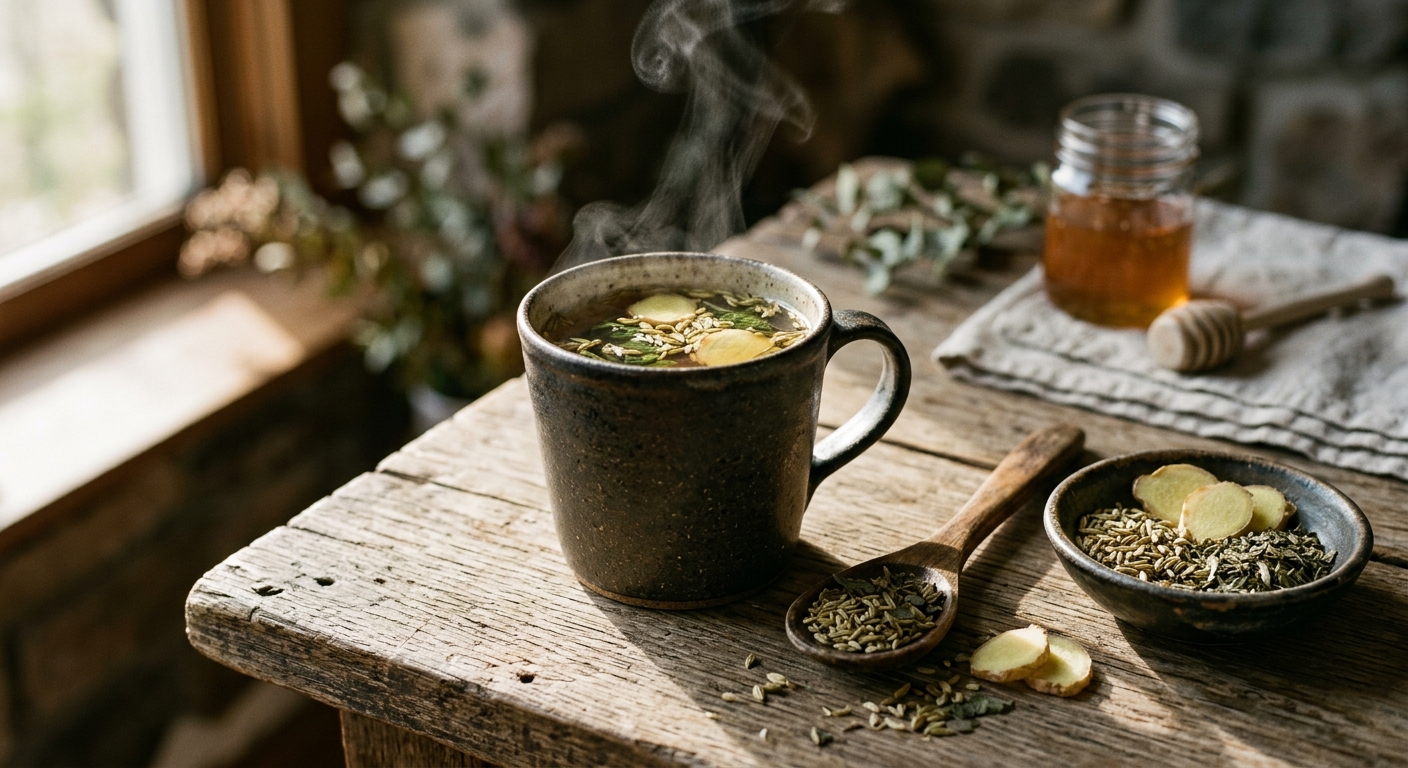
- Add the sliced fresh ginger, cracked fennel seeds, and dried peppermint leaf to a tea infuser or teapot. Pour the hot water over the herbs and cover the vessel immediately with a lid or small plate to trap the volatile aromatic compounds.
- Steep for 7 to 10 minutes. A shorter steep of 7 minutes yields a brighter, mintier cup. A longer steep of 10 minutes draws out more ginger heat and fennel sweetness. Taste at the 7-minute mark and decide.
- Remove the infuser or strain through a fine mesh strainer into your mug. Stir in honey or a squeeze of lemon if desired, and sip slowly while warm, ideally within 20 to 30 minutes of a meal.
- Lightly crush the fennel seeds as in the hot brew method. Slice fresh ginger into thin coins. Combine the ginger, fennel seeds, and dried peppermint in a glass jar.
- Pour 600 ml of filtered room-temperature water over the herbs. The extra volume accounts for the slower, less complete extraction that cold water provides.
- Stir gently to ensure all the herbs are fully submerged. Cover the jar with a lid or a piece of cloth secured with a rubber band. Leave at room temperature for 1 hour to begin extraction, then transfer to the refrigerator.
- Steep in the refrigerator for 8 to 12 hours, or overnight. Taste after 8 hours. If you prefer a stronger brew with more ginger presence, allow up to 12 hours.
- Strain through a fine mesh strainer or cheesecloth into a clean jar or pitcher, pressing the solids gently to extract maximum liquid. Serve over ice, add a slice of lemon or cucumber, and sweeten lightly with a small amount of honey stirred in while the liquid is still slightly chilled for easier dissolving.
- Cut fresh ginger root into generous slices, about 6 to 8 thin coins per two servings. There is no need to peel the ginger if it is clean and organically grown. Add the ginger slices and cracked fennel seeds to a small saucepan with 600 ml of cold filtered water.
- Place the saucepan over medium-high heat and bring to a full boil, then immediately reduce to a gentle simmer. You want a steady, slow bubble, not a rolling boil that will evaporate your liquid rapidly.
- Simmer the ginger and fennel together for 15 to 20 minutes. The liquid will deepen in color and the kitchen will fill with a warm, spiced aroma. Check the water level occasionally and add a splash if it reduces too much.
- Remove the saucepan from heat. Add the dried peppermint leaf directly to the hot decoction liquid and cover with a lid. Allow to steep off the heat for an additional 5 minutes. Peppermint’s volatile oils are sensitive to extended high heat, so adding it at the end preserves its bright flavor and menthol content.
- Strain through a fine mesh strainer into mugs, pressing the ginger and fennel against the strainer to extract all the liquid. Sweeten with honey to taste and serve immediately. This decoction is noticeably stronger and more potent than a standard hot brew, so consider starting with a smaller cup and assessing your tolerance.
Health Benefits
Fennel’s anethole and fenchone are well-documented carminatives, compounds that relax intestinal smooth muscle and help expel trapped gas. A 2021 review in the journal Nutrients confirmed fennel’s antispasmodic action on the GI tract, supporting its traditional use as a post-meal digestive herb.
Ginger is one of the most thoroughly researched natural anti-nausea agents, with multiple randomized controlled trials supporting its use for pregnancy-related nausea, chemotherapy-induced nausea, and post-operative nausea. Its primary mechanism involves 6-gingerol’s action on 5-HT3 serotonin receptors in the gut, which are also the target of pharmaceutical anti-nausea drugs.
Peppermint oil is recognized in several gastroenterology guidelines as an effective short-term treatment for IBS-related pain and cramping. The menthol in peppermint works by blocking calcium channels in intestinal smooth muscle cells, reducing the excessive contractions that drive IBS cramping and discomfort.
Ginger has been shown in human studies to accelerate gastric emptying and increase the secretion of digestive enzymes including lipase and amylase. Drinking this tea before or after a large meal can genuinely help the body process food more efficiently, reducing the heavy, sluggish feeling that often follows eating.
All three herbs in this blend contain significant anti-inflammatory compounds. Ginger’s shogaols inhibit prostaglandin synthesis via COX-2 inhibition, peppermint’s rosmarinic acid reduces intestinal oxidative stress, and fennel’s phytochemicals suppress pro-inflammatory cytokines. Combined, they create a broadly anti-inflammatory environment in the gut that supports healing of irritated tissue.
🧪 Key Bioactive Compounds
The Science Behind Ginger
The science behind Digestive Fire Herb Tea is rooted in how each herb interacts with a different part of the digestive nervous system. Ginger’s phenolic compounds, primarily 6-gingerol and its more potent heat-activated cousin 6-shogaol, work on multiple fronts simultaneously. They stimulate receptors in the stomach lining that trigger increased production of saliva, gastric acid, and bile, all essential for breaking down a meal. They also act on 5-HT3 serotonin receptors in the gut, which are the same receptors targeted by ondansetron, one of the most widely prescribed pharmaceutical anti-nausea drugs. Multiple randomized controlled trials have confirmed ginger’s effectiveness against nausea in pregnancy, chemotherapy, and post-surgical recovery contexts, making it one of the best-studied botanical medicines in the world.
Fennel and peppermint both work primarily through smooth muscle relaxation, but through different mechanisms. Fennel’s primary active compound, anethole, inhibits the contractile activity of intestinal smooth muscle by modulating calcium ion flux across cell membranes. This carminative action physically helps the gut release trapped gas and unclench spasmed sections of intestine. Peppermint’s menthol achieves a similar result by directly blocking L-type calcium channels in smooth muscle cells, a mechanism so well understood that enteric-coated peppermint oil is now an approved treatment for IBS in several countries. The interaction between these two complementary mechanisms means that fennel and peppermint together provide broader and more consistent antispasmodic coverage than either herb alone.
Beyond their immediate mechanical effects, all three herbs also contribute measurable antioxidant and anti-inflammatory activity that benefits the gut lining over time. Chronic low-grade gut inflammation is increasingly linked to a wide range of digestive disorders, from leaky gut syndrome to inflammatory bowel disease. Ginger’s shogaols inhibit COX-2 enzymes involved in prostaglandin-driven inflammation, peppermint’s rosmarinic acid scavenges reactive oxygen species that damage intestinal epithelial cells, and fennel’s fenchone has demonstrated antimicrobial properties against gut pathogens like Helicobacter pylori in laboratory studies. Drinking this blend regularly, particularly after meals and during periods of digestive stress, creates a sustained anti-inflammatory and microbiome-supportive environment that goes well beyond simple symptom relief.
Brewing Tips
- Use fresh ginger root whenever possible. The gingerol content of fresh ginger is significantly higher than dried or powdered ginger, and the flavor is brighter and more complex. Store a knob of fresh ginger in your freezer and grate it directly into the brew without thawing.
- Always cover your brewing vessel with a lid, plate, or small saucer while steeping. Peppermint and fennel contain highly volatile aromatic oils that evaporate quickly in open air. Covering the cup retains these oils in the liquid where they can do their digestive work.
- Drink this tea 15 to 30 minutes before a heavy meal to prime the digestive system, or within 20 minutes after eating to address post-meal bloating and sluggishness. Drinking it more than an hour after eating reduces its effectiveness as a digestive stimulant.