Few herbs awaken the senses quite like lemon verbena. Native to South America and introduced to Europe by Spanish conquistadors in the 17th century, Aloysia citrodora quickly became a prized garden herb across Spain, France, and Portugal, where it was steeped into teas, tucked into sachets, and stirred into cordials. Its leaves release an intensely bright, lemony fragrance at the lightest touch, making it one of the most aromatic herbs you will ever bring into your kitchen. Unlike lemon balm or lemongrass, lemon verbena carries a clean, almost crystalline citrus quality with no bitterness, making the tea as pleasurable to drink as it is beneficial.
In traditional South American herbalism, lemon verbena was used to ease digestive discomfort, calm nervous tension, and restore a sense of mental alertness after periods of fatigue. Argentine and Chilean herbalists brewed it as a morning tonic, valuing it as a way to clear the mind without the jitteriness associated with stimulant herbs. French herbalists incorporated it into blends called verveine, a bedtime or post-dinner tea that settled the stomach while gently refreshing the senses. This dual reputation as both a calming and clarifying herb speaks to its adaptogenic-like quality: it brings the system into balance rather than simply pushing it in one direction.
What makes lemon verbena particularly exciting for an energy and focus blend is its extraordinary concentration of polyphenols, including verbascoside and luteolin, which support cognitive function and help the body manage oxidative stress. Unlike caffeine-based energy teas that spike and crash, lemon verbena works by reducing inflammation, calming the nervous system, and delivering antioxidant compounds that support sustained mental performance. The result is a tea that feels genuinely revitalizing without the anxiety or sleep disruption that often follows caffeinated drinks. Brewed hot, iced, or as a cold-steep concentrate, it is one of the most versatile and rewarding herbs in the modern herbal tea repertoire.
2
cups
Ingredients
- 4 tspdried lemon verbena leaves (loosely packed)
- 480 mlwater (90°C / 194°F)
- —raw honey or agave to taste (optional)
- —fresh lemon slice for garnish (optional)
How to Brew
Click on an item below to shop for the recommended items for this recipe on Amazon.
As an Amazon Associate, we earn from qualifying purchases.
- Heat filtered water to 90 to 95°C (194 to 203°F). If you do not have a temperature-controlled kettle, bring water to a full boil and allow it to rest for 90 seconds before pouring.
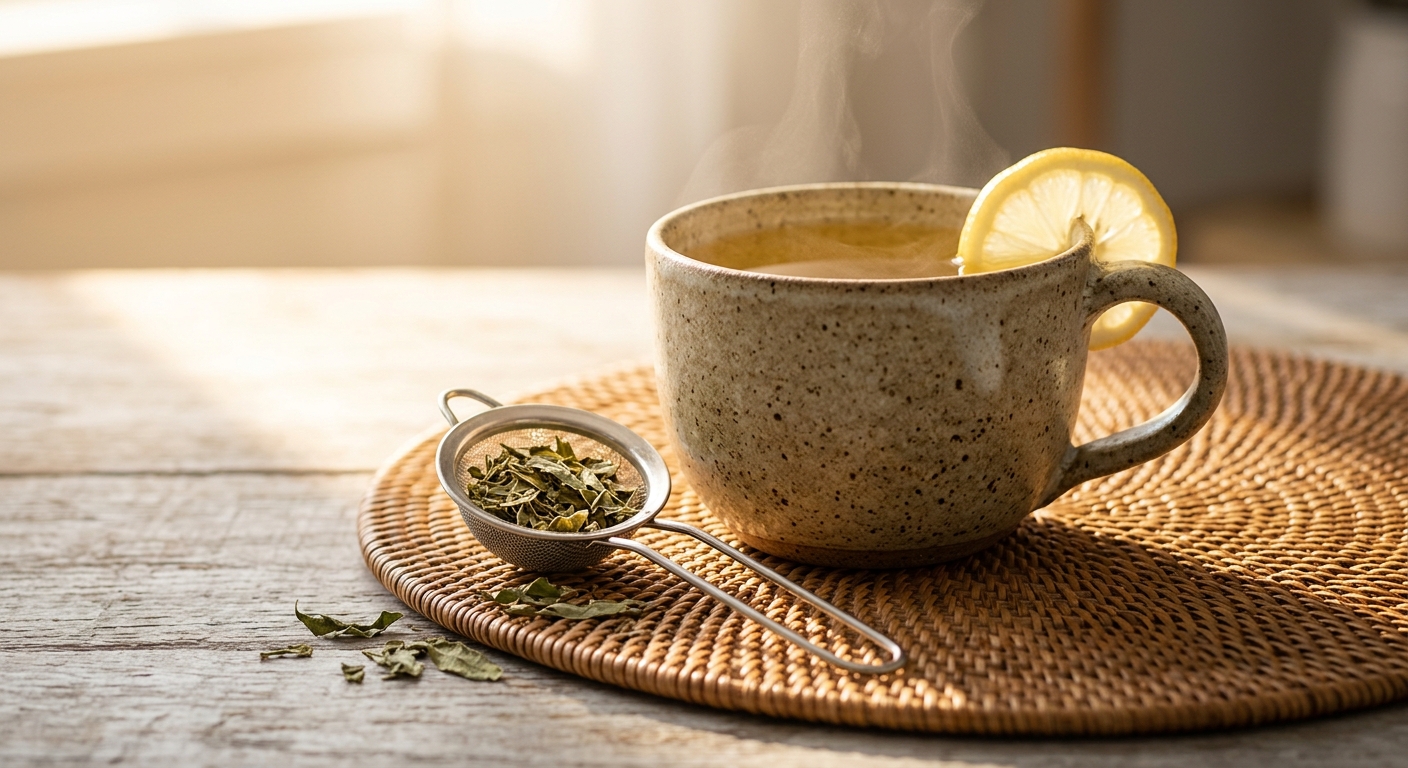
- Add 2 teaspoons of dried lemon verbena leaves per 240 ml of water to a tea infuser or teapot. Lightly crush the leaves between your fingers before placing them in the infuser to help release the volatile oils.
- Pour the hot water directly over the leaves and cover the cup or teapot immediately with a lid or small saucer. Covering the vessel traps the aromatic steam and prevents the most volatile flavor compounds from escaping.
- Steep for 5 to 7 minutes. For a brighter, more citrus-forward cup, remove at 5 minutes. For a fuller-bodied, slightly more herbaceous flavor, allow the full 7 minutes.
- Remove the infuser or strain the leaves. Sweeten lightly with raw honey if desired, and garnish with a thin lemon slice. Serve immediately while the aromatic compounds are at their peak.
- Measure 3 teaspoons of dried lemon verbena leaves per 240 ml of cold, filtered water. The increased leaf ratio compensates for the slower, gentler extraction that occurs at cold temperatures.
- Place the lemon verbena leaves directly into a clean glass jar or cold brew pitcher. Add the cold filtered water and stir briefly to ensure all the leaves are saturated.
- Seal the jar or pitcher and allow it to sit at room temperature for 1 hour to begin extraction, then transfer to the refrigerator.
- Steep in the refrigerator for 8 to 12 hours. An 8-hour steep yields a lighter, more delicate cup; a 12-hour steep produces a more concentrated, intensely citrus infusion. Do not exceed 14 hours, as the flavor can become slightly bitter.
- Strain the leaves through a fine mesh strainer or cheesecloth into a glass. Serve over ice, sweeten with agave or simple syrup if desired, and add a sprig of fresh mint or a slice of cucumber for a refreshing, spa-style drink.
- Add 5 to 6 teaspoons of dried lemon verbena leaves to a large, clean glass jar with a lid. For a lightly enhanced blend, consider adding a few thin slices of fresh ginger or a strip of lemon peel alongside the verbena.
- Fill the jar with cold, filtered water and seal with the lid. Give the jar a gentle swirl to wet all the leaves evenly.
- Place the sealed jar in a sunny outdoor spot or a sun-facing windowsill. Allow it to infuse in direct sunlight for 3 to 4 hours. On cooler or cloudier days, extend the time by 30 to 60 minutes.
- Once the tea has reached your desired strength (it will be a soft golden yellow with a luminous quality in the light), bring the jar indoors and strain the leaves through a fine mesh strainer.
- Serve immediately over ice for a warm-weather energy drink, or refrigerate for up to 24 hours. Add honey, a squeeze of fresh lemon, or a few torn lemon verbena leaves as a garnish before serving.
Health Benefits
Lemon verbena’s rosmarinic acid inhibits acetylcholinesterase, the enzyme that breaks down acetylcholine, a neurotransmitter essential for learning and attention. This mechanism helps sustain mental alertness and concentration without the use of stimulants or caffeine.
Verbascoside and luteolin are among the most potent antioxidant compounds found in any culinary or medicinal herb. Studies have shown that lemon verbena extract significantly reduces markers of oxidative stress in athletes and sedentary individuals alike, protecting cells from damage caused by free radicals.
Traditional use of lemon verbena for digestive complaints is supported by its antispasmodic properties, attributed in part to its volatile oils including citral and limonene. These compounds help relax smooth muscle in the gastrointestinal tract, relieving bloating, cramping, and indigestion.
Unlike stronger nervine herbs such as valerian or passionflower, lemon verbena produces a gentle calming effect that reduces nervous tension without inducing drowsiness. Its limonene and citral content interact with the olfactory and nervous systems to produce a mood-lifting, anxiety-reducing effect suitable for daytime use.
A 2011 clinical trial published in the Journal of the International Society of Sports Nutrition found that supplementation with lemon verbena extract significantly reduced muscle damage markers and inflammation following intense exercise, suggesting it can aid recovery for physically active individuals.
🧪 Key Bioactive Compounds
The Science Behind Lemon Verbena
Lemon verbena’s reputation as a mental energizer is grounded in a compelling concentration of polyphenolic compounds, particularly verbascoside and rosmarinic acid. Verbascoside, the herb’s most abundant and studied phenylethanoid glycoside, is a potent free-radical scavenger that demonstrates neuroprotective effects by shielding neuronal membranes from oxidative damage. In regions of the brain associated with memory and executive function, chronic oxidative stress is a key contributor to cognitive decline and mental fatigue. By neutralizing reactive oxygen species at the cellular level, verbascoside helps preserve neuronal integrity and supports the kind of sustained mental performance that short-term stimulants cannot replicate.
Rosmarinic acid adds another dimension to lemon verbena’s cognitive support profile. This well-studied polyphenolic acid, also found in rosemary and sage, has been shown to inhibit acetylcholinesterase, the enzyme responsible for degrading acetylcholine in synaptic gaps. Acetylcholine is the primary neurotransmitter involved in attention, working memory, and learning consolidation. By slowing its breakdown, rosmarinic acid effectively prolongs cholinergic signaling, which translates to improved focus and mental stamina. This is the same broad mechanism targeted by certain pharmaceutical nootropics, making lemon verbena a compelling natural alternative for those seeking cognitive support without pharmaceutical intervention.
The herb’s volatile oil fraction, dominated by citral (a mixture of the isomers geranial and neral), limonene, and geraniol, contributes to its energizing and mood-lifting properties through both olfactory and systemic pathways. Inhalation of citrus terpenes like limonene has been shown in clinical studies to elevate dopamine and serotonin activity, reduce cortisol levels, and improve subjective measures of mood and alertness. When lemon verbena tea is brewed and the aromatic steam is inhaled during drinking, this aromatherapeutic effect occurs simultaneously with the ingestion of the dissolved polyphenols, creating a multi-pathway approach to energy and focus that is both immediate in its sensory impact and cumulative in its biochemical benefits.
Brewing Tips
- Always cover your cup or teapot immediately after pouring the water, as lemon verbena’s most aromatic volatile compounds can evaporate quickly, taking a significant portion of the flavor and beneficial terpenes with the steam.
- Fresh lemon verbena leaves can be used in place of dried; simply double the quantity (4 teaspoons of fresh leaves instead of 2 teaspoons dried) as fresh leaves contain a higher water content that dilutes their concentration.
- Store dried lemon verbena in an airtight, opaque container away from light and heat. Unlike many dried herbs that degrade slowly, lemon verbena loses its volatile oils relatively quickly when exposed to air, so aim to use your supply within 6 months for the best flavor and potency.