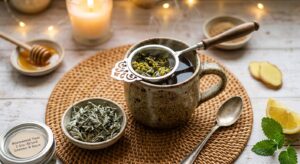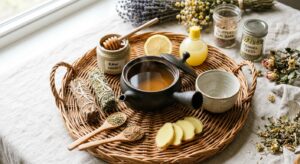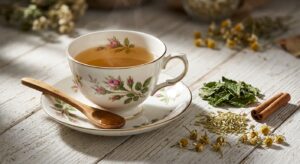
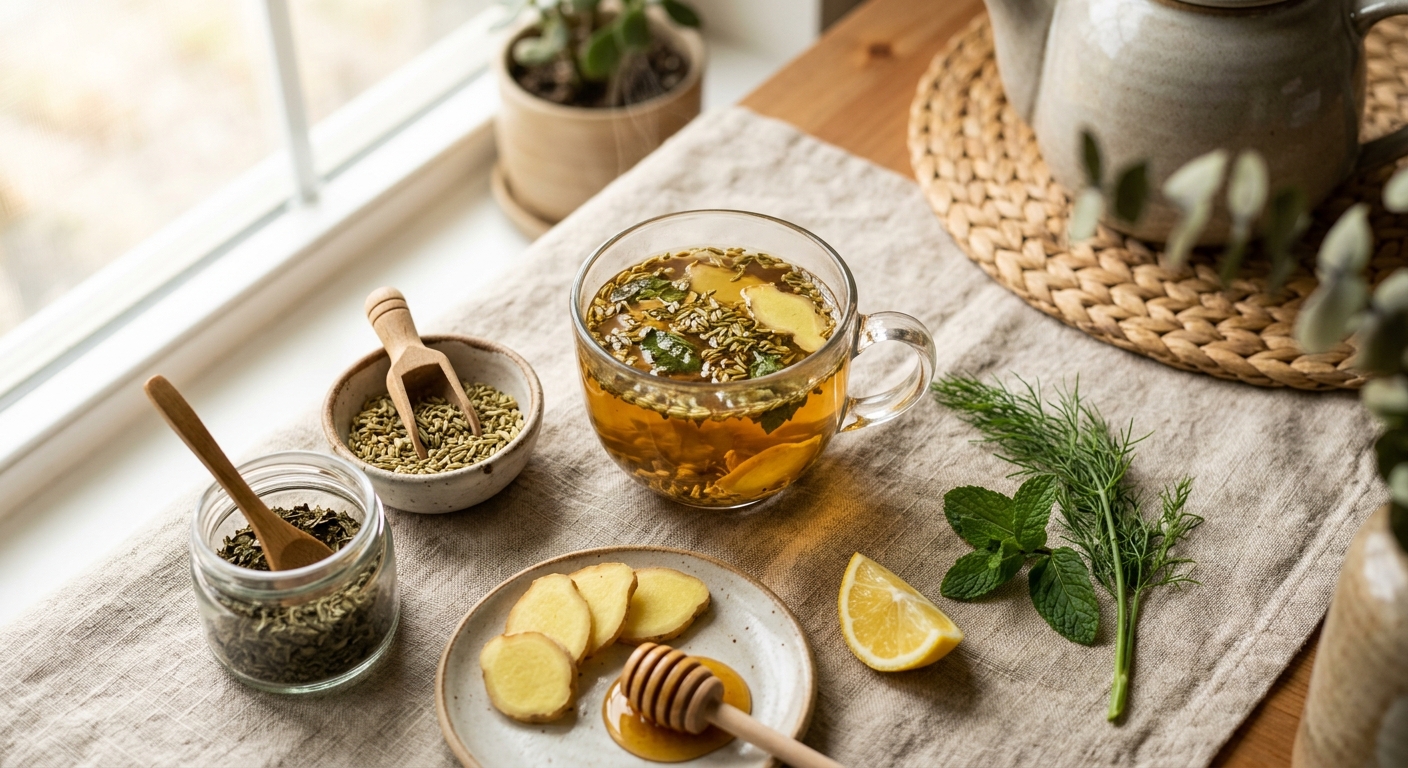
Few discomforts are as universally dreaded as a stomach full of trapped gas, gripping cramps, and the bloated heaviness that follows a difficult meal. Long before antacids and digestive enzymes lined pharmacy shelves, herbalists across Europe, Asia, and the Middle East were reaching for the same trio of plants: fennel seed, peppermint leaf, and fresh ginger root. Each herb brings a distinct mechanism of action to the blend, and together they address gas and cramping from multiple angles simultaneously, making this one of the most time-tested and practically effective teas in the herbal tradition.
Fennel seed has been prized since ancient Egyptian times as a carminative, a word derived from the Latin carminare, meaning to card or cleanse. Roman soldiers chewed fennel seeds before long marches to prevent indigestion, and Ayurvedic practitioners routinely offered roasted fennel after meals as a digestive aid. Peppermint, a natural hybrid of watermint and spearmint first documented in England in the late 17th century, became a cornerstone of European folk medicine for colic and spasms. Ginger root, revered in Traditional Chinese Medicine for over 2,000 years, rounds out the blend with its warming, pro-kinetic action that helps move food through the digestive tract.
What makes this blend genuinely special is the synergy between its three herbs. Fennel and peppermint both contain antispasmodic volatile oils that relax the smooth muscle lining of the intestinal wall, directly releasing trapped gas and easing cramps. Ginger complements this action by stimulating gastric motility, reducing the fermentation time that produces gas in the first place. The result is a tea that smells almost like a natural confection, tastes bright and warming, and gets to work within 20 to 30 minutes for most people.
2
cups
Ingredients
- 1.5 tspfennel seeds, lightly crushed
- 1 tspdried peppermint leaf
- 3 slicesfresh ginger root (about 3mm thick each)
- 480 mlwater (95°C / 203°F)
- —raw honey or maple syrup to taste (optional)
- —a squeeze of fresh lemon juice (optional)
How to Brew
Click on an item below to shop for the recommended items for this recipe on Amazon.
As an Amazon Associate, we earn from qualifying purchases.
- Lightly crush 1.5 teaspoons of fennel seeds using a mortar and pestle or the flat of a spoon on a cutting board. You are looking for cracked seeds, not a powder. This breaks the seed coat and releases the essential oils that do the carminative work.
- Slice 3 thin rounds of fresh ginger root, each about 3mm thick. No need to peel if the ginger is organic. Place the crushed fennel seeds and ginger slices directly into your tea infuser or teapot.
- Add 1 teaspoon of dried peppermint leaf on top of the fennel and ginger. Keep peppermint loose rather than packed tightly so water can circulate freely through the blend.
- Heat your water to approximately 95°C (203°F). Avoid a full rolling boil, as temperatures above 100°C can volatilize and destroy some of the delicate aromatic compounds in peppermint. Pour the water over the herbs and immediately cover the teapot or place a small saucer over your mug to trap the volatile oils as steam.
- Steep for 7 to 10 minutes. For mild gas and everyday use, 7 minutes is sufficient. For more pronounced cramping or bloating, allow the full 10 minutes to extract the deeper antispasmodic compounds from the fennel.
- Remove the infuser or strain the tea into mugs. Add raw honey or a squeeze of lemon if desired. Drink slowly while warm, ideally seated in a relaxed position to support digestion.
- Crush 1.5 teaspoons of fennel seeds as described in the hot brew method. Slice 4 rounds of fresh ginger rather than 3, since cold water extracts ginger’s compounds more slowly and you need slightly more surface area to achieve full flavor.
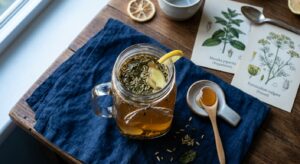
- Combine the crushed fennel seeds, ginger slices, and 1 teaspoon of dried peppermint leaf in a clean glass jar. Pour 480ml of cold, filtered water over the herbs. Do not use warm or hot water for this method.
- Stir briefly to ensure all the herbs are submerged. Loosely cover the jar with a lid or a small plate and leave it at room temperature for 30 minutes to allow initial extraction to begin.
- Transfer the jar to the refrigerator and allow it to steep for a total of 8 to 12 hours, overnight is ideal. The slow, cold extraction produces a smoother flavor with very low bitterness and preserves the most heat-sensitive volatile oils in peppermint.
- Strain the tea through a fine mesh strainer into a glass or pitcher. Serve over ice or at room temperature. Add a thin slice of cucumber or a sprig of fresh mint to enhance the cooling, refreshing quality of the cold brew.
- Add 600ml of cold filtered water to a small saucepan. Place 2 teaspoons of lightly crushed fennel seeds and 5 to 6 thick slices of fresh ginger root directly into the water. Starting in cold water allows the hard seed and root structures to warm gradually, extracting compounds more thoroughly.
- Bring the water to a gentle simmer over medium heat. Once you see small consistent bubbles rising (not a rolling boil), reduce the heat to maintain a temperature around 85 to 90°C (185 to 194°F). Simmer uncovered for 15 to 20 minutes. The liquid will reduce slightly and take on a warm, spiced aroma.
- After 15 to 20 minutes, remove the saucepan from the heat entirely. Add 1.5 teaspoons of dried peppermint leaf directly to the hot simmered liquid. Cover the saucepan with a lid and allow the peppermint to infuse off the heat for 5 minutes. This two-stage approach preserves peppermint’s menthol content, which is highly volatile and degrades at sustained high temperatures.
- Strain the decoction through a fine mesh strainer into mugs, pressing the spent herbs gently with a spoon to extract the last of the liquid. You will notice the decoction is darker and more concentrated than a standard steep.
- If the decoction is very strong, dilute with a small amount of hot water to taste. Add raw honey to balance the ginger’s intensity if desired. Drink one cup after a heavy meal or at the first sign of cramps and gas. The remaining decoction can be stored in a sealed jar in the refrigerator for up to 24 hours and gently reheated.
Health Benefits
Fennel seed’s anethole and fenchone act directly on the smooth muscle of the intestinal wall, preventing and releasing spasms that trap gas. Multiple clinical and preclinical studies confirm fennel’s carminative effect, and it remains one of the most recommended single herbs for flatulence in both European and Ayurvedic phytotherapy guidelines.
Peppermint’s menthol has been shown in randomized controlled trials to significantly reduce abdominal cramping, particularly in irritable bowel syndrome (IBS). A 2014 meta-analysis published in the Journal of Clinical Gastroenterology found enteric peppermint oil significantly superior to placebo for IBS-related abdominal pain, with the antispasmodic mechanism operating through L-type calcium channel inhibition in smooth muscle cells.
Ginger root’s gingerols and shogaols stimulate the release of digestive enzymes and accelerate gastric emptying, reducing the dwell time of food that leads to fermentation-driven gas. A 2011 study in the European Journal of Gastroenterology and Hepatology found that ginger significantly accelerated gastric emptying compared to placebo in healthy volunteers.
Ginger is one of the most well-documented anti-nausea agents in herbal medicine, with evidence supporting its efficacy for postoperative nausea, morning sickness, and motion sickness. Its action on 5-HT3 serotonin receptors in the gut wall helps regulate the nausea reflex, making this tea particularly useful when cramping and nausea occur together.
Rosmarinic acid from peppermint and the phenolic compounds in ginger collectively reduce pro-inflammatory cytokine activity in the intestinal mucosa. This anti-inflammatory action is especially relevant for people whose cramping is driven by underlying gut inflammation, such as in IBS or mild colitis flares.
🧪 Key Bioactive Compounds
The Science Behind Fennel Seed
The effectiveness of this three-herb blend is grounded in well-characterized phytochemistry. Fennel seed’s dominant volatile oil, anethole, has been shown in ex vivo intestinal tissue studies to directly inhibit spontaneous contractions of the ileum and colon, the classic mechanism of a carminative. It achieves this by interfering with calcium-dependent smooth muscle contraction pathways, allowing gas-trapping spasms to release. Fenchone, a secondary ketone in fennel, adds antimicrobial activity against several gut bacteria known to produce excess gas, addressing the fermentation side of bloating rather than just the symptomatic spasm.
Peppermint leaf contributes one of the most studied antispasmodic compounds in natural medicine: menthol. Menthol specifically targets L-type voltage-gated calcium channels on smooth muscle cells lining the intestinal wall. By blocking calcium influx into these cells, menthol prevents the sustained contraction cycles that produce cramping pain. This is the same mechanism exploited by enteric-coated peppermint oil capsules, which have been evaluated in numerous clinical trials for IBS. The oral tea form offers less concentrated delivery than capsules but provides faster absorption through the mucous membranes of the upper GI tract. Peppermint also contains rosmarinic acid, a polyphenol that inhibits COX-2 enzyme activity and reduces the synthesis of prostaglandins, the inflammatory mediators that sensitize pain receptors in the gut lining and amplify cramping sensations.
Ginger root operates through complementary but distinct mechanisms. Its primary bioactives, the gingerols and shogaols, activate 5-HT4 serotonin receptors in the enteric nervous system, stimulating the peristaltic reflex and accelerating gastric emptying. This pro-kinetic effect reduces the residence time of carbohydrates in the small intestine, limiting their exposure to gas-producing bacteria. Ginger also inhibits 5-HT3 receptors, which are responsible for triggering the vomiting reflex and transmitting visceral pain signals, providing an additional layer of anti-nausea and analgesic activity. Together, these three herbs address intestinal gas and cramping through at least five distinct molecular mechanisms, which may help explain why this traditional combination has remained in use across so many cultures and centuries.
Brewing Tips
- Crush fennel seeds fresh each time you brew rather than pre-crushing a large batch. The volatile oils that give fennel its carminative power begin to dissipate within hours of crushing, and freshly cracked seeds will be noticeably more aromatic and effective.
- For acute cramping, drink the tea slowly over 10 to 15 minutes while applying gentle heat from a warm water bottle to your lower abdomen. The combination of internal smooth muscle relaxation from the herbs and external heat works faster than either approach alone.
- If you are making this tea for ongoing digestive support rather than acute relief, brew a larger batch using the decoction method, let it cool, and store it in the refrigerator for up to 24 hours. Drink one cup 20 minutes before meals to prime gastric motility and reduce post-meal gas before it starts.