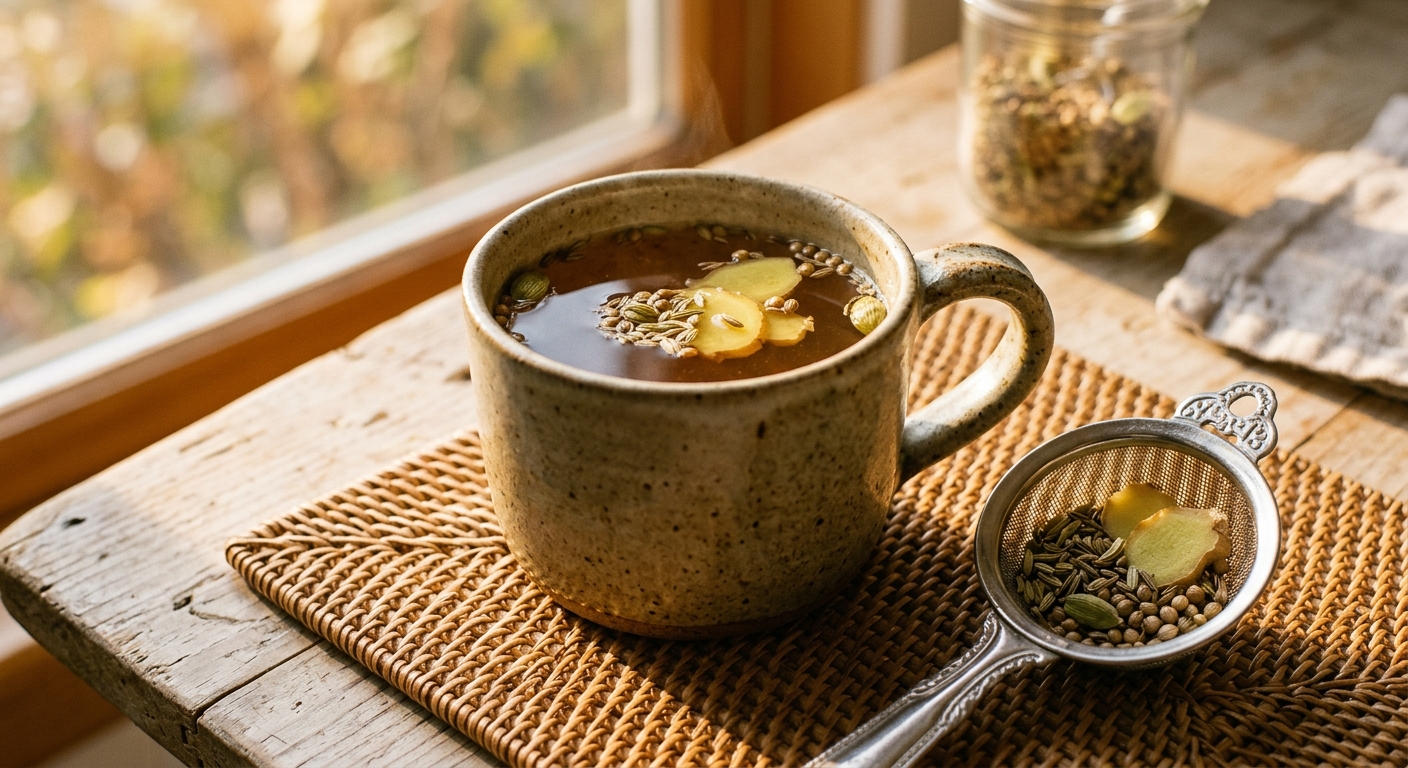
Long before modern gastroenterology mapped the enteric nervous system, Ayurvedic physicians in ancient India were prescribing precise spice combinations to balance the digestive force they called Agni, or digestive fire. This foundational concept held that nearly all disease begins with impaired digestion, and that aromatic seeds and roots could rekindle, regulate, and restore the gut’s natural rhythm. The blend you are about to brew draws on one of Ayurveda’s most beloved formulations, combining ginger root with the trio of fennel, cumin, and coriander seeds, brightened by the floral warmth of cardamom. Together they form a system that has been trusted for over 3,000 years across the Indian subcontinent, Southeast Asia, and beyond.
Each herb in this blend was chosen with care by generations of Ayurvedic practitioners known as vaidyas. Ginger, or shunthi in Sanskrit, was considered the universal medicine, appearing in the ancient Charaka Samhita as a remedy for gas, nausea, and slow digestion. Fennel, cumin, and coriander together form a classic combination called CCF tea, a staple of Ayurvedic kitchens used to calm Vata and Pitta imbalances without overstimulating the system. Cardamom was prized as a gentle digestive stimulant and mouth freshener, used after meals throughout the Mughal era and still offered at Indian restaurants today for exactly that reason.
What makes this blend so enduring is not just its cultural heritage but its sensory pleasure. The tea is deeply aromatic, spicy without aggression, subtly sweet, and grounding in the way only whole seeds and fresh roots can be. Brewing it fills your kitchen with the scent of a spice market, and sipping it feels like a ritual. Whether you are dealing with post-meal bloating, sluggish digestion, or simply want to build a nourishing daily practice, this Ayurvedic digestive blend offers both ancient wisdom and modern scientific support for every warm, spiced cup.
2
cups
Ingredients
- 1 tspfresh ginger root, thinly sliced or grated
- 1 tspfennel seeds, lightly crushed
- 0.5 tspcumin seeds, lightly crushed
- 0.5 tspcoriander seeds, lightly crushed
- 3 wholegreen cardamom pods, lightly crushed
- 500 mlwater
- —raw honey or jaggery to taste (optional)
- —a squeeze of fresh lemon juice (optional)
How to Brew
Click on an item below to shop for the recommended items for this recipe on Amazon.
As an Amazon Associate, we earn from qualifying purchases.
- Add 500 ml of cold water to a small saucepan and place it over medium-high heat. Add the sliced or grated ginger directly to the cold water before it heats so the compounds begin extracting gradually.
- Lightly crush the fennel, cumin, and coriander seeds using a mortar and pestle or the flat side of a knife. This cracks the seed coats and dramatically increases surface area for extraction. Add the crushed seeds and lightly crushed cardamom pods to the saucepan.
- Bring the water to a full boil, then immediately reduce the heat to a gentle simmer. Allow the blend to simmer uncovered for 10 to 15 minutes. You will see the liquid deepen to an amber-gold and the kitchen will fill with a heady spice aroma. Taste at the 10-minute mark and continue simmering if you prefer a stronger brew.
- Remove from heat and allow to rest for 2 minutes so the spices settle slightly. Strain through a fine-mesh strainer or cheesecloth into pre-warmed mugs.
- Add raw honey or jaggery once the tea is just below boiling (below 60°C / 140°F) to preserve the beneficial enzymes in raw sweeteners. Finish with a small squeeze of lemon juice if desired, which brightens all the spice notes and adds a touch of vitamin C.
- Lightly crush the fennel, cumin, coriander seeds, and cardamom pods with a mortar and pestle, using the same technique as the hot brew. Slice the ginger root into thin rounds. The increased surface area is especially important for cold brewing, where no heat assists extraction.
- Combine all the spices and ginger with 500 ml of cool, filtered water in a glass jar or pitcher. Stir briefly to combine. Do not use a metal container, as extended contact with acidic spice compounds can impart a metallic note to the tea.
- Let the jar sit at room temperature for 30 to 60 minutes to allow initial extraction to begin, then seal tightly and transfer to the refrigerator.
- Steep in the refrigerator for 8 to 12 hours, or overnight. The longer the steep, the more complex and mellow the flavor becomes. Taste before straining and leave for an additional 2 hours if you want a stronger result.
- Strain through a fine-mesh strainer into a clean jar or glass. Serve over ice with a slice of fresh lemon or a sprig of fresh mint. Sweeten with simple syrup or liquid honey, as granulated sweeteners dissolve poorly in cold liquid.
- Scale up the recipe to produce a 4-serving concentrate. Use 1 tablespoon each of ginger slices and fennel seeds, 2 teaspoons each of cumin and coriander seeds, and 6 crushed cardamom pods. Add these to 500 ml of cold water in a saucepan, so the final yield is roughly 400 ml of concentrate after evaporation.
- Bring to a full boil over medium-high heat, then reduce to a low but active simmer. Simmer uncovered for 25 to 30 minutes, stirring occasionally, until the liquid has reduced noticeably and deepened to a rich dark amber. The aroma will be intense and concentrated.
- Remove from heat and cool for 5 minutes. Strain through a fine-mesh strainer lined with cheesecloth, pressing the spent spices firmly to extract every last drop of liquid. Discard the spent solids.
- Pour the cooled concentrate into a clean glass jar. Seal tightly and refrigerate. The concentrate will keep for up to 5 days.
- To serve, combine one part concentrate with three parts hot water for a traditional warm cup, or one part concentrate with three parts sparkling water and ice for a bright, digestive-sparkling drink. Sweeten individually as desired.
Health Benefits
The combination of anethole from fennel and cuminaldehyde from cumin works synergistically to relax intestinal smooth muscle and expel trapped gas. Multiple clinical studies have found fennel seed preparations significantly more effective than placebo at reducing bloating and flatulence in adults.
Cumin and ginger have both been shown in peer-reviewed research to upregulate the production of digestive enzymes including lipase, protease, and amylase. This accelerates the breakdown of fats, proteins, and carbohydrates, which directly reduces the fermentation that leads to gas and discomfort.
Ginger’s gingerols and shogaols act on 5-HT3 serotonin receptors in the gastrointestinal tract, effectively blocking the signals that trigger nausea. This mechanism is supported by multiple randomized controlled trials covering nausea from pregnancy, chemotherapy, and motion sickness.
Cardamom and coriander contain antimicrobial volatile oils that exhibit selective activity against pathogenic bacteria such as E. coli and H. pylori without broadly disrupting beneficial bacterial populations. This makes them gentle, food-safe options for maintaining microbial balance.
Linalool, found in both cardamom and coriander, has demonstrated anxiolytic effects in preclinical studies, and emerging research on the gut-brain axis suggests that reducing intestinal spasm and inflammation may directly lower psychological stress responses tied to digestive discomfort.
🧪 Key Bioactive Compounds
The Science Behind Ginger, Fennel, Cumin, Coriander, Cardamom
The science behind this Ayurvedic blend is as layered as its flavor. Ginger’s primary active compounds, the gingerols present in fresh root and the shogaols formed when ginger is dried or heated, are among the most well-studied bioactive molecules in digestive medicine. They work by accelerating gastric emptying, the rate at which food moves from the stomach to the small intestine, which is a key factor in reducing the bloating and heaviness that follow large meals. A 2008 study published in the European Journal of Gastroenterology and Hepatology confirmed that ginger accelerated gastric emptying in healthy volunteers compared to placebo, lending solid scientific grounding to its millennia-old reputation as a digestive stimulant.
Fennel, cumin, and coriander all contribute volatile aromatic oils that act directly on the smooth muscle tissue lining the gastrointestinal tract. Anethole from fennel and linalool from coriander and cardamom have antispasmodic properties, meaning they reduce the involuntary muscular contractions that cause cramping, colic, and painful gas. Cumin’s primary compound, cuminaldehyde, has been shown in laboratory studies to activate digestive enzyme secretion from both the salivary glands and the pancreas, meaning that simply smelling and sipping this blend begins to prepare the entire digestive cascade for efficient food processing. This pre-digestive stimulation is what Ayurvedic practitioners meant when they spoke of kindling Agni before a meal.
Cardamom brings an often overlooked but clinically interesting compound to the blend: 1,8-cineole, also known as eucalyptol. Research has demonstrated that this compound supports bile production and secretion from the gallbladder, which is critical for the emulsification and absorption of dietary fats. Additionally, both cardamom and coriander contain flavonoids including quercetin and luteolin that exhibit anti-inflammatory activity in the intestinal mucosa, the delicate lining of the gut. Chronic low-grade inflammation of this lining is increasingly recognized as a driver of irritable bowel syndrome and other functional gut disorders, making the anti-inflammatory properties of this blend relevant not just for occasional discomfort but for long-term digestive resilience.
Brewing Tips
- Always crush or lightly crack whole seeds before brewing, whether hot or cold. Whole seeds have a sealed outer coat that prevents most of the essential oils from being released into the water, and even a light crush with a mortar and pestle can double the potency of your cup.
- Drink this tea 15 to 30 minutes after a meal rather than during it. Post-meal timing allows the digestive enzymes you have already released from eating to do their primary work first, and the tea then supports the final stages of digestion and gas expulsion without diluting gastric acid mid-meal.
- For a more intensely warming and anti-nausea-focused brew, add a small pinch of ground clove or a single star anise pod to the simmering water. Both are classic Ayurvedic additions to digestive formulas and pair beautifully with the base blend without overpowering the fennel and cardamom.