Long before antacids lined pharmacy shelves, healers across Europe, the Middle East, and Asia were reaching for chamomile and fennel to calm the digestive system. Chamomile, known botanically as Matricaria chamomilla, has been used for over 5,000 years in Egyptian, Greek, and Roman traditions, where it was revered as a cure-all for digestive spasms, inflammation, and nervous tension. Fennel (Foeniculum vulgare) carries an equally rich history, treasured by the ancient Greeks who called it marathon after the battle where soldiers reportedly chewed it to suppress hunger, and by medieval European herbalists who hung it above doorways to ward off indigestion and evil spirits alike. Together, these two herbs form one of traditional herbalism’s most time-honored digestive blends.
What makes this pairing so effective is how elegantly the two herbs complement each other. Chamomile works as an antispasmodic, relaxing the smooth muscle lining of the gastrointestinal tract and reducing inflammation throughout the gut. Fennel seeds contribute their own antispasmodic action while also carminatively expelling trapped gas and stimulating the production of digestive enzymes. Where chamomile brings calm, fennel brings movement, making the combination especially useful for bloating, cramping, indigestion, and that uncomfortable heaviness that settles in after a large or rich meal.
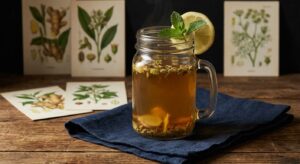
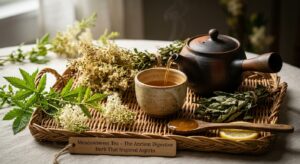
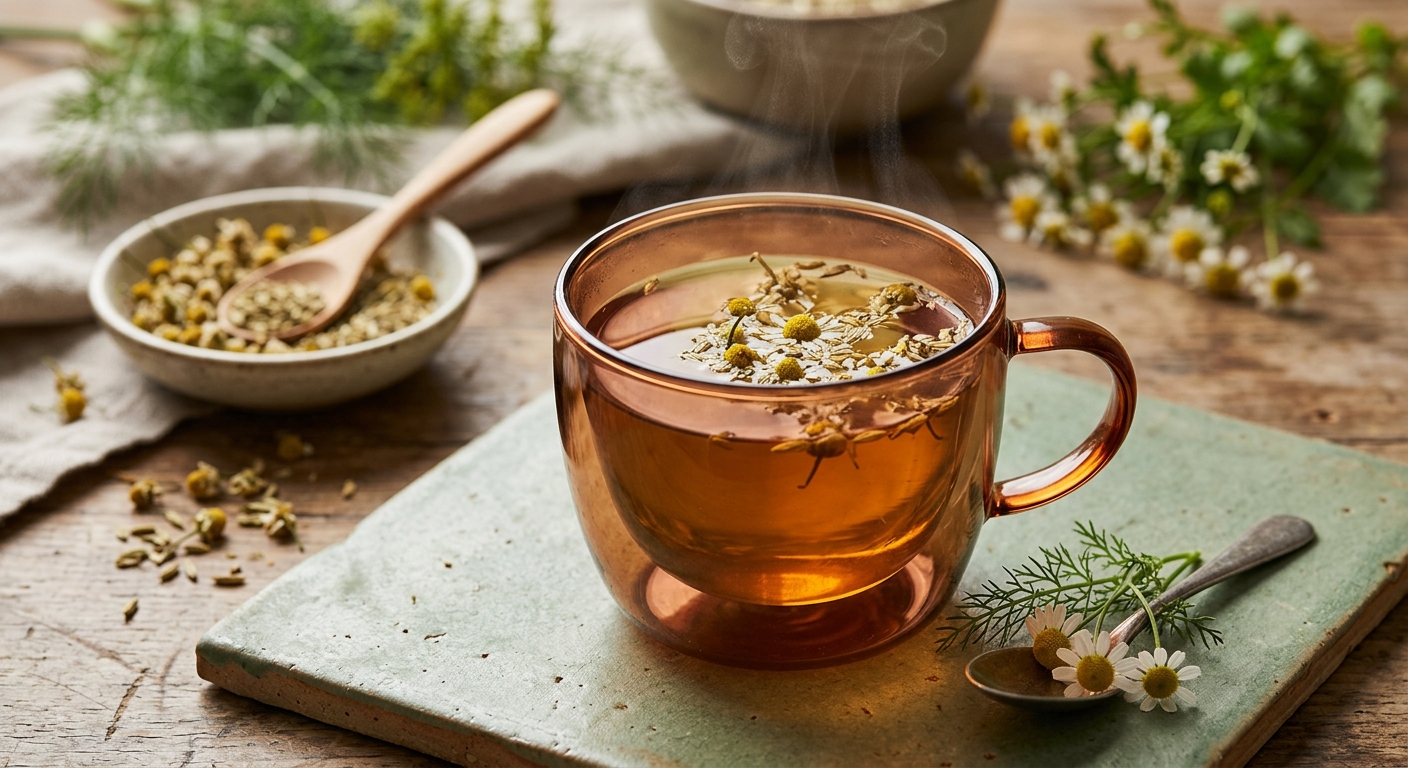
Sensory experience matters too, and this blend does not disappoint. The soft, apple-like floral sweetness of chamomile wraps around fennel’s warm, anise-scented brightness in a way that feels both comforting and reviving. The liquor brews to a luminous golden-amber color, and the aroma alone is enough to signal to your body that relief is on the way. Whether you sip it steaming hot after dinner, cold-brewed and chilled through a warm afternoon, or gently sun-steeped for a slow weekend ritual, chamomile and fennel tea is one of the most versatile and rewarding blends in the herbal apothecary.
2
cups
Ingredients
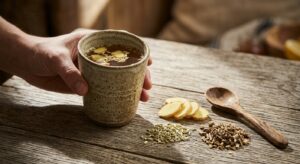
- 2 tspdried chamomile flowers
- 1 tspfennel seeds (lightly crushed)
- 480 mlwater (90°C / 194°F)
- —raw honey to taste (optional)
- —a thin slice of fresh lemon (optional)
How to Brew
Click on an item below to shop for the recommended items for this recipe on Amazon.
As an Amazon Associate, we earn from qualifying purchases.
- Lightly crush the fennel seeds using the back of a spoon or a mortar and pestle. Crushing the seeds opens them up and releases their volatile oils, ensuring you get maximum flavor and digestive benefit from the steep. You do not need to grind them, just crack them slightly.
- Heat filtered water to 90 to 95°C (194 to 203°F). Avoid a full rolling boil, as temperatures above 95°C can degrade the delicate apigenin flavonoids in chamomile and drive off fennel’s aromatic essential oils before they reach your cup.
- Add the crushed fennel seeds and dried chamomile flowers together into a tea infuser, strainer basket, or teapot. Place the infuser into your mug or teapot and pour the hot water directly over the herbs.
- Cover your mug with a saucer or small plate while steeping. This traps the steam and prevents the volatile aromatic compounds from escaping into the air. Steep for 7 to 10 minutes. A longer steep delivers more digestive benefit but can introduce mild bitterness, so taste at 7 minutes first.
- Remove the infuser and gently press the herbs once with a spoon to release any remaining liquid. Stir in raw honey if desired and add a thin lemon slice for brightness. Sip slowly, ideally 15 to 30 minutes after a meal for best digestive results.
- Lightly crush 2 teaspoons of fennel seeds and combine them with 4 teaspoons of dried chamomile flowers in a clean glass jar. The ratio is doubled compared to hot brew to compensate for the slower, less efficient cold extraction process.
- Pour 480 ml of cold, filtered water over the herbs at room temperature. Do not use hot or warm water. Give the jar a gentle stir to ensure the herbs are fully submerged, then seal the jar with a lid.
- Allow the jar to sit at room temperature for 30 minutes to begin the initial aromatic extraction, then transfer the sealed jar to the refrigerator. Let it steep for a total of 8 to 12 hours or overnight. Check at 8 hours for a lighter, sweeter brew or allow the full 12 hours for a more robust flavor.
- When steeping is complete, strain the liquid through a fine-mesh strainer or cheesecloth into a pitcher or second jar, discarding the spent herbs. The cold brew will keep refrigerated for up to 48 hours.
- Pour over ice into tall glasses and sweeten lightly with honey or a drizzle of agave if desired. A sprig of fresh mint or a cucumber slice pairs beautifully with the cool fennel notes.
- Lightly crush 1.5 teaspoons of fennel seeds and combine them with 3 teaspoons of dried chamomile flowers in a clean, clear glass jar with a tight-fitting lid. Clear glass allows sunlight to penetrate the water evenly and helps with the gentle heat transfer that drives this method.
- Pour 480 ml of cold, filtered water into the jar over the herbs. Stir briefly to wet all the herbs, then seal the jar securely.
- Place the sealed jar in a sunny spot outdoors or on a south-facing windowsill where it will receive consistent, direct sunlight. Leave it undisturbed to steep for 2 to 4 hours depending on the intensity of the sun. Check the color and aroma at 2 hours; it should be a warm golden hue with a noticeably fragrant, floral-anise aroma.
- Once the desired strength is reached, bring the jar indoors and strain the liquid through a fine-mesh strainer or tea filter into a clean pitcher, discarding the herbs. Transfer the strained tea immediately to the refrigerator to cool and halt further infusion.
- Serve the sun tea over ice or lightly chilled. Add a small spoonful of raw honey and a lemon wedge to enhance the floral notes. Sun tea should be consumed within 24 hours and always refrigerated after brewing for food safety.
Health Benefits
Fennel’s anethole and fenchone compounds relax the muscles of the intestinal wall and promote the expulsion of trapped gas, while chamomile’s antispasmodic action reduces the cramping that often accompanies bloating. Clinical studies on fennel have confirmed significant reductions in bloating and flatulence with regular consumption.
Both chamomile and fennel independently inhibit smooth muscle contractions in the gastrointestinal tract through calcium channel modulation. This dual antispasmodic action makes the blend particularly effective for colicky pain, IBS-related cramping, and the discomfort of indigestion.
Alpha-bisabolol and chamazulene from chamomile are among the most well-studied natural anti-inflammatory agents for the gastrointestinal system. Research published in peer-reviewed journals confirms chamomile extract reduces pro-inflammatory cytokines and protects the gastric mucosa, making this blend useful for those prone to gastritis or leaky gut irritation.
Fennel seeds have a long history in Ayurvedic and European herbal medicine as a digestive stimulant, and preliminary research supports that fennel increases the secretion of digestive enzymes in the small intestine, improving the breakdown of fats and proteins and reducing the likelihood of post-meal heaviness.
The gut-brain axis means that anxiety and stress frequently manifest as nausea, stomach cramps, or diarrhea. Chamomile’s apigenin content acts on GABA receptors to gently reduce anxiety and nervous tension, which can in turn calm stress-induced digestive symptoms. This makes the blend especially valuable during periods of emotional stress or before anxiety-inducing events.
🧪 Key Bioactive Compounds
The Science Behind Chamomile
The digestive benefits of this blend are rooted in the well-characterized bioactive chemistry of both herbs. In chamomile, the flavonoid apigenin is the standout compound. It acts as a selective agonist at GABA-A receptors, which are distributed not only in the brain but throughout the enteric nervous system that governs gut function. By modulating these receptors, apigenin reduces the hypersensitivity and hypercontractility of intestinal smooth muscle that underlies conditions like irritable bowel syndrome and functional dyspepsia. Chamomile’s terpene fraction, particularly alpha-bisabolol and its precursor matricine (which converts to chamazulene during hot steeping), contributes meaningfully to the herb’s anti-inflammatory profile, inhibiting cyclooxygenase pathways and reducing prostaglandin synthesis in the gut lining. A 2011 double-blind study published in Phytotherapy Research found chamomile extract significantly reduced generalized anxiety, which has downstream benefits for the gut-brain axis.
Fennel’s key active compound, anethole, is a phenylpropanoid with a well-established carminative mechanism. It relaxes the lower esophageal sphincter and intestinal smooth muscle, facilitating the upward and downward movement of trapped gas. Anethole also has demonstrated antimicrobial properties against several strains of pathogenic gut bacteria, which may explain fennel’s traditional use as a digestive cleanser. Fenchone, a monoterpene ketone present in smaller quantities, stimulates peristalsis (the wave-like intestinal contractions that move food through the digestive tract) and has shown antimicrobial synergy with anethole in laboratory studies. Research from the Journal of Ethnopharmacology confirms that fennel seed extracts significantly reduce intestinal spasm frequency in animal models, lending scientific credibility to its centuries-old use.
When consumed together, chamomile and fennel create a complementary mechanism of action that addresses multiple dimensions of digestive discomfort simultaneously. Chamomile calms the inflammatory and nervous components of gut dysfunction, while fennel actively moves gas, stimulates enzyme secretion, and promotes healthy motility. The quercetin present in both herbs adds a layer of antioxidant protection, reducing oxidative damage to the intestinal epithelium that can accumulate with chronic inflammation. This multi-target approach is one reason the blend has endured in traditional medicine systems for millennia, and increasingly, modern phytopharmacology is providing the mechanistic evidence to explain why it works so well.
Brewing Tips
- Always crush fennel seeds just before brewing rather than in advance. The volatile oils responsible for their carminative effect begin to dissipate within hours of being cracked, so fresh crushing guarantees the most potent and flavorful cup.
- Cover your mug with a saucer while steeping. Both chamomile and fennel are rich in volatile aromatic compounds that evaporate quickly with heat. A simple lid or plate traps those compounds in the liquid where they belong, meaningfully improving both flavor and therapeutic value.
- Brew a batch for the week using the cold brew method and store it in the refrigerator in a sealed glass jar. This gives you a ready-to-pour digestive tonic available after every meal without any prep time, making it far easier to build a consistent herbal wellness habit.