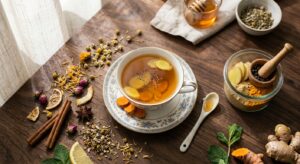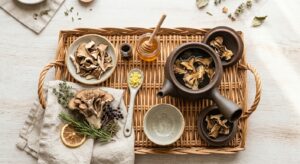
In Traditional Chinese Medicine, the spleen is far more than a blood-filtering organ. It is considered the root of post-natal energy, the seat of digestive transformation, and the central hub of immune vitality. When the spleen is weak, practitioners observe a cascade of symptoms: chronic fatigue, poor appetite, easy bruising, frequent colds, and a foggy mind. Spleen Tonic Tea is a time-honored herbal formula designed to gently and persistently strengthen this foundational organ system, drawing on plants that have been prescribed in Chinese herbalism for over two thousand years.
The backbone of this blend is astragalus root, known in Chinese as Huang Qi, one of the most extensively studied adaptogenic herbs in the world. Paired with codonopsis root (Dang Shen), a milder but deeply nourishing companion often called the poor man’s ginseng, and sweetened naturally with dried jujube red dates (Da Zao), this tea builds what TCM calls Wei Qi, the defensive energy that circulates at the body’s surface and shields it from external pathogens. Together, these three ingredients create a brew that is gentle enough for daily use yet potent enough to produce meaningful, cumulative effects over weeks of consistent use.
Beyond its medicinal heritage, Spleen Tonic Tea is a genuinely pleasant drink. The broth-like depth of astragalus root, the mild sweetness of codonopsis, and the rich caramel warmth of red dates combine into a savory-sweet cup that feels profoundly nourishing rather than medicinal. Whether you are recovering from illness, heading into cold and flu season, or simply trying to rebuild after a period of stress and depletion, this tea offers a daily ritual of restoration rooted in one of the world’s oldest healing traditions.
2
cups
Ingredients
- 3 slicesdried astragalus root (Huang Qi)
- 2 tspdried codonopsis root (Dang Shen), roughly chopped
- 4 piecesdried red jujube dates (Da Zao), pitted and halved
- 500 mlwater (100°C / 212°F)
- —a small cinnamon stick (optional, for warmth)
- —raw honey to taste (optional)
How to Brew
Click on an item below to shop for the recommended items for this recipe on Amazon.
As an Amazon Associate, we earn from qualifying purchases.
- Combine the astragalus slices, chopped codonopsis root, and pitted, halved jujube dates in a small saucepan. If using a cinnamon stick, add it now.
- Pour 500 ml of cold, filtered water over the herbs and bring the pot slowly to a gentle boil over medium heat.
- Once boiling, reduce the heat to a low simmer and cover the pot loosely with a lid. Allow the herbs to decoct at a steady gentle simmer for 25 to 30 minutes. The liquid will reduce slightly and deepen in color.
- Remove from heat and allow the brew to rest, covered, for 5 minutes so that any remaining compounds continue to infuse into the liquid.
- Strain the decoction through a fine-mesh strainer into two warmed mugs, pressing lightly on the herbs to extract the last of the liquid. Sweeten with raw honey if desired and serve immediately.
- Double the herb quantities: use 6 slices of astragalus root, 4 tsp of chopped codonopsis, and 8 jujube date halves. Place all herbs in a clean glass jar.
- Pour 600 ml of cool, filtered water (room temperature, approximately 20 to 22°C / 68 to 72°F) over the herbs. Stir briefly to ensure all herbs are submerged.
- Seal the jar and allow it to sit at room temperature for 1 hour to begin the extraction process, then transfer to the refrigerator for the remaining 9 to 11 hours, ideally overnight.
- In the morning, remove the jar from the refrigerator and allow it to come to room temperature for 15 to 20 minutes. This softens the flavor and makes the beneficial compounds more bioavailable.
- Strain the cold brew through a fine-mesh strainer or cheesecloth into glasses filled with a few ice cubes. Optionally, stir in a small amount of honey or a squeeze of lemon. Consume within 48 hours and keep refrigerated.
- In a medium saucepan, combine 10 slices of dried astragalus root, 3 tablespoons of chopped codonopsis root, 12 to 14 pitted jujube date halves, and optionally 2 small cinnamon sticks. Pour 1.2 liters of cold, filtered water over the herbs.
- Bring the pot to a full boil over medium-high heat, then immediately reduce to the lowest gentle simmer. Do not rush this stage: a rolling boil will cause excessive evaporation and can degrade heat-sensitive polysaccharides.
- Simmer uncovered for 45 to 60 minutes, allowing the liquid to reduce by roughly half (targeting approximately 500 to 600 ml of finished concentrate). Stir every 15 minutes and watch the liquid level carefully.
- Remove from heat and steep, covered, for a further 10 minutes. Strain through a fine-mesh strainer lined with cheesecloth into a clean glass jar, pressing firmly on the spent herbs to extract all remaining liquid.
- Allow the concentrate to cool completely before sealing and refrigerating. To serve, measure approximately 80 to 100 ml of concentrate into a mug and dilute with 150 to 200 ml of freshly boiled water. Sweeten with honey if desired. Consume one serving daily for best tonic effect.
Health Benefits
Astragalus polysaccharides are among the most studied natural immunomodulators, shown in multiple clinical and preclinical trials to increase white blood cell counts, enhance natural killer cell activity, and improve the body’s antibody response to pathogens. Unlike stimulants that temporarily spike immunity, this herb modulates the immune system, bringing both underactive and overactive responses toward balance.
Both astragalus and codonopsis roots act as adaptogens, helping the body resist physical and mental stress by moderating cortisol secretion and supporting mitochondrial energy production. TCM practitioners have used this combination for centuries to treat spleen Qi deficiency, characterized by exhaustion, poor concentration, and general depletion, which closely mirrors what modern medicine calls adrenal fatigue or burnout.
In TCM, the spleen governs the transformation and transportation of food into usable energy, and a weak spleen leads to bloating, loose stools, and malnutrition regardless of dietary intake. The herbs in this blend, particularly codonopsis and jujube, have demonstrated gastroprotective effects, reducing gastric inflammation and supporting the integrity of the gut lining to improve nutrient absorption.
Jujube dates and codonopsis root have both been shown to stimulate erythropoiesis, the production of red blood cells, in animal and human studies. This property makes Spleen Tonic Tea particularly valuable for individuals recovering from illness, blood loss, or iron-deficiency patterns, as it works synergistically with the body’s own hematopoietic mechanisms.
Jujube fruits are rich in vitamin C, betulinic acid, and flavonoids that scavenge free radicals and suppress pro-inflammatory cytokines such as IL-6 and TNF-alpha. Combined with the anti-inflammatory saponins of astragalus, this tea provides a steady, cumulative antioxidant effect that protects immune cells from oxidative damage during infection and recovery.
🧪 Key Bioactive Compounds
The Science Behind Astragalus Root
The immune-fortifying reputation of Spleen Tonic Tea is grounded in a growing body of pharmacological research. Astragalus polysaccharides (APS) are the most studied fraction of astragalus root, and their mechanisms are now reasonably well understood. APS activate toll-like receptor 4 (TLR4) on macrophages, triggering the innate immune cascade and priming dendritic cells to present antigens more effectively to T-lymphocytes. Multiple randomized controlled trials in patients undergoing chemotherapy have confirmed that astragalus supplementation significantly reduces infection rates, accelerates recovery of white blood cell counts, and improves quality of life markers, suggesting a clinically meaningful immunorestorative effect beyond what preclinical studies alone could demonstrate.
Perhaps the most intriguing compound in this formula is cycloastragenol, a triterpenoid aglycone derived from the larger astragaloside saponins during digestion. Cycloastragenol is one of very few natural compounds shown to activate telomerase, the enzyme responsible for maintaining telomere length at the ends of chromosomes. Because telomere shortening is a primary driver of cellular senescence and immune cell exhaustion, cycloastragenol has attracted significant interest in the fields of longevity research and immunogerontology. While human evidence remains early-stage, the compound’s mechanism is scientifically credible and continues to be investigated. Codonopsis polysaccharides complement this action by directly stimulating spleen lymphocyte proliferation and enhancing erythropoiesis in bone marrow tissue, providing measurable increases in red and white blood cell populations in repeated animal studies.
Jujube dates contribute a distinct layer of immunological support through their rich content of jujube polysaccharides, betulinic acid, and flavonoids such as rutin and quercetin. Research published in peer-reviewed journals including the Journal of Ethnopharmacology has documented jujube’s ability to elevate serum immunoglobulin G (IgG) and immunoglobulin M (IgM) levels, strengthen gut-associated lymphoid tissue (GALT), and reduce the pro-inflammatory cytokines TNF-alpha and IL-6 in both in vitro and in vivo models. This gut-immune connection is particularly significant: a large proportion of the body’s immune activity is orchestrated from the intestinal lining, and by supporting digestive health alongside systemic immunity, jujube’s role in this formula bridges the gap between TCM’s spleen-centric immune theory and modern understanding of the gut-immune axis.
Brewing Tips
- Do not discard the cooked jujube dates after straining. They become soft and sweet after decocting and can be eaten directly as a nourishing food, or blended into a small amount of warm water to create a paste to stir back into the tea for extra nutritive value.
- Source astragalus root slices that are pale yellow to ivory in color with a fibrous, slightly sweet taste. Slices that are very dark, gray, or have no discernible sweetness may be old or poorly processed and will deliver significantly fewer active polysaccharides.
- For best therapeutic results, drink this tea consistently for at least three to four weeks. Adaptogens and tonic herbs work on a cumulative basis, gradually rebuilding constitutional strength, and are not intended for single-dose, acute effects the way symptomatic remedies are.