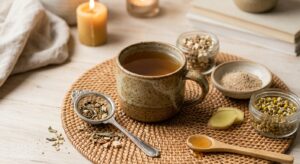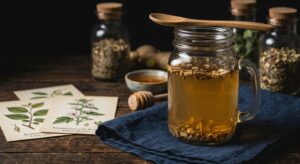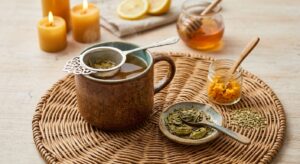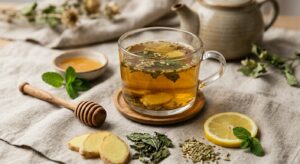
Long before pharmaceutical antacids lined pharmacy shelves, Indigenous peoples of North America were turning to the slippery elm tree (Ulmus rubra) for relief. The soft, reddish inner bark of this native hardwood yields a remarkable substance when mixed with water: a thick, slick gel called mucilage that coats mucous membranes from the mouth all the way through the intestines. Cherokee, Iroquois, and Ojibwe healers used it to soothe sore throats, calm inflamed stomachs, ease childbirth, and even dress wounds. Settlers quickly adopted it, and slippery elm became a staple in American folk medicine cabinets well into the twentieth century.
What makes slippery elm so distinctive among digestive herbs is its mechanism of action. Unlike bitters that stimulate digestive secretions, or carminatives that relax intestinal spasms, slippery elm works primarily through physical contact. Its mucilage forms a protective, lubricating film along irritated tissues, reducing friction, buffering excess stomach acid, and creating an environment where inflamed intestinal walls can begin to heal. This makes it uniquely suited to a wide range of gut complaints, from gastroesophageal reflux and gastritis to inflammatory bowel conditions and chronic constipation.
Slippery elm tea occupies an unusual sensory space. It is not a typical tisane of flowers or leaves steeped in hot water. It is closer to a thin, warming porridge in texture, with a mild, slightly sweet, faintly woodsy flavor that many people find comforting rather than medicinal. The act of drinking it feels nourishing in a deeply physical way, and that quality is precisely what has kept this bark relevant across centuries of healing traditions and into modern integrative medicine.
2
cups
Ingredients
- 2 tspslippery elm inner bark powder (or 1 tbsp coarsely cut bark)
- 480 mlwater (85°C / 185°F)
- —raw honey to taste (optional)
- —a pinch of cinnamon (optional, for warmth and flavor)
How to Brew
Click on an item below to shop for the recommended items for this recipe on Amazon.
As an Amazon Associate, we earn from qualifying purchases.
- Heat your water to approximately 85°C (185°F). If you do not have a temperature-controlled kettle, bring water to a full boil and let it rest off the heat for 3 to 4 minutes before using.
- If using powdered bark, place 1 teaspoon of powder per cup into your mug. Add a small splash of cold water first and stir into a smooth paste, which prevents clumping when the hot water is added.
- Pour the hot water slowly over the paste or coarsely cut bark held in a tea infuser or small strainer, stirring continuously if using powder.
- Cover the mug with a saucer to trap steam and steep for 10 to 15 minutes. The liquid will thicken noticeably and take on a creamy, slightly viscous quality as the mucilage fully hydrates.
- If you used cut bark, remove the infuser. Stir well and drink while warm. Add honey or a pinch of cinnamon if desired. Drink slowly and allow the tea to coat the throat and stomach on the way down.
- Place 2 teaspoons of slippery elm bark powder or 2 tablespoons of coarsely cut bark into a clean glass jar.
- Add 480 ml of cold, filtered water at room temperature. Stir or shake vigorously for 30 seconds to begin hydrating the bark. If using powder, stir until no dry clumps remain on the surface.
- Seal the jar and let it sit at room temperature for 1 hour, then transfer to the refrigerator and steep for a further 7 to 11 hours (overnight is ideal).
- In the morning, shake the jar again. If you used cut bark, strain the liquid through a fine mesh strainer or cheesecloth, pressing lightly to extract the gel. If you used powder, the liquid will be uniformly thick and can be drunk directly or strained for a smoother texture.
- Pour into a glass, stir in honey if desired, and drink cold or at room temperature. Cold brew slippery elm is particularly refreshing for soothing acid reflux during warmer months. It keeps refrigerated for up to 48 hours.
- Add 2 tablespoons of coarsely cut (not powdered) slippery elm inner bark to a small saucepan. Pour in 600 ml of cold, filtered water.
- Place the saucepan over medium-low heat and bring the water slowly up to a gentle simmer, approximately 85 to 90°C (185 to 194°F). Do not allow it to reach a rolling boil, which can break down the polysaccharides.
- Reduce heat to the lowest setting that maintains a gentle simmer. Cover the pan partially with a lid to minimize evaporation and allow it to decoct for 20 to 25 minutes, stirring occasionally. The liquid will become noticeably thick, slightly opaque, and take on a richer beige hue.
- Remove from heat and allow to cool for 5 minutes. Pour through a fine mesh strainer into a mug or heatproof pitcher, pressing the softened bark pieces firmly with the back of a spoon to release as much mucilaginous liquid as possible.
- Add honey, cinnamon, or a small amount of ginger if desired. Serve warm. This yields a more concentrated preparation; if the texture feels too thick, dilute with a small amount of hot water until a comfortable consistency is reached.
Health Benefits
The mucilage in slippery elm forms a thick, buffering layer over the esophageal and stomach lining, physically protecting irritated tissue from gastric acid. Several clinical herbalists and integrative gastroenterologists recommend it as a complementary approach for GERD and gastritis, and it is listed in the Commission E monographs for gastric irritation.
A 2002 pilot study published in the Journal of Alternative and Complementary Medicine found that a slippery elm formula significantly improved bowel habits, bloating, and abdominal pain in IBS patients. Its mucilage normalizes stool consistency by absorbing excess water in diarrhea-predominant cases and lubricating the colon in constipation-predominant cases.
Slippery elm’s mucilage and proanthocyanidins help reinforce and soothe the intestinal epithelium, potentially reducing permeability caused by chronic inflammation. While large clinical trials are still limited, its traditional use in inflammatory bowel conditions is supported by its well-documented demulcent and anti-inflammatory chemistry.
The same mucilaginous coating that protects the gut also lines the throat and upper airways when consumed. Slippery elm lozenges have been used for centuries and are recognized by the FDA as a safe and effective oral demulcent for soothing sore, irritated throat tissue.
The complex polysaccharides and starchy compounds in slippery elm bark are fermented by beneficial bacteria in the large intestine, acting as a prebiotic substrate. This supports a balanced gut microbiome, with particular relevance for people recovering from antibiotic use or chronic gut dysbiosis.
🧪 Key Bioactive Compounds
The Science Behind Slippery Elm
The therapeutic reputation of slippery elm rests primarily on its extraordinary mucilage content, which can account for up to 60 percent of the dry weight of the inner bark. Mucilage is not a single compound but a complex mixture of polysaccharides, including galactose, 3-methyl galactose, rhamnose, and galacturonic acid residues. When hydrated, these long-chain carbohydrate polymers swell and form a viscous, hydrophilic gel. This gel does not get significantly absorbed into the bloodstream; instead, it exerts its effects locally as it moves through the gastrointestinal tract, coating epithelial surfaces with a slick, lubricating layer that mechanically protects against irritants, stomach acid, and friction from food passage.
Beyond the physical buffering action of mucilage, slippery elm contains condensed tannins known as proanthocyanidins, which contribute meaningful antioxidant and anti-inflammatory activity at the gut lining. These compounds help neutralize reactive oxygen species that accumulate during intestinal inflammation, as seen in conditions like Crohn’s disease and ulcerative colitis. The phytosterol beta-sitosterol has been studied for its ability to modulate inflammatory signaling pathways, particularly the NF-kB pathway, which is upregulated in many chronic gut conditions. Together, these compounds create a multi-modal effect: physical protection, antioxidant defense, and molecular anti-inflammatory action working simultaneously.
The prebiotic potential of slippery elm is an area of growing scientific interest. The complex polysaccharides in the bark are not significantly digested by human intestinal enzymes, but they are readily fermented by Bifidobacterium and Lactobacillus species in the large intestine. This fermentation produces short-chain fatty acids (SCFAs) including butyrate, which is the primary fuel source for colonocytes (the cells lining the colon) and a critical regulator of intestinal barrier integrity. A healthier, better-fueled colonocyte layer is more resistant to permeability and inflammation, creating a beneficial downstream effect that extends well beyond the simple demulcent action that first made slippery elm famous.
Brewing Tips
- Always mix powdered slippery elm with a small amount of cold water to form a paste before adding hot liquid. This single step prevents lumpy, unpleasant clumps and ensures a smooth, evenly thickened cup every time.
- Source your slippery elm powder from certified organic, sustainably wildcrafted suppliers. Look for brands that harvest from naturally fallen trees or use responsible partial-bark harvesting methods. Freshness matters: high-quality powder should smell faintly sweet and woodsy, not musty or stale.
- Drink slippery elm tea on an empty stomach, at least 30 minutes before meals or at bedtime, for maximum contact time with the gut lining. For acid reflux relief, a warm cup 20 minutes before eating creates a protective coating before food and stomach acid arrive.