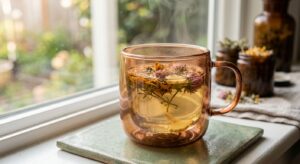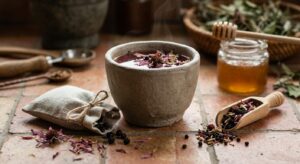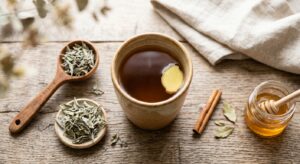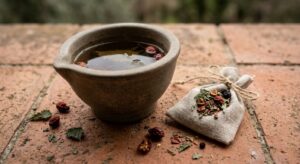
When illness passes and the body begins to mend, there is a quiet window of vulnerability that many people overlook. The acute symptoms fade, yet the immune system remains depleted, energy reserves are low, and the gut is often sluggish from days of disrupted eating and possible medication. For centuries, herbalists across Chinese, European, and Ayurvedic traditions have recognized this recovery phase as a critical time to nourish and rebuild rather than simply resume normal life. This blend draws from that collective wisdom, pairing three of the most well-researched restorative herbs in the herbal pharmacopoeia.
Astragalus root (Astragalus membranaceus) has been a cornerstone of Traditional Chinese Medicine for over two thousand years, prized under the name Huang Qi as a supreme tonic for Wei Qi, the body’s defensive energy. Unlike echinacea, which is used acutely during active infection, astragalus shines in the recovery phase, gently training and rebuilding immune cell populations over time. Elderberry (Sambucus nigra) complements it beautifully, delivering a dense payload of anthocyanins that reduce post-illness oxidative stress and support continued antiviral defense. Fresh or dried ginger root ties the blend together, warming the digestive tract, easing nausea that lingers after illness, and enhancing circulation to carry all these beneficial compounds throughout the body.
The resulting tea is earthy and warming with a sweet berry brightness and a pleasant ginger heat that builds gently at the back of the throat. It is the kind of cup that feels like a gesture of care toward yourself: intentional, nourishing, and grounded in centuries of plant wisdom. Whether you are recovering from a seasonal cold, influenza, or a prolonged bout of illness, this blend is designed to meet you where you are and help carry you back to full strength.
2
cups
Ingredients
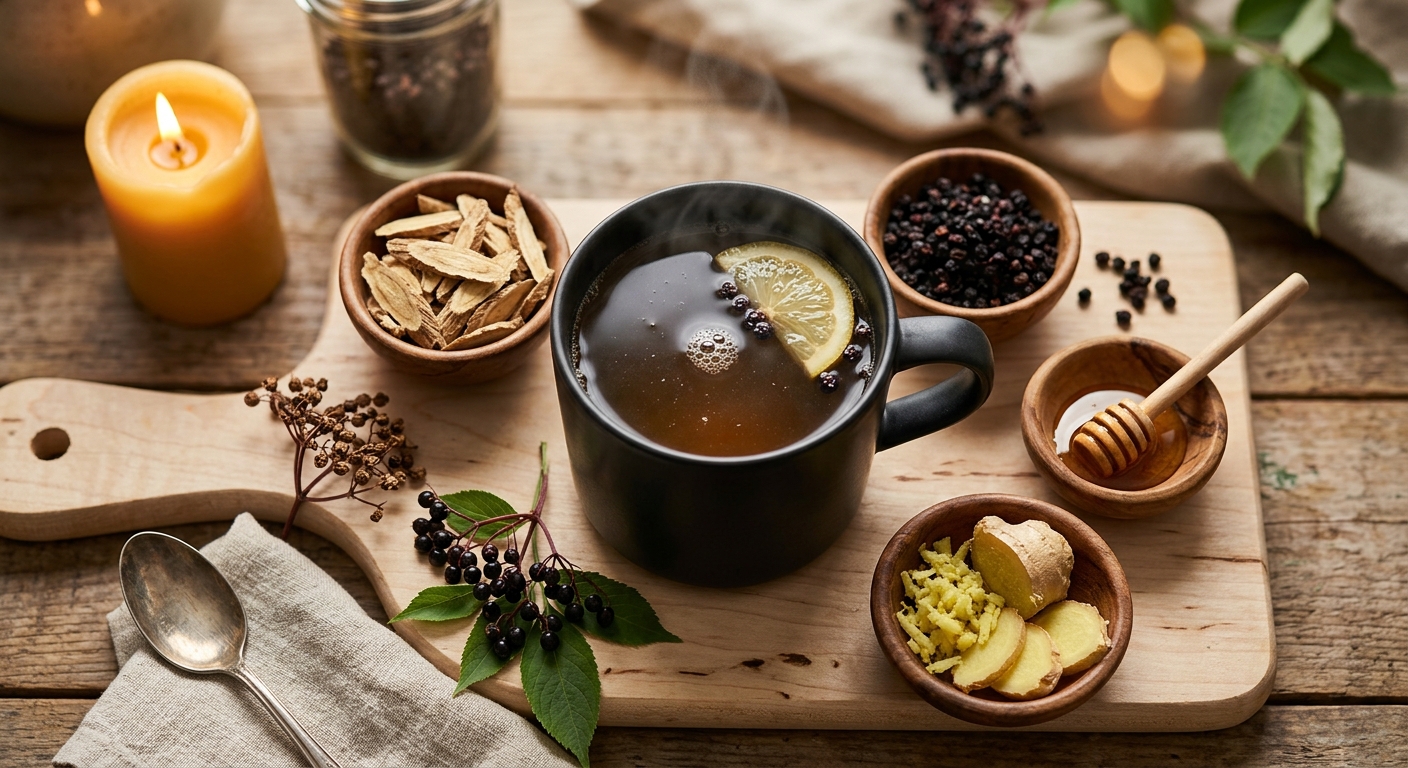
- 2 tbspdried astragalus root slices
- 1 tbspdried elderberries
- 1 tspfreshly grated or sliced ginger root
- 500 mlwater (for hot brew)
- —raw honey to taste (optional)
- —lemon slice to taste (optional)
How to Brew
Click on an item below to shop for the recommended items for this recipe on Amazon.
As an Amazon Associate, we earn from qualifying purchases.
- Add 500 ml of cold filtered water, the astragalus root slices, and the dried elderberries to a small saucepan. Do not add the ginger yet.
- Bring the water to a full boil over medium-high heat, then immediately reduce the heat to a gentle simmer. The surface should bubble quietly but not roll vigorously.
- Simmer uncovered for 15 minutes, allowing the polysaccharides from the astragalus and the anthocyanins from the elderberries to fully release into the liquid. The water will deepen to a rich burgundy color.
- Add the grated or sliced ginger root in the final 5 to 7 minutes of simmering. Adding it late preserves the volatile aromatic compounds in ginger that provide digestive comfort.
- Remove the saucepan from heat and allow the decoction to rest for 2 to 3 minutes. Strain through a fine mesh strainer into warmed mugs.
- Stir in raw honey and a squeeze of lemon if desired. Drink warm, ideally in the morning or early afternoon during the recovery period.
- Place the astragalus root slices, dried elderberries, and fresh ginger slices into a glass jar. Use slightly more astragalus (add an extra half tablespoon) to compensate for the reduced extraction efficiency of cold water.
- Pour 500 ml of cold filtered water over the herbs. Stir gently to ensure the herbs are fully submerged, then seal the jar with a lid.
- Allow the jar to sit at room temperature for 1 hour to begin initial extraction, then transfer to the refrigerator.
- Steep in the refrigerator for 12 to 14 hours, ideally overnight. The liquid will turn a deep rose-burgundy and develop a smooth, slightly sweet flavor as the slow extraction progresses.
- Strain through a fine mesh strainer into a glass or pitcher, pressing gently on the herbs to extract the remaining liquid.
- Serve cold over ice or allow it to come to room temperature before drinking. Add honey and lemon to taste. Consume within 48 hours and keep refrigerated.
- Double the herb quantities: use 4 tablespoons of astragalus root slices, 2 tablespoons of dried elderberries, and 2 teaspoons of ginger root. Add these to a medium saucepan with 500 ml of cold filtered water.
- Bring to a boil over medium heat, then reduce to a very gentle simmer. Partially cover the saucepan with a lid to reduce evaporation while still allowing some steam to escape.
- Simmer for 45 to 60 minutes, checking every 15 minutes and adding small splashes of water if the liquid reduces below roughly 300 ml. You are aiming for a concentrated 250 to 300 ml of richly colored, potent liquid.
- Remove from heat, allow to cool for 5 minutes, then strain through a fine mesh strainer lined with a piece of muslin or cheesecloth for a very clear, smooth concentrate. Press firmly on the spent herbs to extract every drop.
- Pour the concentrate into a clean glass jar or bottle and refrigerate immediately. The concentrate will keep for up to 5 days.
- To serve, dilute approximately 60 to 80 ml of concentrate with 160 to 180 ml of hot water. Adjust ratio to taste. Add honey and lemon as desired.
Health Benefits
Astragalus polysaccharides have been shown in multiple clinical studies to upregulate T-cell proliferation and enhance natural killer cell activity, directly replenishing the immune populations most depleted during acute infection. This adaptogenic immune rebuilding is distinct from the acute immune stimulation of echinacea, making astragalus the ideal post-illness herb.
Elderberry anthocyanins carry an exceptionally high antioxidant capacity, neutralizing the free radicals that accumulate during viral or bacterial infection and the subsequent inflammatory immune response. Reducing this oxidative burden accelerates tissue repair and reduces the lingering fatigue that often follows illness.
Ginger’s 6-gingerol and related shogaols act on serotonin receptors in the gut lining, reducing nausea and cramping. Post-illness digestive sluggishness, often compounded by antibiotic use or days of restricted eating, responds well to ginger’s gentle prokinetic and anti-inflammatory action.
As a classical Qi tonic in Traditional Chinese Medicine, astragalus has been studied for its ability to improve mitochondrial energy production and reduce fatigue in post-illness and post-treatment populations, including several studies in cancer recovery contexts. Regular consumption over one to two weeks during recovery can meaningfully support energy restoration.
Both elderberry flavonoids and astragalus polysaccharides have demonstrated antiviral properties in vitro, including interference with viral cell entry and replication. During the recovery window when immune defenses remain partially suppressed, this continued protection reduces the risk of secondary infection.
🧪 Key Bioactive Compounds
The Science Behind Astragalus Root
The immune-rebuilding power of this blend is anchored by astragalus root’s polysaccharide fraction, particularly the compounds designated APS-1 through APS-4. These large carbohydrate molecules bind to toll-like receptors (TLRs) on macrophages and dendritic cells, triggering a cascade of cytokine signaling that stimulates the proliferation of T-helper and T-cytotoxic lymphocytes. Research published in the Journal of Ethnopharmacology and in Chinese clinical literature demonstrates that regular astragalus consumption over two to four weeks measurably increases CD4+ to CD8+ T-cell ratios, a marker of restored immune competence after illness. Unlike synthetic immunostimulants, APS appears to work as an immunomodulator, bringing depressed immune activity up without triggering excessive inflammation.
Elderberry’s contribution comes primarily from its exceptionally dense anthocyanin profile, with cyanidin-3-glucoside and cyanidin-3-sambubioside identified as the most pharmacologically active. These compounds neutralize reactive oxygen species generated during the inflammatory immune response, reducing the oxidative damage to healthy tissue that contributes to post-illness fatigue and brain fog. A 2016 randomized controlled trial published in Nutrients demonstrated that elderberry supplementation reduced the duration and severity of cold symptoms, and mechanistic studies suggest this occurs partly through inhibition of viral neuraminidase, an enzyme viruses use to escape infected cells and spread. Consuming elderberry in the recovery phase therefore provides a meaningful antioxidant shield while maintaining a degree of antiviral defense during the vulnerable window when primary immunity is still rebuilding.
Ginger’s bioactive phenolic compounds, led by 6-gingerol and its heat-converted analogue 6-shogaol, work through several recovery-relevant pathways simultaneously. They inhibit the pro-inflammatory cyclooxygenase (COX) and lipoxygenase (LOX) enzymes, reducing residual systemic inflammation without suppressing the immune rebuilding process. At the gut level, ginger’s compounds act on 5-HT3 serotonin receptors to suppress nausea and improve gastric motility, accelerating the normalization of digestive function after illness. Ginger also acts as a mild circulatory stimulant, increasing peripheral blood flow and thereby improving the delivery of all three herbs’ active compounds to tissues throughout the body, creating a synergistic enhancement of the overall blend’s restorative effect.
Brewing Tips
- Use actual dried astragalus root slices rather than powder for this blend. The slices release polysaccharides gradually during the simmer without making the liquid cloudy or overly starchy, and they are easy to strain cleanly.
- Begin drinking this blend one to two days after your most acute symptoms resolve. Using it too early during peak illness may direct energy toward detoxification rather than the gentle rebuilding this blend is designed for.
- Consistency matters more than quantity with astragalus. One to two cups daily over seven to fourteen days will produce noticeably better results than drinking three or four cups for two days and stopping.