Burdock root has been a cornerstone of traditional medicine for over two thousand years. In Traditional Chinese Medicine, the root is known as niubangzi and prescribed to clear heat, detoxify the blood, and support the kidneys and liver. In Japan, burdock is eaten as a vegetable called gobo, sliced thin and stir-fried or simmered into broths, a daily food as much as a medicine. European herbalists of the medieval period prized it as a purifying tonic, and Nicholas Culpeper wrote of its ability to cleanse the blood and ease skin eruptions in the seventeenth century. This long, cross-cultural legacy speaks to a root that genuinely delivers on its reputation.
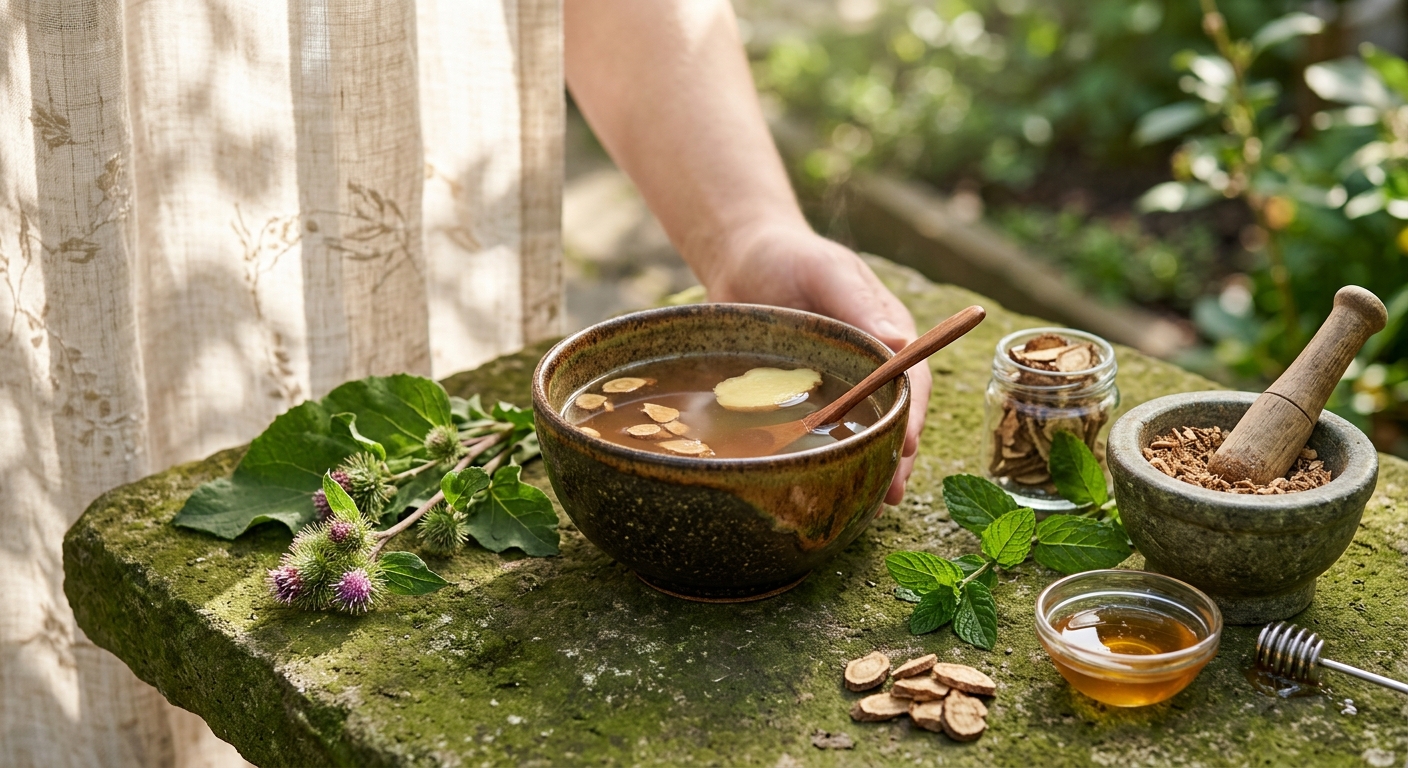
What sets burdock root apart from lighter herbal teas is its substance. This is a root, dense and fibrous, and the tea it produces carries that weight beautifully. The flavor is deep and earthy with a mild sweetness, reminiscent of roasted chicory or fresh artichoke hearts with a slight woodsy bitterness that lingers pleasantly on the palate. Brewed as a decoction, the root yields a warm amber cup that feels genuinely nourishing rather than merely aromatic. It is a tea you drink slowly, with intention.
Modern interest in burdock root has surged alongside growing research into the gut microbiome, largely because burdock is one of the richest plant sources of inulin, a prebiotic fiber that selectively feeds beneficial bacteria in the colon. Combined with its array of polyphenols, lignans, and bitter compounds, burdock root tea offers a compelling blend of traditional wisdom and emerging science. Whether you are seeking digestive support, a gentle liver tonic, or a skin-clearing ritual, this ancient root deserves a place in your herbal cabinet.
2
cups
Ingredients
- 2 tbspdried burdock root, sliced or chopped
- 500 mlwater (filtered preferred)
- —raw honey or maple syrup to taste (optional)
- —a slice of fresh ginger (optional, pairs well)
How to Brew
Click on an item below to shop for the recommended items for this recipe on Amazon.
As an Amazon Associate, we earn from qualifying purchases.
- Place 2 tablespoons of dried, sliced burdock root into a small saucepan. If using fresh burdock root, use approximately 3 tablespoons of thinly sliced root and scrub it well before slicing.
- Pour 500 ml of cold, filtered water over the root. Starting with cold water and bringing it up to temperature slowly encourages a more complete extraction of the root’s compounds.
- Bring the water to a full boil over medium-high heat, then immediately reduce the heat to a gentle simmer. Cover the saucepan with a lid to prevent evaporation of volatile aromatic compounds.
- Simmer gently for 20 to 25 minutes. The liquid will deepen to a warm amber color and reduce slightly. Check periodically to ensure it maintains a steady simmer rather than a rolling boil.
- Remove from heat and allow the decoction to rest, still covered, for 5 minutes. This resting period allows the temperature to drop slightly and permits any remaining compounds to continue diffusing into the liquid.
- Strain the liquid through a fine mesh strainer or cheesecloth into your mugs, pressing the softened root pieces gently with the back of a spoon to extract the last of the liquid. Sweeten with honey or maple syrup if desired and serve immediately.
- Place 3 tablespoons of dried, sliced burdock root into a glass jar. Cold brewing requires a slightly higher herb-to-water ratio than hot brewing to compensate for the less efficient cold extraction.
- Pour 600 ml of cold, filtered water over the root. Stir briefly to ensure all the root pieces are submerged, then seal the jar with a lid.
- Allow the jar to sit at room temperature for the first 2 hours to begin the extraction process, then transfer it to the refrigerator.
- Continue cold brewing in the refrigerator for a further 6 to 10 hours, or overnight. Do not exceed 14 hours total as the brew can develop an overly grassy or slightly fermented note beyond this point due to burdock’s high inulin content.
- Strain the chilled brew through a fine mesh strainer into a clean bottle or pitcher. Press the root pieces lightly to recover the full liquid. Discard the spent root.
- Serve over ice in a tall glass. The cold brew can be stored in the refrigerator for up to 48 hours. A squeeze of fresh lemon and a thin slice of ginger make excellent additions to the chilled brew.
- Combine 4 tablespoons of dried, sliced burdock root with 750 ml of cold, filtered water in a medium saucepan. You may also add a cinnamon stick or a few slices of fresh ginger at this stage to build a more complex flavor into the concentrate.
- Bring to a full boil over medium-high heat, then reduce to a low, steady simmer. Keep the lid slightly ajar rather than fully closed to allow some evaporation, which is intentional in concentrate-making.
- Simmer on low heat for 45 to 60 minutes, until the liquid has reduced by approximately one third to one half. You should be left with roughly 350 to 400 ml of concentrated liquid. Monitor the heat carefully to prevent scorching.
- Remove from heat and allow to cool for 10 minutes, then strain through a fine mesh strainer lined with cheesecloth into a clean glass jar. Press the root pieces firmly to extract every drop of the concentrated brew.
- Allow the concentrate to cool completely before sealing and refrigerating. Label the jar with the date. The concentrate will keep for up to 7 days.
- To serve, dilute 60 to 80 ml of concentrate with 180 to 200 ml of hot water for a warming tonic, or with cold sparkling water over ice for a refreshing gut-health drink. Adjust the dilution ratio to your taste preference.
Health Benefits
Burdock root is one of the most concentrated plant sources of inulin, a prebiotic fiber that bypasses digestion in the small intestine and ferments in the colon, nourishing beneficial bacteria. Regular consumption has been associated with improved stool frequency, reduced bloating, and a more diverse gut microbiome.
The polyphenols in burdock root, particularly chlorogenic acid and caffeic acid, have been shown in animal and in vitro studies to protect liver cells from oxidative damage and support phase II detoxification enzyme activity. Traditional herbalists across cultures have long classified burdock as a primary liver and blood tonic.
Arctigenin, the active metabolite of burdock’s lignan arctiin, has demonstrated significant anti-inflammatory effects in multiple studies by inhibiting the NF-kB signaling pathway, a central driver of chronic inflammation. This may contribute to burdock’s traditional use for inflammatory skin conditions such as eczema and psoriasis.
Burdock’s combination of antioxidant polyphenols, anti-inflammatory lignans, and liver-supportive compounds creates a compounding benefit for skin health. By reducing oxidative stress and supporting the liver’s ability to process and eliminate waste products, regular consumption may reduce the frequency and severity of inflammatory skin breakouts.
Inulin slows the absorption of glucose in the gut, blunting post-meal blood sugar spikes. Additionally, chlorogenic acid has been shown in clinical studies to inhibit glucose-6-phosphatase, an enzyme involved in the liver’s release of glucose into the bloodstream, suggesting a dual mechanism for glycemic support.
🧪 Key Bioactive Compounds
The Science Behind Burdock Root
The therapeutic reputation of burdock root is underpinned by a remarkably diverse phytochemical profile. At its core is inulin, a long-chain fructooligosaccharide that constitutes up to 45 percent of the dry weight of the root in autumn-harvested plants. Unlike digestible starches, inulin passes intact through the stomach and small intestine and arrives in the colon where it is fermented by resident bacteria, particularly Bifidobacterium and Lactobacillus species. This fermentation produces short-chain fatty acids, including butyrate, which serve as the primary fuel source for colonocytes (colon lining cells) and play a central role in maintaining intestinal barrier integrity, reducing intestinal permeability, and moderating immune responses within the gut wall. Multiple human clinical trials on inulin-rich foods have confirmed improvements in stool frequency, microbiome diversity, and markers of gut inflammation.
Burdock root’s lignan content, particularly the glycoside arctiin, adds another layer of biological activity that has attracted considerable research interest. When consumed, arctiin is converted by gut bacteria into its active aglycone form, arctigenin. This compound has been shown across numerous in vitro and animal studies to inhibit the transcription factor NF-kB, a master regulator of the inflammatory cascade, as well as to modulate immune cell activity and suppress the growth of certain cancer cell lines. While human clinical evidence for these effects remains limited, the mechanistic data are compelling and support burdock’s long traditional classification as a blood-purifying and inflammation-modulating herb. Arctigenin’s activity is also notable because it depends on a healthy gut microbiome for conversion, creating a fascinating feedback loop between burdock’s prebiotic and anti-inflammatory properties.
The polyphenolic fraction of burdock root, dominated by chlorogenic acid and caffeic acid, contributes powerful antioxidant and hepatoprotective effects. Chlorogenic acid has been studied extensively in both burdock and coffee research, and has demonstrated the ability to upregulate the liver’s Nrf2 signaling pathway, which governs the production of endogenous antioxidant enzymes including superoxide dismutase and glutathione peroxidase. In animal models of liver toxicity, burdock root extracts have consistently reduced markers of hepatic oxidative stress and protected against chemically induced liver damage. The sesquiterpene lactones present in smaller quantities act through a different mechanism, stimulating the bitter taste receptors on the tongue and in the gastrointestinal tract, triggering a reflex increase in gastric acid secretion, bile flow, and digestive enzyme release that prepares the entire digestive system for efficient nutrient absorption and waste processing.
Brewing Tips
- Purchase dried burdock root from a reputable herbal supplier and check that it is clearly labeled as Arctium lappa. Store it in an airtight container away from light and heat, where it will remain potent for up to 12 months.
- If you have access to fresh burdock root (often sold in Asian grocery stores as gobo), scrub it well with a vegetable brush, slice it thinly on the diagonal, and use it immediately in a decoction. Fresh root produces a brighter, more vibrant flavor than dried, with a pleasant earthy sweetness that is noticeably less bitter.
- Do not discard the cooked burdock root pieces after straining your decoction. The softened slices can be eaten directly, added to a miso soup, or tossed into a grain bowl. They remain rich in fiber even after brewing and contribute to the overall prebiotic benefit of your cup.