For thousands of years, spice-based digestive teas have been central to healing traditions across South Asia, the Middle East, and the Mediterranean. Ginger root has been prescribed in Ayurvedic medicine for over 5,000 years as a digestive stimulant and anti-nausea remedy. Cardamom, sometimes called the “Queen of Spices,” was treasured in ancient Egypt and Greece not only for its intoxicating fragrance but for its ability to settle an uneasy stomach. Fennel seeds, native to the Mediterranean basin, were chewed by Roman soldiers and medieval herbalists alike to relieve gas and support digestion after heavy meals. Together, these three herbs form one of the most time-tested and synergistic digestive formulas in plant medicine history.
What makes this blend so effective is the way the three herbs complement each other at every level. Ginger provides the heat and the enzymatic stimulation that primes the digestive system for action. Cardamom contributes a cooling, sweet counterbalance that soothes the gut lining and freshens the breath. Fennel brings a gentle antispasmodic quality that relaxes the smooth muscles of the intestinal tract, releasing trapped gas and relieving cramping. The result is a tea that tastes like a warming spice bazaar and works on multiple mechanisms of digestion simultaneously, from enzyme activation to gut motility to muscle relaxation.
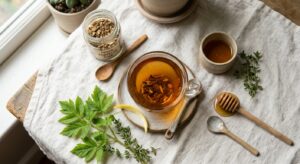
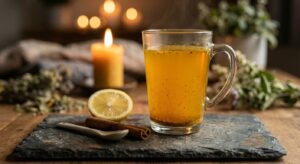
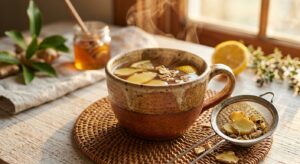
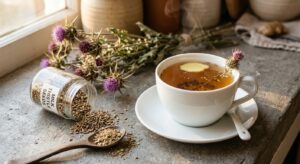
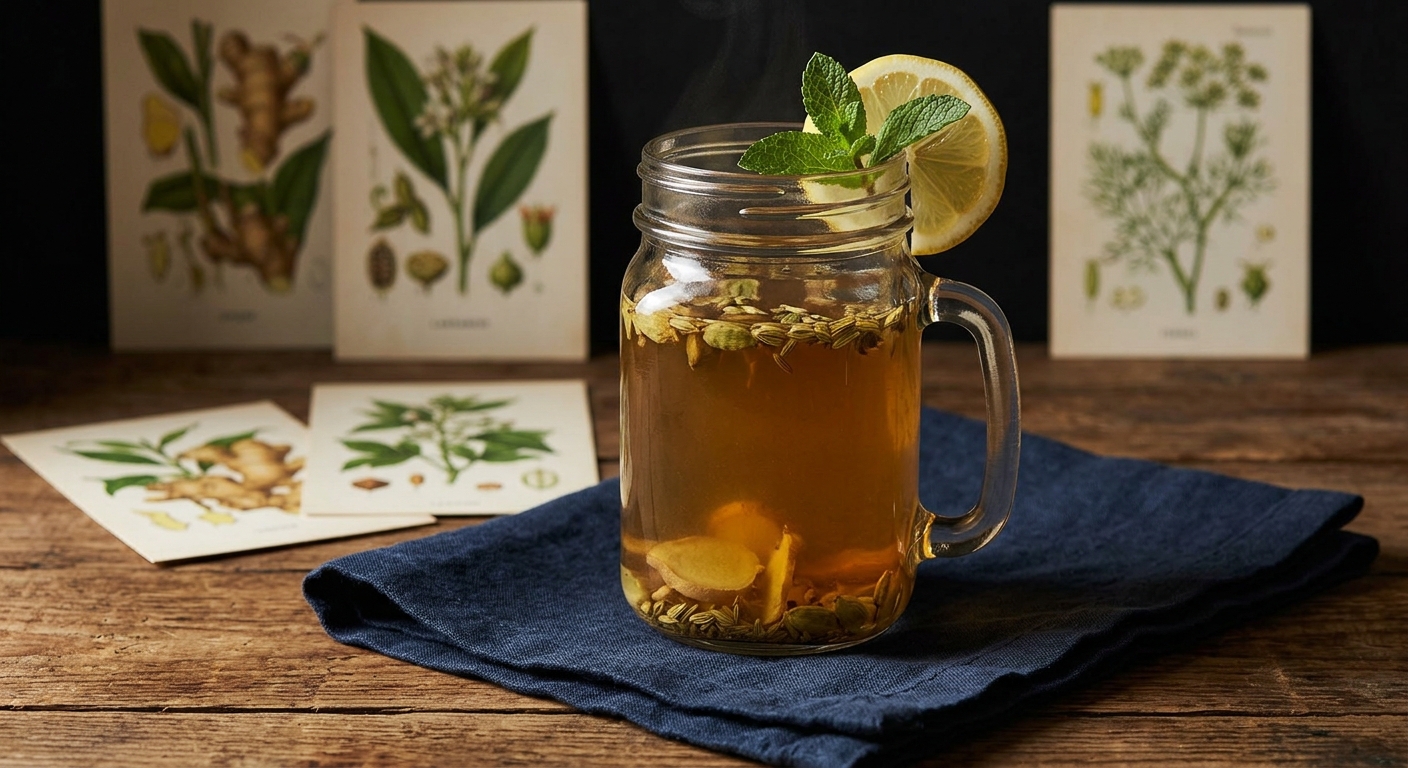
Beyond its digestive prowess, Three Spice Tea is a genuinely pleasurable daily ritual. The brewed cup is a deep amber gold with an aroma that is simultaneously spicy, sweet, and faintly anise-like. It warms from the inside out, making it ideal in the cooler months when digestion naturally slows, but it is equally satisfying cold-brewed over ice as a sophisticated alternative to sugary sodas. Whether you sip it after dinner to wind down or enjoy it mid-morning to support digestive rhythm, this blend is as versatile as it is potent.
2
cups
Ingredients
- 1 tspfresh ginger root, thinly sliced (or 0.5 tsp dried ground ginger)
- 0.5 tspwhole green cardamom pods, lightly crushed
- 1 tspfennel seeds, lightly crushed
- 480 mlwater (filtered)
- —raw honey or jaggery to taste (optional)
- —a squeeze of lemon juice (optional, brightens flavor)
How to Brew
Click on an item below to shop for the recommended items for this recipe on Amazon.
As an Amazon Associate, we earn from qualifying purchases.
- Lightly crush the cardamom pods using the flat side of a knife or a mortar and pestle until the shells crack open and the seeds are exposed. Lightly crush the fennel seeds as well to break the surface. Slice fresh ginger into thin coins roughly 3mm thick.
- Combine the crushed cardamom, crushed fennel seeds, and ginger slices in a small saucepan. Pour in 480ml of filtered cold water and place the pan over medium-high heat.
- Bring the water to a full boil, then immediately reduce the heat to a gentle simmer. Allow the spices to simmer uncovered for 8 to 10 minutes. You will notice the water deepen in color and the kitchen will fill with a warm, spicy aroma. For a stronger brew, simmer up to 12 minutes.
- Remove the saucepan from heat and allow it to rest for 1 minute so the fine particles settle slightly. Strain the tea through a fine mesh strainer directly into two warmed mugs.
- Add raw honey or jaggery to taste while the tea is still hot so it dissolves fully. A small squeeze of fresh lemon juice brightens all three spice flavors and is highly recommended. Serve immediately.
- Lightly bruise the cardamom pods and fennel seeds using a mortar and pestle or by pressing them firmly with the back of a spoon. This is especially important for cold brew because the lower temperature requires maximum surface area exposure to extract flavor effectively. Slice fresh ginger into very thin coins, as thin as possible.
- Combine the prepared spices and ginger in a clean glass jar or pitcher. Pour in 500ml of cold filtered water, stirring briefly to ensure all spices are submerged. Do not use boiling or hot water at any stage.
- Cover the jar with a lid or a piece of cheesecloth secured with a rubber band. Let the jar sit at room temperature for 2 hours to allow the initial extraction to begin, then transfer it to the refrigerator.
- Allow the tea to cold-steep in the refrigerator for a further 8 to 12 hours, or overnight for the best results. The long, cool extraction produces a smooth, layered flavor without bitterness.
- When ready to serve, strain through a fine mesh strainer or cheesecloth into a glass filled with ice. The tea keeps well in the refrigerator for up to 48 hours. Sweeten with a liquid honey or simple syrup if desired, as granulated sweeteners do not dissolve easily in cold liquid.
- Double all spice quantities: use 2 teaspoons of fresh ginger slices, 1 teaspoon of crushed cardamom pods, and 2 teaspoons of crushed fennel seeds. Add these to a small saucepan with 500ml of cold filtered water.
- Bring to a rolling boil over high heat, then reduce the heat to a steady low simmer. Simmer uncovered for 20 to 25 minutes, allowing the liquid to reduce by roughly one third. The resulting concentrate should be a deep, richly colored amber with an intensely aromatic steam.
- If you want a spiced syrup rather than a plain concentrate, stir in 2 tablespoons of raw honey or coconut sugar during the final 5 minutes of simmering and stir until fully dissolved. This is optional but extends palatability and makes it easier to sweeten individual cups.
- Remove from heat and allow to cool for 10 minutes before straining through a fine mesh strainer into a clean glass jar with a tight-fitting lid. Press the spent spices gently with the back of a spoon to extract every drop of liquid.
- Store the concentrate in the refrigerator for up to 5 days. To serve, combine 60 to 80ml of the concentrate with 180ml of hot water for a full-strength hot tea, or with cold sparkling water and ice for a digestive-friendly spiced soda.
Health Benefits
All three herbs in this blend are classified as carminatives, meaning they reduce the formation and accumulation of intestinal gas. Fennel’s anethole and ginger’s gingerols work synergistically to relax GI smooth muscle and improve gut motility, allowing gas to pass more easily and reducing the discomfort of post-meal bloating.
Ginger is one of the most extensively studied natural anti-nausea agents available, with multiple clinical trials demonstrating its effectiveness against nausea from pregnancy, chemotherapy, and motion sickness. Its gingerols and shogaols act on 5-HT3 serotonin receptors in the gut to reduce nausea signals, while also stimulating the production of digestive enzymes that break down food more efficiently.
Ginger has been shown in research to increase the activity of pancreatic lipase, amylase, and protease, the enzymes responsible for breaking down fats, carbohydrates, and proteins respectively. Cardamom similarly stimulates bile secretion from the gallbladder, supporting fat digestion and reducing feelings of heaviness after rich meals.
The phenolic compounds in ginger, particularly 6-gingerol and 6-paradol, exert measurable anti-inflammatory effects on the intestinal lining by inhibiting COX-2 and LOX inflammatory pathways. This makes the blend potentially supportive for individuals with mild inflammatory bowel conditions, though it should complement rather than replace medical treatment.
Fennel and cardamom both contain compounds with demonstrated antimicrobial activity against pathogenic gut bacteria including E. coli and Candida species, without significantly disrupting beneficial lactobacillus populations. Regular consumption may help maintain a healthy microbial balance in the digestive tract.
🧪 Key Bioactive Compounds
The Science Behind Ginger, Cardamom, And Fennel Seed Blend
The digestive efficacy of this three-spice blend is rooted in distinct but complementary biochemical mechanisms. Ginger’s most pharmacologically active compounds are its gingerols, particularly 6-gingerol, and their dehydrated derivatives called shogaols, which form when ginger is dried or heated. These phenolic ketones have been shown in multiple peer-reviewed studies to accelerate gastric emptying, stimulate the production of digestive enzymes including lipase and amylase, and bind to 5-HT3 serotonin receptors in the gut wall, effectively interrupting the nausea signaling pathway. A 2014 meta-analysis published in the British Journal of Anesthesia analyzing 12 randomized trials confirmed ginger’s superiority over placebo for postoperative nausea, while additional research supports its role in pregnancy-related and chemotherapy-induced nausea.
Fennel seed’s primary bioactive compound is anethole, a phenylpropanoid that gives the herb its characteristic anise-like scent and is responsible for its powerful carminative and antispasmodic effects. Anethole acts directly on the smooth muscle tissue of the gastrointestinal tract, reducing the muscle contractions that cause cramping and preventing the accumulation of intestinal gas. A secondary compound, fenchone, contributes additional antispasmodic and mild antimicrobial activity. Research published in the Journal of Ethnopharmacology has confirmed fennel’s ability to reduce intestinal spasm and demonstrated its efficacy in reducing infantile colic, which speaks to its exceptionally gentle yet effective mechanism of action. Cardamom’s volatile oil fraction, dominated by 1,8-cineole and alpha-terpinyl acetate, similarly inhibits acetylcholinesterase activity and relaxes gastrointestinal smooth muscle, while also stimulating bile flow from the gallbladder to support fat digestion.
What makes this blend particularly scientifically interesting is the concept of phytochemical synergy. Each herb targets a slightly different receptor system or enzymatic pathway: ginger works upstream on enzyme secretion and gastric motility, cardamom supports bile flow and upper GI comfort, and fennel addresses lower GI cramping and gas expulsion. Together they provide broad-spectrum digestive support that no single herb could replicate alone. Furthermore, all three herbs contain compounds with measurable anti-inflammatory activity relevant to gut health, including inhibition of the COX-2 and NF-kB inflammatory pathways, suggesting that regular consumption may provide cumulative protective benefits for the intestinal lining beyond immediate symptomatic relief.
Brewing Tips
- Always crush or bruise whole spices before brewing, even for hot infusions. The essential oils responsible for both flavor and therapeutic action are locked inside the seed coats and pod walls and will not fully release into water without physical disruption of the surface.
- For the strongest digestive benefit, drink the tea 15 to 20 minutes after a meal rather than during it, as this timing aligns with when the stomach begins its active churning phase and digestive enzyme demand is at its peak.
- If fresh ginger is unavailable, use half the quantity of dried ground ginger, but add it directly to the pot rather than an infuser, as the fine powder passes through most infuser baskets. Strain through a fine cloth before serving to remove ginger sediment.