Few herbs carry as much historical weight as licorice root (Glycyrrhiza glabra). Used for over 4,000 years across Ancient Egypt, China, Greece, and Ayurvedic India, this humble root was prescribed for everything from sore throats and stomach ulcers to adrenal exhaustion and respiratory complaints. Egyptian pharaohs were buried with stores of licorice root, and traditional Chinese medicine has long ranked it among its most important tonic herbs, calling it Gan Cao or “sweet herb.” Its reputation as a digestive remedy is not merely folklore; modern research is steadily validating what healers have known for millennia.
What makes licorice root so remarkable for the digestive system is its dual action: it soothes inflamed mucous membranes while simultaneously stimulating the production of mucin, the protective coating that lines the stomach and intestinal walls. This makes it especially valuable for people dealing with gastritis, leaky gut, irritable bowel syndrome, or the discomfort of acid reflux. The tea carries a warm, naturally sweet flavor that requires no added sweetener, making it one of the most pleasant medicinal brews in the herbal world.
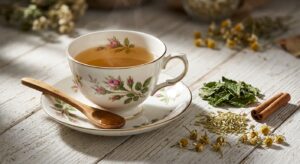
When brewing licorice root tea, you are working with a dense, fibrous root that releases its compounds slowly and rewards patience. Whether you choose a long, gentle decoction to draw out deep healing compounds or a quick hot infusion for everyday digestive support, the resulting cup is rich, warming, and distinctly sweet with soft anise-like undertones. This guide will walk you through three distinct brewing methods, the science behind its key compounds, and everything you need to know to use licorice root safely and effectively.
2
cups
Ingredients
- 2 tspdried licorice root pieces or slices
- 480 mlwater
- —fresh ginger slice (optional, for added digestive support)
- —fennel seeds, a small pinch (optional, for extra carminative effect)
How to Brew
Click on an item below to shop for the recommended items for this recipe on Amazon.
As an Amazon Associate, we earn from qualifying purchases.
- Measure 2 teaspoons of dried licorice root pieces per 240 ml of water. If your root pieces are large, roughly crush or break them to increase surface area and speed extraction.
- Heat filtered water to 90 to 95°C (194 to 203°F). Avoid a full rolling boil, which can make the brew taste slightly bitter rather than clean and sweet.
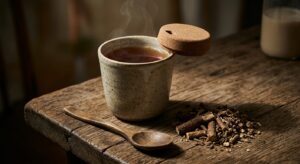
- Place the licorice root in a tea infuser, mesh strainer, or directly into a heatproof mug. Pour the hot water over the root and cover immediately with a lid or small plate to trap volatile aromatic compounds.
- Steep for 10 to 15 minutes. Taste at 10 minutes for a milder, sweeter cup. For a more robust medicinal flavor with greater depth, extend to 15 minutes.
- Remove the infuser or strain out the root pieces. Sip slowly before or after meals for digestive support. No sweetener is typically needed given the root’s natural intensity.
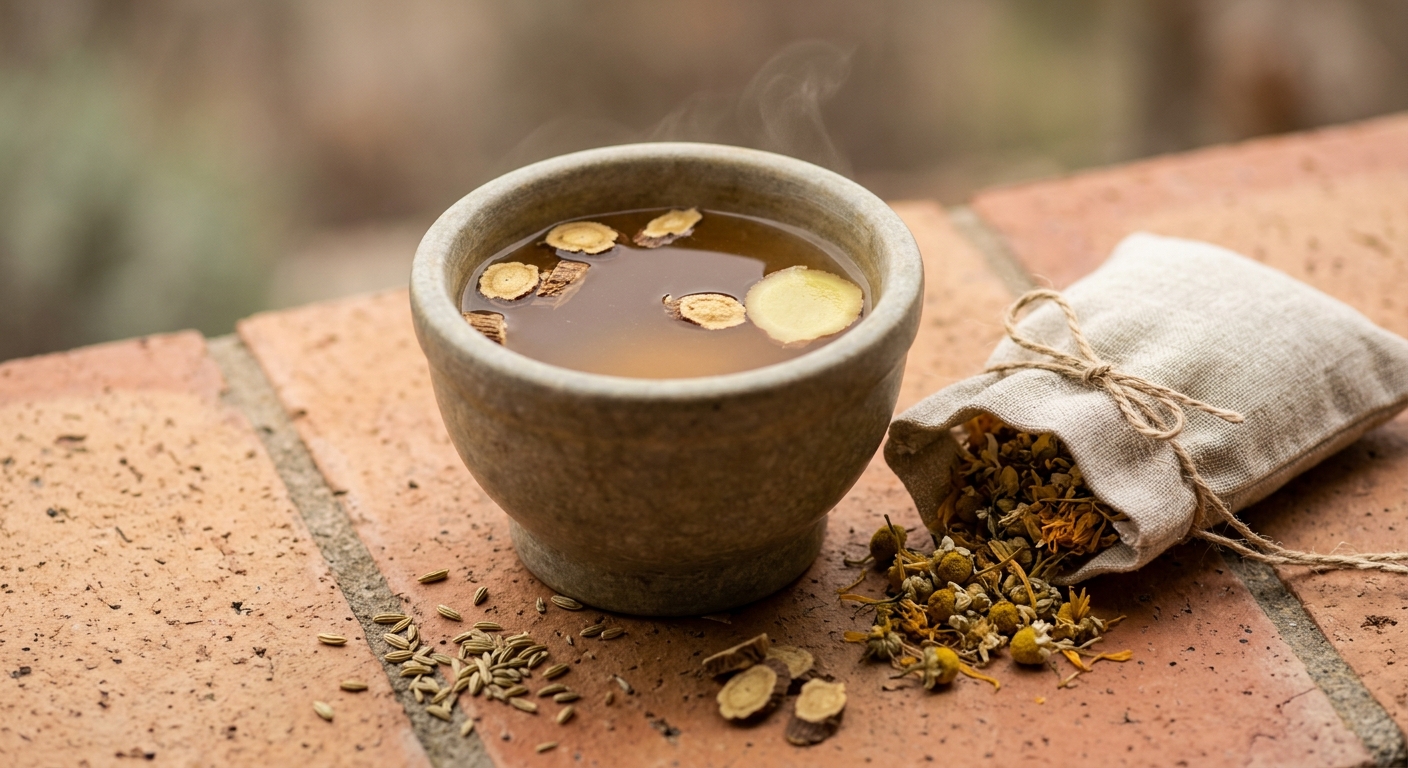
- Add 1 tablespoon of dried licorice root pieces to a small stainless steel or ceramic saucepan. For a richer gut-healing blend, add one thin slice of fresh ginger and a small pinch of fennel seeds alongside the licorice root.
- Pour 480 ml of cold filtered water over the root in the saucepan. Starting in cold water draws out a broader spectrum of compounds as the temperature gradually rises.
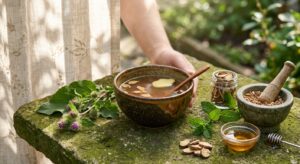
- Bring the water to a gentle simmer over medium heat, watching carefully to avoid a hard boil. Once simmering, reduce heat to low and maintain a soft, steady simmer for 20 to 25 minutes. The liquid will reduce and darken to a deep amber color.
- Remove from heat and allow to rest for 5 minutes, letting the root continue to release compounds as the liquid cools slightly.
- Strain through a fine mesh strainer into two cups. The decoction will be noticeably richer, sweeter, and more concentrated than a standard infusion. Sip one cup immediately and store the second in a sealed jar in the refrigerator for up to 24 hours.
- Add 1 tablespoon of dried licorice root pieces to a clean glass jar. The cold brew method benefits from a slightly higher herb-to-water ratio compared to hot brewing because cold water extracts more slowly.
- Pour 480 ml of room temperature filtered water over the root. Stir gently to ensure all pieces are fully submerged. Do not add hot water at any point, as this fundamentally changes the extraction chemistry.
- Let the jar sit at room temperature for 1 hour to begin extraction, then seal with a lid and transfer to the refrigerator. Leave to cold brew for 12 to 16 hours, or overnight for convenience.
- The following morning, strain the liquid through a fine mesh strainer or cheesecloth into a clean glass. The resulting brew should be a clear, pale amber color with a delicate, clean sweetness.
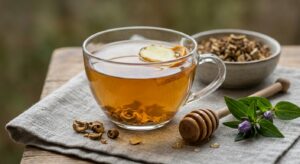
- Serve over a tall glass of ice for a refreshing digestive tonic, or drink chilled straight from the jar. Cold brew licorice is particularly pleasant paired with a few fresh mint leaves or a slice of cucumber for a cooling summer digestive drink.
Health Benefits
Glycyrrhizic acid stimulates the secretion of mucin in the stomach and intestines, reinforcing the mucosal barrier that protects against acid damage, irritants, and pathogens. Clinical studies on deglycyrrhizinated licorice (DGL) have shown significant improvement in gastritis and peptic ulcer symptoms, rivaling some conventional treatments.
Licorice root exhibits antispasmodic activity through its flavonoid content, relaxing smooth muscle in the gastrointestinal tract to relieve gas, cramping, and bloating. It also supports stomach acid balance, reducing both overproduction and the discomfort of low stomach acid.
Glycyrrhizin inhibits the NF-kB inflammatory pathway, one of the primary drivers of chronic gut inflammation associated with conditions such as IBS, leaky gut, and Crohn’s disease. Regular consumption of moderate amounts may help reduce systemic gut inflammation over time.
Glabridin and licoflavone A support hepatic function by reducing oxidative stress in liver cells and promoting bile flow, which is essential for proper fat digestion and the elimination of waste products from the body.
Isoliquiritigenin and other licorice flavonoids have demonstrated inhibitory effects against Helicobacter pylori in laboratory and preliminary clinical studies, suggesting a role for licorice root as a complementary approach in managing H. pylori-related gastritis and ulcers.
🧪 Key Bioactive Compounds
The Science Behind Licorice Root
The star compound in licorice root is glycyrrhizin (also called glycyrrhizic acid), a triterpenoid saponin that is responsible for both the root’s extraordinary sweetness and much of its medicinal power. Once ingested, glycyrrhizin is hydrolyzed by gut bacteria into glycyrrhetic acid, the biologically active form that exerts effects throughout the body. In the gastrointestinal system, this compound inhibits the enzyme 11-beta-hydroxysteroid dehydrogenase, which plays a role in cortisol metabolism and mucous membrane regulation. The result is increased mucin production in the stomach lining, forming a thicker protective layer that guards against acid erosion, the leading cause of gastritis and peptic ulcers.
Licorice root’s flavonoids, particularly liquiritin, isoliquiritigenin, and glabridin, contribute a complementary layer of gut-healing activity. These compounds act as antioxidants that neutralize free radicals in the gastrointestinal tract, reducing the oxidative stress that underpins chronic inflammation. Isoliquiritigenin has been shown in several in vitro and animal studies to inhibit the growth of Helicobacter pylori, the gram-negative bacterium responsible for the majority of duodenal ulcers worldwide. Meanwhile, glabridin has demonstrated hepatoprotective properties in studies on liver cells, suggesting that licorice root supports not just gastric health but the entire digestive axis, from the stomach through to liver function.
It is worth noting that a significant body of research on licorice root’s digestive benefits has been conducted using deglycyrrhizinated licorice (DGL), a processed form where most of the glycyrrhizin is removed to reduce the risk of blood pressure-related side effects. DGL trials have shown measurable improvement in ulcer healing and gastritis symptoms, confirming that the flavonoids alone carry substantial therapeutic weight independent of glycyrrhizin. For tea drinkers consuming moderate amounts of whole licorice root, the concentration of glycyrrhizin in a single cup is generally low enough to be safe for short-term use, while still delivering meaningful levels of these beneficial flavonoid compounds.
Brewing Tips
- Always break or lightly crush whole licorice root pieces before brewing to maximize surface area and improve compound extraction, especially for short hot infusions.
- Licorice root is naturally intensely sweet, so avoid adding honey or other sweeteners until you have tasted the brew first. Most people find it requires none at all.
- For a deeper therapeutic effect, combine the decoction method with a blend of marshmallow root and slippery elm bark. All three herbs coat and protect the gut lining and work synergistically to support mucosal healing.