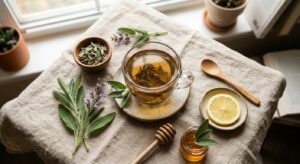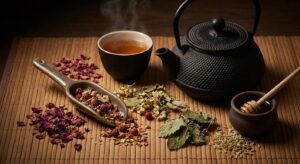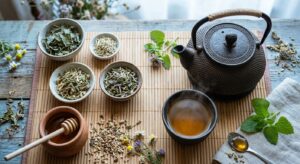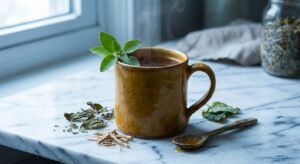
Long before the word “adaptogen” was coined by Soviet pharmacologist Nikolai Lazarev in 1947, healers across Ayurveda, Traditional Chinese Medicine, and Scandinavian folk traditions were prescribing the very same roots, leaves, and berries to help people withstand hardship. Ashwagandha was prized in ancient India as a rasayana, a rejuvenating tonic for the mind and body. Holy basil, known in Sanskrit as Tulsi, was called the Queen of Herbs and grown in temple courtyards as a sacred plant of protection. Rhodiola rosea was carried by Viking warriors heading into battle and given to Russian cosmonauts preparing for the rigors of space. These three herbs, brought together in a single cup, form one of the most time-honored stress-relief formulas on earth.
What makes adaptogenic herbs so remarkable is their dual-directional, normalizing action on the human stress response. Unlike stimulants that push the nervous system into overdrive or sedatives that dampen it entirely, adaptogens help regulate the hypothalamic-pituitary-adrenal (HPA) axis, the central command system for the body’s response to stress. They modulate cortisol, support adrenal function, and help the body return to a state of homeostasis, whether the stressor is physical exhaustion, emotional pressure, or environmental toxins. No single-herb tea does all of this quite as effectively as a well-crafted adaptogen blend.
This particular combination of ashwagandha root, rhodiola root, and holy basil leaf is designed to be both deeply nourishing and gently energizing, calming without causing drowsiness, and grounding without being heavy. The flavor is earthy and aromatic with a subtle peppery warmth, pleasantly complex and easy to sip throughout the day. Whether you are navigating a high-pressure work period, recovering from burnout, or simply looking to build resilience over time, a daily cup of adaptogen blend tea is one of the most practical and pleasurable investments you can make in your long-term wellbeing.
2
cups
Ingredients
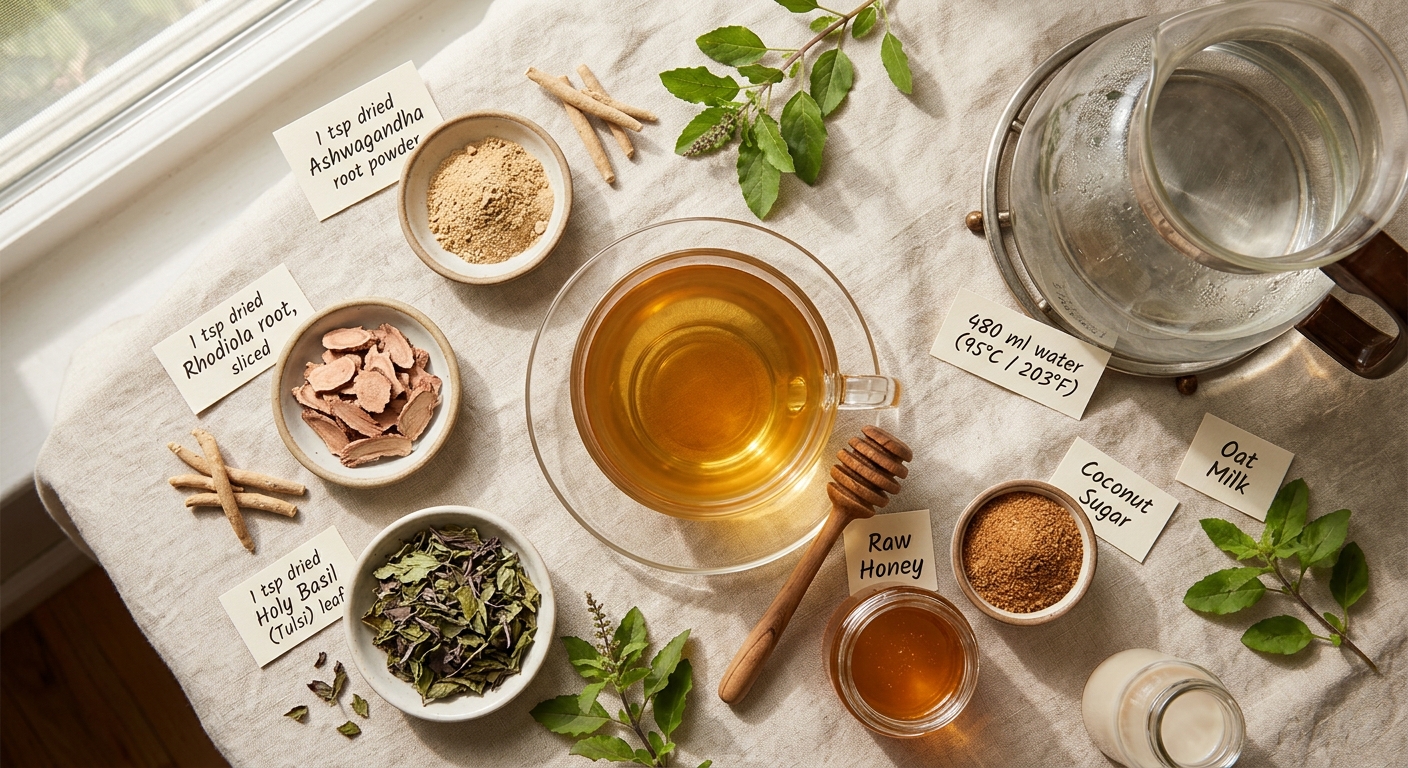
- 1 tspdried ashwagandha root powder or cut root
- 1 tspdried rhodiola root, sliced or cut
- 1 tspdried holy basil (tulsi) leaf
- 480 mlwater (95°C / 203°F)
- —raw honey or coconut sugar to taste (optional)
- —a splash of oat milk or coconut milk (optional, enhances creaminess)
How to Brew
Click on an item below to shop for the recommended items for this recipe on Amazon.
As an Amazon Associate, we earn from qualifying purchases.
- Bring 480 ml of filtered water to 95°C (203°F). If you do not have a temperature-controlled kettle, bring water to a full boil and let it rest for 60 seconds.
- Add the dried ashwagandha root and sliced rhodiola root to your tea infuser or strainer and place it in your mug or teapot. These roots need slightly more time than the leaf, so they go in first.
- Pour the hot water over the roots and steep for 5 minutes to begin extracting the root compounds.
- After 5 minutes, add the dried holy basil (tulsi) leaf directly to the same infuser or floating loose in the pot. Steep for an additional 5 to 10 minutes. This staggered approach preserves the tulsi’s delicate volatile oils while fully extracting the harder root compounds.
- Remove the infuser, pressing gently to release the last of the brew. Stir in raw honey or a splash of oat milk if desired. Sip slowly and allow at least 20 minutes of calm after drinking for full effect.
- Combine the dried ashwagandha root, rhodiola root, and holy basil leaf together in a clean glass jar. Use slightly increased quantities – 1.5 teaspoons of each herb per 480 ml of water – to compensate for the slower cold extraction.
- Pour cold, filtered water (room temperature, not chilled) over the herbs and stir gently to ensure all plant material is submerged. Press any floating leaves down with a spoon.
- Cover the jar loosely with a lid or a piece of cheesecloth secured with a rubber band. Let it sit at room temperature for 1 hour to begin the initial extraction, then transfer to the refrigerator.
- Cold brew for 9 to 13 hours in the refrigerator (overnight is ideal). The low temperature slows extraction but preserves more of the delicate aromatic compounds in the tulsi leaf.
- Strain the blend through a fine mesh strainer or cheesecloth-lined sieve into a clean pitcher or glass. Serve over ice, or gently warm on the stovetop to just below a simmer if you prefer a warm cup. Sweeten with a light honey syrup that dissolves easily in cold liquid.
- Add the ashwagandha root and rhodiola root to a small stainless steel or ceramic saucepan with 600 ml of cold filtered water. Using cold water as the starting point, rather than boiling, maximizes the gradual extraction of dense root compounds as the temperature climbs.
- Bring the water and roots to a gentle boil over medium heat, then immediately reduce to a low simmer at approximately 85 to 90°C (185 to 194°F). You should see small, lazy bubbles breaking the surface, not a rolling boil.
- Simmer uncovered for 20 to 25 minutes, stirring occasionally. The liquid will reduce and deepen in color to a rich amber-brown. If the liquid reduces below 300 ml, add a small splash of hot water to maintain volume.
- Remove the saucepan from heat. Add the dried holy basil (tulsi) leaf directly to the hot liquid, cover with a lid, and allow to steep off the heat for 5 minutes. This off-heat infusion captures the tulsi’s volatile aromatic oils without boiling them away.
- Strain the decoction through a fine mesh strainer into a mug, pressing the herbs firmly to extract all the liquid. The resulting brew will be stronger and more potent than a standard steep. Begin with a half cup serving if you are new to this preparation. Add honey, a pinch of black pepper (which enhances bioavailability of several adaptogenic compounds), or warm coconut milk to mellow the intensity.
Health Benefits
Multiple randomized controlled trials have demonstrated that ashwagandha supplementation significantly reduces serum cortisol levels and self-reported stress scores compared to placebo. Rhodiola has shown similar effects on perceived stress and burnout in occupational health studies.
Rhodiola’s rosavins and salidroside have been shown in clinical studies to reduce mental fatigue and improve cognitive performance during prolonged, cognitively demanding tasks. This blend is particularly useful during high-pressure periods without the jitteriness associated with stimulants.
Ashwagandha root extract has been studied for its ability to improve sleep onset, sleep quality, and total sleep time, likely through its action on GABA pathways in the brain. Unlike sedatives, it promotes natural sleep architecture rather than forcing sedation.
Chronic stress suppresses immune function by elevating cortisol, which in turn disrupts white blood cell activity. Adaptogens help break this cycle by normalizing cortisol and supporting healthy immune signaling, a benefit seen across multiple ashwagandha and holy basil studies.
Prolonged psychological stress triggers systemic low-grade inflammation through cortisol dysregulation and oxidative stress. The triterpenoids and withanolides in this blend have demonstrated anti-inflammatory activity in preclinical and clinical research, helping to address one of the root mechanisms of stress-related illness.
🧪 Key Bioactive Compounds
The Science Behind Ashwagandha, Rhodiola, And Holy Basil (Tulsi)
The science of adaptogens centers on the hypothalamic-pituitary-adrenal (HPA) axis, the body’s master stress response system. When the brain perceives a stressor, the hypothalamus signals the pituitary gland, which signals the adrenal glands to release cortisol. This cascade is life-saving in acute situations, but chronic activation leads to adrenal fatigue, immune suppression, weight gain, cognitive impairment, and disrupted sleep. The withanolides in ashwagandha, particularly withaferin A and withanolide D, have been shown in both preclinical and human clinical trials to modulate this axis by reducing excessive cortisol output and improving adrenal resilience without suppressing the stress response entirely.
Rhodiola rosea operates through a complementary but distinct mechanism. Its primary compounds, rosavins and salidroside, influence the levels of monoamine neurotransmitters including serotonin, dopamine, and norepinephrine by inhibiting the enzymes responsible for their breakdown and facilitating their transport across the blood-brain barrier. A 2015 randomized controlled trial published in Phytomedicine found that rhodiola extract significantly reduced symptoms of stress-related burnout over 12 weeks. Salidroside also supports mitochondrial function, meaning rhodiola improves energy production at the cellular level rather than simply masking fatigue with stimulation.
Holy basil (Ocimum tenuiflorum) rounds out the blend with its own distinct pharmacology. Rich in ursolic acid, rosmarinic acid, and eugenol, tulsi has been shown to inhibit the NF-kB inflammatory signaling pathway and act as a COX-2 inhibitor, reducing the neuroinflammation that accompanies chronic stress. A 2012 clinical study published in the Journal of Ayurveda and Integrative Medicine found that holy basil leaf extract significantly improved cognitive function, reduced anxiety, and lowered stress-related markers in human participants over six weeks. Together, these three herbs address stress from multiple biological angles simultaneously, making the adaptogen blend more effective as a combined formula than any single herb alone.
Brewing Tips
- For best long-term results, drink adaptogen blend tea consistently for at least 4 to 6 weeks. Adaptogens are tonic herbs that build their effects gradually over time rather than providing an immediate single-dose benefit.
- If the earthy bitterness of ashwagandha root is too strong for your taste, add a half teaspoon of cinnamon or a few slices of fresh ginger to the brew. Both complement the blend beautifully and add their own health benefits.
- Avoid drinking this blend on an empty stomach if you are sensitive to bitter herbs. A small snack or meal beforehand reduces the chance of mild nausea, which some people experience when first introducing ashwagandha.