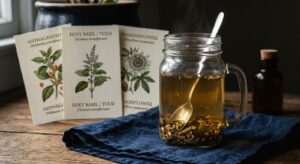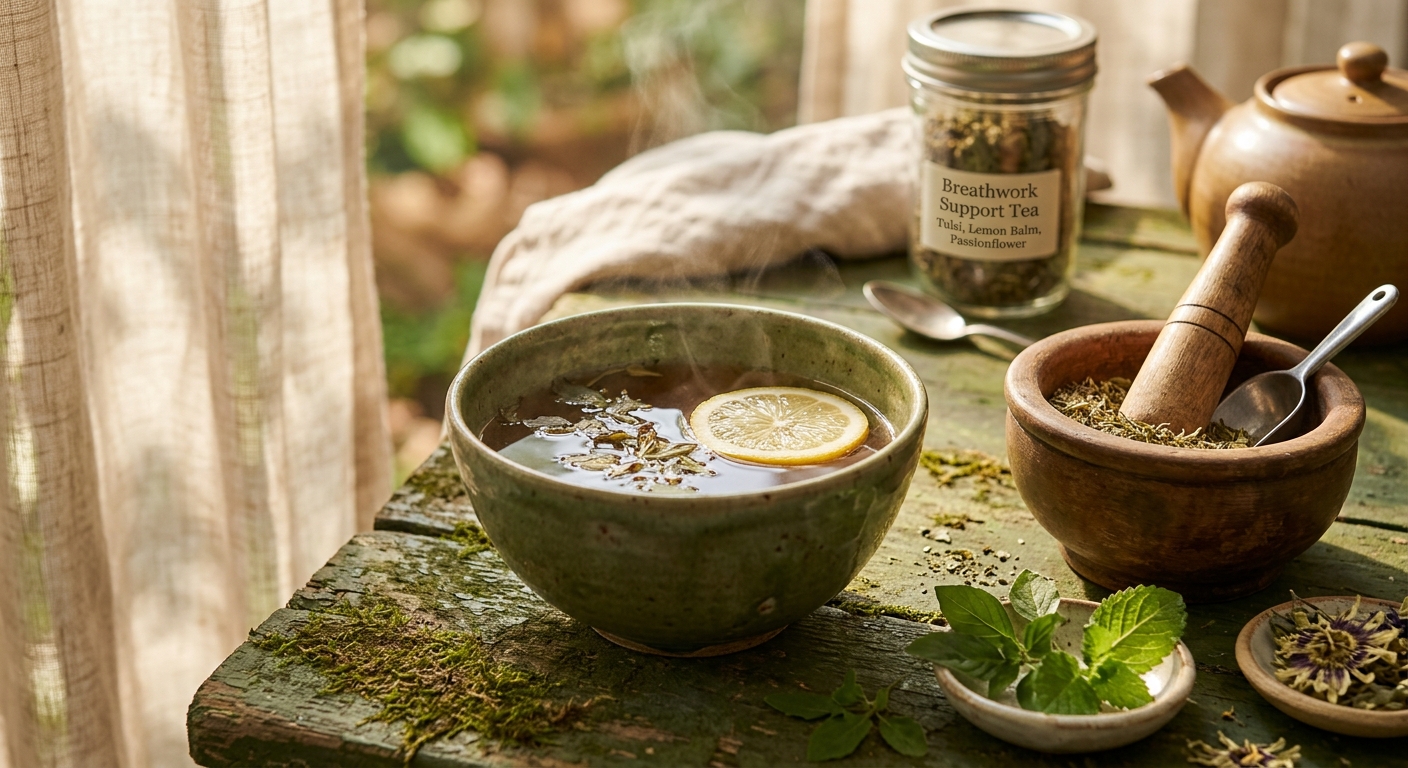
Long before breathwork became a staple of modern wellness studios, healers across India, Europe, and the Americas were turning to specific plants to calm the nervous system, ease respiratory tension, and prepare the mind and body for deep, conscious breathing. Tulsi, known in Ayurvedic tradition as the “Queen of Herbs,” was revered for its adaptogenic properties and its ability to clear the mind while softening anxiety. Lemon balm, a gentle nervine from the mint family, has been cultivated in monastery gardens since the Middle Ages precisely for its ability to soothe the restless mind without dulling the senses. Passionflower, brought to European attention by Spanish explorers in the 16th century, quickly became one of the most respected herbs for calming the racing thoughts that so often interrupt deep breathing practice.
Together, these three herbs form a synergistic blend that works on multiple levels. Tulsi gently supports adrenal function and encourages a steady, open breath. Lemon balm quiets the mental chatter that can make it hard to settle into a practice. Passionflower addresses the deeper anxious undercurrent that keeps the nervous system in a low-grade state of alert. The result is a tea that feels less like a supplement and more like an invitation, a warm, fragrant signal to your body that it is safe to breathe fully and let go.
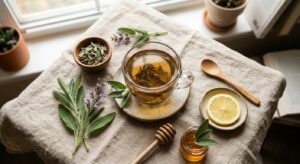
Whether you drink this blend before a morning pranayama session, during a restorative yoga class, or simply on a stressful afternoon when shallow breathing has become your default, Breathwork Support Tea offers gentle, plant-based reassurance. The flavor is layered and approachable: bright and slightly citrusy from the lemon balm, warmly herbal and clove-like from the tulsi, and softly floral with a subtle earthy undertone from the passionflower. It is a tea that rewards slowing down, and that is precisely the point.
2
cups
Ingredients
- 2 tspdried tulsi (holy basil) leaves
- 1.5 tspdried lemon balm leaves
- 1 tspdried passionflower herb
- 480 mlwater (90°C / 194°F)
- —raw honey or maple syrup to taste (optional)
- —a slice of fresh lemon (optional)
How to Brew
Click on an item below to shop for the recommended items for this recipe on Amazon.
As an Amazon Associate, we earn from qualifying purchases.
- Heat your water to 90 to 93°C (194 to 200°F). If you do not have a temperature-controlled kettle, bring water to a full boil and allow it to rest off the heat for 2 minutes before using.
- Combine 2 tsp dried tulsi, 1.5 tsp dried lemon balm, and 1 tsp dried passionflower in a tea infuser or teapot strainer. For two servings, double the quantities.
- Place the infuser in your mug or teapot and pour the hot water directly over the herbs, ensuring all plant material is fully submerged.
- Cover the mug with a small saucer or lid to trap the volatile aromatic oils that carry much of the herb’s calming properties. Steep for 5 to 7 minutes.
- Remove the infuser and gently press the herbs to release any remaining liquid. Sweeten with raw honey if desired, and add a squeeze of fresh lemon to brighten the flavor.
- Sip slowly and mindfully before or during your breathwork practice, allowing the warmth and aroma to cue your nervous system toward relaxation.
- Measure out 3 tsp dried tulsi, 2 tsp dried lemon balm, and 1.5 tsp dried passionflower for approximately 2 to 3 servings. Cold brew requires a slightly higher herb ratio than hot brewing to achieve full flavor at low temperature.
- Place the herbs loosely into a clean glass jar or a large cold-brew infuser bag. Pour 600 ml of room-temperature filtered water over the herbs, ensuring they are fully covered.
- Seal the jar with a lid or cover loosely with a cloth. Let the blend sit at room temperature for 1 hour to begin extraction, then transfer to the refrigerator.
- Allow the tea to cold steep for a minimum of 8 hours and up to 12 hours. Overnight is ideal, making this a convenient preparation to begin the evening before a morning breathwork session.
- Strain the tea through a fine mesh strainer or unbleached cheesecloth into a clean pitcher or bottle. Discard the spent herbs.
- Serve over ice with a thin slice of cucumber or lemon. The cold brew will keep refrigerated for up to 48 hours. Drink one glass about 20 minutes before your practice for a calm, clear foundation.
- In the morning, combine 3 tsp dried tulsi, 2 tsp dried lemon balm, and 1.5 tsp dried passionflower in a large, clean glass jar with a lid. Add 600 ml of cold, filtered water.
- Seal the jar and place it in a sunny spot outdoors or on a south-facing windowsill. The gentle ambient heat of sunlight will slowly coax the aromatic oils and water-soluble compounds from the herbs without any heat degradation.
- Allow the jar to infuse in direct sunlight for 3 to 4 hours, rotating the jar once halfway through to ensure even extraction. Watch the water gradually shift from clear to a warm golden-green.
- Once the tea has reached a rich golden color and the aroma is clearly fragrant, bring the jar inside and strain the liquid through a fine mesh strainer into a clean pitcher.
- Taste the tea before sweetening. Sun tea from this blend tends to be naturally sweeter and more aromatic than refrigerator cold brew. Add honey or a few fresh lemon balm leaves if desired.
- Drink at room temperature or lightly chilled on the same day. Do not store sun tea for longer than 4 hours after straining, as the warm preparation method does not fully prevent microbial growth.
Health Benefits
The combined rosmarinic acid from tulsi and lemon balm, and the chrysin from passionflower, work synergistically to increase GABAergic tone in the brain. This reduces the baseline neural excitability that makes deep, sustained breathing difficult for people experiencing anxiety.
Tulsi contains eugenol and camphene, two compounds shown to have mild bronchodilatory and antispasmodic effects on the airways. Traditional Ayurvedic use of tulsi for respiratory health is increasingly supported by in vitro and clinical research pointing to its ability to ease bronchial tension.
Tulsi is one of the most clinically studied adaptogens, with multiple randomized controlled trials demonstrating significant reductions in serum cortisol and anxiety scores after 4 to 8 weeks of daily use. Even acute consumption produces measurable reductions in subjective stress.
Lemon balm has been studied in double-blind trials showing significant improvements in self-reported calmness and reductions in mental fatigue at doses consistent with a well-brewed cup of tea. It is particularly noted for reducing cognitive over-arousal, the kind of looping thought that disrupts breathwork.
Passionflower has demonstrated effectiveness comparable to low-dose pharmaceutical interventions in at least one randomized trial on insomnia, with participants reporting improved sleep quality and less wakefulness. Pairing an evening breathwork session with this blend may compound the restorative sleep benefit.
🧪 Key Bioactive Compounds
The Science Behind Tulsi (Holy Basil)
The calming action of this blend is rooted in its effect on the GABAergic system, the brain’s primary inhibitory signaling network. GABA (gamma-aminobutyric acid) is the neurotransmitter responsible for reducing neural excitability, and chronically low GABA tone is closely associated with anxiety disorders, shallow chest breathing, and difficulty sustaining focused attention. Both lemon balm (via rosmarinic acid inhibiting GABA transaminase, the enzyme that breaks down GABA) and passionflower (via chrysin binding to GABA-A receptors) increase the availability and activity of GABA without the dependency risk associated with pharmaceutical GABA modulators like benzodiazepines. Clinical studies on lemon balm extract have demonstrated statistically significant reductions in anxiety and improvements in calmness in healthy adults within hours of consumption.
Tulsi contributes a complementary mechanism through the hypothalamic-pituitary-adrenal (HPA) axis. As a clinically validated adaptogen, tulsi’s key compounds including orientin, ursolic acid, and eugenol have been shown to normalize elevated cortisol secretion during stress and reduce the inflammatory cytokines that keep the nervous system in a state of hypervigilance. A 2012 randomized controlled trial published in the Journal of Ayurveda and Integrative Medicine found that participants taking tulsi extract showed significantly lower cortisol levels and improved cognitive function under stress compared to placebo. Separately, tulsi’s eugenol content has demonstrated bronchodilatory effects in smooth muscle studies, offering a biochemical explanation for its traditional Ayurvedic use in respiratory support, a property that directly complements breathwork practice by easing any tension held in the airways and intercostal muscles.
Passionflower’s role in this blend extends beyond simple sedation. Research published in Phytotherapy Research and the Journal of Clinical Pharmacy and Therapeutics has demonstrated that passionflower extract performs comparably to low-dose oxazepam (a pharmaceutical anxiolytic) for the treatment of generalized anxiety disorder, with fewer reports of impaired job performance. The key mechanism appears to involve not only GABA modulation but also the regulation of dopaminergic pathways, helping to address the restlessness and difficulty settling that often accompanies anxiety-driven breathing patterns. Critically, at the doses found in a well-prepared cup of tea, these herbs work gently and synergistically rather than forcefully, making them ideal companions for a mindful breathwork practice rather than replacements for clinical treatment.
Brewing Tips
- Prepare your tea 10 to 15 minutes before beginning breathwork so it has cooled slightly to a comfortable sipping temperature. Drinking it during a practice pause, between breathing rounds, can help anchor you in the present moment.
- Source whole-leaf dried tulsi rather than pre-ground tulsi powder for this blend. Whole leaves retain their volatile aromatic oils far longer in storage and produce a noticeably more fragrant, effective brew.
- If you find the passionflower imparts a slightly grassy or bitter edge that you do not enjoy, reduce the passionflower to 0.5 tsp and add an extra 0.5 tsp of lemon balm. The blend will be gentler and sweeter while retaining most of its anxiolytic benefit.