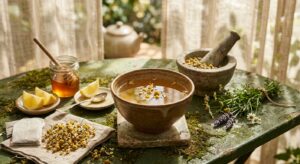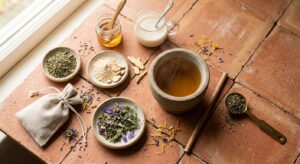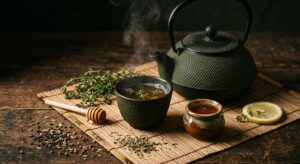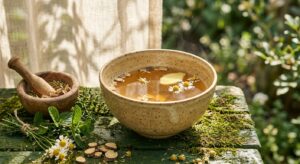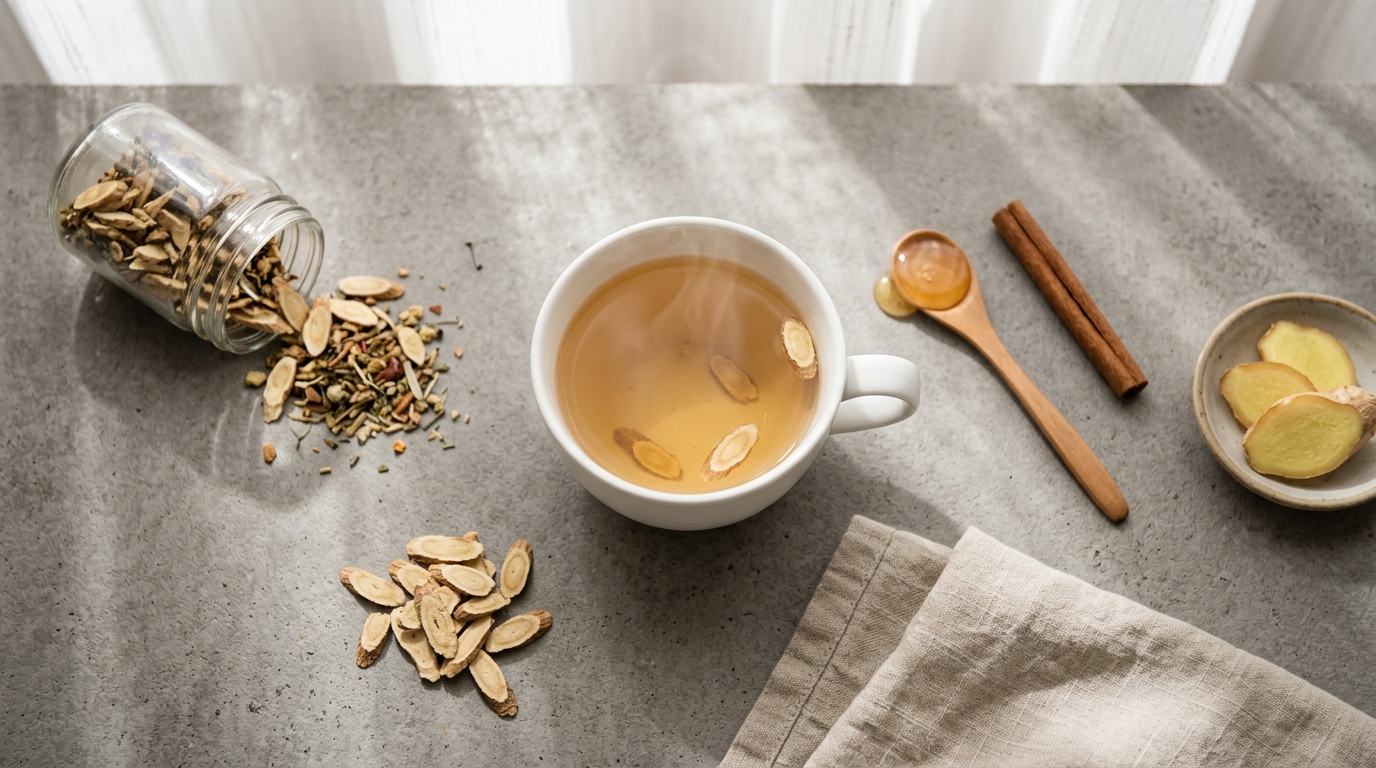
Few herbs carry the weight of history that astragalus does. Known in Traditional Chinese Medicine as Huang Qi, meaning ‘yellow leader,’ Astragalus membranaceus has been used for over 2,000 years as a premier tonic for strengthening the body’s vital energy, or qi. Ancient physicians prescribed it to fortify the lungs, support digestion, and build resistance to illness and stress. The dried root, with its pale yellow interior and slightly fibrous texture, was so revered that it held a permanent place in classical formulas designed for longevity and resilience.
What makes astragalus genuinely remarkable is that it belongs to the adaptogen class of herbs, meaning it works by helping the body regulate its own stress response rather than simply sedating it. Unlike herbs that act quickly and dramatically, astragalus is a slow builder. Traditional practitioners understood that its benefits compounded over weeks and months of consistent use, making it less of a quick remedy and more of a daily ritual for those seeking deep, foundational wellness. This philosophy aligns closely with what modern researchers are now uncovering about its mechanisms of action.
Brewed as a tea, astragalus has a mild, gently sweet, and slightly earthy flavor that makes it surprisingly pleasant on its own and beautifully compatible with warming spices, licorice root, or ginger. The root slices or cut pieces release their active compounds slowly, rewarding a patient steeper with a nourishing, amber-toned cup that feels more like a restorative broth than a traditional floral tea. Whether you are navigating chronic stress, supporting your immune system through seasonal changes, or simply building a long-term wellness practice, astragalus tea is a deeply grounding place to start.
2
cups
Ingredients
- 15 gdried astragalus root slices
- 500 mlwater
- —raw honey or a cinnamon stick to taste (optional)
- —a few slices of fresh ginger (optional)
How to Brew
Click on an item below to shop for the recommended items for this recipe on Amazon.
As an Amazon Associate, we earn from qualifying purchases.
- Measure 15 g of dried astragalus root slices and place them in a small saucepan or a large heat-safe teapot. If using a saucepan, this gives you more control over the extended steep.
- Pour 500 ml of fresh, filtered water over the root slices and bring to a gentle boil over medium heat. Once boiling, reduce heat and allow the tea to simmer uncovered for 20 to 30 minutes. The water will reduce slightly and deepen to a warm amber color.
- If you are adding optional ginger slices or a cinnamon stick, add them at the same time as the astragalus so their flavors meld fully during the long steep.
- Remove the saucepan from heat and allow the tea to rest for 3 to 5 minutes. Strain through a fine mesh strainer into two mugs, pressing the root slices gently with the back of a spoon to extract remaining liquid.
- Sweeten with raw honey if desired and serve immediately while hot. Note that the astragalus root slices themselves are not typically eaten as they remain quite fibrous after brewing.
- Place 20 g of dried astragalus root slices into a clean glass jar. Because cold water extracts compounds more slowly, a slightly higher herb-to-water ratio than the hot brew is recommended to ensure a flavorful result.
- Pour 600 ml of cold, filtered water over the root slices. Stir gently with a long spoon to ensure all pieces are fully submerged. Do not use hot or boiling water, as this immediately shifts the process to a hot steep.
- Cover the jar with a lid or stretch of cloth secured with a rubber band to keep out dust and contaminants. Leave at room temperature for 1 hour, then transfer to the refrigerator.
- Allow the tea to steep in the refrigerator for a minimum of 12 hours and up to 24 hours. The longer it steeps, the more pronounced the sweetness and body become. Check at 12 hours and taste to decide if you prefer a lighter or fuller result.
- Strain through a fine mesh strainer into a jug or directly into glasses filled with ice. Sweeten with honey syrup if desired and serve cold. The finished cold brew will keep refrigerated for up to 48 hours.
- Combine 30 g of dried astragalus root slices with 1 litre of filtered water in a medium saucepan. Using a clay or ceramic pot is the traditional choice, but stainless steel works well. Avoid aluminum cookware.
- Bring the water to a full boil over medium-high heat, then immediately reduce the heat to a gentle simmer. Partially cover the saucepan with a lid, leaving a small gap so steam can escape and the liquid reduces steadily.
- Simmer for 45 to 60 minutes, checking periodically and adding small amounts of water if the level drops below one-third of the original volume. The goal is to reduce the liquid down to approximately 400 to 500 ml of deeply colored concentrate.
- Remove from heat and allow to cool slightly, around 10 to 15 minutes. Strain through a fine mesh strainer, pressing the softened root slices firmly to extract all liquid. Discard the spent root pieces.
- To serve as tea, dilute the concentrate at a ratio of 1 part concentrate to 1 part hot water, or adjust to your taste preference. Store any remaining concentrate in a sealed glass jar in the refrigerator for up to 4 days. Reheat gently before drinking.
Health Benefits
Astragalus functions as a true adaptogen by modulating the hypothalamic-pituitary-adrenal (HPA) axis, helping to normalize cortisol output during periods of chronic stress. Clinical and animal research suggests that regular consumption reduces markers of stress-induced oxidative damage and blunts exaggerated cortisol responses without causing sedation.
Astragalus polysaccharides are among the best-studied natural immunomodulators in herbal medicine. Multiple human trials, including studies in cancer patients undergoing chemotherapy, have demonstrated that astragalus supplementation significantly increases natural killer cell activity, T-lymphocyte proliferation, and overall immune resilience.
Astragaloside IV and formononetin both exhibit meaningful anti-inflammatory activity by suppressing pro-inflammatory cytokines including TNF-alpha and interleukin-6. This makes astragalus particularly relevant for individuals with stress-related inflammation, a common underlying factor in anxiety, fatigue, and immune dysregulation.
Several studies have examined astragalus in the context of cardiovascular support, finding that its saponins help reduce blood pressure, improve microcirculation, and protect against lipid peroxidation. Traditional Chinese Medicine has long classified it as a tonic for the heart, and emerging research provides biological plausibility for this historical use.
Cycloastragenol, a compound unique to astragalus, has attracted significant scientific interest as a telomerase activator. Telomerase helps maintain telomere length, a key marker of cellular aging, and preliminary human studies suggest that astragalus-based supplements may slow age-related telomere shortening, though more large-scale research is needed.
🧪 Key Bioactive Compounds
The Science Behind Astragalus
The adaptogenic reputation of astragalus is increasingly supported by a growing body of biochemical and clinical research. At the center of its stress-buffering action is the influence of astragalus polysaccharides and saponins on the hypothalamic-pituitary-adrenal axis, the body’s primary hormonal stress management system. By modulating the sensitivity of this axis, astragalus appears to prevent the chronic cortisol elevation that underlies much of stress-related illness, from disrupted sleep and anxiety to immune suppression and metabolic dysfunction. Unlike pharmaceutical anxiolytics, it achieves this normalizing effect without binding to GABA receptors or producing sedation, making it suitable for daytime, long-term use.
Perhaps no compound in the herbal world has generated more excitement in longevity research than cycloastragenol, a triterpenoid found exclusively in astragalus root. This compound acts as a precursor to astragaloside IV and, critically, has been identified as one of the few plant-derived molecules capable of activating telomerase, the enzyme responsible for maintaining the protective caps at the ends of chromosomes. Shortened telomeres are strongly associated with cellular aging, chronic disease risk, and increased susceptibility to stress-related damage. A 2011 human pilot study and subsequent animal research have suggested that cycloastragenol-rich extracts can measurably slow telomere attrition, placing astragalus at the frontier of evidence-based longevity medicine.
The immune-modulating activity of astragalus polysaccharides (APS) operates through a well-documented mechanism involving pattern recognition receptors on macrophages, dendritic cells, and natural killer cells. APS binds to toll-like receptor 4 (TLR4) signaling pathways, stimulating the innate immune system while also promoting T-helper cell differentiation and cytokine production. This bidirectional, regulatory form of immune support, stimulating when immunity is low and tempering excessive inflammation, is precisely what distinguishes a true immunomodulator from a simple immune stimulant. Multiple randomized controlled trials in oncology settings have validated these mechanisms in human subjects, lending astragalus a stronger evidence base than many popular herbal remedies.
Brewing Tips
- Do not discard the spent astragalus root slices after a single brew. The dense root can be simmered a second time with fresh water for a lighter, secondary infusion, a practice rooted in traditional Chinese herbal preparation known as second decoction.
- For best results, use astragalus consistently for at least four to six weeks before evaluating its effects. As a tonic adaptogen, it works cumulatively and its benefits are rarely apparent from a single cup.
- Source your astragalus root from a reputable supplier that tests for heavy metals and pesticide residues. Astragalus is grown extensively in northern China, and quality varies significantly across the market. Look for organic certification or a certificate of analysis from a third-party lab.