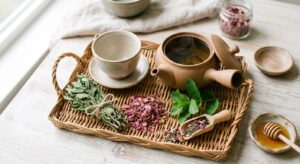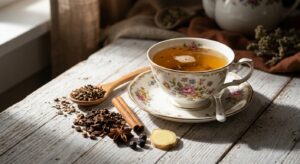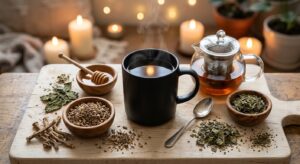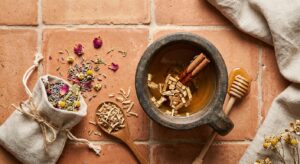
Burnout is more than tiredness. It is a systemic unraveling of the body’s stress response systems, leaving behind a kind of hollow exhaustion that sleep alone cannot fix. For centuries, traditional healing systems across India, Europe, and the Mediterranean have reached for specific herbs to address exactly this state: the frayed nerves, the foggy mind, the depleted adrenals, and the emotional flatness that define burnout. Ayurvedic practitioners prescribed ashwagandha root to restore ojas, the vital life essence thought to be consumed by chronic stress. Monks in medieval European monasteries grew lemon balm as a calming tonic, and tulsi, or holy basil, has been revered in Hindu tradition as a sacred adaptogen capable of bringing the body back into balance.
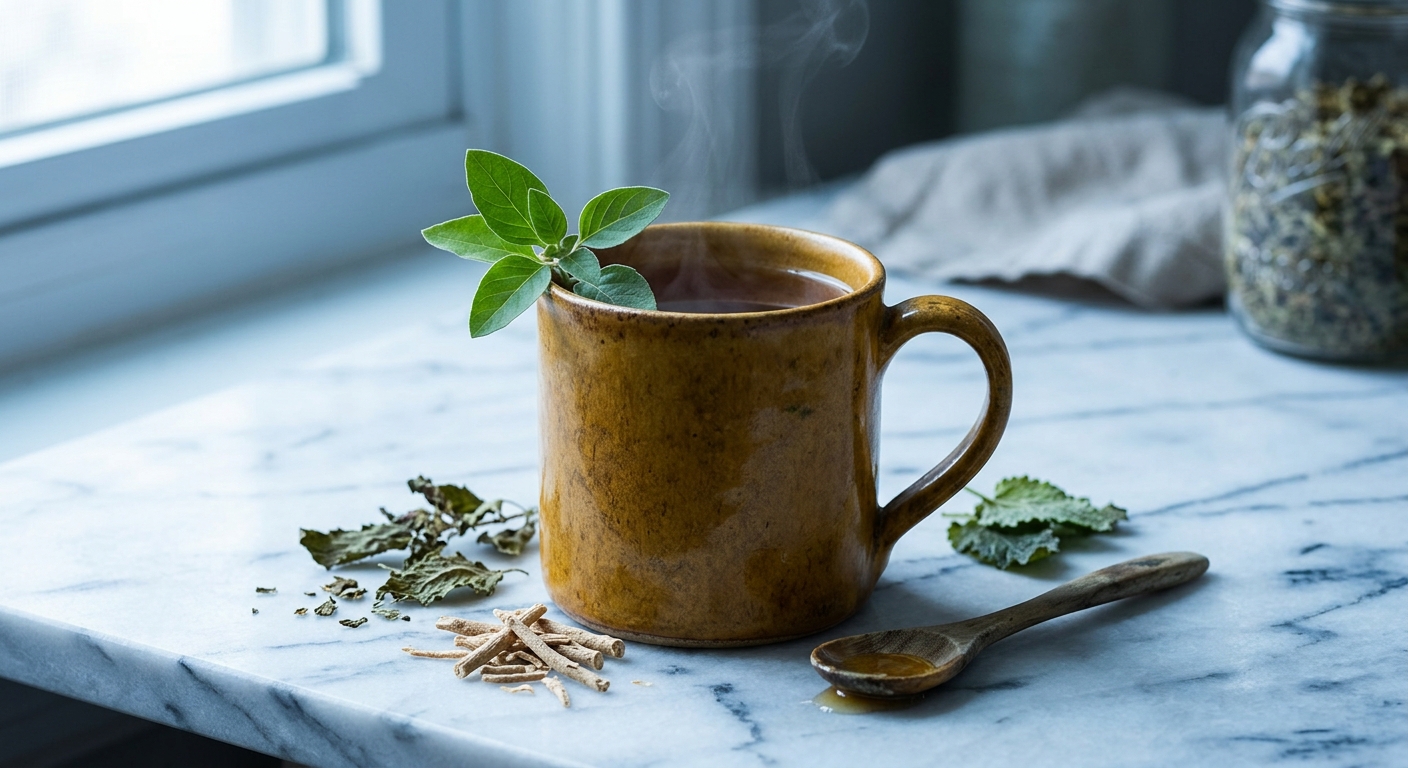
This burnout recovery blend draws on all three of these time-honored herbs, each playing a distinct and complementary role. Ashwagandha acts as the anchor, a deep-acting adaptogen that modulates the HPA axis and helps regulate cortisol over time. Holy basil brings its nervine and adaptogenic qualities, easing anxiety and mental fatigue while lifting a gently flattened mood. Lemon balm softens the edges, calming an overstimulated nervous system and improving cognitive clarity without sedation. Together, they form a tea that does not simply mask symptoms but begins to address the underlying physiological derangement that burnout creates.
What makes this blend particularly special is its approach to recovery: it is nourishing rather than stimulating, restorative rather than suppressive. Unlike caffeine-based tonics that borrow energy from an already depleted system, these herbs support the body’s own capacity to regulate, recover, and return to resilience. Brewed as a warm evening ritual or a cool midday tonic, this tea is an act of deliberate self-care, a small but meaningful signal to your nervous system that the emergency is over and that healing can begin.
2
cups
Ingredients
- 1 tspashwagandha root powder or finely cut dried root
- 1 tspdried holy basil (tulsi) leaf
- 1 tspdried lemon balm leaf
- 480 mlwater (95°C / 203°F)
- —raw honey or coconut sugar to taste (optional)
- —a small splash of full-fat milk or oat milk (optional, helps absorb fat-soluble compounds in ashwagandha)
How to Brew
Click on an item below to shop for the recommended items for this recipe on Amazon.
As an Amazon Associate, we earn from qualifying purchases.
- Bring 480 ml of filtered water to 95°C (203°F). If using a standard kettle, bring to a full boil and allow it to rest for 30 seconds before pouring.
- If using ashwagandha root pieces rather than powder, add them to the water first and allow them to simmer gently at low heat for 5 minutes before removing from heat. If using powder, proceed directly to steeping.
- Place the holy basil and lemon balm into your infuser or directly into a warmed teapot. Pour the hot water, including any ashwagandha root pieces or powder, over the herbs.
- Cover the pot or mug with a lid or small saucer to trap volatile aromatic compounds and prevent heat loss. Steep for 10 to 15 minutes.
- Strain thoroughly. If you used ashwagandha powder, use a fine mesh strainer lined with a small piece of muslin or a paper coffee filter to catch fine particles.
- Sweeten lightly with raw honey if desired, and add a small splash of warm milk to round out the earthy ashwagandha flavor and support absorption of its fat-soluble withanolides. Sip slowly in a calm environment.
- Measure the full ingredient quantities into a clean glass jar. If using ashwagandha powder, whisk it briefly into 60 ml of cool water first to prevent clumping before adding to the jar.
- Add 480 ml of cold filtered water to the jar, stir gently to combine all herbs, and seal the jar with a lid.
- Allow the jar to sit at room temperature for 1 hour to begin extraction, then transfer to the refrigerator. Steep overnight for 10 to 12 hours.
- The following morning, strain the blend through a fine mesh sieve or cheesecloth into a clean jug or bottle. Press the herbs gently to extract the remaining liquid.
- Serve over ice in a tall glass. Stir in a small drizzle of honey or a few drops of liquid stevia if desired. Garnish with a fresh sprig of lemon balm or holy basil for an aromatic finish.
- Store any remaining cold brew in the refrigerator and consume within 48 hours for best flavor and potency.
- Use ashwagandha root pieces or coarsely cut dried root for this method rather than powder. Measure 1.5 teaspoons of ashwagandha root per serving and place it into a small saucepan with 600 ml of cold filtered water.
- Bring the water to a gentle boil over medium heat, then reduce the heat to maintain a low, steady simmer. Allow the root to decoct uncovered for 20 to 25 minutes. The liquid will reduce by roughly 25 percent and deepen in color to a golden amber.
- In the final 5 minutes of simmering, remove the pan from heat and add the holy basil and lemon balm directly to the hot decoction. Cover the pan immediately and allow these delicate herbs to infuse for 5 minutes off the heat. This preserves their volatile oils, which would be destroyed by prolonged boiling.
- Strain the decoction through a fine mesh sieve into a mug or small teapot, pressing the plant material gently.
- Stir in a small amount of warming spice such as a pinch of cinnamon or cardamom to complement the earthy ashwagandha base. Sweeten with raw honey or jaggery if desired, and add a splash of warm milk in keeping with the traditional Ayurvedic preparation known as ashwagandha milk.
- Drink one cup of this decoction in the early evening. Because this method produces a more concentrated extract, limit use to once daily and take breaks from concentrated ashwagandha use every four to six weeks.
Health Benefits
Ashwagandha’s withanolides have been shown in multiple randomized controlled trials to significantly reduce serum cortisol levels and self-reported stress scores. A 2012 study published in the Indian Journal of Psychological Medicine found that 300 mg of ashwagandha root extract twice daily reduced cortisol by 27.9 percent over 60 days, directly targeting the adrenal dysregulation central to burnout.
Lemon balm’s rosmarinic acid inhibits GABA transaminase, the enzyme responsible for breaking down GABA, effectively raising calming neurotransmitter activity in the brain. Clinical studies have shown lemon balm to significantly reduce anxiety and improve mood within a single dose, making it valuable for acute nervous system calming during burnout recovery.
Holy basil has demonstrated nootropic properties in clinical settings, improving cognitive function, attention, and working memory in adults under chronic stress. Its eugenol and ursolic acid content also help reduce neuroinflammation, which is increasingly recognized as a driver of the brain fog associated with burnout.
Ashwagandha root has been shown to improve sleep onset latency and sleep quality in adults with insomnia and stress-related sleep disturbance, with one study attributing this effect partly to the compound triethylene glycol found in the root. Combined with lemon balm’s GABAergic activity, this blend can help restore the deep, restorative sleep that burnout disrupts.
Unlike anxiolytics that suppress the stress response acutely, adaptogens such as ashwagandha and holy basil work by normalizing the body’s stress response systems over time. Regular consumption over four to eight weeks has been shown to reduce allostatic load and improve perceived resilience, helping the nervous system recover its capacity to handle stress without becoming overwhelmed.
🧪 Key Bioactive Compounds
The Science Behind Ashwagandha
The science behind this burnout recovery blend centers on the hypothalamic-pituitary-adrenal axis, or HPA axis, which governs the body’s cortisol stress response. In burnout, the HPA axis becomes dysregulated through chronic overactivation, leading to either abnormally high or, in later stages, blunted cortisol output. Ashwagandha’s withanolides, particularly withaferin A and withanolide D, have been shown to act as adaptogenic modulators of this axis, helping to normalize cortisol secretion patterns rather than simply suppressing them. A landmark 2019 randomized controlled trial published in Medicine found that ashwagandha supplementation led to significant reductions in cortisol, improved sleep quality, and reduced perceived stress scores compared to placebo over an eight-week period.
Lemon balm’s primary active compound, rosmarinic acid, works through a different but complementary mechanism. It inhibits GABA transaminase, the enzyme that degrades gamma-aminobutyric acid in the brain, effectively increasing GABAergic tone. Since GABA is the central nervous system’s primary inhibitory neurotransmitter, this mechanism produces a calming effect without the dependency risks associated with pharmaceutical GABA-modulating drugs. Research published in Nutrients in 2021 confirmed that lemon balm extracts standardized for rosmarinic acid reduced anxiety and improved mood in adults under chronic occupational stress, a profile that closely mirrors burnout presentation.
Holy basil contributes to the blend’s efficacy through multiple pathways. Its eugenol content demonstrates anxiolytic and antidepressant-like properties in preclinical studies, while ursolic acid has been shown to modulate corticosterone levels and reduce oxidative stress in brain tissue. Critically, holy basil also exhibits COX-2 inhibitory activity, meaning it helps reduce the neuroinflammation that accompanies and perpetuates burnout. Emerging research increasingly links elevated inflammatory cytokines, particularly interleukin-6 and TNF-alpha, to the cognitive impairment and emotional blunting of burnout, making holy basil’s anti-inflammatory profile particularly relevant to this condition.
Brewing Tips
- When using ashwagandha powder rather than root pieces, whisk it into a small amount of warm water or milk first to prevent clumping and ensure even distribution throughout your tea.
- Drink this blend consistently for at least four weeks to experience its adaptogenic benefits. Adaptogens work cumulatively and the most significant effects on cortisol and stress resilience tend to emerge between weeks four and eight of regular use.
- Brew a larger batch using the cold brew method on Sunday evenings and portion it into a glass bottle for the week ahead, giving you a ready-made daily recovery tonic without requiring effort during high-stress mornings.