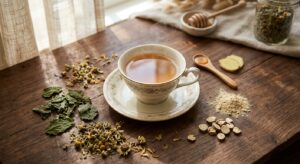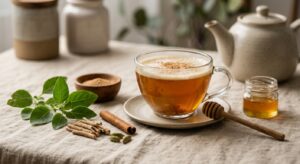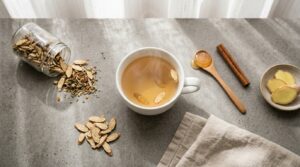
For centuries, herbalists across Europe, Asia, and the Americas have reached for specific plants when the nervous system needed steadying. Lemon balm (Melissa officinalis) was praised by Paracelsus and used in medieval monastery gardens as a tonic for the heart and mind. Passionflower (Passiflora incarnata) was adopted into European herbal medicine after Spanish conquistadors observed Indigenous peoples of the Americas using it as a calming remedy. Skullcap (Scutellaria lateriflora), a native North American herb, was a cornerstone of Eclectic physician practice in the 19th century, prescribed specifically for nervous exhaustion, restlessness, and what they called “nervous irritability.” Together, these three herbs form a blend with a long and credible history of use for exactly the kind of frayed, overstimulated anxiety that social situations can provoke.
Social anxiety is distinct from generalized stress. It tends to arrive in anticipation, tightening the chest before a meeting, a party, or a difficult conversation. The nervous system reads the situation as a threat, flooding the body with cortisol and adrenaline even when no real danger exists. What makes this herbal blend particularly well-suited to that experience is that each herb addresses a slightly different aspect of the anxiety response: lemon balm modulates GABA pathways and reduces cortisol, passionflower quiets racing thoughts without heavy sedation, and skullcap nourishes and calms the nervous system at a deeper, more sustained level. None of these herbs are strongly sedating at typical tea doses, which means you can drink this blend and remain present, clear, and engaged.
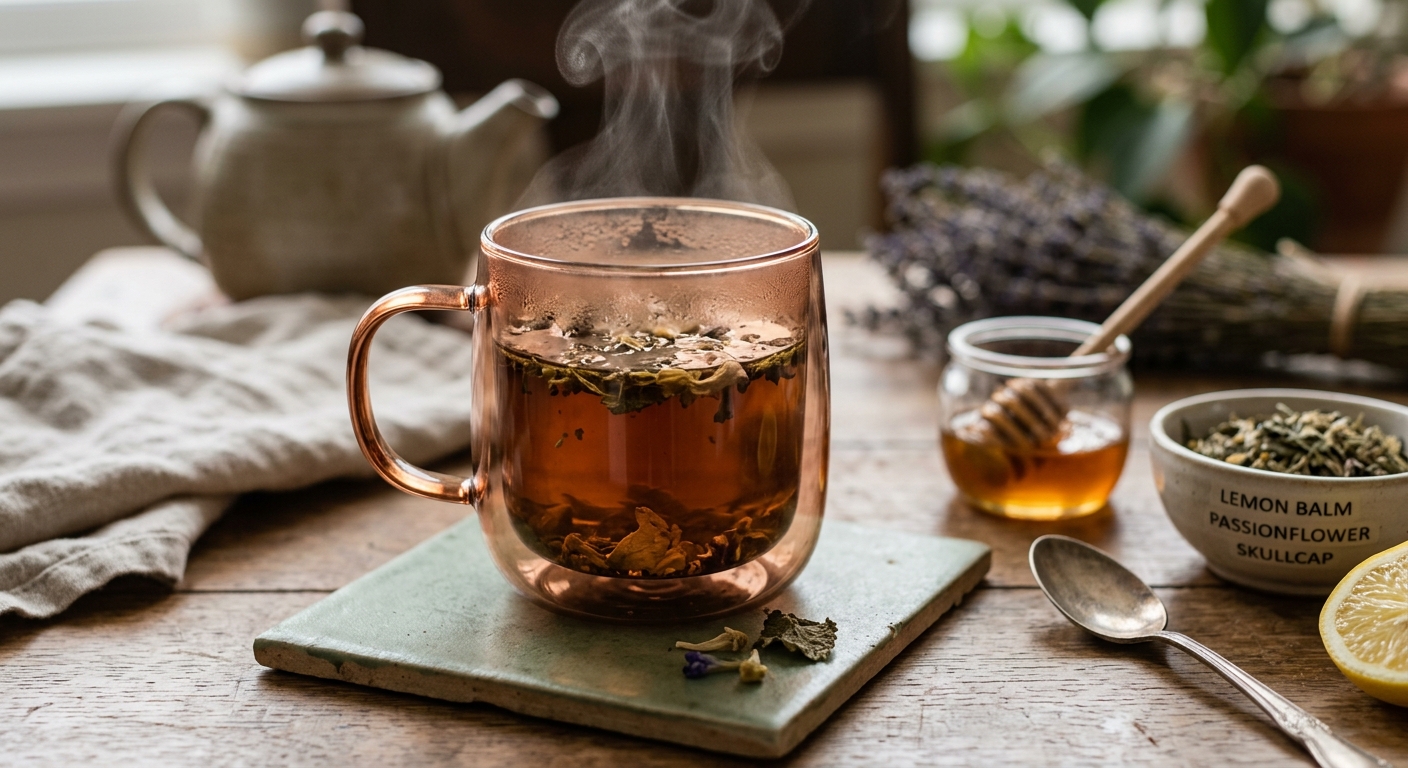
This blend is designed to be brewed and consumed 30 to 60 minutes before a social event, or sipped throughout a stressful day as a tonic. The flavor is herbaceous and gently floral, with a mild bitterness from the skullcap that lemon balm’s citrusy brightness balances beautifully. A touch of honey and a slice of fresh lemon can round the cup into something genuinely pleasant to reach for, not just medicinally, but as a daily ritual of care.
2
cups
Ingredients
- 2 tspdried lemon balm leaves
- 1 tspdried passionflower herb
- 0.75 tspdried skullcap herb
- 480 mlwater (90°C / 194°F)
- —raw honey to taste (optional)
- —fresh lemon slice (optional)
How to Brew
Click on an item below to shop for the recommended items for this recipe on Amazon.
As an Amazon Associate, we earn from qualifying purchases.
- Heat filtered water to 90°C (194°F). If you do not have a temperature-controlled kettle, bring water to a full boil and allow it to cool for 2 to 3 minutes before using.
- Combine 2 tsp dried lemon balm, 1 tsp dried passionflower, and 3/4 tsp dried skullcap in a tea infuser or loose-leaf basket. For two cups, double the quantities.
- Place the infuser in your mug or teapot and pour the heated water directly over the herbs. Cover the mug with a small plate or lid to trap the volatile aromatic oils as the tea steeps.
- Steep for 7 to 10 minutes. For a lighter, more uplifting cup suitable for daytime use, aim for 7 minutes. For a deeper, more grounding cup, steep the full 10 minutes.
- Remove the infuser and press the herbs gently with the back of a spoon to release any remaining liquid. Add raw honey and a squeeze of fresh lemon if desired. Sip slowly and mindfully.
- Measure 3 tsp dried lemon balm, 1.5 tsp dried passionflower, and 1 tsp dried skullcap per 500 ml of cold, filtered water. Cold brewing requires a slightly higher herb ratio because the lower temperature extracts more slowly.
- Combine the herbs and cold water in a glass jar. Stir briefly to ensure all herb material is submerged. Do not use hot water at any stage – the cold process is what gives this method its smooth, mellow character.
- Seal the jar and leave it at room temperature for 1 hour, then transfer it to the refrigerator. Steep for a total of 8 to 12 hours, or overnight for convenience.
- Strain the tea through a fine mesh strainer or cheesecloth into a clean pitcher or glass. Press the herbs gently to extract remaining liquid.
- Serve over ice, or drink chilled. Sweeten with a small amount of honey stirred into a tiny amount of warm water first to help it dissolve easily into the cold tea. Consume within 48 hours and keep refrigerated.
- Combine 4 tsp dried lemon balm, 2 tsp dried passionflower, and 1.5 tsp dried skullcap with 240 ml of water heated to 90°C (194°F) in a small saucepan or heatproof jar. This double-strength ratio will yield enough concentrate for 4 servings when diluted.
- Cover the saucepan or jar tightly and steep for 15 to 20 minutes. The longer steep time and higher herb-to-water ratio draws out a fuller spectrum of active compounds, including flavonoids, rosmarinic acid, and chrysin.
- Strain the concentrate through a fine mesh strainer into a clean glass jar, pressing the herbs firmly to recover all liquid. You should have approximately 180 to 200 ml of dark, aromatic concentrate.
- Allow the concentrate to cool to room temperature, then seal the jar and refrigerate. It will keep for up to 5 days.
- To serve hot, combine 60 to 80 ml of concentrate with 160 to 180 ml of freshly boiled water in a mug and stir. To serve cold, dilute with an equal volume of cold water or sparkling water over ice. Adjust to taste and add honey as desired.
Health Benefits
A 2014 double-blind crossover study published in Nutrients found that lemon balm extract (300 mg) significantly reduced anxiety and improved mood in healthy adults exposed to stress tasks. The combination of lemon balm and passionflower creates complementary GABA-modulating effects that specifically blunt the anticipatory anxiety common to social situations.
Unlike pharmaceutical anxiolytics, the compounds in this blend, particularly baicalin from skullcap and rosmarinic acid from lemon balm, modulate rather than suppress GABA activity, producing a calming effect that allows clear thinking and social engagement to continue unimpaired.
Passionflower has demonstrated clinical efficacy for improving sleep quality, with a randomized controlled trial published in Phytotherapy Research (2011) showing significant improvements in total sleep time and sleep efficiency. When social anxiety runs into the evening and disrupts sleep, a stronger evening cup of this blend can help restore rest.
Chronic social anxiety is associated with dysregulated cortisol release. Rosmarinic acid in lemon balm has been shown in clinical studies to reduce urinary cortisol levels, suggesting the herb helps normalize the HPA (hypothalamic-pituitary-adrenal) axis stress response over time with regular use.
Skullcap has been used by Eclectic and Physiomedicalist herbalists specifically as a nervine tonic, an herb that nourishes the nervous system over time rather than simply suppressing symptoms. Modern research supports this, with baicalin and scutellarein showing neuroprotective effects that may help restore resilience in people dealing with long-term social anxiety.
🧪 Key Bioactive Compounds
The Science Behind Lemon Balm
The anxiolytic activity of this three-herb blend is rooted in its multi-pathway approach to calming the nervous system. Gamma-aminobutyric acid (GABA) is the brain’s primary inhibitory neurotransmitter, and low GABA activity is directly associated with anxiety disorders including social anxiety disorder. Rosmarinic acid, found abundantly in lemon balm, inhibits GABA transaminase, the enzyme responsible for breaking down GABA in the synaptic cleft. By slowing this breakdown, rosmarinic acid effectively increases the availability of GABA, producing a calming signal that dampens overactive threat-detection circuits. A human clinical study published in Nutrients (2014) confirmed that a standardized lemon balm extract significantly reduced self-reported anxiety and improved mood in stressed volunteers, with effects measurable within hours of a single dose.
Passionflower adds a complementary mechanism through its flavonoids, particularly chrysin and apigenin, which bind to benzodiazepine receptor sites on the GABA-A receptor complex. This is the same receptor family targeted by pharmaceutical anxiolytics such as diazepam, though the binding affinity of plant flavonoids is considerably lower, which accounts for their gentler, non-sedating effect profile. Chrysin also demonstrates mild monoamine oxidase inhibiting (MAOI) activity, slowing the metabolism of serotonin and dopamine and contributing to sustained mood elevation. A randomized controlled trial in Phytotherapy Research found passionflower extract comparable to oxazepam for generalized anxiety disorder with fewer side effects, particularly less impairment of job performance, which is directly relevant to social anxiety.
Skullcap’s primary active compounds, baicalin and its aglycone baicalein, bind to both GABA-A receptors and benzodiazepine sites, reinforcing the calming signal initiated by the other two herbs. Research published in Alternative Therapies in Health and Medicine (2014) found that skullcap enhanced global mood without reducing energy or cognition, a critical finding for social anxiety sufferers who need to feel calm and simultaneously present and engaged. Skullcap also demonstrates meaningful antioxidant and neuroprotective properties through its modulation of Nrf2 pathways, suggesting that regular use over weeks may help structurally support a nervous system taxed by chronic anxiety rather than simply offering transient relief.
Brewing Tips
- Always cover your mug while steeping this blend. Lemon balm’s calming volatile oils, particularly citral and citronellal, evaporate readily in open steam, and covering the cup preserves up to 30% more aromatic compounds in the final brew.
- Source skullcap from suppliers who provide third-party species verification or a certificate of analysis. Adulteration with germander is a real issue in the herbal market and can cause liver toxicity. Reputable suppliers such as Mountain Rose Herbs or Starwest Botanicals test specifically for this.
- For regular use as a nervous system tonic rather than acute situational relief, drink one cup of the hot brew daily for at least 4 to 6 weeks. The nourishing effects of skullcap and the cortisol-balancing effects of lemon balm build cumulatively and are most pronounced with consistent use over time.