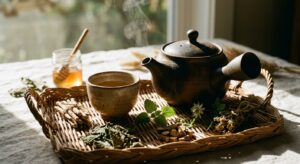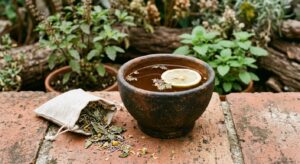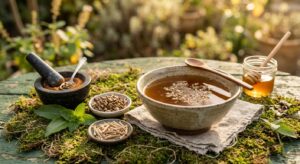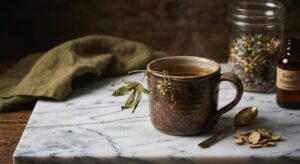
Few herbs announce themselves quite like lemon verbena. The moment you crush a leaf between your fingers, a sharp, clean burst of lemon fills the air, far more vivid and true than any citrus peel or lemon balm can offer. Native to South America, particularly Argentina, Chile, and Peru, lemon verbena (Aloysia citrodora) was brought to Europe by Spanish conquistadors in the 17th century, where it quickly became a beloved garden herb and medicinal staple across Spain, France, and Portugal. In those countries it remains a cherished evening tea, known locally as verbena or hierba luisa, sipped after dinner to ease digestion and calm a busy mind before bed.
In traditional herbalism, lemon verbena has long been prized as a nervine, a herb that gently tones and soothes the nervous system without causing heavy sedation. Herbalists in both the Western and South American traditions have used it for centuries to address anxiety, nervous tension, mild insomnia, and digestive complaints rooted in stress. It was also used topically for fevers and inflammatory conditions, reflecting the broad reach of its therapeutic profile. Today, modern phytotherapy in Europe continues this tradition, with lemon verbena preparations appearing in pharmacies across Spain and France as recognized remedies for restlessness and functional digestive upset.
What makes lemon verbena genuinely special is the combination of its sensory experience and its bioactive depth. The herb owes its extraordinary fragrance to a high concentration of volatile oils, particularly citral, which is also the compound responsible for the therapeutic potency of melissa and lemongrass. Beyond aroma, lemon verbena contains powerful antioxidant polyphenols and flavonoids that have attracted serious scientific attention for their anti-inflammatory and neuroprotective properties. Whether you are brewing a hot cup to unwind after a stressful afternoon or preparing a cold infusion for a warm summer day, lemon verbena delivers a tea experience that is both deeply pleasurable and genuinely supportive of your wellbeing.
2
cups
Ingredients
- 2 tbspdried lemon verbena leaves (loosely packed)
- 480 mlwater (90°C / 194°F for hot brew)
- —raw honey or agave to taste (optional)
- —thin lemon slice for garnish (optional)
How to Brew
Click on an item below to shop for the recommended items for this recipe on Amazon.
As an Amazon Associate, we earn from qualifying purchases.
- Heat filtered water to 90 to 95°C (194 to 203°F). If you do not have a temperature-controlled kettle, bring water to a full boil and let it rest off the heat for 2 to 3 minutes before brewing.
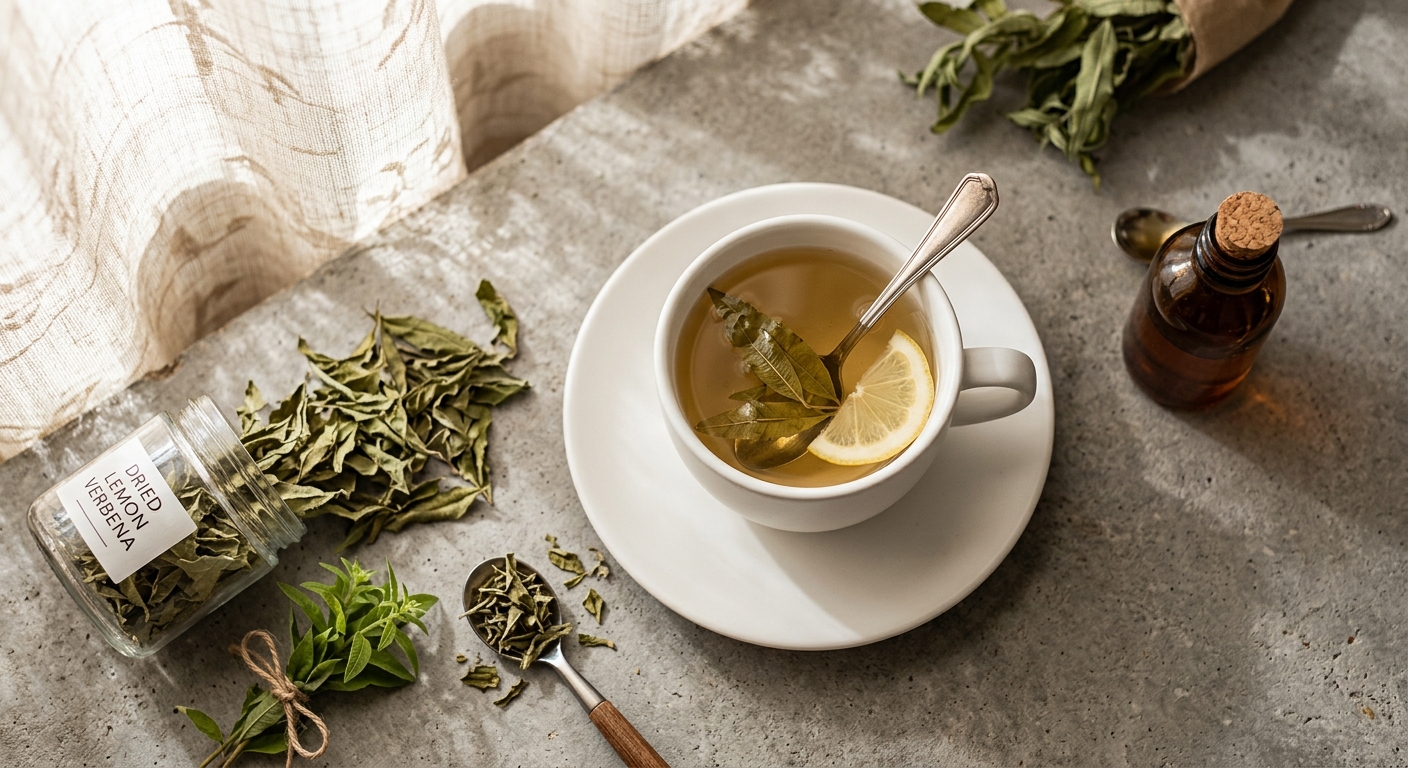
- Add 1 tablespoon of dried lemon verbena leaves per 240 ml of water to your tea infuser or teapot. Lightly crush or crumble the leaves between your fingers before placing them in the infuser to help release the volatile oils.
- Pour the hot water directly over the leaves and cover the teapot or mug with a lid or small plate. Covering is important as it traps the aromatic steam and prevents the most fragrant compounds from escaping into the air.
- Steep for 5 to 8 minutes. At 5 minutes you will get a bright, lighter cup. At 8 minutes the tea deepens in color and flavor with a more pronounced herbal body. Taste at 5 minutes and continue steeping to your preference.
- Remove the infuser or strain the leaves and serve immediately. Add honey and a thin lemon slice if desired. Sip slowly and allow the warmth and aroma to work their calming effect.
- Place 3 tablespoons of dried lemon verbena leaves per 480 ml of cold, filtered water into a clean glass jar or pitcher. The higher leaf ratio compensates for the slower extraction at cold temperatures.
- Briefly bruise the leaves by gently pressing them with a spoon against the side of the jar before adding the water. This opens up the cell structure slightly and helps cold water penetrate and extract the aromatic compounds more effectively.
- Pour cold, filtered water over the leaves, seal the jar with a lid, and give it a gentle swirl to ensure the leaves are fully submerged and in contact with the water.
- Place the jar in the refrigerator and allow it to steep for 8 to 12 hours. Overnight is ideal. Avoid leaving it beyond 14 hours as the flavor can become slightly grassy.
- Strain out the leaves through a fine mesh strainer or cheesecloth directly into glasses filled with ice. Sweeten lightly with agave or a few drops of honey if desired. Garnish with a sprig of fresh lemon verbena or a lemon wheel for a beautiful presentation.
- Place 3 to 4 tablespoons of dried lemon verbena leaves into a large, clean clear glass jar. A clear vessel is essential as it allows sunlight to penetrate and heat the water evenly throughout.
- Fill the jar with 720 ml of cold, filtered water and stir briefly to wet the leaves. Seal the jar with a lid or cover loosely with cheesecloth secured with a rubber band to keep out debris while allowing some evaporation.
- Place the jar in a spot that receives direct, unobstructed sunlight for 2 to 4 hours. Warmer days above 32°C (90°F) will brew faster and produce a more aromatic cup. Check the color and scent at the 2-hour mark.
- Once the tea has reached a pale golden yellow color and smells richly of lemon verbena, bring the jar inside and strain out the leaves through a fine mesh strainer into a clean pitcher.
- Serve immediately over ice with a drizzle of honey and fresh lemon slices, or refrigerate and consume within 24 hours. Do not leave sun tea at room temperature for extended periods after brewing is complete.
Health Benefits
Lemon verbena contains multiple compounds, including citral and apigenin, that interact with GABA receptors in the central nervous system to reduce nervous excitability. A 2012 clinical study published in Phytotherapy Research found that standardized lemon verbena extract significantly reduced anxiety scores in participants compared to placebo, supporting centuries of traditional use as a calming nervine herb.
The herb’s combination of GABA-modulating flavonoids and relaxant monoterpenes makes it a gentle ally for those with stress-related sleep difficulties. Unlike stronger sedative herbs such as valerian, lemon verbena promotes relaxation and easier sleep onset without morning grogginess, making it well suited for an evening ritual cup.
Lemon verbena has a long history as a carminative and antispasmodic herb, used to relieve bloating, cramps, nausea, and nervous indigestion. Geraniol and limonene relax smooth muscle in the gastrointestinal tract, while the herb’s anti-inflammatory polyphenols may help calm irritation in the gut lining, making it particularly useful when digestive symptoms are stress-triggered.
Verbascoside, lemon verbena’s signature polyphenol, consistently ranks among the highest antioxidant compounds identified in herbal infusions. Research published in the Journal of Agricultural and Food Chemistry has confirmed that lemon verbena tea has significantly higher antioxidant capacity than green tea in comparable concentrations, helping neutralize free radicals and reduce systemic oxidative stress.
Several human clinical trials have investigated lemon verbena extract for its ability to reduce exercise-induced oxidative damage and muscle soreness. A study in the Journal of the International Society of Sports Nutrition found that athletes supplementing with lemon verbena extract showed significantly lower markers of muscle damage and faster recovery, suggesting the herb’s antioxidant and anti-inflammatory compounds may benefit active individuals.
🧪 Key Bioactive Compounds
The Science Behind Lemon Verbena
The scientific study of lemon verbena has accelerated considerably in the past two decades, driven in large part by the discovery of verbascoside (also called acteoside), a phenylethanoid glycoside that is now recognized as one of the most bioactive antioxidant compounds found in any commonly consumed herbal plant. Verbascoside neutralizes reactive oxygen species, inhibits the enzyme cyclooxygenase-2 (COX-2) in a mechanism comparable to non-steroidal anti-inflammatory drugs, and modulates nuclear factor kappa B (NF-kB) signaling, a master regulator of inflammatory gene expression. These actions collectively explain much of the herb’s observed anti-inflammatory, gastroprotective, and tissue-protective effects, and they form the biochemical foundation for its promising results in exercise recovery research.
The anxiolytic and calming properties of lemon verbena are best understood through the lens of its volatile oil composition and flavonoid content. Citral, the compound responsible for the herb’s intensely lemony aroma, has been shown in preclinical studies to potentiate GABA-A receptor activity, the same inhibitory neurotransmitter pathway targeted by benzodiazepine medications, though at far gentler and non-addictive levels. Apigenin, another key flavonoid in the leaf, has been studied extensively for its binding affinity to benzodiazepine receptor sites in the central nervous system. Together these compounds create a synergistic calming effect that reduces neuronal excitability without causing significant sedation, making lemon verbena particularly well suited for daytime stress relief as well as evening use.
Emerging research has also explored lemon verbena’s effects on gut-brain axis signaling. The herb’s antispasmodic compounds, particularly geraniol and limonene, act directly on smooth muscle tissue in the gastrointestinal tract, reducing cramping and improving motility. More intriguingly, the anti-inflammatory polyphenols in lemon verbena may influence the enteric nervous system, the network of neurons lining the gut that communicates bidirectionally with the brain. This provides a plausible mechanistic explanation for the centuries-old observation that lemon verbena tea soothes both nervous tension and the digestive complaints that so often accompany it, an elegant illustration of whole-plant medicine at work.
Brewing Tips
- Always cover your mug or teapot while hot brewing lemon verbena. The most aromatic and therapeutically active volatile compounds are highly susceptible to evaporation with steam, and even a minute of uncovered steeping can result in a noticeably less fragrant and less effective cup.
- Store dried lemon verbena leaves in an airtight container away from heat and direct light. The citral content degrades quickly when exposed to oxygen and UV light, and properly stored leaves should retain their potency and bright aroma for up to 18 months.
- If you have access to a lemon verbena plant, fresh leaves are a spectacular alternative to dried ones. Use twice the volume of fresh leaves compared to dried (about 2 tablespoons per cup), bruise them gently, and steep at the same temperature for 5 to 6 minutes. The fresh herb produces an almost transcendently fragrant cup that dried leaves, however good, cannot quite match.