Bringing a new baby home is one of the most profound experiences a human being can have, and also one of the most depleting. Sleep deprivation, hormonal shifts, constant vigilance, and the emotional weight of new responsibility can leave caregivers feeling strung out, anxious, and deeply fatigued. Long before modern medicine had a name for postpartum stress, herbalists across Europe, the Middle East, and the Americas were brewing gentle nervine teas to steady frayed nerves and ease exhausted minds. Lemon balm was prescribed by Paracelsus in the sixteenth century for those suffering from melancholy and heart palpitations. Chamomile was offered to restless mothers in ancient Egypt. Passionflower was used by indigenous peoples of the Americas to calm anxiety and invite sleep. These three herbs together form a time-honored alliance, gentle enough for breastfeeding parents in moderate amounts, and effective enough to make a real difference.
This blend works because each herb brings something distinct to the cup. Lemon balm (Melissa officinalis) is a bright, lemony nervine that reduces cortisol and lifts mood. Chamomile (Matricaria chamomilla) softens muscular tension and quiets the digestive system, which often takes the brunt of chronic stress. Passionflower (Passiflora incarnata) is the deepest-acting of the three, modulating GABA pathways to reduce racing thoughts and promote the kind of still, settled feeling that makes rest possible. Together, they create a tea that does not sedate so much as it simply removes the static, the white-knuckle alertness that keeps new parents staring at the ceiling even when the baby is finally asleep.
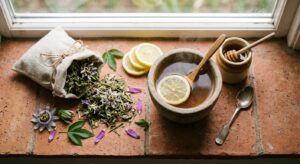
This recipe is designed for two servings so that partners can share the ritual, because stress in a new-parent household rarely belongs to just one person. Brewing tea together, even for five minutes, is itself a small act of restoration. The pale gold cup is gently floral, lightly citrusy, and softly sweet, nothing harsh, nothing medicinal, just a quiet moment in a loud season. Reach for it in the late afternoon when cortisol is cresting, or in the evening hour before you attempt to sleep when the baby sleeps.
2
cups
Ingredients
- 2 tspdried lemon balm leaves
- 2 tspdried chamomile flowers
- 1 tspdried passionflower herb
- 480 mlwater (90°C / 194°F)
- —raw honey or chamomile honey to taste (optional)
- —thin slice of fresh lemon (optional)
How to Brew
Click on an item below to shop for the recommended items for this recipe on Amazon.
As an Amazon Associate, we earn from qualifying purchases.
- Heat 480 ml of fresh filtered water to approximately 90°C (194°F). If you do not have a temperature-controlled kettle, bring water to a boil and let it rest off-heat for two minutes before using.
- Combine 2 tsp dried lemon balm, 2 tsp dried chamomile flowers, and 1 tsp dried passionflower in a tea infuser, muslin bag, or teapot strainer basket. Give the blend a gentle pinch between your fingers to lightly bruise the leaves and encourage the release of volatile oils.
- Pour the hot water slowly over the herbs, covering them completely. Place a small saucer or lid over the top of your mug or teapot to trap the aromatic steam inside the vessel. This preserves the volatile terpenes that contribute both to flavor and therapeutic effect.
- Steep for 5 to 7 minutes. At 5 minutes, the tea will be brighter and more citrusy. At 7 minutes, it deepens slightly and the passionflower earthiness becomes more present. Remove the infuser promptly to prevent bitterness.
- Sweeten gently with raw honey if desired, and add a thin lemon slice for an additional citrus note. Sip slowly and without screens if possible, allowing the ritual itself to begin the transition toward calm.
- Combine 3 tsp dried lemon balm, 3 tsp dried chamomile flowers, and 1.5 tsp dried passionflower in a clean glass jar. The slightly higher herb ratio compensates for the slower, cooler extraction that cold water provides.
- Pour 500 ml of cold, filtered water over the herbs. Stir briefly to ensure all the plant material is fully saturated and no dry clumps remain floating at the surface.
- Loosely cover the jar with a lid or a piece of cloth secured with a rubber band. Allow it to rest at room temperature for 30 minutes, then move it to the refrigerator. Steep overnight for 8 to 12 hours.
- In the morning, strain the cold brew through a fine mesh strainer or cheesecloth into a clean bottle or pitcher. Press the herbs gently to recover the last of the liquid. The resulting tea will be pale gold, lightly hazy, and noticeably smooth.
- Serve over ice or drink directly from the fridge. Add a small drizzle of honey dissolved in a teaspoon of warm water if you prefer sweetness, since honey does not dissolve easily in cold liquid. Consume within 48 hours and keep refrigerated.
- Measure out 4 tsp dried lemon balm, 4 tsp dried chamomile flowers, and 2 tsp dried passionflower. Place the herbs in a small saucepan or heatproof vessel with a pour spout.
- Heat 300 ml of filtered water to 90°C (194°F) and pour it over the herb blend. The smaller volume of water relative to the larger herb quantity will produce a strong, concentrated infusion.
- Cover the vessel tightly with a lid or plate to trap volatile oils and steep for 10 to 12 minutes. The liquid will be a rich amber-gold, noticeably deeper in color than a standard cup.
- Strain the concentrate through a fine mesh strainer into a clean glass jar, pressing the herbs firmly to extract fully. Allow the concentrate to cool to room temperature before sealing and refrigerating.
- To serve, pour approximately 80 to 100 ml of concentrate into a mug and dilute with 150 to 180 ml of hot water for a warm cup, or with cold water and ice for a quick cold drink. Sweeten to taste and store the remaining concentrate refrigerated for up to three days.
Health Benefits
All three herbs in this blend modulate GABA pathways, the brain’s primary inhibitory system. A double-blind placebo-controlled trial published in Nutrients (2014) found that lemon balm extract significantly reduced anxiety scores and improved mood in stressed adults, while chamomile extract has demonstrated anxiolytic effects in generalized anxiety disorder trials at the University of Pennsylvania.
Passionflower has been shown in clinical research to increase total sleep time and improve subjective sleep quality. A study published in Phytotherapy Research found that passionflower tea consumed 30 to 60 minutes before bed significantly reduced the time needed to fall asleep, an effect that is especially meaningful for new parents trying to maximize limited sleep windows.
Rosmarinic acid from lemon balm has been shown to reduce urinary cortisol metabolites in stressed individuals and to suppress the overactivation of the HPA (hypothalamic-pituitary-adrenal) axis, the core stress-regulation system that becomes dysregulated under chronic sleep deprivation and emotional load.
Chamomile is a well-documented antispasmodic and carminative, meaning it relaxes smooth muscle throughout the gastrointestinal tract. New parents frequently experience stress-driven digestive upset including nausea, cramping, and appetite disruption, and chamomile’s bisabolol and flavonoid content directly addresses this by reducing GI inflammation and spasm.
Lemon balm has demonstrated mild monoamine-modulating activity, influencing serotonin and dopamine pathways in ways that contribute to a more stable, lifted mood. In a randomized controlled study, participants drinking lemon balm extract reported significantly improved mood and reduced irritability, effects that can be profoundly meaningful during the emotional volatility of early parenthood.
🧪 Key Bioactive Compounds
The Science Behind Lemon Balm
The calming power of this blend rests on a shared mechanism: all three primary herbs modulate gamma-aminobutyric acid (GABA), the central nervous system’s main inhibitory neurotransmitter. When GABA activity is high, neural firing slows, anxiety diminishes, and the body becomes more capable of moving out of sympathetic (fight-or-flight) dominance into parasympathetic (rest-and-digest) mode. Rosmarinic acid from lemon balm achieves this by inhibiting GABA transaminase, the enzyme responsible for breaking GABA down. Apigenin from chamomile binds directly to benzodiazepine-sensitive GABA-A receptors. Chrysin, orientin, and vitexin from passionflower provide additional GABA-A receptor binding and have demonstrated sedative effects in preclinical and clinical models. Together, these compounds provide a multi-pathway approach to nervous system regulation that is notably more comprehensive than any single herb alone.
Beyond GABA, lemon balm contributes meaningfully to mood stability through its influence on monoamine neurotransmitters. Research published in Nutrients and Psychosomatic Medicine has shown that Melissa officinalis extract can inhibit monoamine oxidase A (MAO-A), the enzyme that degrades serotonin and dopamine. This mild MAO-inhibiting activity helps sustain the availability of mood-stabilizing neurotransmitters without the side effects associated with pharmaceutical MAO inhibitors at therapeutic doses. Additionally, the volatile monoterpenes in lemon balm, particularly citronellal and geranial, have been shown to reduce plasma cortisol in animal models and to blunt the HPA axis stress response, suggesting that even inhaling the steam from a freshly brewed cup contributes to its calming effect.
Chamomile’s contribution extends beyond the brain. Its primary active compound, apigenin, has been studied in multiple randomized controlled trials for generalized anxiety disorder (GAD), with a landmark long-term trial at the University of Pennsylvania demonstrating both acute and sustained anxiolytic effects over a 26-week period. Chamomile also contains significant concentrations of bisabolol and chamazulene, anti-inflammatory terpenes that reduce systemic inflammation markers elevated by chronic stress. Since new-parent stress is not only psychological but also deeply physiological, involving elevated inflammatory cytokines, disrupted cortisol rhythms, and compromised immune function, an herb that simultaneously addresses neurological and systemic inflammation is a particularly well-suited ally for this population.
Brewing Tips
- Lemon balm loses its aromatic volatile oils rapidly after drying. Always buy from a reputable supplier with a high turnover and store in an airtight, opaque container away from heat. If your dried lemon balm smells faintly of hay rather than lemon, it is too old and its therapeutic potency will be significantly reduced.
- For the most effective calming window, drink this tea 45 to 60 minutes before you plan to sleep or rest. This timing aligns with the absorption and metabolism rate of the key compounds, particularly passionflower’s chrysin, which reaches peak effect roughly one hour after ingestion.
- If you are very sensitive to herbs or new to herbal tea, start with just the lemon balm and chamomile for the first week, then introduce passionflower gradually. Some individuals find that even gentle nervines cause drowsiness more pronounced than expected, and it is wise to assess your response before drinking this blend if you need to drive or care for a newborn alone immediately after.