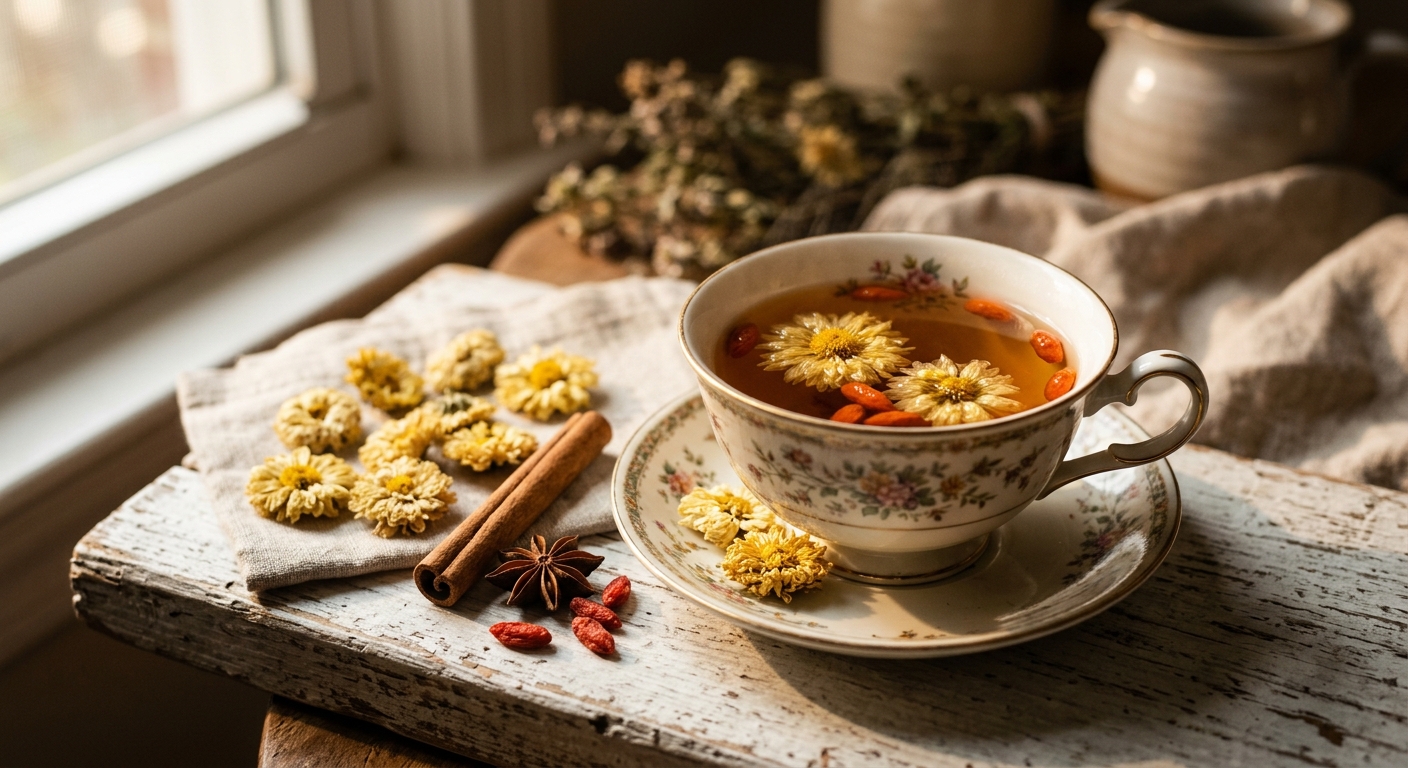
In Korea, chrysanthemum tea is known as gukhwa-cha (국화차), a brew so deeply woven into the fabric of daily life that its golden petals have graced royal court tables and humble kitchen hearths alike. Dating back over a thousand years, chrysanthemum has been a cornerstone of East Asian botanical medicine, celebrated in Chinese, Korean, and Japanese traditions for its ability to calm the spirit, clear the eyes, and release heat from the body. Korean chrysanthemum cultivation developed its own distinct character over time, with growers in regions like Hamyang and Ganghwa Island selecting cultivars prized for their honeyed sweetness and luminous ivory-gold petals.
What makes gukhwa-cha particularly special is its dual identity: it is simultaneously a medicinal herb and a ritual of beauty. Koreans have long brewed chrysanthemum at the turning of seasons, using it to ease the restless heat of summer nights and the dry tension of winter evenings. The flower holds deep symbolic meaning in Korean culture, representing longevity, nobility, and the quiet dignity of aging gracefully. Sipping it before bed is not merely a health practice; it is a small act of mindful ceremony, a moment of pausing before the world goes quiet.
Modern research is beginning to confirm what traditional healers always knew. Chrysanthemum flowers contain a rich array of flavonoids, terpenoids, and chlorogenic acids that work together to modulate the nervous system, reduce inflammation, and support the body’s natural transition into sleep. Whether you are drawn to it for its science, its history, or simply the way its amber liquor glows in a ceramic cup, Korean chrysanthemum tea offers one of the most gentle and rewarding paths to evening calm available in the herbal world.
2
cups
Ingredients
- 10 whole dried flowersdried Korean chrysanthemum flowers (Chrysanthemum morifolium)
- 480 mlwater (85°C / 185°F)
- —raw honey or rock sugar to taste (optional)
- —goji berries for garnish (optional, traditional)
How to Brew
Click on an item below to shop for the recommended items for this recipe on Amazon.
As an Amazon Associate, we earn from qualifying purchases.
- Heat filtered water to 80 to 90°C (176 to 194°F). If you do not have a temperature-controlled kettle, bring water to a boil and let it rest uncovered for 3 to 4 minutes before pouring.
- Place 4 to 5 whole dried chrysanthemum flowers per cup into a warmed teapot or directly into your cup using a wide-mesh infuser. The flowers need room to fully open and release their oils, so avoid packing them into a tight basket infuser.
- Pour the heated water gently over the flowers in a slow, circular motion to encourage even blooming. Watch as the dried blossoms begin to rehydrate and unfurl, releasing their golden hue into the water.
- Steep for 3 to 5 minutes. At 3 minutes you will get a lighter, more floral cup; at 5 minutes the flavor deepens slightly with more herbal body. Taste at 3 minutes and continue steeping if desired.
- Lift out the infuser or strain the flowers. Add a small amount of raw honey or rock sugar if desired, and drop in a few goji berries for a traditional Korean pairing. Drink slowly in a calm, dimly lit space 30 to 60 minutes before bed.
- Add 12 to 14 whole dried chrysanthemum flowers to a clean glass jar or pitcher. Use slightly more flowers than you would for hot brewing, as cold water extracts flavor more slowly and gently.
- Pour 600 ml of cold, filtered water over the flowers. Do not use warm or hot water at any stage. The slow, cold extraction is what gives this method its signature clarity and sweetness.
- Stir gently once to ensure all the flowers are submerged, then seal the jar loosely with a lid or cover with a clean cloth. Leave at room temperature for 30 minutes to allow initial hydration, then transfer to the refrigerator.
- Steep in the refrigerator for 6 to 8 hours or overnight. The longer steep produces a fuller flavor without any bitterness, making this method ideal for people who find hot-brewed chrysanthemum tea too sharp.
- Strain the flowers through a fine mesh strainer into glasses filled with ice. Taste before adding any sweetener, as cold brewing often brings out a natural honeyed sweetness that requires little or no addition. Garnish with a fresh or dried chrysanthemum bloom if available.
- Select a clean, clear glass jar with a tight-fitting lid. Transparency is important here, as part of the sun tea experience is watching the golden color develop as the sun works through the glass.
- Add 14 to 16 whole dried chrysanthemum flowers to the jar for every 700 ml of cold, filtered water. The gentle warmth of the sun extracts more slowly than boiling water, so a slightly higher flower-to-water ratio ensures good flavor development.
- Seal the jar and place it in a sunny outdoor spot or on a bright south-facing windowsill. Rotate the jar once halfway through steeping so all the flowers receive even exposure to the sunlight and warmth.
- Steep for 2 to 4 hours depending on sun intensity. On a bright summer day, 2 hours is usually sufficient. On a milder day or in indirect light, allow the full 4 hours. The tea is ready when it reaches a rich golden-amber color and smells noticeably floral.
- Bring the jar inside, strain the flowers, and taste immediately. Adjust sweetness with honey or rock sugar if desired. Serve over ice or at room temperature. Refrigerate any leftover tea promptly and consume within 24 hours.
Health Benefits
Flavone compounds in chrysanthemum, particularly acacetin and linarin, have demonstrated sedative-hypnotic activity in preclinical studies, reducing the time it takes to fall asleep and extending total sleep duration. These effects appear to be mediated through GABA receptor modulation rather than any single compound acting alone.
Luteolin and apigenin both interact with GABA-A receptors in the central nervous system, producing a calming effect that eases the racing thoughts and physical tension that often prevent sleep. Unlike pharmaceutical anxiolytics, these compounds produce gentle, non-habit-forming relaxation.
Chrysanthemum flowers are rich in chlorogenic acid and multiple flavonoids that inhibit pro-inflammatory cytokine production. Reducing systemic inflammation before bed supports deeper, more restorative sleep and may benefit those whose sleep is disrupted by chronic low-grade inflammatory conditions.
In traditional Korean and Chinese medicine, chrysanthemum tea is specifically prescribed for tired, strained, or dry eyes. Modern research supports this, showing that chrysanthemum extracts contain compounds that reduce oxidative stress in ocular tissue and improve symptoms of digital eye strain, making it an ideal evening tea for those who spend long hours looking at screens.
Korean medicine categorizes chrysanthemum as a cooling herb that reduces internal heat. This concept aligns with physiological findings showing that a slight drop in core body temperature is a key trigger for sleep onset. Drinking warm chrysanthemum tea in the evening may support this natural thermoregulatory process.
🧪 Key Bioactive Compounds
The Science Behind Korean Chrysanthemum
The sleep-supportive properties of Korean chrysanthemum tea are not the product of a single magic compound but rather an orchestrated ensemble of flavones and polyphenols working through complementary mechanisms. The most well-studied sleep-related compounds are acacetin and its glycoside form linarin, both found in meaningful concentrations in Chrysanthemum morifolium. A series of studies, including animal model research published in peer-reviewed pharmacological journals, found that linarin significantly reduced sleep latency and increased total sleep time in a manner comparable to low-dose benzodiazepines, but without the dependency profile or next-day sedation associated with pharmaceutical sleep aids. The proposed mechanism involves positive modulation of GABA-A receptors, the same inhibitory receptors targeted by many anti-anxiety and sleep medications.
Luteolin and apigenin amplify this calming effect through their own GABA-receptor interactions while simultaneously exerting anti-inflammatory activity by suppressing NF-kB signaling pathways and reducing the release of pro-inflammatory cytokines like IL-6 and TNF-alpha. This matters for sleep because chronic low-grade inflammation is now recognized as a significant driver of sleep fragmentation and reduced slow-wave sleep. By dampening this inflammatory background noise, chrysanthemum’s polyphenol content may help restore the architecture of deep sleep rather than simply inducing sedation. Chlorogenic acid adds an additional dimension by functioning as a potent antioxidant that protects neurons from oxidative stress and has been investigated for its ability to regulate the hypothalamic-pituitary-adrenal axis, the system governing cortisol output that, when dysregulated, keeps people wired and alert at night.
The traditional Korean and Chinese medical classification of chrysanthemum as a heat-clearing herb also has a physiological basis worth understanding. Sleep onset in humans is closely tied to a drop in core body temperature, a process regulated by the hypothalamus. Consuming warm fluids before bed can gently assist peripheral vasodilation, helping the body radiate heat and achieve the 0.5 to 1°C drop in core temperature associated with sleep initiation. Chrysanthemum’s mild diaphoretic quality, documented in ethnopharmacological literature, may enhance this process. Taken together, the science suggests that gukhwa-cha supports sleep through at least three distinct but complementary pathways: direct GABA-receptor modulation, anti-inflammatory activity, and thermoregulatory assistance, which may explain why generations of Koreans found it so reliably effective as an evening ritual.
Brewing Tips
- Store dried chrysanthemum flowers in an airtight glass jar away from direct light and heat. Properly stored flowers retain their volatile aromatics and bioactive compounds for up to 12 months, but the floral scent fades noticeably after 6 months, which is a good indicator of diminishing potency.
- For the most visually stunning and aromatic cup, use whole dried chrysanthemum flowers rather than crushed petals or tea bags. Whole flowers rehydrate fully during steeping, releasing flavor gradually and creating a living bloom in your cup that crushed versions simply cannot replicate.
- If you find the flavor too light on first brew, resist the urge to increase steeping time dramatically. Instead, increase the number of flowers by one or two and keep the steep time the same. Extended steeping brings out bitterness, while a higher flower ratio gives you more floral intensity and sweetness without the harsh finish.