For many people, anxiety peaks in the early morning hours, when cortisol surges and the day’s demands press in before the first cup is even poured. This is not a character flaw or a sign of weakness – it is a well-documented physiological pattern known as the cortisol awakening response. Herbal traditions across centuries have recognized this fragile morning window and offered botanical allies to meet it with grace. This Morning Anxiety Herbal Tea draws on three of the most trusted nervine herbs in Western and Ayurvedic herbalism: lemon balm, ashwagandha root, and passionflower, each chosen for its distinct and complementary role in calming an overactive nervous system.
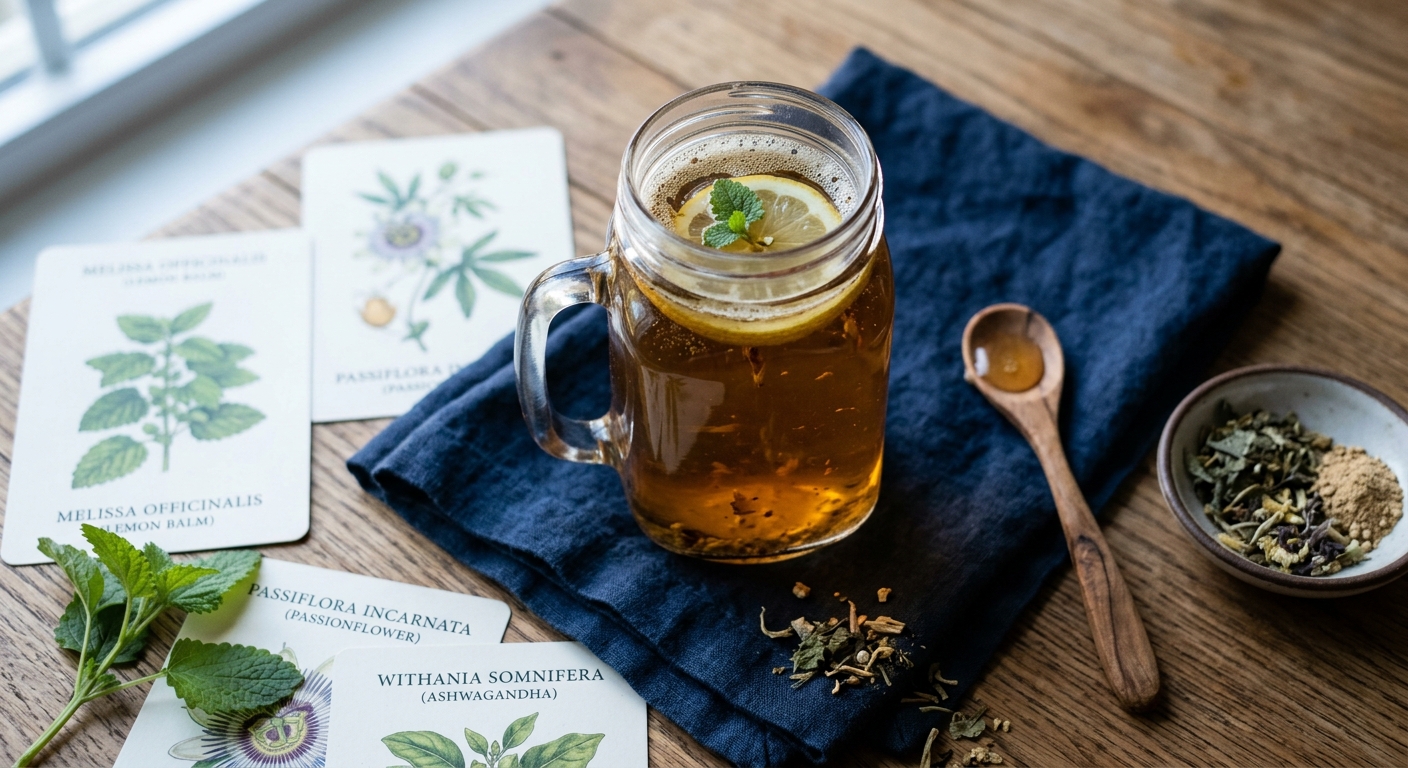
Lemon balm (Melissa officinalis) has been used in European herbal medicine since at least the 10th century, prized by the physicians of the Middle Ages as a remedy for a troubled mind and a restless heart. Ashwagandha (Withania somnifera) is one of the cornerstone adaptogens of Ayurvedic medicine, revered for over 3,000 years as a Rasayana, or rejuvenating tonic, that helps the body modulate its response to stress. Passionflower (Passiflora incarnata) was used by Indigenous peoples of North America long before European botanists took notice, traditionally prepared as a tea to calm nervous agitation and encourage restful sleep. Together, these three herbs form a synergistic blend that addresses anxiety from multiple biochemical angles without causing sedation or interfering with a productive day.
What makes this blend particularly well suited to mornings is its careful balance. The passionflower and lemon balm work quickly to ease acute tension, while the ashwagandha root works more slowly as an adaptogen, gradually recalibrating the HPA axis over time. The result is a tea that feels gentle and grounding rather than heavy, with a flavor profile that is lightly herbal, subtly earthy, and pleasantly citrus-touched. Whether you brew it hot on a slow morning, prepare a cold brew the night before, or batch it into a concentrate for busy weekdays, this tea offers a meaningful ritual of care at the start of each day.
2
cups
Ingredients
- 2 tspdried lemon balm leaves
- 1 tspashwagandha root powder
- 1 tspdried passionflower herb
- 480 mlwater (90°C / 194°F for hot brew)
- —raw honey or maple syrup to taste (optional)
- —a slice of fresh lemon (optional)
How to Brew
Click on an item below to shop for the recommended items for this recipe on Amazon.
As an Amazon Associate, we earn from qualifying purchases.
- Heat 480 ml of filtered water to 88 to 92°C (190 to 198°F). If you do not have a temperature-controlled kettle, bring water to a boil and allow it to rest off heat for 2 to 3 minutes.
- Add 2 tsp dried lemon balm, 1 tsp ashwagandha root powder, and 1 tsp dried passionflower to a tea infuser or small French press. Because ashwagandha root powder is fine, a fine-mesh infuser or a French press is strongly recommended over a loose-weave infuser.
- Pour the hot water over the herbs and cover the vessel immediately. Covering the tea while it steeps traps the volatile aromatic compounds that would otherwise escape with the steam, preserving both flavor and calming potency.
- Steep for 7 to 10 minutes. For a gentler flavor and lighter effect, aim for 7 minutes. For a more robust, earthy infusion with greater potency, steep the full 10 minutes.
- Press or strain the herbs thoroughly, stirring the liquid to reintegrate any ashwagandha powder that has settled. Add raw honey and a squeeze of fresh lemon if desired. Sip slowly over 10 to 15 minutes as a mindful morning ritual.
- The evening before, combine 3 tsp dried lemon balm, 1.5 tsp ashwagandha root powder, and 1.5 tsp dried passionflower in a clean glass jar. Slightly higher herb ratios compensate for the slower cold extraction process.
- Pour 600 ml of cold, filtered water over the herbs. Stir well for 20 to 30 seconds to ensure the ashwagandha powder is dispersed into the water rather than clumping on top.
- Seal the jar with a lid and place it in the refrigerator. Allow the herbs to steep undisturbed for 8 to 12 hours. An overnight steep of approximately 10 hours produces the most balanced result.
- In the morning, give the jar a gentle shake or stir to reintegrate any settled powder. Strain through a fine-mesh sieve or cheesecloth into a glass, pressing the herbs gently to extract remaining liquid.
- Serve over ice or enjoy at refrigerator temperature. Add a drizzle of honey and a thin slice of lemon for brightness. Cold-brewed morning anxiety tea keeps well in the refrigerator for up to 24 hours.
- Combine 4 tbsp dried lemon balm, 2 tbsp ashwagandha root powder, and 2 tbsp dried passionflower in a medium saucepan. This larger batch will yield approximately 5 to 6 servings of concentrate.
- Add 600 ml of filtered water to the saucepan and heat to 85 to 90°C (185 to 194°F) over medium-low heat. Avoid boiling to protect the aromatic volatile compounds in lemon balm and passionflower.
- Maintain the temperature at a gentle near-simmer and steep the herbs for 15 to 20 minutes, stirring occasionally to keep the ashwagandha powder fully integrated. The liquid will deepen in color to a rich amber-green.
- Remove from heat and allow the mixture to cool for 5 minutes. Strain through a fine-mesh sieve lined with cheesecloth, pressing the spent herbs firmly to extract every last drop of the concentrated liquid.
- Pour the concentrate into a sealed glass jar and refrigerate immediately. The concentrate will keep for up to 5 days. Each morning, combine 80 to 100 ml of concentrate with 160 to 200 ml of hot or cold water, adjusting the ratio to your preferred strength. Add honey or lemon as desired.
Health Benefits
Ashwagandha’s withanolides directly modulate the HPA axis, blunting excessive cortisol output during the cortisol awakening response. A randomized controlled trial published in Medicine (2019) found that 240 mg of ashwagandha extract daily significantly reduced morning cortisol levels compared to placebo.
Lemon balm’s rosmarinic acid raises GABA availability in the brain by inhibiting the enzyme that breaks GABA down, producing effects similar in mechanism to mild anxiolytic medications but without dependency risk. Multiple small clinical trials have demonstrated measurable reductions in self-reported anxiety scores following lemon balm supplementation.
Passionflower’s flavonoids, particularly chrysin and vitexin, interact with GABA-A receptors and serotonin pathways to reduce sympathetic nervous system hyperactivity. A 2011 clinical trial found passionflower extract to be as effective as low-dose oxazepam for generalized anxiety disorder, with fewer side effects.
Unlike acute anxiolytics that work only in the moment, ashwagandha is classified as an adaptogen, meaning regular use over weeks gradually recalibrates the body’s stress-response systems. Studies suggest meaningful benefits with as little as 4 to 8 weeks of consistent daily use.
Lemon balm has demonstrated positive effects on mood, calmness, and cognitive performance in healthy adults under stress. A crossover study published in Nutrients (2014) found that a single dose of lemon balm extract improved mood and reduced anxiety while also enhancing speed and accuracy on cognitive tasks.
🧪 Key Bioactive Compounds
The Science Behind Lemon Balm
The three herbs in this blend target anxiety through distinct but complementary neurochemical mechanisms, which is precisely what makes their combination more effective than any single herb alone. Lemon balm’s primary active compound, rosmarinic acid, works by inhibiting GABA transaminase, the enzyme responsible for breaking down gamma-aminobutyric acid (GABA) in the brain. GABA is the nervous system’s primary inhibitory neurotransmitter, and low GABA activity is strongly associated with anxiety disorders. By slowing GABA degradation, lemon balm effectively raises GABA availability, quieting excessive neuronal firing and promoting a state of calm alertness. This mechanism closely parallels how some pharmaceutical anxiolytics work, though lemon balm acts far more gently and without the risk of dependence.
Passionflower contributes two key flavonoids to this mechanism: chrysin and vitexin. Chrysin has demonstrated direct binding affinity for benzodiazepine receptor sites on the GABA-A receptor complex, meaning it can activate the same calming pathway targeted by benzodiazepine drugs, though with considerably lower potency and without the associated risks of sedation or dependency. Vitexin appears to interact with both serotonin receptors and opioid receptors, broadening passionflower’s anxiolytic profile beyond the GABA system alone. Together, these compounds create a multi-receptor calming effect that addresses both the cognitive and physical manifestations of anxiety.
Ashwagandha operates on a longer timescale and at the hormonal level. Its bioactive withanolides modulate the hypothalamic-pituitary-adrenal (HPA) axis, the central regulator of the body’s stress response, by reducing the overproduction of cortisol and adrenal hormones. Research also suggests that withanolides influence GABAergic transmission and may reduce neuroinflammation, adding a third calming pathway to the blend. Because ashwagandha’s adaptogenic effects accumulate over weeks rather than hours, this morning tea functions both as an acute anxiety-relief drink and as a long-term nervous system tonic when consumed as a consistent daily practice.
Brewing Tips
- Use a covered vessel while steeping. Lemon balm and passionflower contain volatile aromatic oils that evaporate quickly with heat – keeping a lid on your mug or teapot during steeping can meaningfully increase both the flavor and the therapeutic content of your cup.
- For the ashwagandha root powder, whisk the finished tea briefly before drinking or give it a firm stir, as the powder tends to settle at the bottom. Some people prefer using ashwagandha root pieces instead of powder for easier straining, though steeping time should be extended to 12 to 15 minutes for whole root pieces.
- Consistency matters more than quantity with this blend. The anxiety-reducing benefits of ashwagandha in particular are cumulative and depend on regular daily use over 4 to 8 weeks. Treat this as a morning ritual rather than an as-needed remedy for best long-term results.