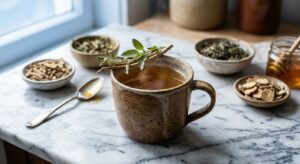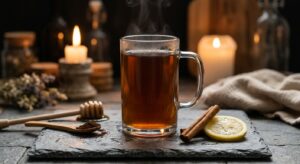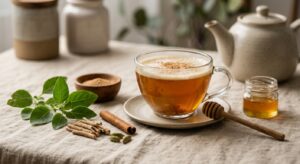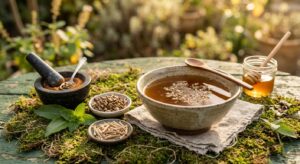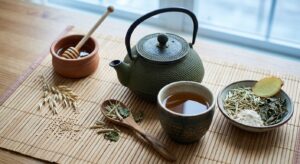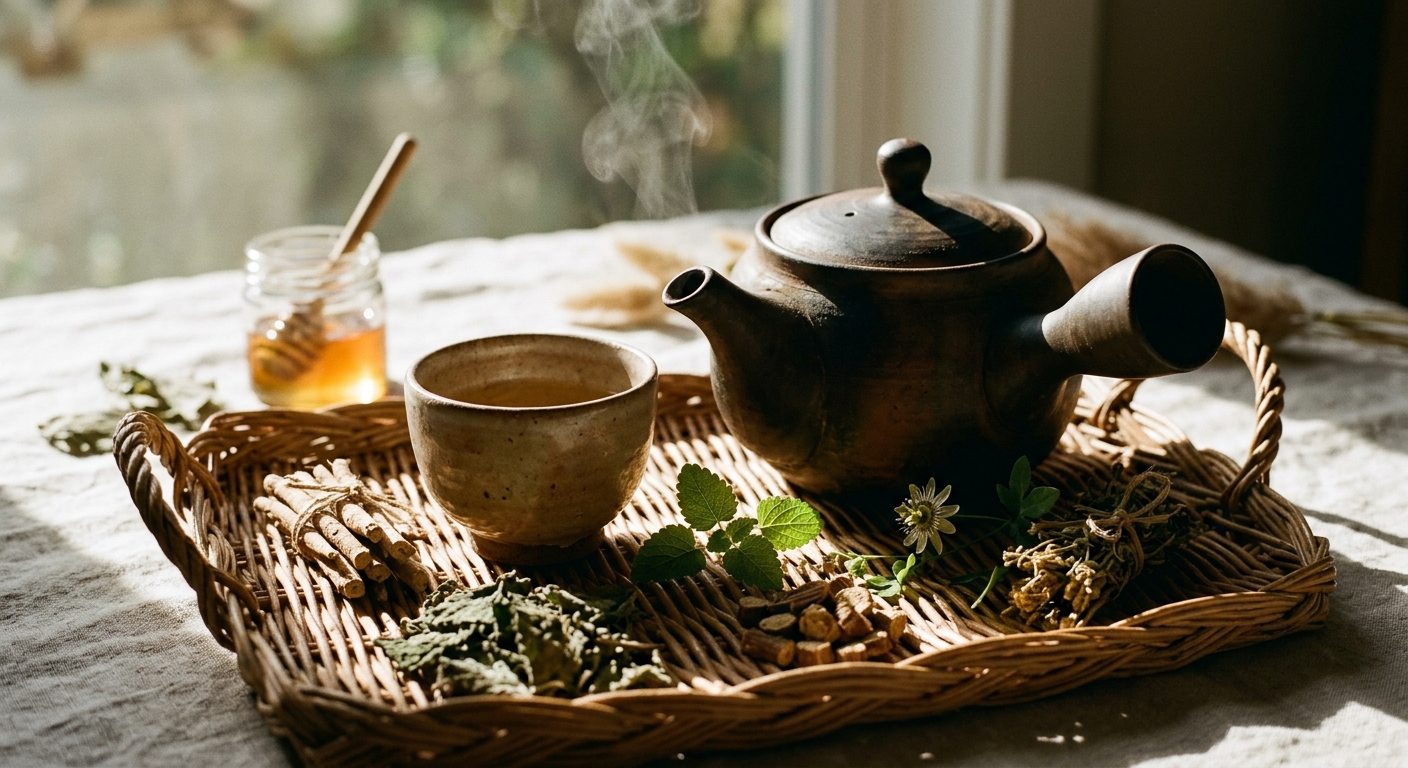
Emotional eating is rarely about hunger. It is a deeply human response to stress, boredom, grief, or overwhelm, a reaching for comfort that the body has learned to associate with food. For centuries, plant healers across Ayurvedic, European, and Chinese traditions recognized this connection between emotional states and appetite, and they responded with blends designed not to suppress hunger but to calm the nervous system that was driving it. This tea draws on that long lineage, combining adaptogenic, nervine, and digestive herbs into a single, purposeful cup.
The foundation of this blend is ashwagandha root, the revered Ayurvedic adaptogen used for over 3,000 years to buffer the body against chronic stress. Alongside it, lemon balm brings a gentle European nervine tradition, calming the mind and easing the digestive tension that stress so often triggers. Licorice root, prized in both Chinese and Western herbal medicine, adds sweetness without sugar and supports the adrenal system that becomes taxed during prolonged stress. Together, these herbs address emotional eating at its root: a dysregulated stress response.
What makes this blend especially powerful is its sensory quality. The tea is earthy, subtly sweet, and faintly citrusy, a combination that engages the senses and slows the breath before the first sip is even taken. Drinking it as a conscious ritual, stepping away from the pantry, wrapping your hands around a warm mug, and breathing in the steam, is itself a form of pattern interruption. The herbs do the deeper biochemical work, but the act of brewing and sipping is a form of self-care that many find redirects the emotional impulse toward nourishment of a different kind.
2
cups
Ingredients
- 1 tspashwagandha root powder or small root pieces
- 1.5 tspdried lemon balm leaves
- 0.5 tsplicorice root pieces
- 0.5 tspdried passionflower herb
- 480 mlwater (95°C / 203°F)
- —raw honey to taste (optional)
- —a thin slice of fresh ginger (optional, for warmth)
How to Brew
Click on an item below to shop for the recommended items for this recipe on Amazon.
As an Amazon Associate, we earn from qualifying purchases.
- Bring 480 ml of filtered water to 95°C (203°F). Use an electric kettle with temperature control if available, or bring water to a full boil and let it rest for 30 seconds.
- If using ashwagandha root pieces rather than powder, add them to the water in a small saucepan and simmer gently for 5 minutes before adding the other herbs. This pre-decoction step pulls out the heavier root compounds that a simple steep alone cannot fully extract.
- Place the ashwagandha (if using powder), lemon balm, licorice root pieces, and passionflower into a fine mesh infuser or tea strainer set inside your mug or teapot.
- Pour the hot water (or the pre-simmered ashwagandha liquid) over the herbs and cover the mug with a small saucer or lid to trap the volatile aromatic oils from the lemon balm.
- Steep for 10 to 15 minutes. The longer end of this range will produce a more earthy, robust cup with stronger adaptogenic character. The shorter end yields a lighter, more citrus-forward brew.
- Remove the infuser, stir gently, and sweeten with raw honey if desired. Sit quietly with the mug, breathe in the steam for a few seconds before drinking, and treat this moment as a deliberate pause.
- Combine the ashwagandha powder or root pieces, dried lemon balm, licorice root, and passionflower in a clean glass jar. Use 1.5 times the normal herb quantity compared to hot brew, since cold water extracts compounds more slowly and less efficiently.
- Pour 480 ml of cold, filtered water over the herbs. Stir briefly with a long spoon to ensure all the dried material is fully saturated.
- Seal the jar with a lid and leave it at room temperature for 1 hour to begin the extraction process, then transfer it to the refrigerator.
- Allow the blend to cold brew for a total of 10 to 12 hours, ideally overnight. The ashwagandha root pieces will sink and the lemon balm will release its oils slowly into the cold water, creating a particularly smooth and aromatic result.
- In the morning, strain the liquid through a fine mesh strainer or cheesecloth into a glass or bottle, pressing the herbs gently to release any remaining liquid.
- Serve over ice or drink chilled. Add a squeeze of fresh lemon to brighten the flavor, or a small drizzle of honey. The cold brew keeps refrigerated for up to 48 hours.
- Measure 600 ml of filtered water into a small saucepan. Add the ashwagandha root pieces and licorice root to the cold water before heating. Starting in cold water allows a more gradual, thorough extraction of the tough root compounds.
- Bring the water and roots to a gentle simmer over medium-low heat. Do not allow it to reach a rolling boil. Maintain a steady low simmer and let the roots cook for 15 minutes, stirring occasionally. The liquid will deepen in color and take on a rich, earthy aroma.
- After 15 minutes of simmering the roots, reduce the heat to the lowest setting and add the dried lemon balm and passionflower directly to the saucepan. Cover the pot with a lid immediately to capture the delicate aromatic oils from these more volatile herbs.
- Allow the blend to infuse off the heat or on the lowest possible setting for a further 5 to 10 minutes. The residual heat is sufficient to draw out the nervine compounds from the lemon balm and passionflower without destroying them.
- Strain the decoction through a fine mesh strainer into two mugs, pressing the herbs firmly with the back of a spoon to extract every drop.
- Taste the decoction before sweetening. The licorice root will have imparted a pronounced natural sweetness and the brew should feel full-bodied and warming. Add raw honey only if needed, and consider a pinch of cinnamon for extra grounding warmth.
Health Benefits
Ashwagandha’s withanolides have been shown in double-blind clinical trials to significantly reduce serum cortisol levels. Since elevated cortisol is one of the primary biochemical triggers for sweet and fatty food cravings, lowering it directly reduces the urge to eat for emotional comfort.
Lemon balm and passionflower both act on the GABAergic system, the brain’s primary inhibitory circuit, reducing the neural excitability that manifests as restlessness, anxiety, and the compulsive quality of emotional eating. Clinical studies on lemon balm extract show measurable reductions in anxiety and mood disturbance within single doses.
Chronic stress depletes the adrenal glands and leads to the dysregulated cortisol rhythms associated with afternoon energy crashes and evening emotional eating. Ashwagandha and licorice root both support adrenal recovery, helping to normalize energy and appetite patterns over time.
Emotional eating is frequently accompanied by digestive symptoms like bloating, cramping, and nausea driven by the gut-brain axis. Lemon balm has a well-documented antispasmodic effect on the gastrointestinal tract, and licorice root soothes the mucosal lining, making this blend supportive for the digestive fallout of stress as well.
Passionflower’s mild anxiolytic action, combined with the grounding sensory ritual of brewing a warm decoction, supports a shift in consciousness away from impulsive reactivity. Several studies on mindfulness-based interventions for emotional eating identify this kind of intentional pause as clinically meaningful in breaking the stress-to-eating cycle.
🧪 Key Bioactive Compounds
The Science Behind Ashwagandha
The science behind this blend centers on the hypothalamic-pituitary-adrenal (HPA) axis, the hormonal cascade that governs the body’s stress response. When we experience emotional stress, the HPA axis triggers cortisol release from the adrenal glands. Cortisol, in turn, promotes cravings for calorie-dense foods by activating reward pathways in the brain’s nucleus accumbens and by directly influencing the appetite-regulating hormones leptin and ghrelin. Ashwagandha’s withanolides have been demonstrated in randomized controlled trials to reduce cortisol by up to 28 percent over an eight-week period, meaningfully interrupting this cascade at its hormonal source.
The nervine herbs in this blend address the neurological side of the equation. Lemon balm’s primary active compound, rosmarinic acid, inhibits the enzyme GABA-transaminase, which is responsible for breaking down gamma-aminobutyric acid in the brain. The result is elevated GABA levels, the same general mechanism used by pharmaceutical anxiolytics, though with a far gentler and more balanced action. Passionflower’s vitexin and isovitexin compounds act as partial agonists at the GABA-A receptor, reinforcing this calming signal without inducing the dependence or cognitive blunting associated with synthetic GABA modulators. Together, these two herbs reduce the anxious arousal that compels emotional eating without suppressing alertness or mood.
Licorice root contributes through a different mechanism. Glycyrrhizin inhibits the enzyme 11-beta-hydroxysteroid dehydrogenase, which converts active cortisol into its inactive form. In the short term and at moderate doses, this can support cortisol availability during states of adrenal fatigue, helping to normalize the flat cortisol curves that produce afternoon energy crashes and evening carbohydrate cravings. This is why traditional herbalists used licorice root not only as a sweetener but as what we now understand to be an adrenal tonic. The synergy between ashwagandha’s cortisol-lowering action and licorice root’s cortisol-stabilizing action creates a more nuanced and complete adrenal support than either herb could provide alone.
Brewing Tips
- Brew this tea at 3 pm if afternoon snacking is your pattern. This is when cortisol naturally dips and cravings tend to peak, making it the most strategically effective time to drink an adaptogenic blend.
- Use ashwagandha root pieces rather than powder when possible. Powder can make the tea gritty and harder to strain, while root pieces simmer cleanly and can be composted after brewing.
- If the earthy bitterness of ashwagandha is too strong for your palate, increase the licorice root slightly. Its natural glycyrrhizin sweetness balances the bitterness without adding sugar, keeping the blend appropriate for those managing blood sugar concerns.