Long before meditation retreats and mindfulness apps, ancient cultures understood that certain plants could serve as allies in the practice of inner stillness. In Ayurvedic tradition, tulsi (holy basil) was grown in temple courtyards and sipped as a sacred preparation before prayer and contemplation. Ashwagandha root was prescribed by Vedic physicians as a rasayana, a rejuvenating tonic to restore clarity and resilience to an overworked nervous system. Passionflower, native to the Americas, was used by Indigenous healers and later adopted by European herbalists in the 17th century as a remedy for nervous restlessness and sleeplessness. Together, these three herbs form a blend that is greater than the sum of its parts.
What makes this blend particularly well suited to meditation is the synergy between adaptogenic and nervine action. Tulsi gently elevates mood and sharpens awareness without stimulating the way caffeine does, allowing you to be alert yet calm. Ashwagandha works beneath the surface, modulating the stress hormone cortisol so the body’s threat-response quiets down before you ever close your eyes. Passionflower rounds out the blend with its gentle sedating quality, softening the mental chatter that so often disrupts a sitting practice. The result is a cup that feels ceremonial, purposeful, and deeply nourishing.
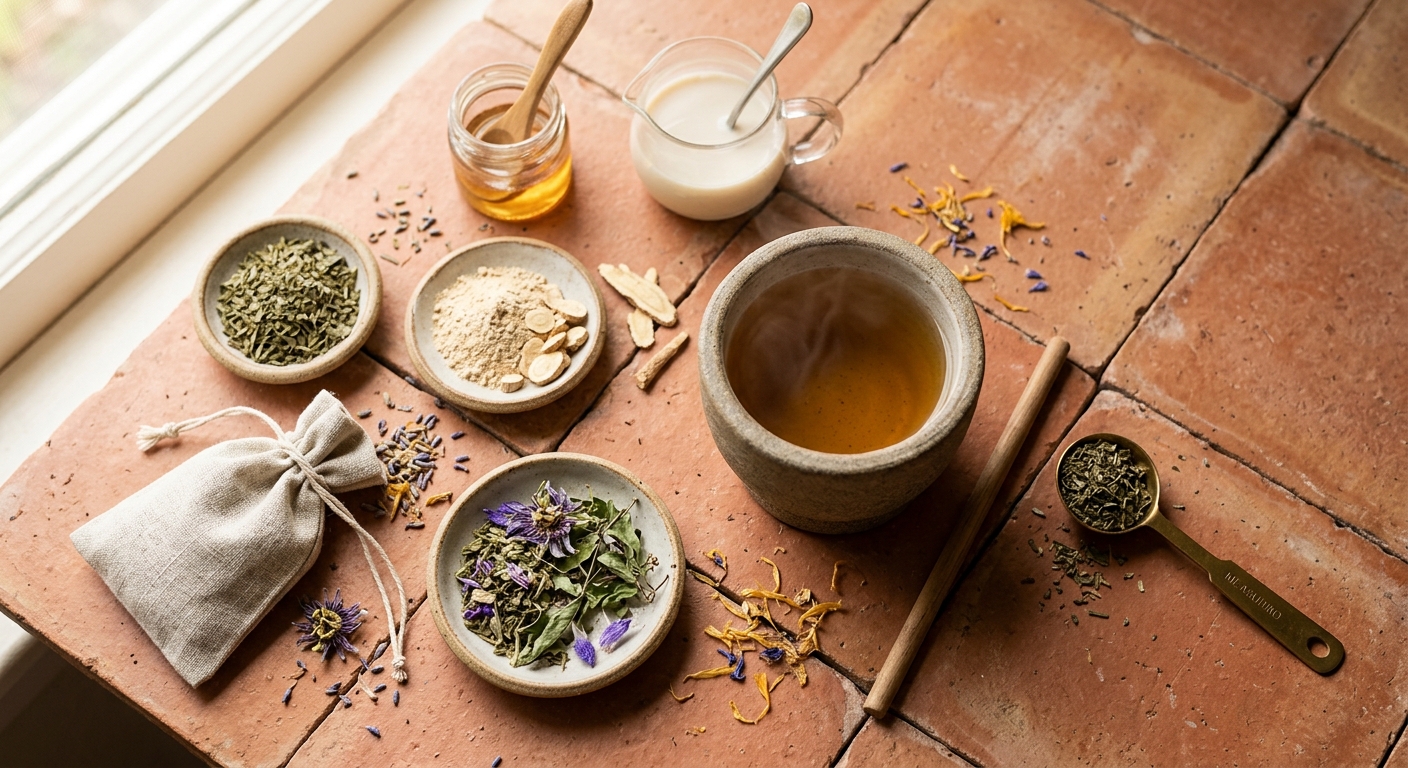
Brewing this tea as a ritual is itself a form of meditation. The act of measuring herbs, listening for the kettle, watching the water change color, and inhaling the earthy, clove-kissed aroma before the first sip can anchor attention to the present moment just as effectively as a formal seated practice. Whether you drink it in the ten minutes before your morning sit, in the evening to unwind, or during a quiet afternoon break, this blend invites you to slow down and return to yourself.
2
cups
Ingredients
- 2 tspdried tulsi (holy basil) leaves
- 1 tspashwagandha root powder or sliced dried root
- 1 tspdried passionflower herb (leaf and vine)
- 480 mlwater (90°C / 194°F)
- —raw honey or coconut sugar to taste (optional)
- —a small splash of oat milk (optional, softens the ashwagandha bitterness)
How to Brew
Click on an item below to shop for the recommended items for this recipe on Amazon.
As an Amazon Associate, we earn from qualifying purchases.
- Heat filtered water to 90 to 95°C (194 to 203°F). Avoid a full rolling boil, which can degrade the volatile aromatic compounds in tulsi and the delicate alkaloids in passionflower.
- If using sliced ashwagandha root rather than powder, add it to the water alone and simmer gently for 5 minutes before adding the other herbs. This short decoction extracts more of the root’s withanolides. If using powder, skip this step.
- Add the dried tulsi leaves and passionflower herb to a tea infuser or directly into a warmed teapot. Pour the hot water (or the ashwagandha decoction) over the herbs.
- Cover the vessel with a lid or small plate to trap volatile aromatic oils and steep for 7 to 10 minutes. Taste at 7 minutes – longer steeping increases bitterness from the ashwagandha.
- Strain into warmed mugs. Add raw honey if desired, stirring slowly and with intention. Hold the mug in both hands, close your eyes, and inhale before drinking. This sensory pause is part of the ritual.
- Combine the dried tulsi, ashwagandha root (sliced or powder), and passionflower herb in a clean glass jar. Use slightly more herb than you would for hot brew – approximately 1.5 times the standard amount – since cold water extracts more slowly and less completely.
- Pour room-temperature filtered water over the herbs, filling the jar. Give the mixture a gentle stir to ensure the herbs are fully submerged. If using ashwagandha powder, whisk it briefly to prevent clumping at the bottom.
- Seal the jar and leave it at room temperature for 1 hour to begin the initial extraction, then transfer to the refrigerator. Steep overnight for 10 to 14 hours total.
- In the morning, strain the tea through a fine mesh strainer or cheesecloth into a clean bottle or pitcher. Press the herbs gently to extract the remaining liquid.
- Serve over ice or at room temperature. The cold brew will keep refrigerated for up to 3 days. Sweeten with a small amount of honey dissolved in warm water (a simple syrup) so it blends evenly into the cold liquid.
- Double the herb quantities: use 4 tsp dried tulsi, 2 tsp ashwagandha root, and 2 tsp passionflower for 480 ml of water. This will produce a concentrate that you dilute 1:1 with hot or cold water at serving time.
- If using sliced ashwagandha root, begin with a gentle 8-minute simmer in the full water volume before adding the tulsi and passionflower herbs. This extended decoction draws out a deeper concentration of withanolides.
- Add tulsi and passionflower to the ashwagandha decoction (or to the hot water if using powder). Cover and steep for 15 to 20 minutes. The longer steep will produce a noticeably darker, more bitter brew, which is intentional for a concentrate.
- Strain through a fine mesh strainer, pressing the herbs firmly. Allow the concentrate to cool to room temperature, then transfer to a sealed glass jar.
- Refrigerate for up to 5 days. To serve, combine equal parts concentrate and hot water (for a warming cup) or pour over ice with cold water (for a refreshing version). Adjust the ratio to your taste and intended depth of effect.
Health Benefits
Multiple randomized controlled trials have shown that ashwagandha supplementation significantly lowers serum cortisol levels and self-reported stress scores compared to placebo. When combined with the adaptogenic action of tulsi, which also modulates the hypothalamic-pituitary-adrenal axis, this blend offers meaningful support for people experiencing chronic low-grade stress.
Passionflower’s flavonoids, particularly vitexin and isovitexin, enhance the activity of gamma-aminobutyric acid (GABA), the brain’s primary inhibitory neurotransmitter. A 2011 randomized trial found passionflower extract comparable to low-dose oxazepam in treating generalized anxiety disorder, without the associated impairment of job performance.
Tulsi contains rosmarinic acid and eugenol, compounds that modulate serotonin and dopamine activity in the brain. Unlike caffeine-based alertness, tulsi promotes a calm, grounded clarity that is particularly well suited to meditation, pranayama, and other contemplative practices.
Passionflower and ashwagandha both support deeper, more restorative sleep through complementary mechanisms. Passionflower enhances GABA-mediated sleep signaling, while ashwagandha’s triethylene glycol content has been independently identified as a sleep-inducing component in animal models, with human studies showing improved sleep quality and morning alertness.
Unlike pharmaceutical anxiolytics that work acutely and may cause tolerance or dependency, both tulsi and ashwagandha are adaptogens, meaning their benefits accrue gradually with consistent use. Regular consumption helps recalibrate the body’s baseline stress-response threshold over weeks and months.
🧪 Key Bioactive Compounds
The Science Behind Tulsi (Holy Basil)
The calming effects of this blend are not incidental. Each of its three herbs acts on the nervous system through distinct but complementary biochemical pathways, which is precisely why their combination is more effective than any single herb alone. Ashwagandha’s withanolides are the most studied compounds in the blend. These steroidal lactones modulate the hypothalamic-pituitary-adrenal (HPA) axis, the central stress-regulating system of the body, by blunting the overproduction of cortisol in response to perceived threats. A landmark 2012 double-blind study published in the Indian Journal of Psychological Medicine found that 300 mg of ashwagandha root extract twice daily reduced cortisol levels by 27.9% and significantly improved scores on standardized stress-assessment questionnaires over 60 days. Withaferin A, a specific withanolide, has also been shown to inhibit NF-kB signaling, a pathway that links chronic stress to systemic inflammation.
Passionflower’s primary anxiolytic mechanism centers on the flavonoid C-glycosides vitexin and isovitexin. These compounds bind to GABA-A receptors, the same receptor sites targeted by benzodiazepine drugs, but they do so more gently and without triggering the tolerance, dependency, or cognitive dulling associated with pharmaceuticals. The GABA-A receptor is essentially the brain’s main braking system, and when passionflower compounds enhance its activity, the result is a quieting of excessive neural firing, reduced rumination, and a lowering of physiological arousal. Because these compounds do not fully occupy the benzodiazepine binding site, they produce a softer, more nuanced effect that supports meditation without inducing sedation or impairing cognitive function at typical tea doses.
Tulsi contributes to the blend through a different but equally important route. Its phenylpropanoid compounds, especially eugenol and rosmarinic acid, influence the monoamine neurotransmitter systems, specifically serotonin and dopamine signaling in the prefrontal cortex and limbic system. Rosmarinic acid has demonstrated measurable inhibition of catechol-O-methyltransferase (COMT), an enzyme that breaks down dopamine, suggesting it may help sustain the positive, focused mood states associated with meditation. Tulsi also contains ursolic acid, a triterpenoid that modulates the release of heat shock proteins and cytokines involved in the stress response. Taken together, the three herbs create a layered biochemical environment that supports the nervous system from multiple angles, making the meditation that follows not just a practice but a deeply supported physiological state.
Brewing Tips
- Brew your meditation tea while your space is still being prepared. The act of brewing becomes part of the ritual, and having the cup ready the moment you sit down removes any interruption between intention and practice.
- Use sliced ashwagandha root rather than powder when possible for hot brew and concentrate methods. The powder absorbs less completely into the infuser, can leave a gritty texture, and tends to make the brew cloudier. Reserve the powder for cold brew, where a brief whisk disperses it evenly.
- If the ashwagandha bitterness is too pronounced on first tasting, do not automatically add more sweetener. Instead, try shortening the steep time by 2 minutes or reducing the ashwagandha portion by half and gradually increasing it over one to two weeks as your palate adjusts. Many practitioners report that the bitterness becomes appreciated, even anticipated, over time.
- Store your dried herb blend in a sealed glass jar away from direct sunlight and heat. Pre-mixing a two-week supply of the three herbs in the correct ratio saves preparation time and ensures consistency between sessions.
- For evening meditation, increase the passionflower to 1.5 tsp and reduce the tulsi to 1 tsp. Tulsi has a mildly uplifting quality that is ideal for morning and daytime practices, while emphasizing passionflower shifts the blend’s character toward deeper relaxation and sleep preparation.