Nervous exhaustion is not simply feeling tired. It is a state of deep depletion in which the body’s stress response systems have been running on overdrive for too long, leaving behind a persistent fog of anxiety, irritability, poor sleep, and emotional fragility. Herbalists across traditions have long recognised this pattern and developed specific blends to address it, drawing on tonic herbs that nourish and rebuild rather than simply sedate. This recovery tea brings together three of the most respected nervine tonics in Western and Ayurvedic herbalism: oat straw, ashwagandha root, and lemon balm.
Oat straw, the green tops and straw of Avena sativa, has been used since at least the medieval period in European folk medicine as a restorative for the nerves. It was a favourite of the renowned 19th-century herbalist Dr. Edward Bach and later championed by herbalist Susun Weed as a premier nourishing herb for the nervous system. Ashwagandha (Withania somnifera) comes from the Ayurvedic tradition, where it has been classified as a rasayana, a class of rejuvenating herbs used to restore vitality and longevity. Its name translates loosely to ‘smell of horse’, referencing both its earthy aroma and the strength it was believed to impart. Lemon balm (Melissa officinalis), a gentle member of the mint family, has been treasured since ancient Greece for its ability to ‘lift the spirit’ and ease anxious tension without leaving a person dulled or drowsy.
Together, these three herbs form a synergistic trio that addresses nervous exhaustion from multiple angles: oat straw provides slow, mineral-rich nourishment to the nervous system itself; ashwagandha helps regulate the body’s cortisol response and builds stress resilience over time; and lemon balm eases the surface symptoms of anxiety and promotes clarity. The resulting tea is earthy, gently herbaceous, and faintly lemony, with a warmth that feels genuinely restorative from the very first sip. This is a blend intended for regular, consistent use over weeks rather than a single-cup fix, reflecting its role as a true tonic rather than a quick remedy.
2
cups
Ingredients
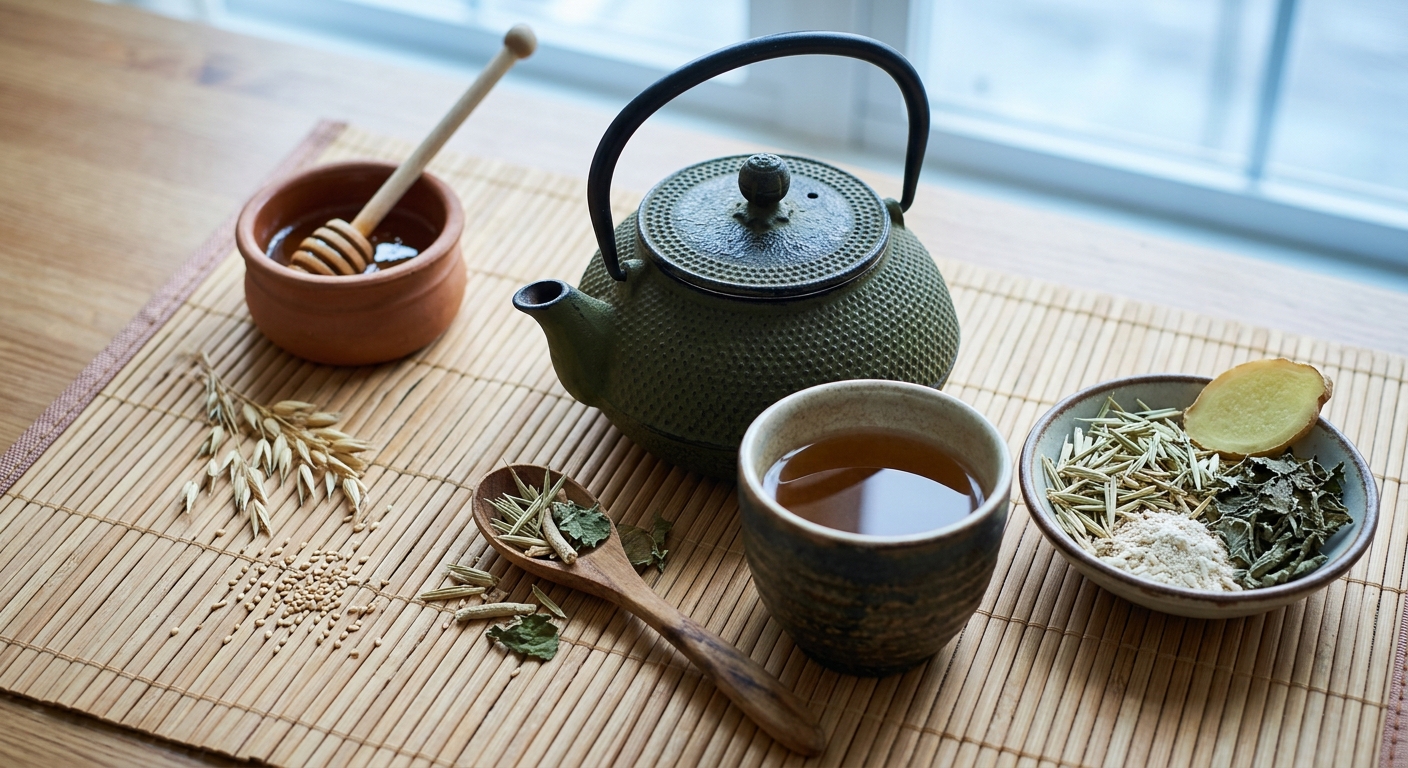
- 2 tspdried oat straw (cut and sifted)
- 1 tspashwagandha root powder or finely cut root
- 2 tspdried lemon balm leaves
- 480 mlwater (95°C / 203°F)
- —raw honey to taste (optional)
- —a thin slice of fresh ginger (optional, for warmth)
How to Brew
Click on an item below to shop for the recommended items for this recipe on Amazon.
As an Amazon Associate, we earn from qualifying purchases.
- Bring filtered water to 95°C (203°F). If you do not have a temperature-controlled kettle, bring water to a full boil and allow it to rest for 60 seconds before pouring.
- Add 2 teaspoons of dried oat straw, 1 teaspoon of ashwagandha root, and 2 teaspoons of dried lemon balm into a fine mesh infuser or a tea strainer placed inside a pre-warmed teapot or large mug. Pre-warming the vessel with a splash of hot water helps maintain brewing temperature throughout the long steep.
- Pour 480 ml of hot water slowly over the herbs, ensuring all plant material is saturated. If using a teapot, place the lid on to trap volatile aromatic compounds from the lemon balm. If using a mug, cover it with a small saucer.
- Steep for a full 15 to 20 minutes. This extended time is necessary for the oat straw to release its silica and flavonoids and for ashwagandha to surrender its bitter withanolides into the water. Set a timer so you do not forget.
- Remove the infuser or strain the tea through a fine mesh strainer into your cups. The tea will have deepened to a warm amber-green color. Discard the spent herbs or add them to compost.
- Taste before sweetening. If the ashwagandha earthiness is too pronounced, stir in a small amount of raw honey to balance. Add a thin slice of fresh ginger now if desired, allowing it to steep for an additional 2 minutes in the hot tea before drinking.
- Measure out a double quantity of herbs: 4 teaspoons of dried oat straw, 2 teaspoons of ashwagandha root, and 4 teaspoons of dried lemon balm. Cold water extracts compounds more slowly and less completely than hot water, so increasing the ratio compensates for the lower extraction rate.
- Place the herbs into a clean glass jar. If using ashwagandha root powder rather than cut root, place it into a small muslin bag or tea filter first so it does not cloud the final brew excessively.
- Pour 480 to 600 ml of cool, filtered water over the herbs. Stir briefly with a clean spoon to ensure all the plant material is submerged. Do not use ice cold water at this stage as it can shock the plant cells and restrict initial extraction.
- Loosely cover the jar with a lid or a clean cloth secured with a rubber band. Allow the jar to sit at room temperature for the first 1 to 2 hours, then transfer it to the refrigerator.
- Steep in the refrigerator for a minimum of 8 hours and up to 12 hours overnight. The longer end of this range will produce a richer, more mineral-forward cup.
- In the morning, strain the cold brew through a fine mesh strainer lined with a piece of muslin cloth into a clean jar or pitcher. The muslin is especially important if you used powdered ashwagandha. Serve over a glass of ice, stir in honey if desired, and store any remaining cold brew in the refrigerator for up to 24 hours.
- Combine 2 teaspoons of dried oat straw and 1.5 teaspoons of ashwagandha root in a small saucepan. Pour 600 ml of cold filtered water directly over the herbs in the pan. Starting in cold water and slowly bringing the herbs to temperature encourages a more gradual and thorough extraction of minerals and adaptogenic compounds.
- Place the saucepan over medium heat and bring slowly to a gentle simmer, not a rolling boil. Once simmering, reduce the heat to low to maintain a consistent, quiet simmer where small bubbles rise intermittently but the brew does not boil vigorously.
- Simmer uncovered for 20 to 25 minutes, stirring occasionally. You will notice the liquid reducing slightly and deepening in color. Keep an eye on the liquid level and add a small splash of water if it reduces by more than a quarter.
- Remove the saucepan from heat. Add 2 teaspoons of dried lemon balm directly to the hot decoction in the pan. Cover the pan with a lid immediately to trap the volatile aromatic oils from the lemon balm, which would be destroyed by continued boiling.
- Allow the lemon balm to infuse in the residual heat for 10 minutes with the lid on. This two-stage approach preserves the delicate compounds of lemon balm while still fully extracting the more robust compounds from oat straw and ashwagandha.
- Strain the decoction through a fine mesh strainer into cups or a pre-warmed teapot, pressing the spent herbs gently with the back of a spoon to extract the remaining liquid. Sweeten with raw honey if desired, or stir in a small splash of oat milk to mellow the earthy intensity. This decoction can also be cooled and stored in the refrigerator for up to 48 hours, making it practical to prepare a larger batch at the start of the week.
Health Benefits
Oat straw is classified as a nervine tonic, meaning it supports the structural and functional health of the nervous system over time rather than producing an immediate sedative effect. Its silica, flavonoids, and avenanthramides nourish depleted nerves, making it particularly suited to recovery from long-term stress or burnout.
Multiple clinical trials, including a 2012 double-blind study published in the Indian Journal of Psychological Medicine, have demonstrated that ashwagandha root extract significantly reduces serum cortisol levels and perceived stress scores in chronically stressed adults. Its withanolides modulate the hypothalamic-pituitary-adrenal (HPA) axis, helping to prevent the cortisol dysregulation that drives nervous exhaustion.
Lemon balm has been the subject of several controlled studies demonstrating its ability to reduce anxiety and improve mood. Its rosmarinic acid inhibits GABA transaminase, slowing the breakdown of gamma-aminobutyric acid and thereby promoting a calm, clear mental state without sedation or cognitive dulling.
Ashwagandha has been shown in clinical studies to significantly improve sleep quality, sleep onset latency, and morning alertness in adults with insomnia and anxiety. Combined with lemon balm’s gentle calming action on the nervous system, this blend supports the deep restorative sleep that is essential for recovery from nervous exhaustion.
Both lemon balm and ashwagandha have demonstrated nootropic properties in human trials. Ashwagandha has been shown to improve reaction time, task performance, and attention, while lemon balm has been linked to improved memory and reduced cognitive fatigue, addressing the mental fog that commonly accompanies burnout.
🧪 Key Bioactive Compounds
The Science Behind Oat Straw
The science behind this recovery blend centres on the body’s stress response axis, specifically the hypothalamic-pituitary-adrenal (HPA) axis, which governs the release of cortisol and other stress hormones. In states of prolonged stress, this axis becomes dysregulated, producing either chronically elevated cortisol or, in advanced exhaustion, abnormally low cortisol output as the system burns out. Ashwagandha’s withanolides are among the best-studied natural compounds for correcting this dysregulation. A landmark 2012 randomised, double-blind, placebo-controlled trial published in the Indian Journal of Psychological Medicine found that 300 mg of ashwagandha root extract taken twice daily for 60 days produced a 27.9% reduction in serum cortisol levels compared to placebo, alongside significant improvements in all measures of perceived stress. Subsequent studies have replicated and extended these findings, with a 2019 study in Medicine showing improvements in sleep quality, anxiety, and morning alertness at the same dosage.
Lemon balm’s anxiolytic action is now well characterised at the molecular level. Its primary active polyphenol, rosmarinic acid, acts as an inhibitor of GABA transaminase, the enzyme responsible for degrading gamma-aminobutyric acid (GABA) in the brain. By slowing GABA breakdown, lemon balm effectively raises the brain’s inhibitory tone, producing a calming effect similar in mechanism to pharmaceutical anxiolytics but far gentler in magnitude and without the tolerance and dependency risks. A 2004 study in Psychosomatic Medicine demonstrated that a standardised lemon balm extract reduced laboratory-induced stress and significantly improved mood and calmness scores in healthy volunteers, with effects observable within a single dose. Chronic administration studies have further shown improvements in cognitive performance alongside anxiety reduction, suggesting that lemon balm supports rather than impairs mental function, a critical distinction for people recovering from burnout-related brain fog.
Oat straw’s contribution to this blend is less dramatic in terms of single-compound pharmacology but is arguably the most important for long-term recovery. Rich in bioavailable silica, avenanthramides, iron, magnesium, and B vitamins, oat straw provides the nutritional substrate that an exhausted nervous system needs to repair itself. Silica in particular has been associated in traditional botanical medicine with the integrity of connective tissue and nerve coverings, and while the direct clinical research on oat straw as a nervine is still developing, a 2011 study in the Journal of Alternative and Complementary Medicine found that daily consumption of an oat herb extract significantly improved cognitive performance and attention in older adults, supporting the traditional claim that oat straw has a measurable tonic effect on the brain and nervous system. Together, these three herbs address nervous exhaustion at the level of hormonal regulation, neurotransmitter support, and nutritional nourishment, making this blend a genuinely multi-layered therapeutic tool.
Brewing Tips
- Consistency is the most important factor with this blend. Ashwagandha and oat straw are tonic herbs that produce cumulative benefits over weeks of regular use, so aim to drink one to two cups daily for a minimum of four to six weeks before evaluating results.
- If you find the earthy bitterness of ashwagandha too strong in the hot brew, switch to the cold brew method, which significantly reduces bitter extraction and produces a noticeably smoother, sweeter cup while preserving most of the adaptogenic benefits.
- Grow your own lemon balm for the freshest possible flavor. It is one of the easiest herbs to cultivate in a pot on a windowsill or in a garden, and fresh lemon balm leaves used at a ratio of 2 tablespoons fresh to 1 teaspoon dried will produce a dramatically brighter, more aromatic cup than dried lemon balm alone.