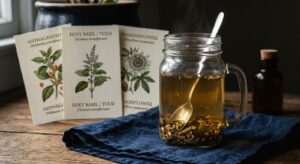
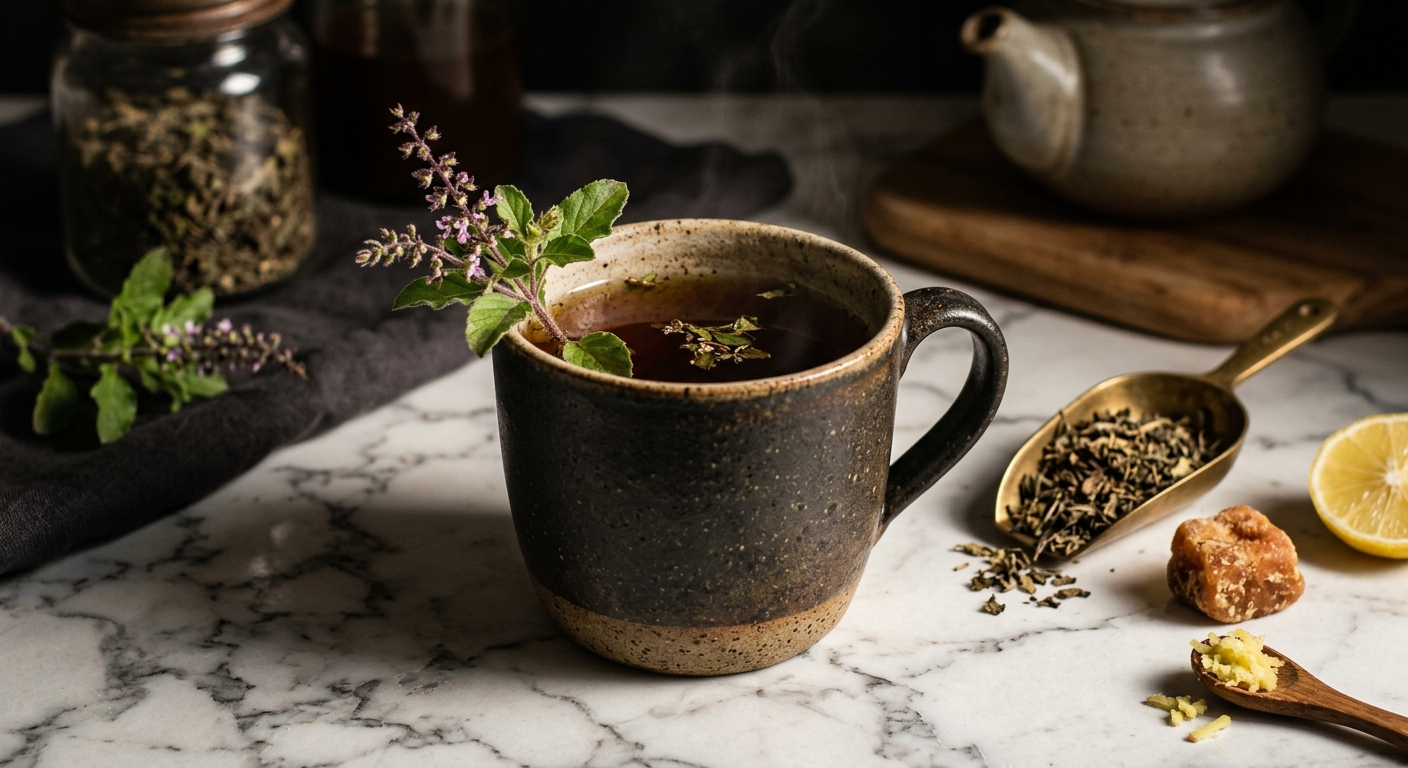
Few herbs carry the spiritual and medicinal weight of holy basil, known throughout South Asia as Tulsi, meaning “the incomparable one.” Revered in Hindu tradition as a manifestation of the goddess Lakshmi and planted in the courtyards of homes and temples for millennia, Tulsi (Ocimum tenuiflorum) is far more than a culinary herb. It is a living pharmacy, a sacred guardian, and one of the most well-studied adaptogens in the world. Ancient Ayurvedic texts describe it as a rasayana, a rejuvenating tonic that promotes longevity, mental clarity, and spiritual well-being. Drinking tulsi tea is, in many ways, an act that bridges the ancient and the modern.
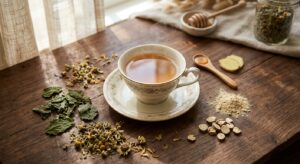
There are three primary varieties of tulsi cultivated for tea: Vana (wild forest basil, with a light and citrusy profile), Krishna (dark-leafed and intensely spicy, with strong clove and pepper notes), and Rama (the most common variety, with a mellow, sweet, and slightly floral character). Many commercial tulsi teas blend two or all three varieties to create a balanced cup, while single-origin blends allow the distinct terroir of each type to shine. The fresh or dried leaves, stems, and flowers are all used, each contributing aromatic volatile oils that give tulsi its unmistakable warmth and complexity.
What separates tulsi from a simple calming herb is its classification as an adaptogen, a plant that helps the body modulate its own stress response rather than simply sedating it. Unlike valerian or passionflower, which act more like herbal sedatives, tulsi can be drunk in the morning without causing brain fog. It sharpens focus, lifts mood, and simultaneously eases the physiological tension of chronic stress. This makes it an ideal daily tea for anyone navigating the demands of modern life, and a deeply satisfying cup on its own merits, fragrant, warming, and alive with botanical character.
2
cups
Ingredients
- 2 tspdried tulsi leaves (or 4 tsp fresh tulsi leaves)
- 240 mlwater per serving (90°C / 194°F for hot brew)
- —raw honey or jaggery to taste (optional)
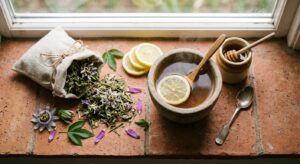
- —fresh lemon slice to taste (optional)
- —small piece of fresh ginger, grated (optional, pairs beautifully)
How to Brew
Click on an item below to shop for the recommended items for this recipe on Amazon.
As an Amazon Associate, we earn from qualifying purchases.
- Heat your water to 90 to 95°C (194 to 203°F). If you do not have a temperature-controlled kettle, bring water to a full boil and allow it to rest uncovered for 90 seconds before pouring.
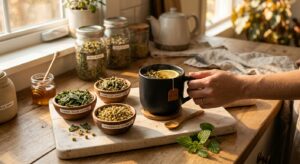
- Place 2 teaspoons of dried tulsi leaves per cup into your tea infuser or directly into a warmed teapot. If using fresh leaves, use 4 teaspoons per cup and lightly bruise them between your fingers first to release the essential oils.
- Pour the hot water over the tulsi and cover your mug or teapot immediately with a lid or small saucer. Covering the vessel traps the volatile aromatic oils that would otherwise escape with the steam.
- Steep for 5 to 7 minutes. For a lighter, more floral cup steep for 5 minutes. For a bolder, spicier tea with deeper adaptogenic character, steep for the full 7 minutes.
- Remove the infuser or strain the leaves. Add raw honey, jaggery, or a squeeze of fresh lemon if desired, and drink while warm for maximum aromatic enjoyment.
- Measure 3 teaspoons of dried tulsi leaves per 240 ml of cold, filtered water into a clean glass jar. Cold brewing requires a slightly higher leaf-to-water ratio than hot brewing because the lower temperature extracts compounds more slowly and less completely.
- Fill the jar with cold or room-temperature filtered water, stir gently to ensure the leaves are fully submerged, and seal the jar with its lid. Do not use hot or warm water at this stage.
- Place the jar in the refrigerator and allow it to steep for 8 to 12 hours. Eight hours produces a lighter, sweetly floral cold brew, while 12 hours yields a more full-bodied amber tea with a pleasant spicy warmth even when served cold.
- Strain the tulsi leaves through a fine mesh strainer or cheesecloth into a clean pitcher or glass. The cold brew will keep refrigerated for up to 48 hours in a sealed container.
- Serve over ice with a slice of fresh lemon or a few fresh mint leaves. Sweeten lightly with a simple honey syrup (equal parts honey and warm water, pre-dissolved) for the best integration of sweetener into the cold liquid.
- Combine 480 ml of cold filtered water in a small saucepan with 4 teaspoons of dried tulsi leaves, 3 thin slices of fresh ginger, 4 whole green cardamom pods (lightly crushed), and a small cinnamon stick. For extra heat during illness season, add 2 to 3 whole black peppercorns.
- Bring the mixture to a gentle boil over medium heat, stirring once. Once it reaches a boil, immediately reduce the heat to low and allow it to simmer uncovered for 10 to 15 minutes. The liquid will reduce and deepen in color to a warm amber-gold.
- Watch the pot as it simmers. The aroma will evolve from sharp and spicy to a rounded, almost sweet warmth as the volatile compounds of the spices and tulsi meld together. This is the traditional kadha fragrance, rich and enveloping.
- Remove the saucepan from heat and allow the brew to rest for 2 minutes. Strain through a fine mesh strainer into two mugs, pressing the leaves gently to extract the last of the liquid.
- Sweeten with raw honey or jaggery to taste. Add a small splash of full-fat milk or oat milk if desired for a creamier, chai-adjacent tulsi kadha. Drink warm immediately for the full therapeutic and sensory effect.
Health Benefits
Tulsi is classified as an adaptogen because it helps normalize cortisol levels and modulate the hypothalamic-pituitary-adrenal (HPA) axis, the body’s central stress response system. A randomized double-blind trial published in the Journal of Ayurveda and Integrative Medicine found that participants taking tulsi extract reported significant reductions in forgetfulness, exhaustion, and sleep disturbances compared to placebo.
Unlike sedating herbs, tulsi has demonstrated nootropic properties in several clinical studies, with participants showing improvements in reaction time, error rates, and cognitive flexibility. The combination of rosmarinic acid and ocimumosides appears to support healthy neurotransmitter balance in the prefrontal cortex.
Multiple human trials have shown that regular consumption of tulsi leaf extract can significantly reduce fasting blood glucose and postprandial blood glucose levels, potentially through eugenol’s ability to stimulate insulin secretion and improve peripheral insulin sensitivity.
Tulsi’s rich array of phenolic compounds, including ursolic acid, rosmarinic acid, and orientin, work together to suppress pro-inflammatory cytokines while simultaneously modulating immune response. Traditional Ayurvedic practitioners have long used tulsi as a first-line herb during seasonal illness, a use now supported by its demonstrated antimicrobial and immunomodulatory activity.
Ursolic acid and eugenol both contribute to tulsi’s cardioprotective effects: eugenol inhibits platelet aggregation (reducing clot risk) and ursolic acid has been shown to lower LDL cholesterol and triglycerides in animal models, with promising early human data supporting its role in heart health maintenance.
🧪 Key Bioactive Compounds
The Science Behind Holy Basil (Tulsi)
The adaptogenic activity of holy basil is not the result of a single active compound but an orchestrated interplay of several distinct phytochemicals acting across multiple biological pathways simultaneously. The most studied mechanism involves the modulation of the hypothalamic-pituitary-adrenal (HPA) axis. Ocimumosides A and B, glycosides unique to Ocimum tenuiflorum, have been shown in controlled animal studies to normalize elevated corticosterone levels and prevent stress-induced depletion of monoamine neurotransmitters including serotonin, dopamine, and norepinephrine in the prefrontal cortex and hippocampus. This explains tulsi’s distinctive quality of producing calm without cognitive dulling, as serotonin and dopamine support both mood regulation and executive function.
Eugenol, the dominant volatile compound in tulsi’s essential oil and the molecule responsible for its characteristic clove-like warmth, contributes anti-inflammatory action through inhibition of cyclooxygenase (COX) enzymes, the same mechanism targeted by non-steroidal anti-inflammatory drugs (NSAIDs). Chronic psychological stress drives systemic inflammation through sustained elevation of inflammatory cytokines such as IL-6 and TNF-alpha, and eugenol’s COX inhibition, combined with ursolic acid’s suppression of the NF-kB transcription pathway, creates a dual anti-inflammatory effect that addresses this stress-inflammation link directly. Rosmarinic acid adds a third layer by inhibiting the enzyme catechol-O-methyltransferase (COMT), slowing the metabolic breakdown of dopamine and norepinephrine and potentially extending their beneficial effects in the synaptic cleft.
On the antioxidant front, the flavone C-glycosides orientin and vicenin are among the most potent free radical scavengers identified in the Lamiaceae family. Oxidative stress, the cellular damage caused by an accumulation of reactive oxygen species (ROS), is both a consequence and a driver of chronic stress, creating a damaging feedback cycle. By neutralizing ROS directly and upregulating the body’s endogenous antioxidant enzymes such as superoxide dismutase and catalase, tulsi’s flavonoids help break this cycle at the cellular level. The convergence of these mechanisms across neurochemistry, endocrinology, inflammation, and oxidative stress is what makes tulsi a genuinely multidimensional adaptogen rather than a simple anxiolytic, and why modern researchers continue to investigate its therapeutic potential across such a wide range of conditions.
Brewing Tips
- Always cover your mug while steeping hot tulsi tea. The aromatic volatile oils, particularly eugenol and linalool, escape readily with rising steam, and covering the vessel preserves both the therapeutic compounds and the complex fragrance that makes tulsi so distinctive.
- For the freshest and most potent tea, source tulsi from reputable Ayurvedic suppliers or grow your own Rama or Krishna variety in a sunny windowsill pot. Fresh leaves can be harvested, air-dried at room temperature for 5 to 7 days, and stored in a sealed glass jar away from light for up to 12 months.
- Build a daily tulsi ritual rather than using it reactively. Because tulsi works on the HPA axis and cortisol rhythms over time, consistent daily consumption (one to two cups per day for at least three to four weeks) produces noticeably greater stress-buffering effects than occasional use during acute stress moments.