The vagus nerve is one of the most extraordinary structures in the human body. Stretching from the brainstem all the way down through the heart, lungs, and digestive tract, it acts as the master conductor of the parasympathetic nervous system. When vagal tone is high, you feel calm, connected, and resilient. When it is low, anxiety, digestive upset, brain fog, and a racing heart tend to take over. Traditional herbalists across cultures have long worked with nervine plants to settle what ancient Ayurvedic texts called vata imbalance and what medieval European herbalists described as a troubled spirit. What they were intuitively targeting, modern science is now beginning to understand as vagal tone.
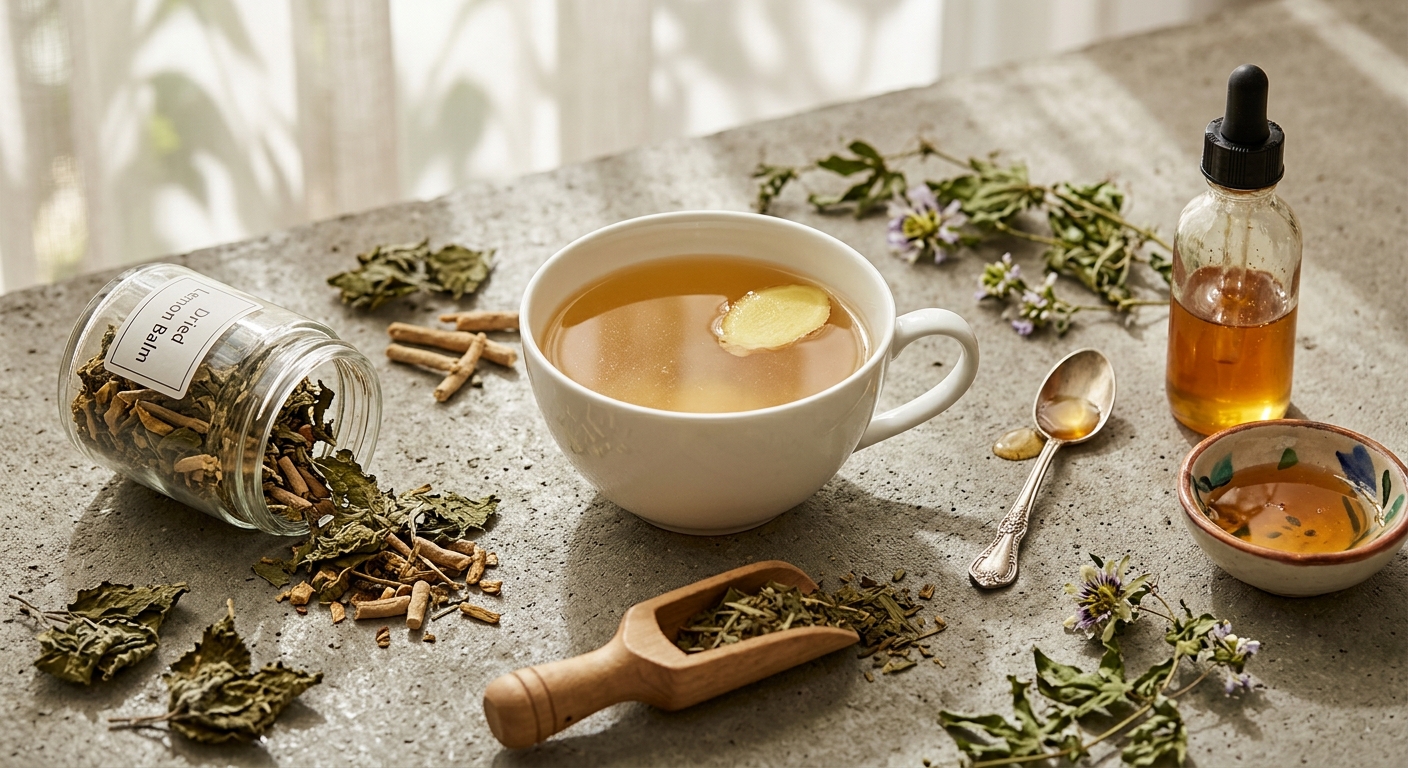
This blend draws on three of the most studied and time-honored nervine herbs in the world. Lemon balm (Melissa officinalis) has been used since at least the Middle Ages to ease anxiety, lift melancholy, and calm the gut. Ashwagandha root (Withania somnifera) is a cornerstone of Ayurvedic medicine, classified as a rasayana, or rejuvenating tonic, used for over 3,000 years to build resilience against stress. Passionflower (Passiflora incarnata) was embraced by Indigenous peoples of the Americas long before it became a staple of European herbal medicine, prized for its remarkable ability to quiet an overactive, spiraling mind. Together, these three herbs create a synergistic blend that speaks directly to the nervous system.
What makes this tea particularly special is its approach: rather than simply sedating the nervous system, the herbs in this blend help tone and regulate it. Ashwagandha modulates the HPA axis and cortisol response over time. Lemon balm’s rosmarinic acid inhibits GABA breakdown for immediate calm. Passionflower’s chrysin and flavonoids gently bind to benzodiazepine receptors without the dependency concerns associated with pharmaceutical anxiolytics. Sipped warm in the evening or cold through the afternoon, this is a tea you can return to every day as part of a genuine nervous system care practice.
2
cups
Ingredients
- 2 tspdried lemon balm leaves
- 1 tspashwagandha root powder (or 1.5 tsp dried ashwagandha root pieces)
- 1 tspdried passionflower herb (leaf and vine)
- 480 mlwater (90°C / 194°F for hot brew)
- —raw honey or maple syrup to taste (optional)
- —a thin slice of fresh ginger (optional, supports vagal tone via gut warming)
How to Brew
Click on an item below to shop for the recommended items for this recipe on Amazon.
As an Amazon Associate, we earn from qualifying purchases.
- If using ashwagandha root powder, add it directly to your infuser or teapot along with the lemon balm and passionflower. If using root pieces, place them in a small saucepan with 500 ml of cold water, bring to a low simmer, and decoct for 10 minutes before removing from heat and proceeding.
- Heat your water to 88 to 92°C (190 to 198°F). Avoid a rolling boil, as excessive heat can degrade the volatile aromatic compounds in lemon balm that contribute to its calming effect.
- Place the lemon balm and passionflower into a tea infuser or directly into a teapot. If you are using ashwagandha powder, add it here as well. Pour the hot water (or the warm ashwagandha decoction) over the herbs.
- Cover the vessel with a lid or small plate to trap the volatile oils and steep for 7 to 10 minutes. A shorter steep yields a lighter, more floral cup. A full 10 minutes draws out more of the bitter nervine compounds from the passionflower.
- Strain carefully into your mug. If you used ashwagandha powder, strain through a fine mesh strainer or a piece of cheesecloth to remove any sediment.
- Sweeten lightly with raw honey if desired, add a slice of fresh ginger for extra warmth, and sip slowly in a quiet space. Allow yourself 15 to 20 minutes with this cup without screens or distractions.
- Measure out a double-strength ratio of herbs: 4 tsp dried lemon balm, 2 tsp ashwagandha root powder or pieces, and 2 tsp dried passionflower for every 480 ml of cold filtered water. Cold water extracts compounds more slowly and less efficiently, so doubling the herb quantity compensates.
- Combine the herbs and cold filtered water in a clean glass jar. Stir gently to ensure the ashwagandha powder is distributed throughout the water rather than clumping at the surface.
- Seal the jar with a lid or cover it tightly with a small plate or wrap. Allow it to sit at room temperature for 1 hour to begin extraction, then transfer it to the refrigerator.
- Let the blend cold brew for 10 to 14 hours, ideally overnight. The slow, cool extraction preserves heat-sensitive volatile oils in lemon balm and creates a noticeably smoother, less tannic flavor than hot brewing.
- When ready, strain the cold brew through a fine mesh strainer lined with cheesecloth into a clean pitcher or bottle, pressing gently on the spent herbs to extract remaining liquid.
- Serve over ice in a tall glass. Add a squeeze of fresh lemon juice and a sprig of fresh lemon balm as a garnish if available. The cold brew will keep refrigerated for up to 48 hours.
- Combine 3 tbsp dried lemon balm, 2 tbsp ashwagandha root powder or pieces, and 1.5 tbsp dried passionflower with 720 ml of cold filtered water in a small saucepan. This is a triple-strength ratio designed for dilution.
- Bring the mixture slowly to a low simmer over medium-low heat. Do not boil aggressively. Once you see gentle bubbling, reduce the heat to maintain a steady low simmer between 85 and 90°C (185 to 194°F).
- Simmer uncovered for 20 to 25 minutes, stirring occasionally, until the liquid has reduced by approximately one third. You should have roughly 480 to 500 ml of deeply colored, fragrant concentrate remaining.
- Remove from heat and allow the concentrate to cool slightly for 5 minutes before straining through a fine mesh strainer lined with cheesecloth. Press the herbs firmly to extract as much liquid as possible.
- While still warm, stir in 2 to 3 tablespoons of raw honey to preserve the concentrate and add sweetness. Transfer to a clean glass jar with a tight-fitting lid and refrigerate.
- To serve, dilute 60 to 80 ml of concentrate with 180 to 200 ml of hot water for a warm cup, or with cold sparkling water over ice for a refreshing herbal tonic. The concentrate keeps refrigerated for up to 5 days.
Health Benefits
The combination of GABA-enhancing compounds from lemon balm and passionflower, along with ashwagandha’s cortisol-modulating withanolides, helps shift the autonomic nervous system away from fight-or-flight dominance and toward the rest-and-digest state regulated by the vagus nerve. Regular consumption supports heart rate variability, a key measurable marker of healthy vagal tone.
Multiple clinical trials have demonstrated that each herb in this blend independently reduces anxiety symptoms. A 2014 study published in the Journal of Alternative and Complementary Medicine found that ashwagandha significantly reduced scores on standardized anxiety scales. Passionflower has shown efficacy comparable to low-dose oxazepam for generalized anxiety in a randomized controlled trial.
Because approximately 80 percent of vagal nerve fibers run from the gut to the brain rather than the reverse, gut health profoundly affects nervous system state. Lemon balm’s antispasmodic properties soothe intestinal cramping and bloating associated with anxiety, while ashwagandha’s adaptogenic action reduces stress-induced gut permeability, collectively calming the feedback loop between digestive distress and mental anxiety.
Unlike pharmaceutical sleep aids, passionflower and lemon balm improve sleep quality through GABAergic mechanisms without suppressing REM sleep or causing next-morning sedation. A randomized double-blind trial found that passionflower tea significantly improved subjective sleep quality compared to placebo after just seven days of use.
Ashwagandha functions as a true adaptogen, meaning its cortisol-lowering and neuroprotective effects accumulate with consistent use over 4 to 8 weeks. Regular daily consumption of this blend, particularly in the context of a broader nervous system care practice, supports the body’s long-term capacity to respond to stressors without tipping into chronic dysregulation.
🧪 Key Bioactive Compounds
The Science Behind Lemon Balm
The vagus nerve’s calming influence is mediated largely through the neurotransmitter GABA (gamma-aminobutyric acid), which inhibits excitatory activity in the central nervous system. Lemon balm’s primary active compound, rosmarinic acid, has been shown in both in vitro and human trials to inhibit GABA-transaminase, the enzyme responsible for breaking down GABA in synaptic clefts. By slowing GABA breakdown, rosmarinic acid effectively raises GABA availability in the brain, producing anxiolytic effects that have been measured in EEG studies as increased alpha wave activity, the brain wave signature of calm alertness. A 2014 randomized controlled trial published in Nutrients found that a single dose of lemon balm extract significantly improved mood and reduced anxiety scores in healthy volunteers within 60 minutes.
Passionflower’s anxiolytic mechanism operates on the same GABAergic pathway but through a different mechanism. Its flavonoid compounds, particularly chrysin, vitexin, and isovitexin, bind directly to benzodiazepine receptor sites on GABA-A receptor complexes. This is the same binding site targeted by pharmaceutical drugs like diazepam and alprazolam, but the binding affinity of these plant flavonoids is far gentler, producing therapeutic calming without the full sedation, tolerance, or withdrawal potential associated with pharmaceutical options. A randomized controlled trial comparing passionflower extract to oxazepam for generalized anxiety disorder found equivalent efficacy on anxiety rating scales, with passionflower producing significantly less impairment of job performance.
Ashwagandha operates on a different but complementary axis, targeting the hypothalamic-pituitary-adrenal (HPA) axis rather than GABA receptors directly. Its withanolides have been shown to reduce serum cortisol levels by modulating the sensitivity and responsiveness of the HPA axis, effectively recalibrating the body’s primary stress response system. A 2012 double-blind randomized controlled trial published in the Indian Journal of Psychological Medicine demonstrated that 300 mg of ashwagandha root extract twice daily reduced serum cortisol by 27.9 percent and significantly reduced scores on perceived stress scales after 60 days. Because chronic cortisol elevation is one of the primary drivers of reduced vagal tone, ashwagandha’s cortisol-modulating action directly supports the long-term improvement of vagal function and parasympathetic nervous system health.
Brewing Tips
- Use ashwagandha root powder rather than pieces for hot brew and concentrate methods, as powder integrates more fully into the liquid and delivers more consistent withanolide content per cup. Switch to root pieces for cold brew to make straining easier.
- Store your dried herb blend in a single pre-mixed batch in an airtight amber glass jar away from light and heat. Pre-mixing in a 2:1:1 ratio of lemon balm to passionflower to ashwagandha means your tea is ready to scoop without measuring each time.
- Drink this tea consistently rather than occasionally for the deepest benefits. Lemon balm and passionflower provide immediate calming effects, but ashwagandha’s adaptogenic effects on cortisol and vagal tone build meaningfully over 4 to 8 weeks of daily use.