Few flowers carry as much cultural and medicinal weight as the chrysanthemum. In China, where this tea has been enjoyed since the Song Dynasty (960 to 1279 CE), the chrysanthemum is one of the Four Gentlemen of Chinese art, symbolizing nobility, resilience, and the ability to bloom even as autumn turns cold. Emperors drank it. Poets praised it. Taoist monks cultivated it in monastery gardens, believing it could extend life and sharpen the mind. Today, chrysanthemum tea remains one of the most widely consumed herbal infusions across China, Taiwan, Hong Kong, and Southeast Asia, brewed fresh in teahouses, sipped at dim sum, and sold in chilled bottles on nearly every street corner from Shanghai to Singapore.
In Traditional Chinese Medicine (TCM), chrysanthemum flowers are classified as a cooling herb, used to clear heat and wind, calm liver yang, and brighten the eyes. Practitioners have long prescribed chrysanthemum infusions for feverish conditions, red or irritated eyes, dizziness, tension headaches, and the kind of internal heat that manifests as irritability and restlessness. This cooling quality is not merely metaphorical. Modern research has begun to validate what TCM practitioners observed centuries ago: chrysanthemum contains a rich array of flavonoids, chlorogenic acids, and volatile terpenes that work together to reduce inflammation, modulate the nervous system, and support cardiovascular health.
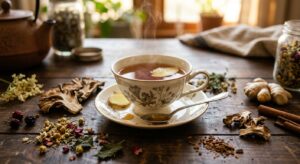
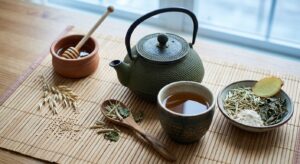
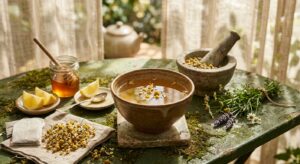
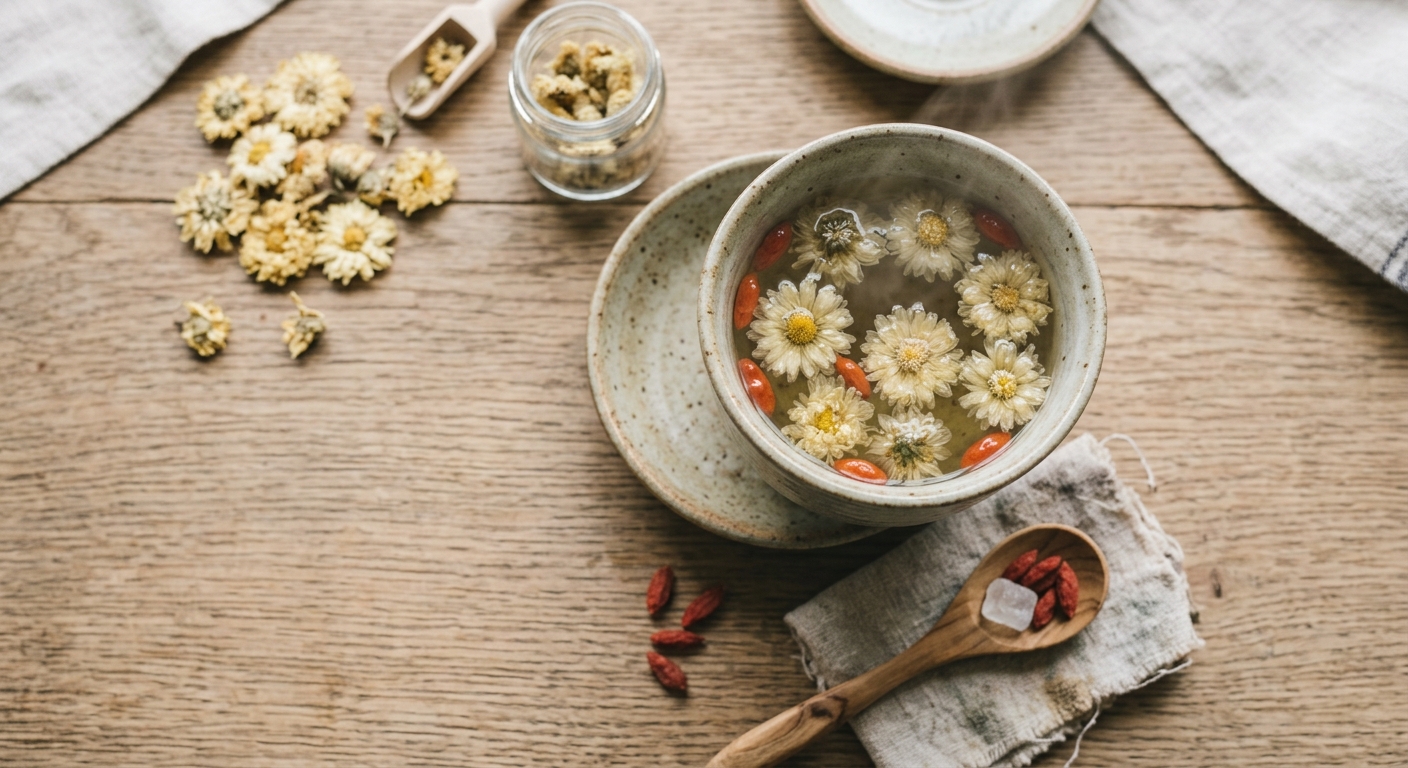
What makes chrysanthemum tea particularly special from a sensory perspective is its extraordinary gentleness. Where green tea brings grassy astringency and hibiscus delivers sharp tartness, chrysanthemum offers something far more subtle: a soft, honeyed floral sweetness with a clean, slightly cooling finish. The brewed tea is visually stunning as well, pale gold to warm amber depending on steeping time, with whole dried blossoms slowly unfurling in the cup like a slow-motion garden coming to life. It is a tea that rewards both the palate and the eye, making it as much a ritual of beauty as it is a practice of wellness.
2
cups
Ingredients
- 8 dried flowersdried chrysanthemum blooms (about 1.5 tsp loosely packed)
- 240 mlwater (85 to 90°C / 185 to 194°F)
- —rock sugar or raw honey to taste (optional)
- —a few goji berries for added sweetness and color (optional)
How to Brew
Click on an item below to shop for the recommended items for this recipe on Amazon.
As an Amazon Associate, we earn from qualifying purchases.
- Heat fresh filtered water to 85 to 90°C (185 to 194°F). Avoid boiling water, as temperatures above 95°C can break down delicate floral compounds and make the tea taste bitter or flat.
- Place 6 to 8 dried chrysanthemum blossoms per 240 ml of water into a glass teapot or infuser. If adding goji berries, drop in 4 to 6 now alongside the flowers.
- Pour the hot water directly over the blooms in a slow, circular motion to encourage even hydration and full opening of the petals.
- Steep for 3 to 5 minutes. Watch the flowers as they slowly rehydrate and expand. The water will shift from clear to a soft golden hue. Remove the infuser or strain at 5 minutes to prevent over-steeping.
- Add a small piece of rock sugar or a drizzle of honey if desired. Sip slowly while the tea is still warm for the best calming effect.
- Place 10 to 12 dried chrysanthemum blossoms per 500 ml of cold filtered water into a clean glass jar or pitcher. The higher flower-to-water ratio compensates for the slower cold extraction.
- If desired, add 6 to 8 goji berries and a small strip of dried longan fruit for a traditional sweet complexity. These are common cold brew additions in Chinese herbal tea culture.
- Seal the jar and leave it at room temperature for 30 minutes to allow the flowers to begin hydrating, then transfer to the refrigerator.
- Steep in the refrigerator for 6 to 8 hours or overnight. The slow cold extraction draws out the sweet floral compounds while leaving behind the harsher tannins that hot water would release.
- Strain through a fine mesh strainer into a serving pitcher or pour directly into ice-filled glasses. Sweeten lightly with rock sugar syrup if desired and serve immediately over ice.
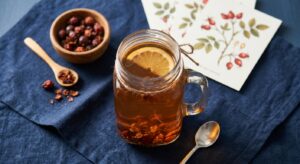
- Add 12 to 15 dried chrysanthemum blossoms to a clean, clear glass jar with 500 ml of cold filtered water. A wide-mouth mason jar works well as it allows maximum light penetration.
- Optionally tuck in a few fresh mint leaves or a thin slice of fresh ginger for complexity. These additions pair naturally with chrysanthemum’s cooling and digestive qualities.
- Seal the jar loosely and place it in a sunny outdoor spot or a sunny windowsill where it will receive direct sunlight for 2 to 4 hours. The warmth of the sun will gently coax out the floral sweetness without the harshness of boiling water.
- Check the tea after 2 hours. It should be a clear, soft golden color with a sweet floral aroma. If you prefer a stronger brew, leave it for up to 4 hours total.
- Bring the jar indoors, strain out the flowers, and refrigerate for at least 30 minutes before serving. Pour over ice and garnish with a fresh chrysanthemum bloom if available. Consume within 24 hours.
Health Benefits
The flavonoids luteolin and apigenin in chrysanthemum interact with GABA and benzodiazepine receptors in the brain, producing a gentle calming effect on the central nervous system. Several animal studies and preliminary human trials support its anxiolytic properties, making it a practical daily tea for managing low-level stress.
Traditional Chinese medicine has used chrysanthemum to treat liver heat patterns, which manifest as tension headaches, eye redness, and visual fatigue. Modern evidence suggests that chrysanthemum’s anti-inflammatory flavonoids and its mild vasodilatory effects may ease the vascular tension that underlies stress-related headaches, while its antioxidant compounds help protect ocular tissues from oxidative damage.
Acacetin and chlorogenic acid in chrysanthemum have both demonstrated blood pressure-modulating and cholesterol-lowering activity in clinical and laboratory studies. Regular consumption of chrysanthemum tea has been associated with reduced blood pressure in small human trials, suggesting meaningful cardioprotective benefits with consistent use.
Chrysanthemum flowers are exceptionally rich in polyphenols, particularly chlorogenic acid, luteolin, and quercetin derivatives, which neutralize free radicals and reduce systemic oxidative stress. This antioxidant load may help protect cells from premature aging and reduce the cumulative cellular damage associated with chronic stress.
Consistent with its TCM classification as a cooling herb, chrysanthemum contains borneol and multiple flavonoids with documented anti-inflammatory activity. These compounds help lower inflammatory markers and have shown effectiveness in reducing the heat and redness of mild inflammatory conditions, supporting the herb’s long traditional use during seasonal transitions and febrile states.
🧪 Key Bioactive Compounds
The Science Behind Chrysanthemum
The calming reputation of chrysanthemum tea is increasingly backed by modern phytochemistry. The two most pharmacologically significant flavonoids in Chrysanthemum morifolium are apigenin and luteolin, both of which have been shown in laboratory and animal studies to interact with the GABA-A receptor complex in the central nervous system. GABA (gamma-aminobutyric acid) is the brain’s primary inhibitory neurotransmitter, and compounds that enhance GABA activity produce feelings of calm, reduce neuronal excitability, and can ease the physiological symptoms of anxiety. Apigenin in particular has been studied for its benzodiazepine receptor binding activity, meaning it acts at the same receptor sites as prescription anti-anxiety medications, though with far gentler and non-habit-forming effects. This mechanism provides a strong scientific rationale for chrysanthemum tea’s centuries-long use as a stress and anxiety remedy.
Beyond its neurological effects, chrysanthemum’s exceptionally high polyphenol content, particularly chlorogenic acid and its derivatives, provides robust antioxidant and anti-inflammatory activity that has measurable downstream effects on stress physiology. Chronic psychological stress is known to elevate systemic inflammation and increase reactive oxygen species (free radicals) throughout the body. By scavenging these free radicals and suppressing inflammatory cytokine production, chrysanthemum’s polyphenols help break the cycle of oxidative stress that chronic anxiety perpetuates at the cellular level. Research published in journals including the Journal of Agricultural and Food Chemistry and Food Chemistry has confirmed high total phenolic and flavonoid content in chrysanthemum flower extracts, with strong radical-scavenging activity measured by DPPH and ABTS assays.
The cardiovascular benefits of chrysanthemum also have a solid mechanistic foundation. Acacetin, a flavonoid unique to chrysanthemum among commonly consumed herbs, has demonstrated the ability to inhibit L-type calcium channels in vascular smooth muscle cells, producing vasodilation and modest blood pressure reduction. Separately, chlorogenic acid has been shown in meta-analyses of clinical trials to modestly but significantly lower both systolic and diastolic blood pressure. Given that chronic stress is a well-established driver of hypertension, these compounds position chrysanthemum tea as a genuinely multifunctional stress remedy that addresses both the nervous system and the cardiovascular consequences of prolonged anxiety. The borneol content also contributes an analgesic and anti-inflammatory dimension, helping explain the traditional use of chrysanthemum for tension headaches and inflammatory eye conditions.
Brewing Tips
- Always source food-grade dried chrysanthemum flowers from a reputable supplier. Many decorative chrysanthemums are treated with pesticides and are not safe for consumption. Look specifically for Chrysanthemum morifolium, known in Chinese markets as Ju Hua, or the Hangzhou white chrysanthemum variety, which is considered the finest for tea.
- Do not over-steep. Chrysanthemum is delicate and releases its best flavor between 3 and 5 minutes in hot water. Steeping beyond 7 minutes can introduce a slightly bitter, hay-like taste as tannins over-extract. You can re-steep the same blossoms two to three times with slightly longer steep times on subsequent infusions.
- Store dried chrysanthemum flowers in an airtight glass container away from light and moisture. Proper storage preserves both the volatile aromatic compounds and the active flavonoids. Well-stored flowers retain their potency and fragrance for up to 12 months.