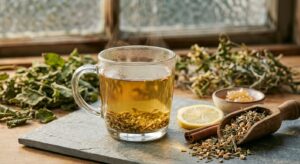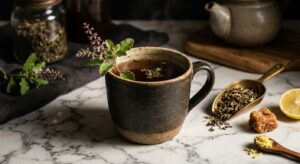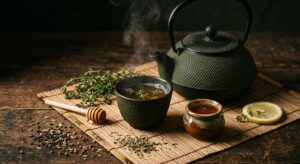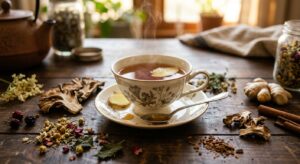
Long before modern pharmacology, healers in ancient Greece and Rome were steeping lemon balm leaves to calm frayed nerves and lift heavy spirits. Theophrastus wrote of Melissa officinalis as a remedy for melancholy, and medieval herbalists including Paracelsus called it the ‘elixir of life,’ believing a daily cup could sharpen the mind and ease the heart. Benedictine monks cultivated it extensively throughout Europe, and it became a core ingredient in Carmelite Water, a famous 14th-century remedy used to treat headaches, anxiety, and nervous complaints. This is not a trendy wellness herb. It is one of the most historically documented calming plants in the Western herbal tradition.
What sets lemon balm apart from other anxiety herbs is its dual-action character. It is simultaneously relaxing and mentally clarifying, making it useful during the day when chamomile’s deeper sedation would be unwelcome. The fresh leaves carry a bright, lemony scent produced by volatile oils including citral and citronellal, and the brewed tea carries that same airy, uplifting quality into every sip. It softens the edges of anxious thoughts without clouding focus, a combination that is genuinely rare in the plant world.
Grown as a bushy perennial in the mint family, lemon balm thrives in gardens across temperate climates and is easy to cultivate at home. The leaves are best harvested just before flowering, when rosmarinic acid and flavonoid concentrations peak. Whether you grow your own or source dried leaves from a reputable supplier, the result in the cup is a pale golden tea with a delicate citrus perfume, a mild honey-like sweetness, and a calm that settles over you within minutes. This guide walks you through everything you need to know to brew it beautifully and benefit from it fully.
2
cups
Ingredients
- 2 tbspdried lemon balm leaves (or 4 tbsp fresh leaves, lightly bruised)
- 480 mlwater (90°C / 194°F)
- —raw honey or a lemon slice to taste (optional)
How to Brew
Click on an item below to shop for the recommended items for this recipe on Amazon.
As an Amazon Associate, we earn from qualifying purchases.
- Heat filtered water to 90°C (194°F). If you do not have a temperature-controlled kettle, bring water to a full boil and let it rest for 2 to 3 minutes before pouring.
- Place 2 tablespoons of dried lemon balm leaves (or 4 tablespoons of fresh, lightly bruised leaves) into a tea infuser or directly into a warmed teapot. Bruising fresh leaves between your fingers releases the aromatic oils before steeping.
- Cover the infuser or teapot immediately after pouring the water. This traps the volatile citrus oils inside the brew rather than letting them escape as steam, which is essential for both flavor and therapeutic potency.
- Steep for 5 to 7 minutes. Start checking at 5 minutes. A longer steep (up to 10 minutes) produces a more potent medicinal brew but may add slight bitterness.
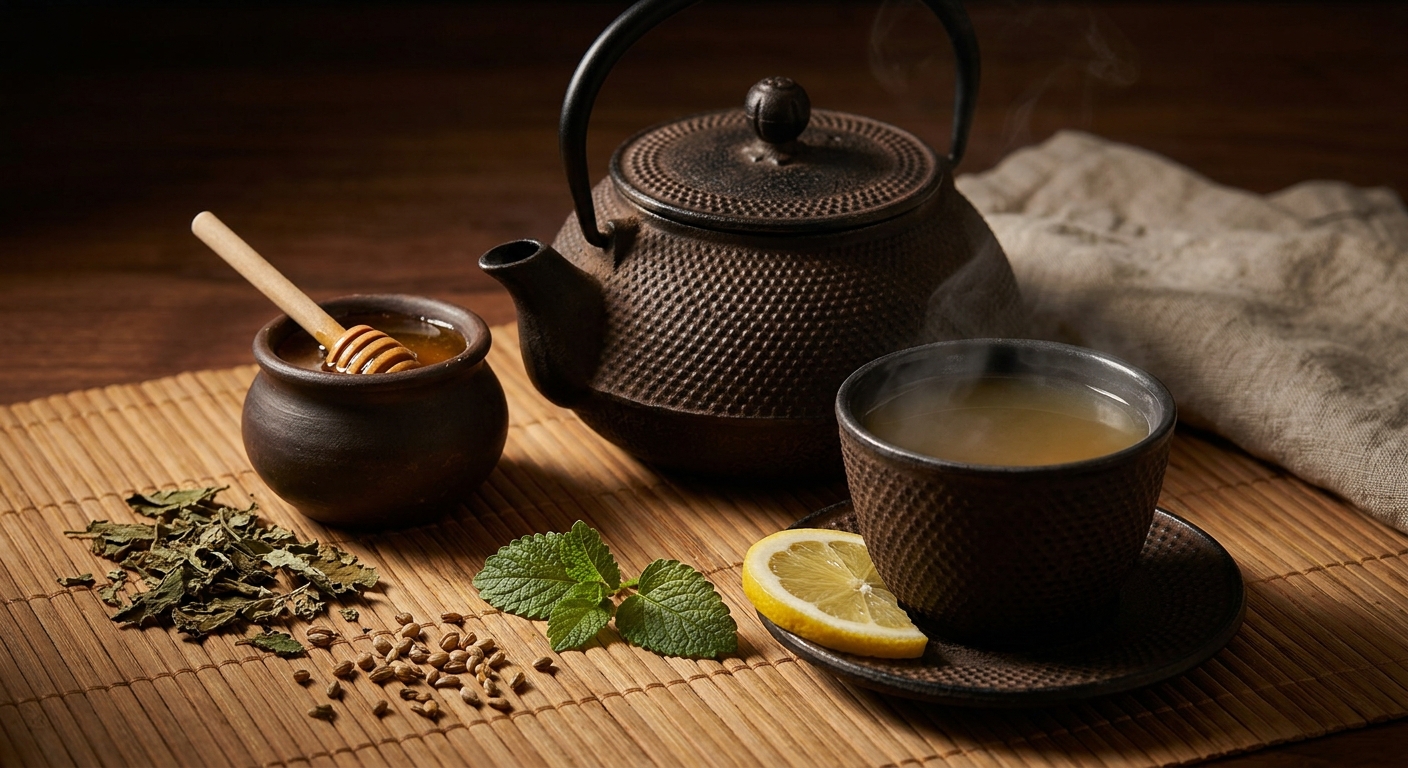
- Remove the infuser or strain the leaves. Sweeten lightly with raw honey if desired, and add a thin lemon slice to amplify the citrus notes. Drink warm, ideally 30 to 60 minutes before a stressful event or at bedtime.
- Place 3 tablespoons of dried lemon balm leaves (or 5 to 6 tablespoons of fresh leaves, torn or lightly bruised) into a clean glass jar. The higher ratio compensates for the slower, lower-temperature extraction.
- Fill the jar with room-temperature filtered water (approximately 600 ml for two servings). Stir gently to fully submerge all the leaves.
- Cover the jar with a lid or a small plate to prevent absorption of refrigerator odors and to keep the volatile oils from dissipating. Place in the refrigerator.
- Allow to steep for 8 to 12 hours. An overnight steep is ideal. Avoid exceeding 14 hours as the flavor can become slightly bitter and grassy.
- Strain the leaves through a fine-mesh strainer or cheesecloth into a clean pitcher or glasses. Serve over ice with a sprig of fresh mint or a slice of cucumber for a spa-like, calming cold drink. Keeps refrigerated for up to 24 hours.
- Add 3 tablespoons of dried lemon balm leaves (or a generous handful of fresh leaves) to a large, clear glass jar. A wide-mouth jar works best to maximize sun exposure.
- Fill the jar with room-temperature filtered water (approximately 750 ml to 1 liter for 2 to 3 servings). Stir briefly to ensure the leaves are fully submerged.
- Seal the jar and place it in a sunny spot outdoors or on a bright windowsill. Allow it to infuse in direct sunlight for 2 to 4 hours, checking the color periodically. The tea is ready when it reaches a soft, luminous golden-green hue.
- Bring the jar indoors and refrigerate for at least 30 minutes before serving. This chilling step is important for both food safety and flavor, as sun tea tastes noticeably better when served cold.
- Strain into glasses over ice and garnish with a fresh lemon balm sprig and a squeeze of lemon juice. The result is a softly herbaceous, sun-warmed infusion with remarkable aromatic brightness.
Health Benefits
Multiple human clinical trials, including a 2004 double-blind crossover study published in Psychosomatic Medicine, found that a standardized lemon balm extract significantly reduced anxiety and improved mood in healthy volunteers. The mechanism centers on rosmarinic acid’s inhibition of GABA transaminase and the flavonoid-driven modulation of GABA-A receptors, the same targets as pharmaceutical anti-anxiety medications, but with a gentler, non-habit-forming action.
Lemon balm has been studied in combination with valerian root for insomnia, with results showing significant improvement in sleep latency and sleep quality. Even on its own, its GABA-enhancing compounds help quiet the mental chatter that delays sleep onset, making a cup before bed a well-supported bedtime ritual.
A 2003 study in Neuropsychopharmacology found that lemon balm extract improved speed of memory recall and increased accuracy on cognitive tasks in healthy adults at moderate doses. This is attributed partly to its acetylcholinesterase-inhibiting activity, which preserves acetylcholine levels in the brain, a neurotransmitter central to attention and memory.
As a member of the mint family, lemon balm shares antispasmodic properties that directly relax smooth muscle tissue in the gastrointestinal tract. This makes it especially valuable for the upset stomach, cramping, and bloating that commonly arise during periods of stress or anxiety, a condition sometimes called nervous dyspepsia.
Luteolin and other flavonoids in lemon balm influence serotonergic signaling pathways, and several small human studies have found improvements in self-reported mood and reductions in negative mood states after supplementation. While not a substitute for clinical treatment, it offers meaningful support for everyday emotional balance.
🧪 Key Bioactive Compounds
The Science Behind Lemon Balm
The anxiolytic power of lemon balm is rooted in its ability to interact directly with the brain’s primary inhibitory neurotransmitter system: GABA (gamma-aminobutyric acid). The key agent is rosmarinic acid, a potent polyphenol concentrated in the leaves, which inhibits the enzyme GABA transaminase. This enzyme normally breaks down GABA in synaptic spaces, so when it is inhibited, GABA levels rise and the nervous system shifts toward a state of calm. This is the same broad mechanism targeted by benzodiazepine drugs, but lemon balm achieves it through enzymatic inhibition rather than direct receptor agonism, resulting in a gentler, non-sedating effect at typical tea doses.
Complementing rosmarinic acid are the flavonoids apigenin and luteolin, which bind directly to benzodiazepine binding sites on GABA-A receptor complexes. Apigenin in particular has been well-characterized in this role, with studies showing it produces measurable anxiolytic and mild sedative effects in animal models. Meanwhile, luteolin demonstrates anti-neuroinflammatory properties and has been linked to serotonin receptor modulation, which may explain some of lemon balm’s mood-lifting qualities beyond its calming action. These compounds work in concert rather than isolation, which is why whole-herb preparations like tea tend to outperform isolated extracts in some studies.
The volatile oil fraction of lemon balm, dominated by citral (a mixture of geranial and neral isomers), contributes to both the sensory experience and the pharmacology of the tea. Citral has demonstrated GABA-A receptor modulating activity in preclinical research, and inhalation studies suggest that simply smelling lemon balm’s aroma may reduce physiological stress markers. This means the ritual of drinking the tea, including its citrus scent rising in the steam, is not merely pleasant but potentially therapeutic. A 2014 study in Nutrients found that a single dose of lemon balm extract meaningfully reduced self-rated anxiety and improved mood in healthy adults, suggesting even occasional use delivers measurable benefits.
Brewing Tips
- Always cover your cup or teapot while steeping lemon balm. The volatile oils that give it both its aroma and its calming properties escape easily with steam, and covering the vessel preserves them in the brew.
- Fresh lemon balm makes a noticeably more aromatic tea than dried. If you have access to fresh leaves, use roughly double the amount and bruise them firmly in your hands before adding to the infuser to release the essential oils.
- For anxiety relief, consistency matters more than dose. A moderate daily cup of lemon balm tea produces more sustained benefits over weeks than occasional large amounts. Clinical studies showing cognitive and mood benefits typically used daily supplementation over periods of 2 to 4 weeks.