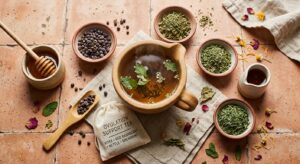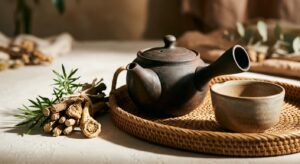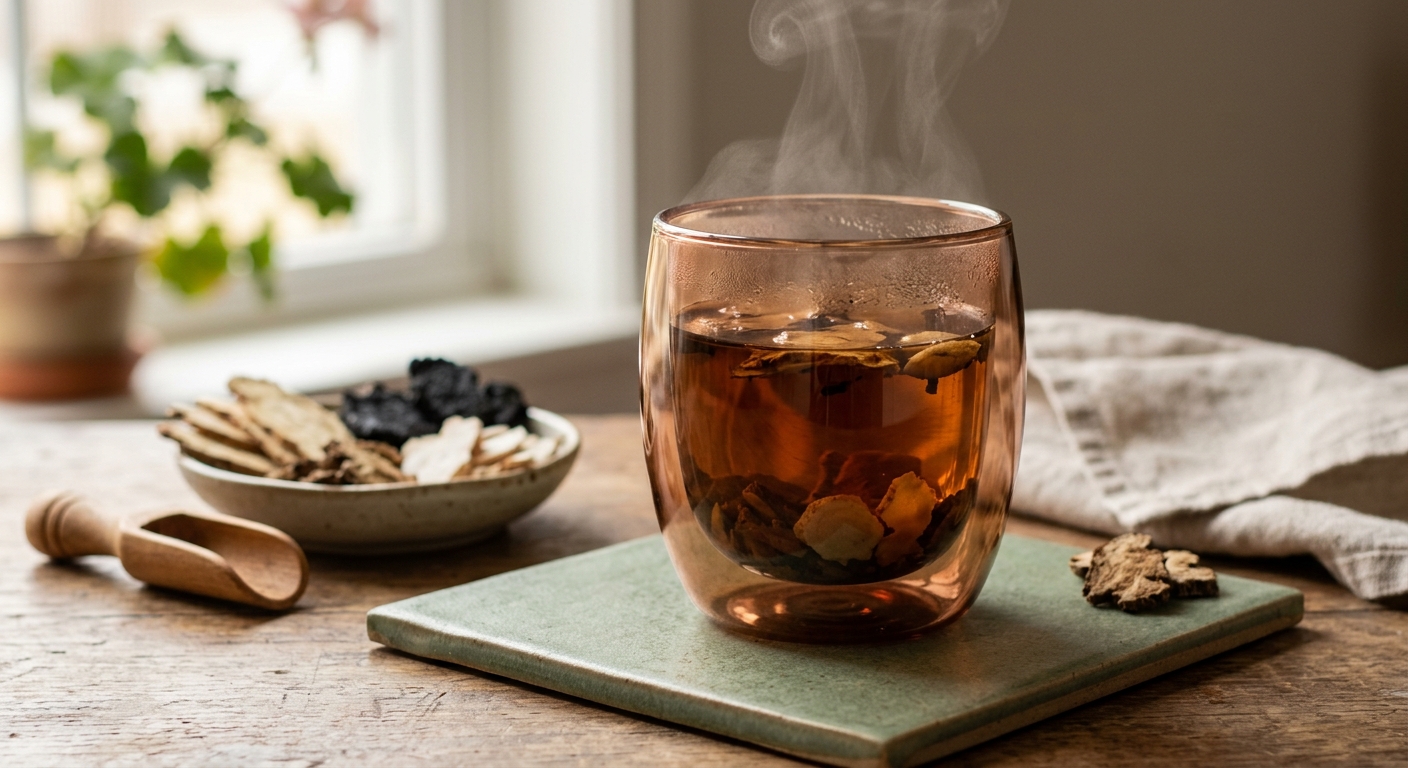
In Traditional Chinese Medicine, the concept of ‘blood deficiency’ describes a state far beyond simple anemia. It encompasses fatigue, pallor, dizziness, irregular menstruation, dry skin, poor sleep, and emotional unease, a constellation of symptoms that modern women navigating stress, blood loss, and nutritional gaps know all too well. The Si Wu Tang, or Four Substance Decoction, is one of TCM’s most celebrated classical formulas, a harmonious quartet of roots that has been prescribed to women for over a thousand years. This tea is a gentle, daily-drinking adaptation of that foundational formula, honoring its ancient wisdom while suiting modern life.
The four primary herbs in this blend each carry distinct roles. Dang gui (Angelica sinensis) is the empress of Chinese herbal medicine for women, prized for tonifying and moving blood, regulating the menstrual cycle, and relieving cramping. Shu di huang (Rehmannia glutinosa, prepared) provides deep, nourishing essence for blood and kidney yin. Bai shao (Paeonia lactiflora, white peony root) softens and nourishes the liver, calming spasms and soothing tension. Chuan xiong (Ligusticum chuanxiong) acts as the invigorating messenger, moving qi and blood throughout the body to prevent stagnation and carry the other herbs to their destinations. Together, they form a complete tonic that both builds and circulates, a balance that sets Si Wu Tang apart from simpler single-herb remedies.
This tea has a flavor that reflects its medicinal depth: earthy, mildly sweet, faintly bitter, with a warm, resinous finish from the dang gui and a subtle mineral richness from the shu di huang. It is not a delicate floral infusion but a grounding, substantive brew meant to be sipped with intention. Traditionally taken during and after menstruation to replenish lost blood, it is equally valued as a daily tonic for women in any phase of life seeking deeper nourishment. Prepare it with patience, ideally as a decoction, and allow its slow-simmered depth to remind you that some forms of care cannot be rushed.
2
cups
Ingredients
- 6 gdang gui (Angelica sinensis, sliced dried root)
- 9 gshu di huang (prepared Rehmannia glutinosa root)
- 6 gbai shao (Paeonia lactiflora, white peony root)
- 4 gchuan xiong (Ligusticum chuanxiong rhizome)
- 600 mlfiltered water
- —rock sugar or raw honey to taste (optional)
- —2 to 3 slices fresh ginger (optional, for warmth and digestion)
How to Brew
Click on an item below to shop for the recommended items for this recipe on Amazon.
As an Amazon Associate, we earn from qualifying purchases.
- Weigh out your four roots: 6 g dang gui, 9 g shu di huang, 6 g bai shao, and 4 g chuan xiong. If your roots are in larger pieces, break or roughly crush them to increase surface area for extraction.
- Rinse the roots briefly under cool water to remove any dust or debris from drying or storage. This also softens the outer layer slightly and helps flavor compounds release more readily.
- Place the rinsed herbs into a ceramic or clay teapot, a heat-safe glass pot, or a large mug with a secure lid. Add 600 ml of freshly boiled filtered water at 95 to 100°C (203 to 212°F).
- Cover tightly and steep for 15 to 20 minutes. The cover is essential: volatile aromatic oils in dang gui and chuan xiong escape in steam, so keeping them trapped preserves the therapeutic aroma compounds and the full flavor profile.
- Strain the brew through a fine mesh strainer into two warmed mugs, pressing gently on the herb material to extract the last of the liquid. Add a small piece of rock sugar or a drizzle of honey if desired. Sip slowly while warm.
- Combine all four herbs in a small clay pot, ceramic saucepan, or stainless steel pot. Avoid aluminum or reactive metals, which can interfere with the alkaloid and glycoside content of these roots. Add 700 ml of filtered water and allow the herbs to soak for 20 to 30 minutes before heating. This pre-soak rehydrates the root fibers and jumpstarts extraction.
- Bring the pot to a gentle boil over medium heat, then immediately reduce the heat to a low simmer. The surface should show a lazy, slow bubble, not a rolling boil. Cover the pot with a lid slightly ajar to allow minimal steam to escape while preventing excessive evaporation.
- Simmer gently for 30 to 45 minutes, checking occasionally and adding small amounts of hot water if the liquid reduces below 400 ml. The goal is a concentrated, rich decoction of approximately 300 to 350 ml of finished liquid for two servings.
- Optional: Perform a second extraction by adding 500 ml of fresh water to the spent herbs and simmering for another 20 minutes. Combine both extracts and divide into two portions. This double-extraction method, called ‘er jian’ in Chinese pharmacy practice, maximizes the yield of water-soluble compounds from expensive or hard-to-source roots.
- Strain through a fine mesh strainer, pressing the herb material firmly. Pour into warmed cups. Add 2 to 3 slices of fresh ginger and a piece of rock sugar if desired. Drink one cup in the morning and one in the evening for best results.
- Weigh and prepare your herbs as for the hot methods. Because cold water extracts these dense roots slowly, grind or finely crush the herb pieces using a mortar and pestle or the flat of a knife to maximize surface area. Finer cuts dramatically improve cold extraction efficiency for woody roots.
- Place the crushed herbs into a clean glass jar. Add 650 ml of cold, filtered water at room temperature. Stir briefly to submerge all herb material. Leave the jar uncovered or loosely covered at room temperature for 2 hours to begin extraction, then seal tightly and transfer to the refrigerator.
- Allow the herbs to cold steep in the refrigerator for 10 to 14 hours, ideally overnight. Gently swirl or invert the jar once or twice during the steeping period if you remember, though it is not essential.
- In the morning, strain the cold brew through a fine mesh strainer lined with a piece of cheesecloth into a pitcher or two glasses. Press the herb material gently. The resulting liquid will be a translucent amber with a lighter, sweeter flavor than the decocted version.
- Serve cold over ice, or gently warm a single cup in a small saucepan over low heat for 3 to 4 minutes without boiling if you prefer a warm drink. Cold brew keeps sealed in the refrigerator for up to 2 days.
Health Benefits
The Si Wu Tang formula has been used for over a millennium to regulate irregular periods, reduce menstrual pain, and address scanty or heavy flow. Clinical studies in Taiwan and China have documented its effects on uterine contractility and prostaglandin modulation, with z-ligustilide and paeoniflorin working synergistically to balance uterine muscle tone.
Shu di huang and dang gui are classic TCM ‘blood tonics’ whose mechanisms align with modern understanding of hematopoiesis. Catalpol from Rehmannia has been shown in studies to stimulate erythropoiesis (red blood cell production), while ferulic acid from dang gui supports iron absorption and protects existing red blood cells from oxidative damage.
Z-ligustilide, present in significant concentrations in both dang gui and chuan xiong, acts as a smooth muscle relaxant with documented anti-spasmodic effects comparable in mechanism to some conventional antispasmodics. Paeoniflorin from bai shao further reduces uterine hypertonicity, making this formula particularly effective for primary dysmenorrhea.
In TCM, liver blood deficiency is closely linked to emotional irritability, anxiety, and disturbed sleep around the menstrual cycle. Paeoniflorin from bai shao has shown anxiolytic effects in multiple animal studies, modulating GABAergic and serotonergic pathways. Dang gui’s ferulic acid also demonstrates mild MAO-inhibitory activity, which may contribute to mood support.
Blood deficiency in TCM manifests as dry, dull, or lackluster skin, and the Si Wu Tang formula has a long history as a beauty tonic. Modern research supports this: ferulic acid is a potent antioxidant that protects skin collagen, while the polysaccharides in Rehmannia support skin hydration at the cellular level. Women who drink this tea regularly often report improved skin texture within one to two menstrual cycles.
🧪 Key Bioactive Compounds
The Science Behind Dang Gui (Angelica Sinensis)
The Si Wu Tang formula represents a remarkable example of empirical pharmacology developed centuries before biochemical analysis existed. Modern research has validated its traditional applications by identifying the specific molecules responsible for its effects. Z-ligustilide, the primary volatile phthalide shared by dang gui and chuan xiong, acts on smooth muscle calcium channels to reduce contractility, which explains the formula’s antispasmodic and menstrual pain-relieving properties. This same mechanism produces vasodilation, improving peripheral circulation and contributing to the warming, blood-moving qualities that TCM practitioners observed clinically over centuries. Importantly, the combination of herbs modulates these effects more precisely than any single herb alone, with bai shao’s paeoniflorin providing a counterbalancing tonic action that prevents excessive relaxation while shu di huang anchors the formula with deep nutritive support.
The hematopoietic (blood-building) dimension of this formula has attracted significant scientific interest. Catalpol, the main iridoid glycoside of Rehmannia glutinosa, has demonstrated the ability to stimulate the proliferation of hematopoietic stem cells and promote erythropoiesis in multiple in vivo studies, offering a plausible molecular basis for the herb’s traditional role as a ‘blood essence’ tonic. Meanwhile, ferulic acid from dang gui and chuan xiong shows potent antioxidant activity that protects erythrocytes from lipid peroxidation, effectively extending the life and functional integrity of red blood cells already in circulation. Together, these two mechanisms, stimulating production and protecting existing cells, reflect the TCM principle of simultaneously tonifying and preserving.
Perhaps most intriguing is the formula’s effect on hormonal and neurological balance. Paeoniflorin from bai shao has been studied for its effects on the hypothalamic-pituitary-ovarian (HPO) axis, with some clinical trials in women with polycystic ovary syndrome (PCOS) showing that peony-based formulas can help normalize luteinizing hormone (LH) to follicle-stimulating hormone (FSH) ratios. Separately, ferulic acid demonstrates mild inhibitory activity at monoamine oxidase (MAO), which could contribute to the mood-stabilizing effects reported by women who use this formula around their cycle. These findings suggest that the Si Wu Tang blend does not act on a single target but exerts a pleiotropic, multi-pathway effect, precisely the kind of systemic rebalancing that TCM practitioners have described as ‘nourishing blood and regulating the liver’ for over a thousand years.
Brewing Tips
- Source your herbs from a reputable Chinese herbal pharmacy or certified supplier rather than generic online markets. The quality difference in shu di huang and dang gui is significant: properly prepared shu di huang should be glossy, black, and sweet-smelling, not dry and gray. Inferior herbs will produce a thin, poorly medicinal brew.
- The traditional dosage cycle for Si Wu Tang in women’s health is to begin drinking 3 to 5 days after menstruation ends and continue through mid-cycle, pausing during the period itself unless specifically directed otherwise by a TCM practitioner. This timing aligns with the follicular phase when blood-building is most beneficial.
- Save your spent herb material after straining: it still contains residual compounds. Add 500 ml of fresh water to the solids, simmer for another 20 minutes, and use this lighter second extraction as a foot soak, which is a traditional practice for drawing warmth downward, relieving leg fatigue, and supporting circulation.