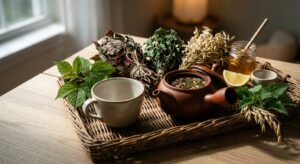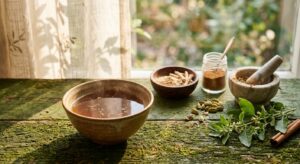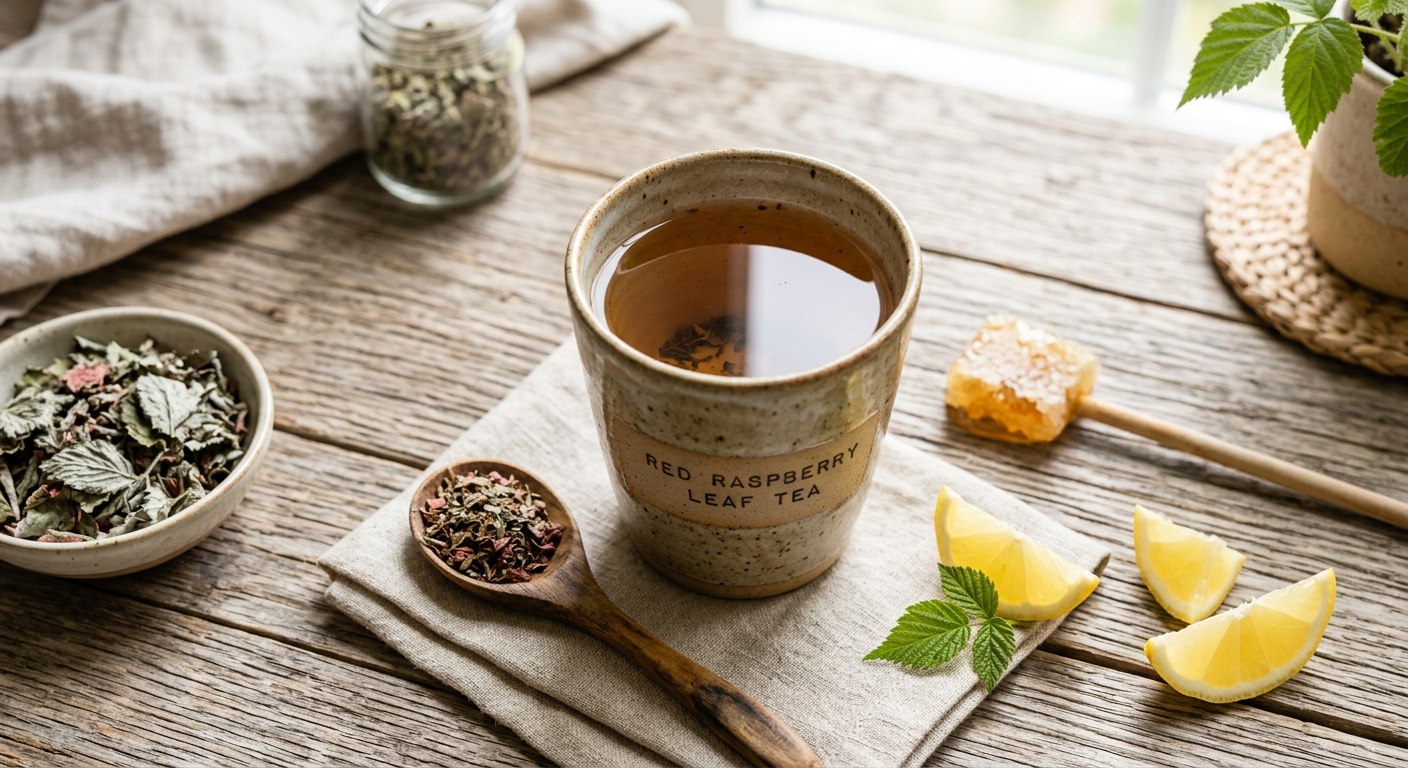
Long before raspberry fruit became a culinary staple, the leaves of the plant were the prized part for herbalists and midwives alike. Red raspberry leaf (Rubus idaeus) has been used in European and Native American herbal traditions for centuries, most notably as a uterine tonic and pregnancy support herb. Medieval herbalists prescribed it for easing labor, reducing heavy menstrual bleeding, and calming menstrual cramps. Its reputation as the definitive “woman’s herb” has persisted through centuries of folk medicine and continues to be validated by modern nutritional science.
What makes red raspberry leaf so remarkable is its exceptional mineral density. The leaves are a concentrated source of magnesium, potassium, iron, calcium, and vitamins B, C, and E, offering a profile more akin to a multivitamin than a simple cup of tea. The key active compound, fragarine, is an alkaloid believed to tone and relax the smooth muscle tissue of the pelvic region, which may explain its traditional use for reducing menstrual cramping and supporting uterine health across all stages of a woman’s reproductive life.
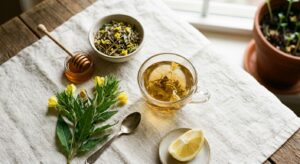
The sensory experience of red raspberry leaf tea is often a pleasant surprise for first-time drinkers. It carries none of the fruity sweetness one might expect from its name. Instead, it brews into a clean, lightly astringent, earthy cup reminiscent of a mild black tea, with a subtle woody undertone and a smooth, dry finish. This versatility makes it easy to enjoy daily, whether hot on a quiet morning, cold-brewed over ice in summer, or as a concentrated infusion to maximize its nutritional yield.
2
cups
Ingredients
- 2 tspdried red raspberry leaf (per cup)
- 240 mlwater (95°C / 203°F)
- —raw honey or lemon to taste (optional)
How to Brew
Click on an item below to shop for the recommended items for this recipe on Amazon.
As an Amazon Associate, we earn from qualifying purchases.
- Heat filtered water to 95°C (203°F). Bring to a near-boil and allow it to rest for 30 seconds off the heat if you do not have a temperature-controlled kettle.
- Measure 2 teaspoons of dried red raspberry leaf per 240 ml (8 oz) cup. Place the leaves into a tea infuser, muslin bag, or teapot strainer basket.
- Pour the hot water directly over the leaves. Cover your mug or teapot with a lid or small plate to trap the steam and preserve volatile compounds during steeping.
- Steep for 5 to 10 minutes depending on your desired strength. A 5-minute steep gives a lighter, gentler cup; 10 minutes yields a darker, more robust infusion with a stronger mineral taste.
- Remove the infuser and discard the spent leaves. Taste before adding any sweetener, as the natural mineral quality of this tea pairs beautifully with a small squeeze of fresh lemon to brighten the flavor.
- Measure 3 teaspoons of dried red raspberry leaf per 480 ml (2 cups) of cold, filtered water. Use a slightly higher ratio than hot brew to compensate for the slower cold extraction.
- Combine the leaves and cold water in a clean glass jar. Stir gently to ensure all leaves are submerged. Do not use hot water at any point in this method.
- Place a loose lid or plastic wrap over the jar and leave it at room temperature for the first hour to begin gentle extraction, then transfer it to the refrigerator.
- Allow the jar to steep in the refrigerator for 8 to 12 hours, or overnight. The long cold steep draws out minerals, fragarine, and mild tannins without the bitterness that high heat can amplify.
- Strain the leaves through a fine mesh strainer or cheesecloth into a clean jug or glasses filled with ice. Serve immediately. Cold brew red raspberry leaf keeps refrigerated for up to 48 hours. Add a slice of fresh lemon or a few fresh mint leaves for a refreshing summer drink.
- Measure 28 to 30 grams (approximately 1 oz or a large handful) of dried red raspberry leaf and place it into a 1-liter heat-safe glass jar or French press.
- Bring fresh filtered water to a full boil (100°C / 212°F) and pour it to the very top of the jar, filling it completely. The larger volume and full boil temperature are essential to this method’s nutritional extraction.
- Screw on the jar lid tightly or press down the French press plunger to just above the leaves. This creates a sealed, steam-rich environment that drives minerals such as calcium, magnesium, and iron into the liquid over the long steep.
- Leave the jar to infuse at room temperature for a minimum of 4 hours and up to 8 hours. Do not refrigerate during the steeping phase, as ambient temperature maintains a slow passive heat that continues extraction.
- After the steep, strain the infusion through a fine mesh strainer or cheesecloth, pressing the leaves firmly to extract all remaining liquid. The resulting brew will be a deep amber color, noticeably darker and more mineral-tasting than a standard hot brew.
- Drink 1 to 2 cups of the nourishing infusion per day, warm or at room temperature. Refrigerate any unused portion and consume within 24 hours, as the high mineral content makes this more perishable than a regular cup of tea.
Health Benefits
Fragarine, the key alkaloid in red raspberry leaf, is believed to tone the uterine and pelvic muscles while the leaf’s high magnesium content supports muscle relaxation, together helping to ease the intensity of menstrual cramps and reduce heavy or irregular bleeding.
Red raspberry leaf has been used by midwives for generations to prepare the uterus for labor by strengthening and toning uterine muscle. Some small clinical studies and midwifery surveys suggest that regular use in the third trimester may be associated with shorter active labor, though larger randomized trials are needed to confirm this effect.
The leaves provide a bioavailable source of iron, calcium, magnesium, potassium, and vitamins C and E, offering genuine nutritional value particularly relevant during menstruation, pregnancy, and postpartum recovery when these nutrients are most depleted.
Polyphenols including ellagitannins, kaempferol, and quercetin contribute significant antioxidant activity that combats oxidative stress and systemic inflammation, which are underlying factors in conditions such as endometriosis, polycystic ovary syndrome, and hormonal imbalance.
The astringent tannins in red raspberry leaf have a toning effect on the mucous membranes of the digestive tract, helping to reduce diarrhea, soothe gut inflammation, and support overall digestive regularity.
🧪 Key Bioactive Compounds
The Science Behind Red Raspberry Leaf
The therapeutic reputation of red raspberry leaf rests on a combination of its alkaloid chemistry and its exceptional mineral density, both of which have attracted increasing scientific scrutiny in recent decades. The most discussed active compound is fragarine, an alkaloid unique to Rubus species that is believed to act on the smooth muscle of the uterus and pelvic floor. Unlike uterotonic herbs that stimulate contraction, fragarine is proposed to have an amphoteric or normalizing effect, toning the muscle to contract more efficiently when needed while also relaxing excessive or irregular spasming. This dual action is the proposed mechanism behind its traditional use for both easing menstrual cramps and preparing the uterus for more coordinated labor contractions. However, robust human clinical trials isolating fragarine’s effects remain limited, and much of the evidence base is drawn from in vitro studies and traditional midwifery practice.
The polyphenol content of red raspberry leaf is substantial and scientifically well-documented. Ellagitannins, the dominant tannin class in the leaf, break down in the gut to produce urolithins, metabolites with demonstrated anti-inflammatory, antioxidant, and antiproliferative activity. Flavonoids including kaempferol and quercetin have been shown in multiple studies to modulate inflammatory pathways by inhibiting cyclooxygenase enzymes (COX-1 and COX-2), the same targets as nonsteroidal anti-inflammatory drugs, offering a possible biochemical explanation for the herb’s traditional use in reducing pelvic inflammation and menstrual pain. Kaempferol has additionally been studied for its interactions with estrogen receptors, showing selective modulatory activity that may contribute to hormonal balancing effects without acting as a straightforward phytoestrogen.
From a nutritional perspective, the mineral profile of red raspberry leaf is striking for a plant-based source. Analytical studies have confirmed high concentrations of calcium (comparable to some dairy sources per gram), magnesium, potassium, and non-heme iron, alongside vitamins C and E. These nutrients are not merely incidental; they are directly relevant to the physiological demands of menstruation, pregnancy, and postpartum recovery. Magnesium in particular has well-established clinical evidence for reducing dysmenorrhea (painful periods) by inhibiting prostaglandin synthesis and supporting smooth muscle relaxation. This nutritional dimension sets red raspberry leaf apart from many herbal teas and supports its traditional use as a daily nourishing tonic rather than simply a symptomatic remedy.
Brewing Tips
- Store dried red raspberry leaf in an airtight glass jar away from direct light and heat. Properly stored, the dried leaf retains its flavor and potency for up to 12 months.
- If you find the astringency of hot brew too strong, add a small squeeze of fresh lemon juice rather than sweetener. The citric acid softens the tannin bite and enhances the mineral brightness of the tea.
- For a consistent daily wellness routine, brew a batch of cold brew overnight so you have a ready-to-drink infusion each morning throughout the week. This makes it easier to maintain the regular use that maximizes the herb’s long-term toning benefits.