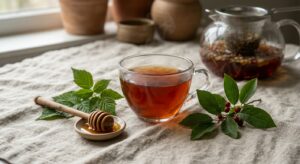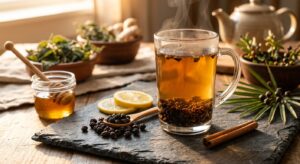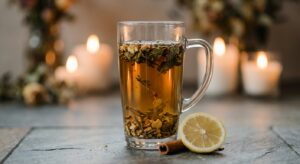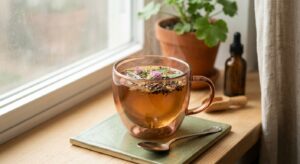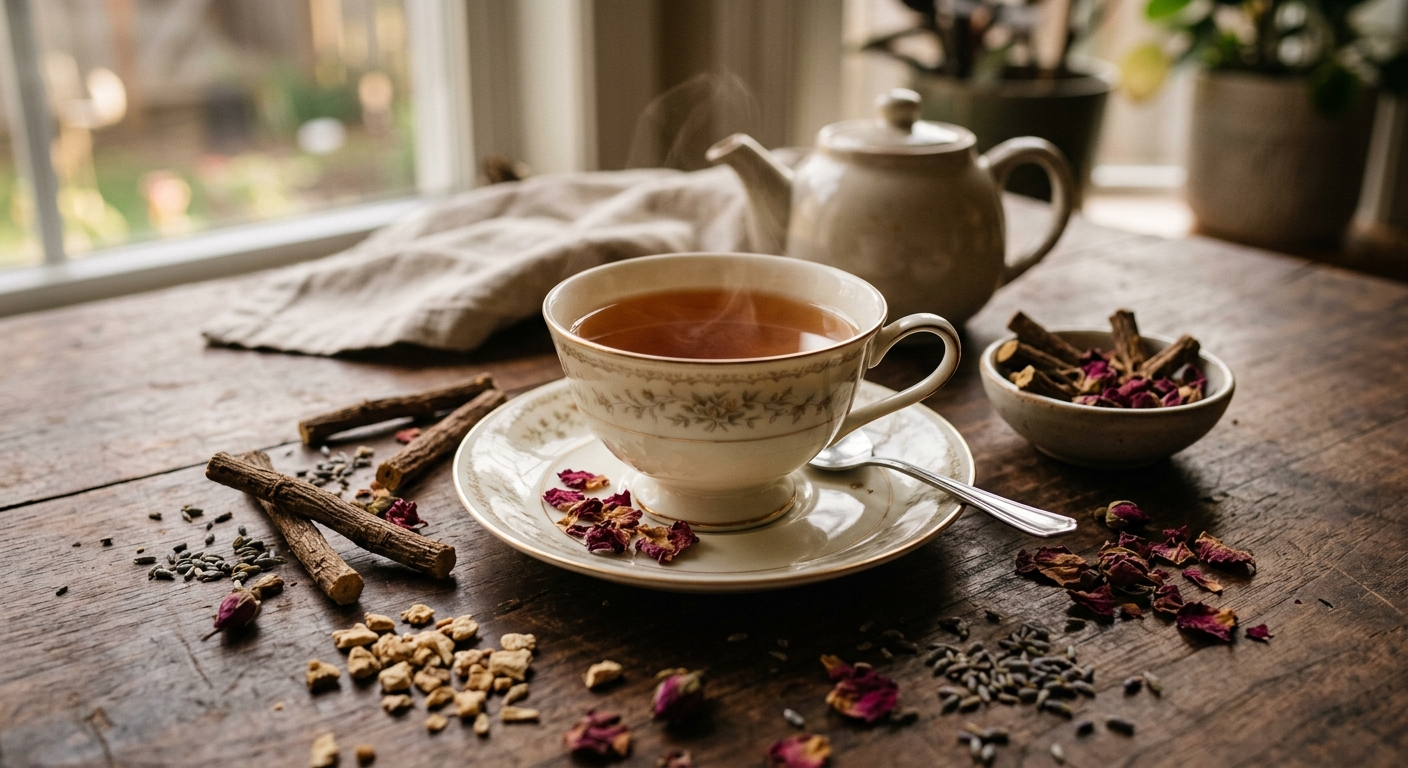
Licorice root (Glycyrrhiza glabra) has been revered for thousands of years across vastly different healing traditions. Ancient Egyptian healers brewed it as a restorative tonic, Chinese medicine practitioners classified it as a supreme harmonizer herb used to balance other botanicals in complex formulas, and Ayurvedic physicians prized it for its cooling and soothing properties. This extraordinary root contains a compound called glycyrrhizin, which is roughly 50 times sweeter than table sugar, giving licorice tea its signature deep, naturally sweet flavor without a single gram of added sugar.
For women specifically, licorice root has earned a respected place in herbal traditions across cultures. Its mild phytoestrogenic activity has been used to ease the hormonal fluctuations of the menstrual cycle and soften the intensity of menopausal transitions. Herbalists in the Western tradition have long combined it with other women’s herbs like chaste tree berry and dong quai, while traditional Chinese medicine incorporates it into formulas specifically designed to nourish the yin and stabilize reproductive health. This dual identity as both a culinary flavoring and a serious medicinal herb makes it uniquely approachable for those new to plant medicine.
What sets licorice root apart as a women’s tea is the convergence of its hormonal, digestive, and adrenal-supportive properties. Women navigating PMS, perimenopause, or stress-related fatigue often find that the root addresses several discomforts at once. Its anti-inflammatory action soothes bloating and cramping, its adaptogenic qualities help regulate cortisol, and its phytoestrogens offer gentle hormonal modulation. Brewed as a tea, these benefits arrive in one of the most comforting, deeply flavored cups in the herbal world.
2
cups
Ingredients
- 2 tspdried licorice root pieces or cut-and-sifted licorice root
- 480 mlwater (95 to 100°C / 203 to 212°F)
- —1/4 tsp dried ginger root (optional, for warmth and additional anti-inflammatory support)
- —1/4 tsp rose petals (optional, for a floral note and uterine tonic support)
- —small squeeze of fresh lemon juice (optional, brightens the flavor)
How to Brew
Click on an item below to shop for the recommended items for this recipe on Amazon.
As an Amazon Associate, we earn from qualifying purchases.
- Measure 2 teaspoons of dried licorice root pieces per 480 ml (2 cups) of cold, filtered water and add both directly to a small saucepan. If using optional additions like dried ginger root, add them now as well.
- Bring the water to a gentle boil over medium heat, then immediately reduce the heat to a low simmer. You should see small, steady bubbles rising but the liquid should not be at a rolling boil.
- Simmer uncovered for 10 to 15 minutes. The liquid will deepen to a rich amber or golden-brown color and the natural sweetness will intensify as the root releases its compounds. For a stronger medicinal brew, simmer for the full 15 minutes.
- Remove the saucepan from the heat and allow to rest for 2 minutes off the burner. This brief resting period lets any volatile aromatic compounds that developed during simmering settle back into the liquid.
- Pour the decoction through a fine-mesh strainer into your mug, pressing gently on the root pieces with the back of a spoon to extract the last of the liquid.
- Taste before adding any sweetener. Because of glycyrrhizin, this tea is naturally and intensely sweet. Add a small squeeze of lemon juice if desired to balance the sweetness, or drop in a few dried rose petals to steep for an additional minute before drinking.
- Add 1 tablespoon of dried licorice root pieces (a higher ratio than hot brew is needed because cold water extracts more slowly) to a clean glass jar. If adding rose petals or sliced fresh ginger, include them at this stage.
- Pour 480 ml of cold, filtered water over the root. The root pieces will begin to slowly release their color and sweetness even at room temperature. Stir gently with a long spoon to ensure the root is fully submerged.
- Leave the jar on your countertop at room temperature for 2 hours. This initial ambient-temperature phase activates the first round of extraction without the risk of encouraging bacterial growth, which can occur if dense roots are left in tepid water for too long.
- Cover the jar with a lid or a square of cloth secured with a rubber band, then transfer it to the refrigerator. Allow it to cold brew for an additional 10 to 14 hours, ideally overnight.
- Strain the cold brew through a fine-mesh strainer or a nut milk bag into a clean glass or pitcher, pressing gently on the root material to capture the full infusion.
- Serve over ice in a tall glass. Because cold brew licorice tea is naturally very sweet, it pairs beautifully with a slice of cucumber or a sprig of fresh mint for a refreshing, spa-style wellness drink. Keeps refrigerated for up to 3 days.
- Combine 3 tablespoons of dried licorice root pieces with 480 ml of cold, filtered water in a small saucepan. This elevated root-to-water ratio creates a concentrate that will be diluted before drinking, so do not adjust the ratio based on serving preference at this stage.
- Bring to a gentle boil over medium heat, then reduce immediately to a very low simmer. Simmer uncovered for 25 to 30 minutes, checking occasionally. The liquid will reduce by roughly one-third and turn a deep mahogany-amber color.
- Remove from heat and allow to cool at room temperature for 15 minutes. Do not strain yet. Allowing the root to continue steeping during cooldown extracts additional polysaccharides and flavonoids.
- Strain through a fine-mesh strainer into a small glass bottle or jar, pressing firmly on the root pieces to extract every drop of the concentrate.
- To serve, combine approximately 60 ml (2 oz) of concentrate with 180 ml (6 oz) of hot water, warm oat milk for a creamy hormonal-support latte, or chilled sparkling water for an effervescent wellness tonic. Taste and adjust the ratio to your preference, keeping in mind the concentrate is intensely sweet.
- Label the jar with the date and store in the refrigerator for up to 7 days. Shake gently before each use as some natural sediment may settle at the bottom.
Health Benefits
The phytoestrogens in licorice root, particularly glabridin and isoliquiritigenin, interact with estrogen receptors in a modulating way, potentially raising estrogen activity when levels are low (as in menopause) and buffering its effects when levels are high (as in estrogen-dominant PMS). A 2012 clinical study published in the Iranian Journal of Pharmaceutical Research found that licorice root was more effective than hormone therapy at reducing the frequency and intensity of hot flashes in menopausal women.
Licorice root’s anti-inflammatory and antispasmodic properties help reduce the prostaglandin-driven uterine cramping responsible for dysmenorrhea. Its mild diuretic action also addresses water retention and bloating commonly experienced in the luteal phase of the menstrual cycle.
Glycyrrhetinic acid inhibits the breakdown of cortisol in the body, effectively extending cortisol’s activity and helping women with adrenal fatigue maintain more stable energy levels throughout the day. This adaptogenic quality makes licorice root particularly valuable for women under chronic stress, whose adrenal output is often diminished.
The polysaccharides and glycyrrhizin in licorice root form a protective, gel-like coating along the stomach lining and gut wall, reducing inflammation and easing symptoms of gastritis, bloating, and irritable bowel syndrome. Menstruation frequently triggers or worsens digestive upset, making this a particularly well-timed benefit.
Liquiritin, a flavonoid in licorice root, has demonstrated antidepressant and anxiolytic effects in animal studies by increasing serotonin and dopamine availability. While human clinical data is still limited, its traditional use as a mood-lifting tonic across Chinese and Ayurvedic medicine aligns with these emerging mechanistic findings.
🧪 Key Bioactive Compounds
The Science Behind Licorice Root
The pharmacological activity of licorice root is driven by a rich matrix of bioactive compounds, but glycyrrhizin and its metabolite glycyrrhetinic acid are the most extensively studied. Glycyrrhizin is cleaved by intestinal bacteria into glycyrrhetinic acid, which inhibits the enzyme 11-beta-hydroxysteroid dehydrogenase type 2. This enzyme normally converts active cortisol into inactive cortisone in peripheral tissues. By slowing this conversion, glycyrrhetinic acid allows cortisol to remain active longer, which can support women experiencing adrenal insufficiency or stress-related fatigue. However, this same mechanism is responsible for the blood pressure-elevating effects associated with excessive licorice consumption, underscoring the importance of moderated use.
The phytoestrogenic compounds in licorice root, including glabridin, isoliquiritigenin, and formononetin, interact with both alpha and beta estrogen receptors throughout the body. Research suggests that these isoflavane and chalcone compounds tend to preferentially bind beta estrogen receptors, which are found in high concentrations in the brain, bone, and cardiovascular system, while producing weaker stimulation of alpha receptors in reproductive tissue. This selective receptor binding profile is considered favorable because it may deliver some of the protective benefits of estrogen on bones and mood without significantly stimulating estrogen-sensitive tissues. A 2021 review in the journal Phytomedicine highlighted glabridin specifically as a compound worthy of further clinical investigation for menopausal symptom management.
Licorice root’s anti-inflammatory action operates through multiple pathways. Glycyrrhizin inhibits the enzyme phospholipase A2, which is involved in the production of pro-inflammatory prostaglandins. It also suppresses the nuclear factor kappa B (NF-kB) signaling pathway, a master regulator of inflammation implicated in menstrual cramping, endometriosis-related pain, and systemic inflammatory conditions. Meanwhile, the root’s polysaccharide fraction acts as a prebiotic, feeding beneficial gut bacteria and contributing to the gut-hormone axis, a communication pathway that is increasingly recognized as central to reproductive hormonal health in women.
Brewing Tips
- Always start with cut-and-sifted dried licorice root rather than licorice root powder for tea, as powder makes straining difficult and can result in a muddy, overly bitter brew.
- Because licorice root is intensely sweet on its own, taste your tea before reaching for any sweetener. Most women find it pleasantly sweet without any additions, which makes it a great caffeine-free alternative to sweetened drinks.
- If you want to build a customized women’s blend, licorice root acts as a natural synergist and flavor enhancer for other herbs. It pairs beautifully with chaste tree berry (for cycle regulation), red clover (for phytoestrogenic support), and spearmint (for anti-androgen effects in PCOS). Keep licorice root at no more than 25 percent of any blend to keep its flavor balanced and its glycyrrhizin content safe.