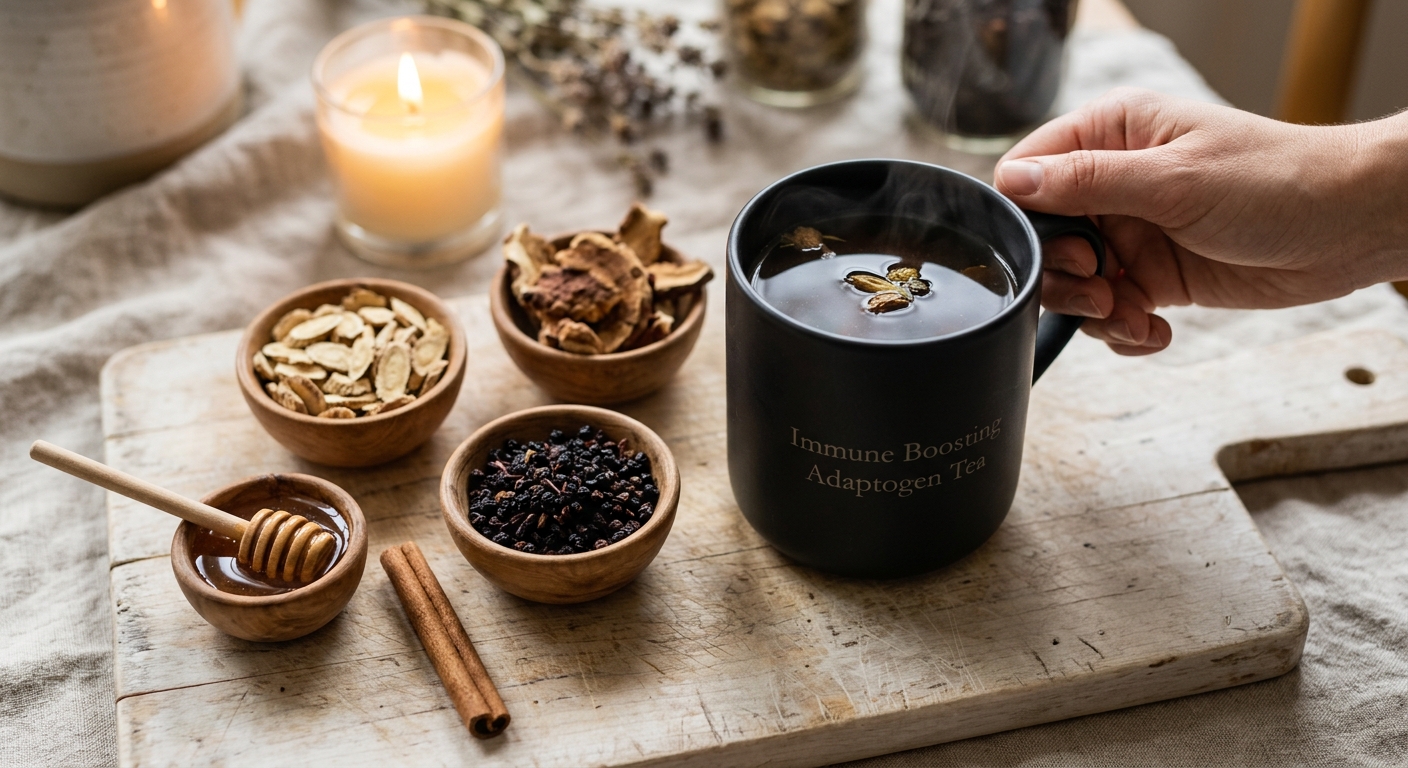
Long before pharmaceutical immune support lined pharmacy shelves, healers in China, Japan, and indigenous European communities were turning to the earth for protection. Astragalus root, known as Huang Qi in Traditional Chinese Medicine, has been prescribed for over 2,000 years as a tonic herb to strengthen what TCM practitioners call the Wei Qi, the body’s defensive energy that guards against external pathogens. Alongside it, reishi mushroom, the so-called “Mushroom of Immortality,” was reserved for emperors and monks in ancient Asia, prized for its ability to calm the spirit while simultaneously building deep immune resilience. Elderberry rounds out this triad with its long European folk medicine history, used by herbalists from Hippocrates to Nicholas Culpeper as a remedy for colds, fevers, and respiratory ailments.
What makes this blend remarkable is not just the individual potency of each ingredient, but the synergy they create together. Adaptogens like astragalus and reishi work by modulating the stress response and normalizing immune function over time, rather than simply stimulating it acutely. Elderberry contributes immediate antiviral action and a rich, tart fruitiness that makes this otherwise earthy, woodsy brew genuinely pleasant to drink. Together, they offer both long-term immune building and short-term seasonal protection in a single cup.
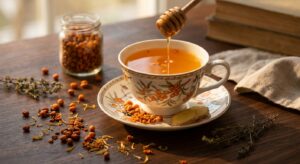
This is a tea designed for ritual as much as remedy. Because astragalus root and reishi are dense, fibrous botanicals, they benefit from a longer, lower-and-slower brewing approach than delicate floral teas. The result is a deep garnet brew with a savory, slightly sweet complexity that feels more like a nourishing broth than a typical herbal infusion. Drink it daily through the colder months, or as a restorative anytime your body needs extra support.
2
cups
Ingredients
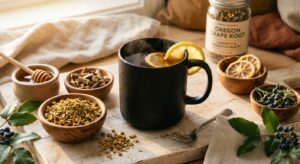
- 2 tbspdried astragalus root slices
- 1 tbspdried reishi mushroom slices or powder
- 1 tbspdried elderberries
- 500 mlwater (100°C / 212°F for decoction)
- 1 tspraw honey (optional)
- —cinnamon stick to taste (optional)
- —fresh lemon juice to taste (optional)
How to Brew
Click on an item below to shop for the recommended items for this recipe on Amazon.
As an Amazon Associate, we earn from qualifying purchases.
- Add the dried astragalus root slices, reishi mushroom, and elderberries to a small saucepan. Pour in 500 ml of cold, filtered water.
- Bring the water to a full boil over medium-high heat, then reduce the heat to low so the liquid maintains a gentle simmer. Add the optional cinnamon stick at this stage if using.
- Simmer uncovered for 20 to 30 minutes. You will notice the liquid deepening to a rich garnet color and reducing slightly. For a stronger medicinal brew, simmer for the full 30 minutes.
- Remove from heat and allow the decoction to cool for 2 to 3 minutes. Pour through a fine mesh strainer or cheesecloth into two mugs, pressing the spent herbs lightly with the back of a spoon to extract remaining liquid.
- Stir in raw honey and a squeeze of fresh lemon juice if desired. The lemon brightens the earthy flavor and adds a small dose of vitamin C to complement the elderberry.
- Use reishi mushroom powder and finely crumbled dried elderberries for this method. If you only have astragalus root slices, lightly crush them with a mortar and pestle to increase their surface area before adding them to the jar.
- Combine the crushed astragalus root, reishi powder, and elderberries in a large glass jar. Pour in 600 ml of cold, filtered water at room temperature. Using slightly more water compensates for the reduced extraction efficiency of cold water.
- Stir gently to combine, ensuring the reishi powder is fully dispersed and not clumping at the surface. Place the lid on the jar and leave it at room temperature for 2 hours to begin extraction.
- Transfer the jar to the refrigerator and allow the herbs to cold steep for a minimum of 12 hours and up to 18 hours. The longer the steep, the more polysaccharides are drawn out from the mushroom and root.
- When ready to serve, strain the brew through a fine mesh strainer lined with cheesecloth into a glass or pitcher. Serve over ice, and sweeten with a small drizzle of honey or a splash of elderflower cordial for a more complex flavor.
- Double the standard ingredient quantities: use 4 tablespoons of astragalus root slices, 2 tablespoons of reishi mushroom, and 2 tablespoons of elderberries. Add all ingredients to a medium saucepan with 1 liter of cold, filtered water.
- Bring the mixture to a full boil over medium-high heat, then reduce to a steady simmer. Allow the liquid to reduce by approximately half over 45 to 60 minutes, stirring occasionally. The final volume should be roughly 480 to 500 ml of deeply colored, aromatic concentrate.
- Remove from heat and cool for 5 minutes. Strain through a fine mesh strainer lined with cheesecloth into a clean glass measuring cup or bowl, pressing the herbs firmly to extract all liquid.
- While still warm, stir in 2 tablespoons of raw honey to act as both a natural sweetener and a mild preservative. You may also add a teaspoon of fresh lemon juice at this stage.
- Pour the finished concentrate into a clean glass jar with a tight-fitting lid. Store in the refrigerator for up to 5 days. To serve, dilute 60 to 80 ml of concentrate into 180 ml of hot water or herbal tea, or take it as a 30 ml wellness shot on its own.
Health Benefits
Astragalus root polysaccharides have been shown in multiple clinical studies to increase white blood cell production and enhance both T-cell and B-cell activity. Regular daily consumption over four to eight weeks is associated with measurable improvements in immune function markers in healthy adults.
Elderberry extracts have been studied in randomized controlled trials showing a reduction in cold duration by an average of two days and a significant reduction in symptom severity scores. The anthocyanins in elderberry appear to directly interfere with viral replication at the cellular level.
Unlike simple immune stimulants, the beta-glucans in reishi mushroom act as bidirectional immunomodulators, meaning they can upregulate a sluggish immune system and help calm an overactive one. This is particularly valuable for those with autoimmune tendencies or chronic inflammation.
Both astragalus and reishi are classified as adaptogens, compounds that help the body maintain homeostasis under physical and psychological stress. Chronic stress is a major suppressor of immune function, and these herbs help buffer the cortisol response that would otherwise impair immune surveillance.
The triterpenoids in reishi and the polyphenol content of elderberry offer substantial free-radical scavenging activity. Oxidative stress damages immune cells and accelerates cellular aging, and regular intake of antioxidant-rich botanicals helps maintain the integrity of immune cell membranes and DNA.
🧪 Key Bioactive Compounds
The Science Behind Astragalus Root
The immune-supporting power of this blend is rooted in its remarkable concentration of polysaccharides, particularly the astragalus polysaccharides (APS) and the beta-glucans derived from reishi mushroom. Polysaccharides are long-chain carbohydrate molecules that interact directly with pattern recognition receptors on immune cells, including toll-like receptors (TLRs) on macrophages and dendritic cells. When these receptors are engaged by APS or beta-glucans, they trigger a signaling cascade that upregulates the production of cytokines and increases the proliferation and activation of natural killer (NK) cells, which are among the body’s first responders to viral infection. A 2014 meta-analysis published in the Journal of Chinese Integrative Medicine confirmed that astragalus-based preparations significantly increased CD4 and CD8 T-lymphocyte counts in immune-compromised individuals, supporting its long-standing clinical use in TCM oncology.
Elderberry’s mechanism of action is notably direct at the viral level. The anthocyanins in elderberry, particularly cyanidin-3-glucoside and cyanidin-3-sambubioside, have been shown in in vitro studies to bind to the hemagglutinin proteins on the surface of influenza A and B viruses. Hemagglutinin is the molecular key a virus uses to attach to and enter a host cell, and by coating these proteins, elderberry’s flavonoids effectively block viral entry before infection can take hold. A 2016 randomized, double-blind, placebo-controlled trial published in Nutrients found that airline passengers who took elderberry extract before and during international flights experienced significantly shorter cold duration and reduced severity scores compared to the placebo group, offering compelling real-world evidence for this mechanism.
Reishi’s ganoderic acids add a sophisticated anti-inflammatory layer to the blend’s immune action. These triterpenoids inhibit the enzyme histidine decarboxylase, reducing the conversion of histidine to histamine, which is a key driver of inflammation and allergic response in the respiratory tract. Additionally, ganoderic acids have been shown to inhibit the nuclear factor kappa-B (NF-kB) signaling pathway, one of the central regulators of inflammatory gene expression. This dual action, activating innate immunity while dampening excessive inflammatory signaling, is what makes reishi particularly valuable for respiratory immune health and distinguishes adaptogenic herbs from simple stimulants.
Brewing Tips
- Source your astragalus root as whole slices or thin sticks rather than powder, as this allows you to easily remove the fibrous root material after decoction while still providing sufficient surface area for effective extraction during simmering.
- To maximize elderberry potency, look for dried elderberries from Sambucus nigra specifically, as this species has the highest concentration of immune-active anthocyanins and has been used in the majority of clinical research. Avoid ornamental elderberry varieties.
- If you find the reishi mushroom flavor too intensely bitter or earthy for daily drinking, try using a 10:1 reishi extract powder instead of whole dried slices. You will need only a quarter teaspoon to achieve the equivalent medicinal load with a noticeably smoother, less astringent flavor profile.