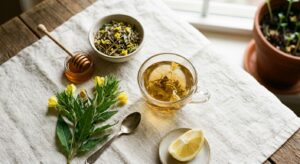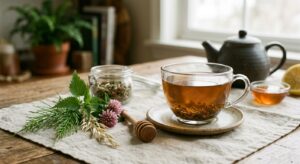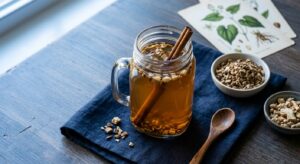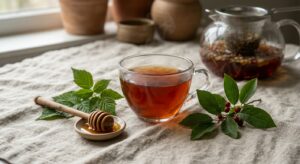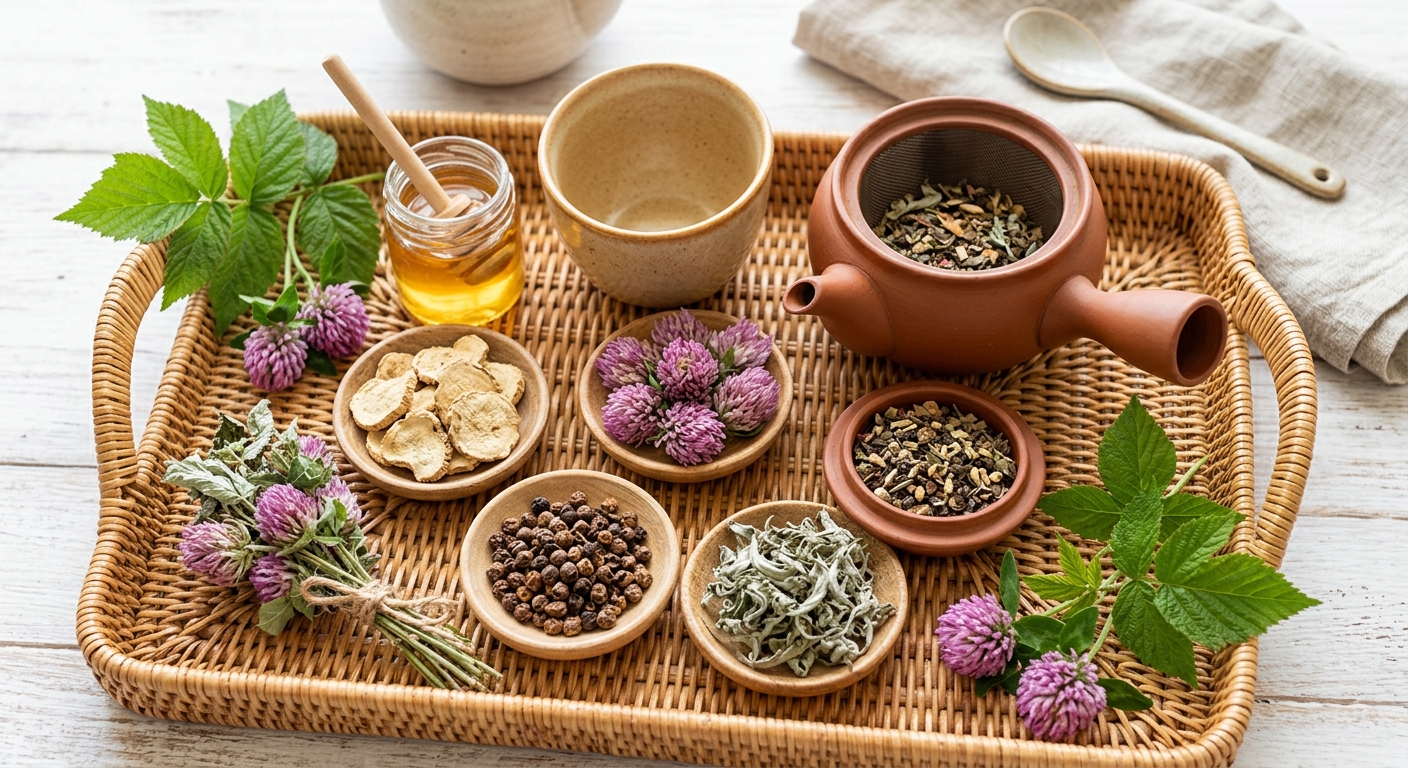
For generations, women across cultures have turned to plant medicine to support their reproductive health, cycling through seasons of change with the help of roots, flowers, and seeds. Ovarian reserve, which refers to the quantity and quality of a woman’s remaining eggs, is increasingly a focus of modern fertility conversations. While no herbal tea can reverse the natural decline of egg count that comes with age, traditional herbalism offers a rich toolkit of plants believed to nourish the endocrine system, reduce oxidative stress in the reproductive organs, and support the hormonal environment in which eggs mature. This blend draws on that wisdom, combining maca root, red clover blossoms, vitex berries, and red raspberry leaf into a single, purposeful cup.
Maca root, a cruciferous vegetable native to the high Andes of Peru, has been cultivated for over 2,000 years both as a food staple and a fertility tonic. Incan warriors reportedly consumed maca before battle for stamina, and women in Andean communities have long used it to ease menopausal transitions and irregular cycles. Red clover, rich in isoflavones that mimic estrogen in the body, has deep roots in North American and European folk medicine as a blood-purifying and reproductive tonic herb. Vitex agnus-castus, also known as chaste tree berry, has been documented in Western herbal medicine since the writings of Hippocrates and Dioscorides, prized for its ability to regulate the pituitary gland and balance the ratio of estrogen to progesterone across the menstrual cycle.
Together, these herbs create a tea that is earthy, subtly sweet, and faintly floral, a grounding blend suited to morning rituals or quiet afternoon reflection. It is important to approach this blend with realistic expectations and patience, as herbal support for reproductive health typically requires consistent use over several menstrual cycles before effects become noticeable. This is not a quick fix but a long-form act of nourishment, one that honours the complexity of female reproductive physiology and the slow, steady power of plant medicine.
2
cups
Ingredients
- 1 tspdried maca root powder or slices
- 1 tspdried red clover blossoms
- 0.5 tspdried vitex (chaste tree) berries, lightly crushed
- 1 tspdried red raspberry leaf
- 480 mlwater (95°C / 203°F)
- —raw honey or maple syrup to taste (optional)
- —splash of oat milk for creaminess (optional)
How to Brew
Click on an item below to shop for the recommended items for this recipe on Amazon.
As an Amazon Associate, we earn from qualifying purchases.
- Bring 480 ml of filtered water to 95°C (203°F). If using an electric kettle without temperature control, allow freshly boiled water to rest for 30 seconds before pouring.
- If using maca root slices rather than powder, add them to the water first and allow them to simmer gently on the lowest stovetop heat for 5 minutes to begin releasing their compounds. If using maca powder, skip this step and proceed directly to steeping.
- Combine the maca (powder or pre-simmered slices), red clover blossoms, lightly crushed vitex berries, and red raspberry leaf in a tea infuser or strainer placed inside your mug or teapot.
- Pour the hot water over the herbs and cover the mug with a small saucer or lid to trap the volatile aromatic compounds. Steep for 12 to 15 minutes.
- Remove the infuser and press the herbs gently with the back of a spoon to extract the remaining liquid. Sweeten with honey or maple syrup if desired, and add a small splash of oat milk for a warming, latte-like finish.
- Sip slowly, ideally in the morning or mid-afternoon. Avoid drinking this blend in the evening if you find maca root energising.
- Measure out the full ingredient quantity into a clean glass jar: 1 tsp maca root powder, 1 tsp red clover blossoms, 0.5 tsp lightly crushed vitex berries, and 1 tsp red raspberry leaf per 480 ml of water.
- Pour room-temperature filtered water over the herbs in the jar. Stir gently with a long spoon to ensure the maca powder is fully incorporated and not clumping at the surface.
- Seal the jar with a lid and allow it to sit at room temperature for 1 hour, then transfer to the refrigerator and steep for a further 9 to 11 hours. An overnight steep is ideal.
- The following morning, strain the herbs through a fine mesh strainer or cheesecloth, pressing gently to extract the remaining liquid. Discard the spent herbs.
- Serve over ice in a tall glass. The cold brew will have a smoother, less astringent flavour than the hot version. Sweeten lightly with a small pour of maple syrup if desired, as it blends more evenly into cold liquid than honey. Consume within 24 hours for best freshness.
- Place 1 tsp maca root slices and 0.5 tsp lightly crushed vitex berries into a small saucepan with 600 ml of cold filtered water. Using slightly more water compensates for evaporation during simmering.
- Bring the water to a gentle simmer over medium heat, then reduce to the lowest setting. Allow the roots and berries to simmer uncovered for 20 to 25 minutes, stirring occasionally. The liquid should reduce by roughly 20 percent and deepen in colour to a rich amber.
- Remove the saucepan from the heat and add the red clover blossoms and red raspberry leaf directly to the hot decoction liquid. Cover the saucepan with a lid and allow the delicate flowers and leaves to steep off the heat for an additional 10 minutes. This two-stage approach ensures the woody botanicals are fully extracted without scorching the more fragile floral and leaf material.
- Strain the decoction through a fine mesh strainer into two mugs, pressing the herbs firmly to extract every drop of the concentrated liquid.
- Sweeten with raw honey and add oat milk to taste. Because this method produces a more concentrated brew, you may wish to dilute each cup with 30 to 60 ml of hot water if the flavour is too intense. Drink one cup immediately and store the second in a sealed jar in the refrigerator for up to 48 hours.
Health Benefits
Vitex agnus-castus has been studied in multiple European clinical trials and shown to reduce elevated prolactin levels and support progesterone production in the luteal phase of the menstrual cycle, addressing a common underlying factor in irregular ovulation and reduced fertility.
The isoflavones in red clover, particularly biochanin A and formononetin, have demonstrated antioxidant properties in laboratory studies, and antioxidant-rich environments in the ovarian follicle are associated with better egg maturation and DNA integrity.
Maca root is classified as an adaptogen and has been shown in several randomised trials to reduce self-reported symptoms of hormonal imbalance, including in perimenopausal women, potentially by modulating the hypothalamic-pituitary-adrenal (HPA) axis rather than directly supplying hormones.
Red raspberry leaf is a longstanding uterine tonic in Western and Ayurvedic herbalism, rich in fragrine, magnesium, and iron. While direct clinical evidence for fertility is limited, its nutritive content supports the overall health of the reproductive system and has been used for centuries to prepare the uterus for conception.
Emerging research and traditional use suggest that reducing chronic inflammation and oxidative stress, the mechanisms targeted by the compounds in this blend, may help slow the rate of follicular depletion over time, supporting anti-Mullerian hormone (AMH) levels in women undergoing fertility support.
🧪 Key Bioactive Compounds
The Science Behind Maca Root
The science behind this blend centres on its multi-pronged approach to reproductive endocrinology. Vitex agnus-castus is the most clinically studied herb in this formula. Its primary mechanism appears to involve binding to dopamine D2 receptors in the anterior pituitary gland, which suppresses the release of prolactin. Elevated prolactin, a condition called hyperprolactinaemia, is a well-documented cause of irregular or absent ovulation. Several randomised controlled trials, particularly from European research groups working with Vitex extracts, have demonstrated meaningful reductions in prolactin levels alongside improvements in luteal phase length and progesterone concentrations in women with cycle irregularities.
Red clover’s contribution to this blend is primarily through its isoflavone content, especially formononetin and biochanin A. These compounds are classified as phytoestrogens because they bind to estrogen receptors, though with significantly lower affinity than endogenous estradiol. This weak binding can act as a competitive buffer in high-estrogen environments, or as gentle support in low-estrogen states, making red clover a nuanced rather than heavy-handed hormonal influence. Crucially, antioxidant properties demonstrated in vitro suggest these compounds may help protect the granulosa cells surrounding developing follicles from the oxidative damage that is increasingly linked to diminished ovarian reserve and poor egg quality as women age.
Maca root’s mechanisms are less fully elucidated but appear to operate upstream of direct hormone production. Its unique glucosinolates and fatty acid amides, called macamides, are thought to act on the hypothalamus and pituitary gland in a hormone-modulating rather than hormone-mimicking way. This means maca may help the body produce and regulate its own hormones more efficiently rather than supplying exogenous hormone-like compounds. Clinical trials in perimenopausal women have reported reductions in FSH levels and improvements in estradiol levels following maca supplementation, both markers relevant to ovarian reserve assessment. While this research is preliminary and largely conducted with concentrated supplements rather than whole-herb tea, it provides a plausible biological rationale for maca’s long traditional use as a fertility food.
Brewing Tips
- Consistency is key with this blend. Aim to drink one to two cups daily for at least two to three full menstrual cycles before evaluating its effects, as herbal adaptogens and hormone-modulating plants work gradually over time.
- If using maca root powder, add it after the water has cooled slightly from boiling to around 85°C (185°F), as excessive heat may degrade some of its delicate glucosinolate compounds. Stir well to prevent clumping before adding other herbs.
- Track your cycle while drinking this tea regularly. Keeping a simple journal of cycle length, energy levels, and mood can help you and your herbalist or healthcare provider identify meaningful shifts in hormonal patterns over time.