Few herbs carry as much reverence in the world of women’s plant medicine as dong quai (Angelica sinensis). Known as the “female ginseng” in Traditional Chinese Medicine (TCM), this aromatic root has been prescribed by Chinese herbalists for over 2,000 years to nourish the blood, regulate the menstrual cycle, and ease the transition through menopause. Its Chinese name, dang gui, translates loosely to “return to order,” a poetic reference to its reputation for restoring balance to the female body. In classical TCM texts like the Shennong Bencao Jing, it was classified among the highest-grade herbs, suitable for long-term use to build vitality rather than merely suppress symptoms.
The plant itself is a tall, celery-like perennial that grows in the cool mountain valleys of China, Korea, and Japan, particularly in the provinces of Gansu, Yunnan, and Sichuan. It is the dried root that holds the medicine, with a warm, earthy, and slightly sweet aroma that bears a faint resemblance to celery and anise. Unlike many Western herbal traditions that use a single herb in isolation, TCM has long combined dong quai with companion herbs such as peony root, rehmannia, and ligusticum to create classical formulas like Si Wu Tang (Four Substance Decoction), one of the oldest and most widely used women’s tonics in recorded history.
Western herbalism and modern integrative medicine have increasingly embraced dong quai as clinical interest in botanical alternatives for menstrual and menopausal support has grown. While it does not contain phytoestrogens in the same way as red clover or soy, research points to its rich array of coumarins, phthalides, and polysaccharides as the source of its uterine-regulating, anti-inflammatory, and circulatory-enhancing effects. Brewing dong quai as a tea or decoction is one of the most traditional and effective ways to extract these compounds, making it an accessible ritual for women seeking gentle, plant-based hormonal support.
2
cups
Ingredients
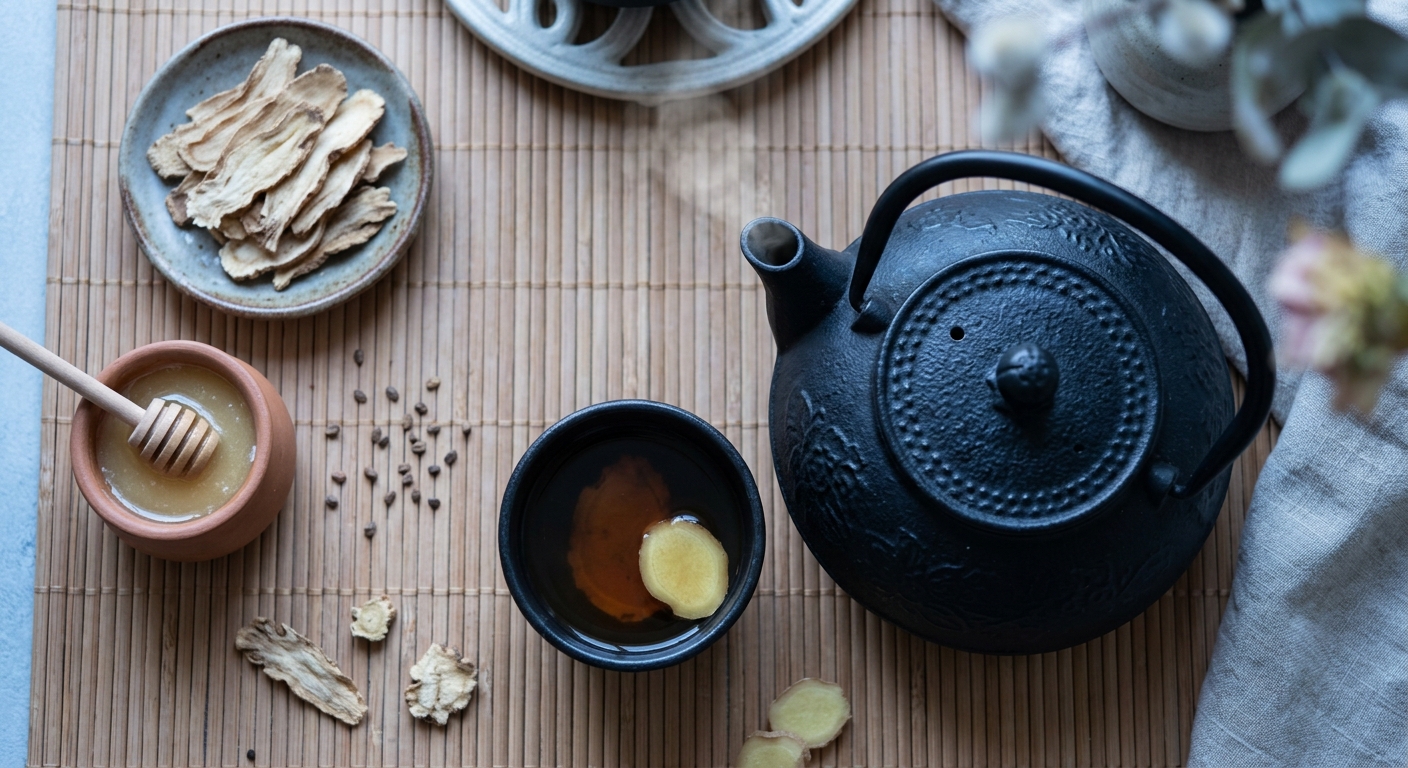
- 10 gdried dong quai root slices (Angelica sinensis)
- 500 mlwater (filtered)
- —raw honey or rock sugar to taste (optional)
- —a few slices of fresh ginger (optional, for warmth and digestion)
How to Brew
Click on an item below to shop for the recommended items for this recipe on Amazon.
As an Amazon Associate, we earn from qualifying purchases.
- Measure 5 g (roughly 1 heaped tablespoon) of finely sliced or coarsely ground dried dong quai root per 250 ml of water.
- Heat filtered water to 90 to 95°C (194 to 203°F). Avoid a full rolling boil, as prolonged high heat can degrade some of the more volatile aromatic compounds like ligustilide.
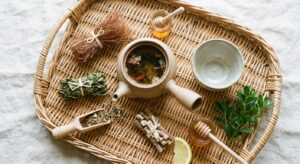
- Place the dong quai root in a tea infuser or directly into a small teapot. Pour the hot water over the root and cover with a lid to trap the aromatic steam.
- Steep for 15 to 20 minutes. The longer end of this range produces a deeper, more medicinal cup with a stronger bittersweet finish.
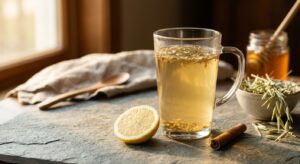
- Strain carefully into a warmed mug. Add a small slice of fresh ginger or a teaspoon of raw honey to soften the earthy bitterness if desired.
- Sip slowly while warm. This tea is traditionally taken once daily in the lead-up to menstruation or as a daily tonic during a structured herbal cycle.
- Combine 10 g of whole or thickly sliced dried dong quai root with 600 ml of cold filtered water in a small ceramic or stainless steel saucepan. Using a clay or ceramic pot is traditional and minimizes any metallic interaction with the root’s compounds.
- Bring the water to a full boil over medium-high heat, then immediately reduce the heat to a gentle simmer. You should see small, steady bubbles rising, not a vigorous rolling boil.
- Partially cover the pot and allow the root to decoct for 25 to 35 minutes. As the liquid reduces, it will deepen in color to a rich amber and intensify in aroma. Keep an eye on the water level and top up with a small amount of hot water if it reduces by more than half.
- At the 25-minute mark, taste the liquid. It should be earthy, warm, and carry a distinct bittersweet herbal flavor. Continue simmering to the 35-minute mark for a stronger, more concentrated medicinal brew.
- Remove from heat and allow to rest for 5 minutes before straining through a fine mesh strainer into a mug or serving vessel.
- Sweeten with rock sugar or raw honey if desired, as is traditional in many Chinese herbal preparations. Drink while warm, ideally in the evening or during the first few days of the menstrual cycle.
- Use finely sliced or lightly crushed dried dong quai root at a ratio of 6 g per 500 ml of cold filtered water. The increased surface area from slicing or lightly crushing the root is important for cold extraction, as no heat is present to assist compound release.
- Combine the root slices and cold water in a clean glass jar. Stir gently to ensure all root pieces are fully submerged. Leave uncovered at room temperature for the first 2 hours to begin the extraction process.
- After 2 hours, seal the jar tightly and transfer it to the refrigerator. Allow the root to cold-brew for a further 10 to 14 hours (overnight is ideal). Do not exceed 16 hours total, as extended cold extraction can introduce a musty, overly earthy note.
- When ready, strain the liquid through a fine mesh strainer or cheesecloth into a serving glass or pitcher. The resulting brew should be a pale golden amber with a soft, subtly sweet, and mildly herbal character.
- Serve over ice or chilled straight from the jar. A few slices of fresh cucumber or a small squeeze of lemon juice complement the gentle earthiness of cold-brewed dong quai and add a refreshing dimension. Consume within 48 hours and keep refrigerated.
Health Benefits
Z-ligustilide, the primary phthalide in dong quai, acts as a smooth muscle relaxant that reduces uterine spasms. Several clinical studies and in vitro investigations have confirmed its antispasmodic activity, supporting its long-standing use in TCM for primary dysmenorrhea.
Dong quai is classified in TCM as a blood tonic and emmenagogue, meaning it promotes and regulates menstrual flow. Modern research suggests its compounds may modulate estrogen receptor activity indirectly through circulatory and anti-inflammatory pathways rather than through direct phytoestrogenic action, though its precise hormonal mechanism is still being investigated.
Ferulic acid and ligustilide both demonstrate vasodilatory and antiplatelet properties, reducing blood viscosity and improving peripheral circulation. This supports dong quai’s use in TCM for blood stagnation patterns characterized by dark, clotted menstrual blood, cold extremities, and pallor.
Several observational studies and clinical trials have explored dong quai as a complementary therapy for menopausal hot flashes and mood fluctuations. While evidence is mixed for dong quai used in isolation, its combination with other TCM herbs has shown statistically significant improvements in quality of life for perimenopausal women in multiple randomized controlled trials.
The phenolic compounds in dong quai, particularly ferulic acid, exhibit significant free-radical scavenging capacity. Research published in peer-reviewed pharmacology journals has documented its inhibition of pro-inflammatory cytokines, suggesting a systemic anti-inflammatory benefit beyond its reproductive applications.
🧪 Key Bioactive Compounds
The Science Behind Dong Quai
The therapeutic reputation of dong quai is anchored in its unusually complex phytochemical profile, which includes phthalides, coumarins, phenolic acids, and polysaccharides. The most clinically studied of these are the phthalides, particularly Z-ligustilide, which constitutes up to 50% of the volatile oil fraction of the root. Z-ligustilide has been shown in multiple in vitro and animal studies to relax smooth muscle tissue by inhibiting calcium influx and modulating prostaglandin synthesis, two key mechanisms underlying menstrual cramping. This provides a plausible pharmacological explanation for one of TCM’s oldest clinical observations: that dong quai relieves the spasmodic pain of dysmenorrhea.
Ferulic acid, the most abundant phenolic compound in dong quai, has been extensively studied in its own right as a cardiovascular and neuroprotective agent. It inhibits platelet aggregation by suppressing thromboxane A2 synthesis and has been shown to improve nitric oxide bioavailability, resulting in vasodilation and enhanced blood flow. This mechanism directly supports the TCM concept of invigorating blood and resolving stasis, the theoretical framework used to describe conditions characterized by poor circulation, clotted menstrual blood, and associated pain. Ferulic acid has also demonstrated antioxidant activity superior to that of vitamin E in certain in vitro models, lending credibility to dong quai’s broader anti-aging and anti-inflammatory reputation.
The coumarin derivatives present in dong quai, including osthole and various furanocoumarins, contribute additional biological activity including anti-inflammatory cytokine inhibition and mild anticoagulant effects. Research into the root’s polysaccharide fraction has revealed meaningful immunomodulatory properties, including macrophage activation and regulation of inflammatory signaling pathways, suggesting that dong quai’s benefits extend beyond the reproductive system to influence systemic immune function. It is worth noting that the specific ratio and concentration of these compounds varies based on the part of the root used (the root head, body, and tail have different compound profiles in TCM practice), as well as the preparation method, with decoction consistently shown to yield the highest extraction of ferulic acid and phthalide content compared to infusion or cold extraction.
Brewing Tips
- Source your dong quai from a reputable TCM supplier or certified herbal apothecary and look for roots labeled Angelica sinensis specifically, as several other angelica species (such as Angelica archangelica) are commonly sold under similar names but have a different compound profile and traditional use.
- In classical TCM practice, the root tail (wei) of dong quai is considered more potent for invigorating blood and relieving stagnation, while the root body (shen) is used for gentler nourishing and tonic effects. Ask your supplier which part of the root you are purchasing if you have a specific therapeutic goal.
- Dong quai is traditionally taken in 2 to 4 week cycles, often from the end of menstruation to the start of the next cycle, rather than continuously throughout the month. Taking a break during menstruation itself is advisable unless advised otherwise by a qualified herbalist, particularly if you are prone to heavy flow.