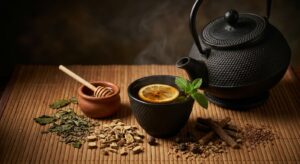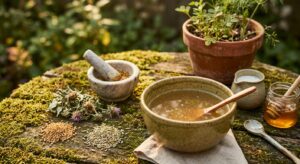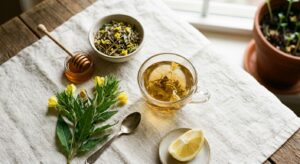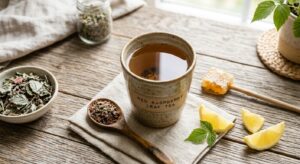
Long before hospitals and pharmaceutical prenatal vitamins, midwives carried bundles of dried herbs to support the women in their care. The blend now lovingly called Traditional Midwife Herbal Tea draws on a lineage of plant wisdom stretching from medieval European apothecaries to Appalachian folk healers and Native American herbalists. At its core are four foundational herbs: red raspberry leaf, nettle leaf, oat straw, and rose hips, each chosen for their mineral density, affinity for the female reproductive system, and gentle yet profound nourishing action. Together they form a tea that feels less like medicine and more like a wholesome, grounding daily ritual.
Red raspberry leaf has long held the title of the midwife’s herb, prized for its fragarine content, a plant alkaloid traditionally believed to tone the uterine muscles and ease menstrual discomfort. Nettle leaf brings an extraordinary mineral profile, delivering bioavailable iron, calcium, magnesium, and vitamin K in every cup, nutrients that are especially critical during menstruation, pregnancy, and the postpartum period. Oat straw, the green aerial parts of the oat plant, contributes silica and B vitamins that nourish the nervous system, while rose hips provide a generous hit of vitamin C to enhance iron absorption and support immune resilience. The synergy between these four plants is not accidental. Generations of midwives refined this combination precisely because the herbs amplify one another’s strengths.
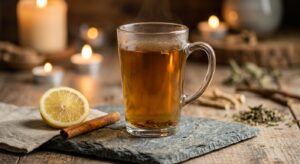
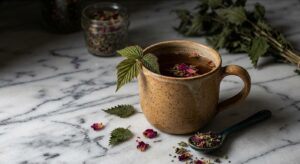
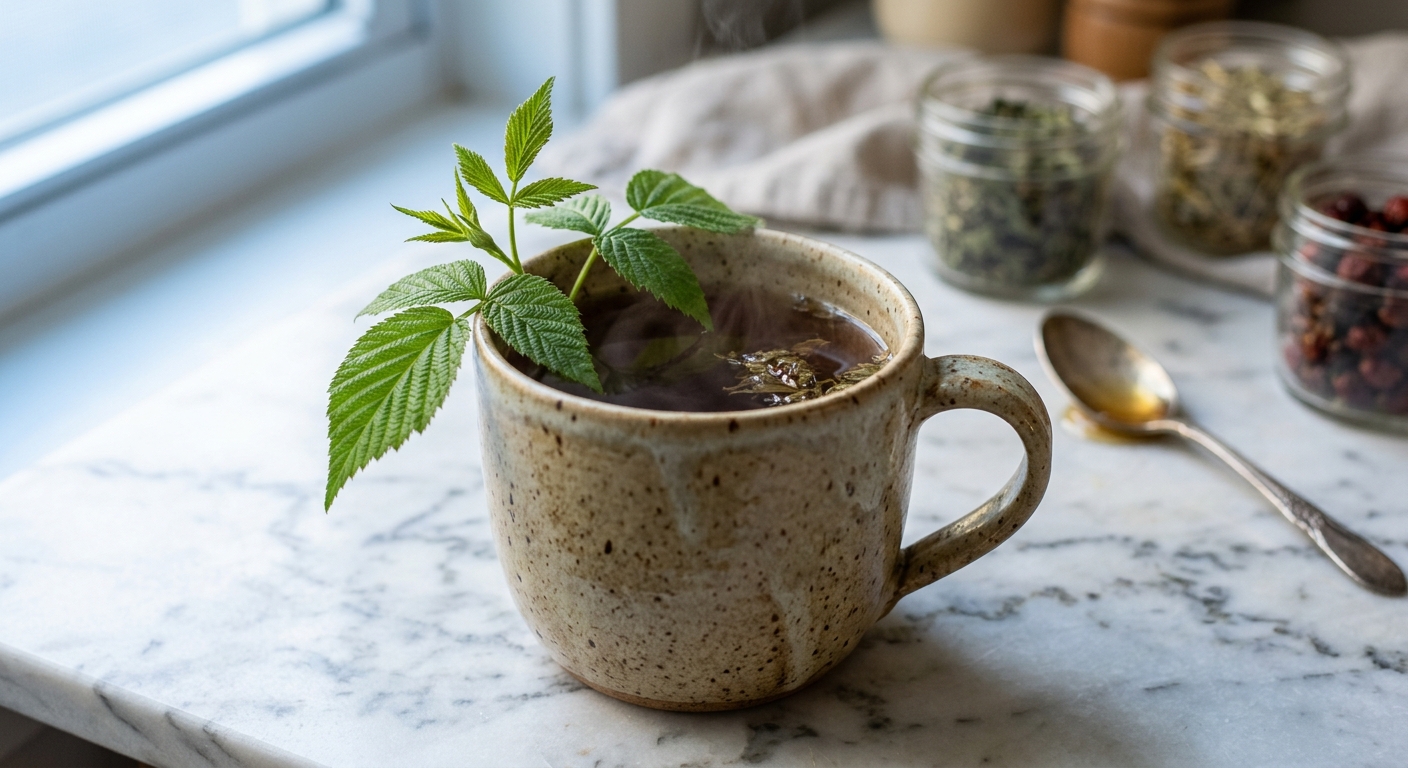
Sensory experience matters deeply with this tea. Brewed properly, it yields a deep amber to russet cup with a pleasantly earthy, slightly astringent base from the raspberry leaf, softened by the grassy sweetness of oat straw and brightened by the tartness of rose hips. Nettle adds a mineral, almost spinach-like undertone that anchors the whole blend. It is a tea that feels substantive, something you sense nourishing you from the inside out. Whether you are sipping it to ease premenstrual tension, to build nutritional reserves during pregnancy, or simply as a daily tonic, this brew invites you into a tradition of care that is as old as birth itself.
2
cups
Ingredients
- 2 tspdried red raspberry leaf
- 1 tspdried nettle leaf
- 1 tspdried oat straw
- 1 tspdried rose hips (whole or crushed)
- 480 mlwater (95°C / 203°F)
- —raw honey to taste (optional)
- —slice of lemon (optional, to enhance iron absorption)
How to Brew
Click on an item below to shop for the recommended items for this recipe on Amazon.
As an Amazon Associate, we earn from qualifying purchases.
- Bring filtered water to 95°C (203°F). Avoid a full rolling boil, which can degrade delicate vitamins such as vitamin C in the rose hips.
- Combine the dried red raspberry leaf, nettle leaf, oat straw, and crushed rose hips in a tea infuser, muslin bag, or directly into a teapot. Use the amounts listed for 2 servings.
- Pour the hot water directly over the herbs, ensuring all plant material is fully submerged. Cover the cup or teapot with a lid or small plate to trap volatile aromatic compounds and retain heat.
- Steep for a minimum of 10 minutes and up to 15 minutes. The longer steep draws out a richer mineral content, which is the primary purpose of this blend.
- Remove the infuser or strain the tea through a fine mesh strainer into mugs. Squeeze a slice of lemon into each cup before drinking to boost vitamin C and improve iron bioavailability.
- Sweeten lightly with raw honey if desired. Drink warm, ideally one to two cups per day as a nutritive tonic.
- Place 4 teaspoons of red raspberry leaf, 2 teaspoons of nettle leaf, 2 teaspoons of oat straw, and 2 teaspoons of crushed rose hips into a clean glass jar. This larger quantity compensates for the slower extraction at lower temperatures and yields a richly mineralized brew.
- Fill the jar with 1 liter of room-temperature filtered water, ensuring all herbs are fully submerged. Use a spoon to press any floating material beneath the surface.
- Seal the jar with a tight-fitting lid and allow it to sit at room temperature for 1 hour, then transfer it to the refrigerator.
- Let the herbs infuse in the refrigerator for a minimum of 8 hours and up to 12 hours. Avoid steeping beyond 12 hours as the tea may develop an overly bitter, intensely tannic flavor.
- Strain the cold infusion through a fine mesh strainer or cheesecloth, pressing the plant material firmly to extract all liquid. Discard the spent herbs or add them to a compost pile.
- Pour over ice or drink chilled straight from the jar. Add a squeeze of fresh lemon juice to maximize iron absorption. The infusion will keep refrigerated for up to 24 hours.
- Combine 4 tablespoons of red raspberry leaf, 2 tablespoons of nettle leaf, 2 tablespoons of oat straw, and 2 tablespoons of crushed rose hips in a medium saucepan. This is roughly double the standard ratio, designed to produce a concentrated brew.
- Add 500 ml of filtered water and bring the mixture slowly to 95°C (203°F) over medium heat. Do not allow it to reach a full boil. Once temperature is reached, reduce the heat to the lowest setting.
- Cover the saucepan with a lid and maintain a very gentle simmer for 20 to 25 minutes. The liquid will reduce slightly and deepen to a rich, dark amber color.
- Remove from heat and allow the concentrate to cool in the covered pan for an additional 10 minutes, so the herbs can continue releasing their compounds into the now-gentler liquid.
- Strain the concentrate through a fine mesh strainer lined with cheesecloth into a sterilized glass jar or bottle, pressing the herbs firmly to extract all liquid.
- Store the concentrate sealed in the refrigerator for up to 5 days. To use, dilute approximately 60 to 80 ml of concentrate with 180 ml of hot or cold water per serving. Add lemon juice and honey as desired.
Health Benefits
Red raspberry leaf’s fragarine alkaloid has long been used by midwives to strengthen uterine muscle tone. A 1999 Australian study published in the Journal of Midwifery found that women who consumed raspberry leaf were less likely to need interventions during labor, lending some clinical weight to centuries of traditional use.
Nettle leaf is one of the most mineral-dense plants in the herbal pharmacopoeia, offering iron, calcium, magnesium, and potassium in bioavailable forms. Regular consumption of this blend during and after menstruation can help counteract the depletion of these nutrients, particularly iron, that accompanies monthly blood loss.
The combined anti-inflammatory flavonoids in raspberry leaf and nettle, particularly quercetin and kaempferol, may inhibit the overproduction of prostaglandins, the hormone-like compounds responsible for uterine cramping. Oat straw further supports the nervous system, helping to reduce the irritability and tension that often accompany PMS.
Midwives have recommended this blend during the second and third trimesters of pregnancy for its ability to deliver folate, calcium, iron, and vitamin K, nutrients essential for fetal development and maternal blood clotting. Postpartum, the blend helps replenish nutrient stores depleted by labor and breastfeeding.
Rose hips deliver one of the highest natural concentrations of vitamin C of any plant food, which supports white blood cell activity and acts as an antioxidant to protect reproductive and systemic tissues from free radical damage. This is especially valuable during pregnancy when immune dynamics shift significantly.
🧪 Key Bioactive Compounds
The Science Behind Red Raspberry Leaf
The nutritional power of Traditional Midwife Herbal Tea rests on a foundation of mineral-rich plant chemistry. Nettle leaf (Urtica dioica) has been analyzed in multiple studies and found to contain significant concentrations of iron, calcium, magnesium, potassium, and vitamins A, C, and K. Crucially, these minerals are present in forms that are relatively bioavailable compared to synthetic supplements, and the vitamin C provided by rose hips in the same cup actively enhances the absorption of nettle’s non-heme iron by reducing it to its absorbable ferrous form in the gut. This pairing represents an elegant example of how traditional herbalists intuitively created synergistic formulas long before modern nutritional science could explain why they worked.
Red raspberry leaf contains fragarine, a poorly understood plant alkaloid that appears to exert a dual action on smooth muscle tissue, relaxing overly contracted uterine muscle while simultaneously toning atonic or weakened tissue. This balancing quality, sometimes called a trophorestorative action in herbal medicine, may explain why raspberry leaf has been used to ease cramping in some women while also being used to prepare the uterus for efficient labor contractions. The leaf also contains tannins, which give it a mildly astringent quality, and flavonoids including quercetin and kaempferol, which have demonstrated anti-inflammatory and antispasmodic activity in cell studies by inhibiting cyclooxygenase enzymes involved in prostaglandin synthesis. Since excess prostaglandins are a primary driver of primary dysmenorrhea, this mechanism offers a plausible scientific basis for the herb’s long traditional use in menstrual pain relief.
Oat straw (Avena sativa green aerial parts) contributes a distinct dimension to this blend through its high silicic acid content and a rich supply of B vitamins, particularly B1 (thiamine) and B2 (riboflavin). Silicic acid is a critical precursor to the structural protein collagen and supports the integrity of connective tissue throughout the body, including the ligaments and pelvic floor structures that come under significant stress during pregnancy and birth. Oat straw’s nervous system affinity, recognized in traditional European herbal medicine as a nervine tonic, has been explored in several human trials, including a 2011 study that found an acute dose of oat herb extract improved attention and concentration in older adults. For women managing the cognitive and emotional fluctuations of premenstrual syndrome or pregnancy, this gentle nervous system support, combined with the mineral richness of the rest of the blend, makes this a tea with genuinely layered physiological benefits.
Brewing Tips
- Always cover your cup or teapot while steeping this blend. The lid traps volatile aromatic compounds that would otherwise evaporate and also maintains the temperature needed for thorough mineral extraction from the denser plant material like oat straw and rose hips.
- Crush dried rose hips lightly with the back of a spoon before adding them to the infuser. The seeds and flesh release their vitamin C and antioxidant compounds far more readily when the surface area is increased, giving you a meaningfully more potent brew.
- For the highest mineral yield, the overnight cold infusion method is preferred by many traditional herbalists over the quick hot steep. If you are drinking this tea primarily as a nutritive mineral supplement rather than for taste or immediate comfort, prepare a batch the night before and drink it throughout the following day.