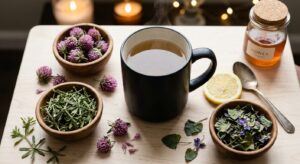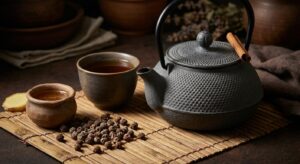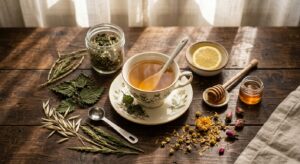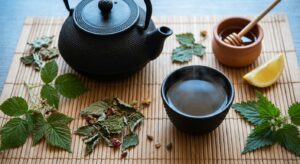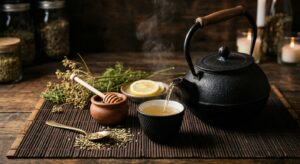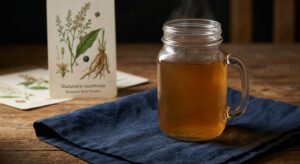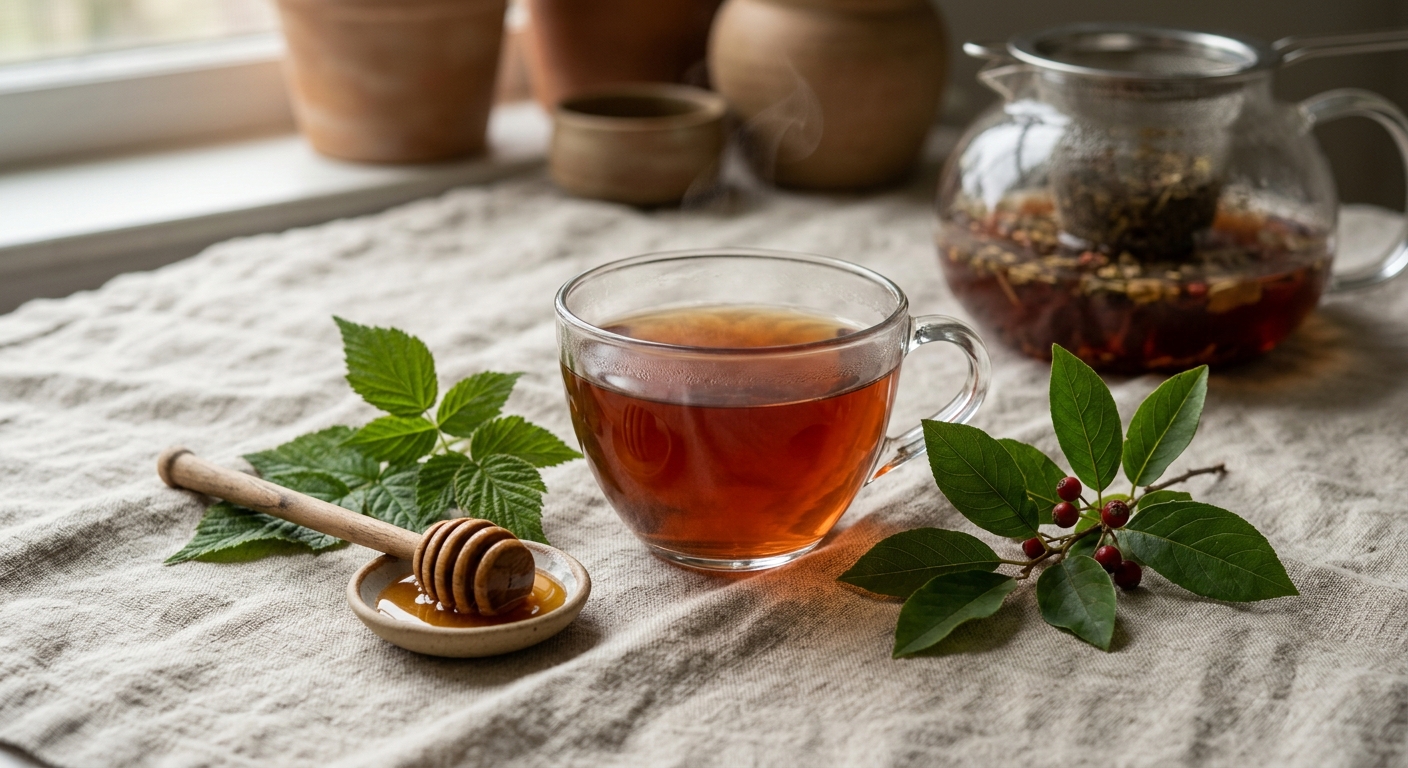
For centuries, women across cultures have turned to plant medicine to navigate the rhythms of their menstrual cycles. Long before pharmaceutical interventions existed, herbalists in Europe, Asia, and the Americas were brewing teas from raspberry leaf, cramp bark, and chasteberry to ease the discomforts that arrive in the days before menstruation. These plants were not fringe remedies but central pillars of traditional midwifery and women’s health, passed down through generations of healers who understood the body’s hormonal landscape through careful observation and lived experience.
This PMS Relief blend brings together three powerhouse herbs, each targeting a distinct dimension of premenstrual syndrome. Cramp bark (Viburnum opulus) is named precisely for its antispasmodic action on uterine muscle, making it a go-to for painful cramping and pelvic tension. Red raspberry leaf (Rubus idaeus) tones the uterine muscle while delivering a rich supply of magnesium, a mineral that is frequently depleted before menstruation and directly linked to mood instability and cramping. Chasteberry (Vitex agnus-castus), the most studied of the three, acts on the pituitary gland to gently rebalance progesterone and prolactin levels, addressing the hormonal root of bloating, breast tenderness, and mood swings.
What makes this tea especially appealing is its cumulative nature. While a single cup can offer noticeable relief during an acute cramp or a tense afternoon, the full benefits of herbs like chasteberry and raspberry leaf build over weeks and cycles of consistent use. Brewing this tea as a daily ritual in the two weeks before your period, or sipping it throughout your cycle, gives these botanicals the time and repetition they need to meaningfully support your hormonal health. The flavor is earthy and slightly astringent with warm, woody undertones, grounding and comforting in exactly the way a remedial tea should be.
2
cups
Ingredients
- 1 tspdried cramp bark (Viburnum opulus)
- 1 tspdried red raspberry leaf
- 0.5 tspdried chasteberry (Vitex agnus-castus)
- 0.25 tspdried ginger root (optional, for warmth and nausea relief)
- 480 mlwater (95°C / 203°F)
- —raw honey or maple syrup to taste (optional)
- —a squeeze of lemon to brighten flavor (optional)
How to Brew
Click on an item below to shop for the recommended items for this recipe on Amazon.
As an Amazon Associate, we earn from qualifying purchases.
- Bring filtered water to 95°C (203°F). If using a standard kettle, bring to a full boil and let it rest for 30 to 60 seconds to drop just below boiling point.
- Combine the cramp bark, red raspberry leaf, chasteberry, and optional ginger root in a tea infuser, tea ball, or small muslin bag. Place inside your mug or teapot.
- Pour 240 ml of hot water per serving over the herbs, ensuring all plant material is fully submerged. Cover the mug with a small saucer or lid to trap volatile aromatic compounds and retain heat during steeping.
- Steep for 10 to 15 minutes. For acute cramping relief, lean toward the full 15 minutes to maximize extraction of cramp bark’s antispasmodic constituents.
- Remove the infuser and gently press it against the side of the mug to release the last of the concentrated liquid. Sweeten with raw honey or maple syrup if desired, and add a squeeze of lemon to balance the astringency.
- Sip slowly while warm. For best results during the premenstrual phase, drink one to two cups daily in the week before your period begins.
- Measure out a double-strength ratio of herbs: 2 tsp cramp bark, 2 tsp red raspberry leaf, 1 tsp chasteberry, and 0.5 tsp dried ginger root per 480 ml of cold filtered water. The cold extraction requires more plant material to compensate for reduced extraction efficiency.
- Combine the herbs and cold water in a glass jar with a tight-fitting lid. Stir gently to ensure all herb material is saturated and submerged.
- Let the jar sit at room temperature for 1 hour, then transfer to the refrigerator. Steep for a total of 8 to 12 hours, or overnight for convenience.
- Strain the infusion through a fine mesh strainer or cheesecloth into a clean glass bottle or pitcher, pressing gently on the herbs to extract all liquid.
- Taste before sweetening. The cold brew will be noticeably smoother and more subtly flavored than the hot brew. Add honey syrup (honey dissolved in warm water) or a splash of tart cherry juice for a PMS-supportive flavor boost.
- Store refrigerated for up to 48 hours and drink one to two cups daily. Shake or stir before each serving as some plant compounds may settle.
- Place the cramp bark and chasteberry in a small saucepan with 600 ml of cold filtered water. Starting in cold water helps draw compounds out of the dense plant material gradually as the temperature rises.
- Bring the water to a gentle boil over medium heat, then immediately reduce to a low simmer. The surface should be just barely moving, not a rolling boil.
- Simmer uncovered for 20 to 25 minutes, allowing the liquid to reduce slightly by about 15 to 20 percent. The decoction will darken to a deep mahogany color and develop a more robust, resinous aroma.
- After simmering, remove the pan from heat and add the red raspberry leaf and optional ginger root directly to the hot liquid. Cover with a lid and allow these more delicate herbs to infuse off the heat for an additional 5 to 7 minutes.
- Strain through a fine mesh strainer into a mug or teapot, pressing firmly on the plant material to extract every drop of the concentrated liquid.
- Sweeten with raw honey if desired. Because this decoction is more concentrated, you may wish to dilute it slightly with an additional 60 to 80 ml of hot water before drinking. Drink one cup up to twice daily during the premenstrual phase or on the first two days of menstruation.
Health Benefits
Cramp bark contains scopoletin and viopudial, compounds shown to relax uterine smooth muscle spasms. Clinical herbalists have long documented its effectiveness for dysmenorrhea, and preliminary pharmacological studies confirm its antispasmodic activity at the cellular level.
Chasteberry (Vitex agnus-castus) is the most clinically researched herb for PMS, with multiple randomized controlled trials showing significant reductions in breast tenderness, irritability, mood swings, and bloating compared to placebo. It works by increasing dopamine activity in the hypothalamus, which in turn reduces elevated prolactin and supports progesterone dominance in the luteal phase.
The combined diuretic-adjacent action of raspberry leaf and the prolactin-lowering effect of chasteberry address both the hormonal and physiological causes of premenstrual bloating. Normalizing prolactin levels directly reduces the fluid retention many women experience in the days before their period.
Magnesium from raspberry leaf plays a well-documented role in regulating the HPA stress axis and GABA neurotransmitter activity. Magnesium deficiency, which deepens in the premenstrual phase, is directly correlated with heightened anxiety, tearfulness, and irritability, making dietary magnesium through foods and herbs a meaningful intervention.
Red raspberry leaf contains fragarine, an alkaloid with a selective toning effect on the uterine and pelvic floor musculature. Unlike stimulants that trigger contraction, fragarine normalizes muscle tone, which may reduce both cramping and excessive flow over time with regular use across multiple cycles.
🧪 Key Bioactive Compounds
The Science Behind Cramp Bark
The most extensively studied ingredient in this blend is chasteberry (Vitex agnus-castus), and the body of clinical evidence behind it is genuinely compelling. A landmark 2001 randomized trial published in the British Medical Journal found that chasteberry extract was superior to placebo in reducing the core symptoms of PMS, including irritability, mood changes, headaches, and breast fullness. The mechanism centers on the iridoid glycoside agnuside and related diterpenes, which bind to dopamine D2 receptors in the pituitary gland. This dopaminergic activity suppresses the secretion of prolactin, a hormone that, when chronically elevated during the luteal phase, drives breast tenderness, water retention, and mood disruption. By normalizing prolactin, chasteberry effectively addresses multiple PMS symptoms from a single hormonal intervention point.
Cramp bark’s pharmacological profile is equally well-mapped. Its primary antispasmodic constituents, scopoletin and viopudial, act directly on smooth muscle tissue by modulating calcium ion channels and inhibiting muscle contraction signaling pathways. Scopoletin, a coumarin derivative, has demonstrated smooth muscle relaxation activity in in vitro studies, and its selective affinity for uterine musculature makes it particularly relevant for dysmenorrhea. Viopudial, an iridoid unique to Viburnum species, appears to complement scopoletin’s action through a separate but parallel pathway, which may explain why whole cramp bark preparations outperform isolated extracts in traditional clinical observations.
Red raspberry leaf rounds out the blend with a nutritional and tonic dimension. The alkaloid fragarine has been shown in animal studies to have a selective normalizing effect on uterine tone, reducing hypercontractility without causing the opposite extreme of uterine atony. Beyond fragarine, raspberry leaf provides a meaningful dose of bioavailable magnesium, and the relationship between magnesium and PMS is now well-supported in the literature. A meta-analysis published in Nutrients in 2017 confirmed that magnesium supplementation significantly reduced PMS symptoms including mood disturbances, fluid retention, and pain. Given that progesterone, which rises in the luteal phase, is a known magnesium-depleting hormone, the premenstrual drop in magnesium is now understood as a physiological driver of many classic PMS symptoms rather than a coincidence.
Brewing Tips
- Begin drinking this tea 10 to 14 days before your expected period (the start of the luteal phase) and continue through the first two days of menstruation. Chasteberry and raspberry leaf both work best with consistent, cycle-aligned use rather than sporadic symptomatic relief.
- Always cover your mug or teapot while the tea steeps. Many of the volatile aromatic compounds in ginger and the more fragile constituents of raspberry leaf escape with steam, reducing both flavor and therapeutic potency if left uncovered.
- If the astringency of cramp bark is too strong for your palate, add a small slice of fresh pear or a few dried tart cherries to your infuser alongside the herbs. Both soften the bitter edge and tart cherry independently supports anti-inflammatory activity.