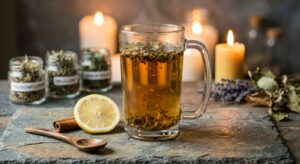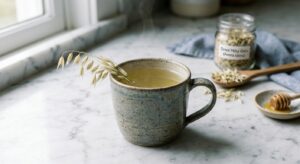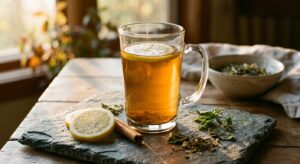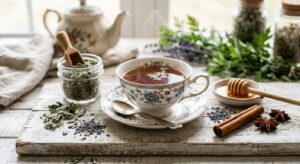
Long before modern sleep medicine, indigenous communities of the American West relied on California poppy (Eschscholzia californica) as a gentle nervine and mild analgesic. Unlike its controversial relative the opium poppy, California poppy contains no opiates and was used by Californian tribes such as the Chumash and Luiseno to calm restless children, soothe headaches, and encourage sleep. European settlers quickly adopted its use, and by the nineteenth century it had traveled across the Atlantic as a remedy for anxiety and insomnia. Today it remains the state flower of California and a beloved botanical in the Western herbal tradition.
Valerian (Valeriana officinalis) brings ancient credentials to this blend. Revered by Greek physicians including Hippocrates and Dioscorides, valerian root has been prescribed for sleep disturbances, nervous tension, and heart palpitations for over two thousand years. Medieval apothecaries called it “all-heal,” and during World War II it was distributed to civilians in Britain to manage anxiety from air raids. Its earthy, deeply pungent aroma is polarizing but unmistakable, and its sedative reputation has been substantiated by a growing body of modern clinical research.
Blending these two herbs creates something greater than the sum of their parts. California poppy softens valerian’s sharp, musky edge with subtle floral sweetness, while valerian deepens the mild relaxation that California poppy provides on its own. The result is a warm, amber-hued cup with a grounding herbaceous character that signals to your nervous system: it is time to wind down. Whether you brew it hot on a cold evening or prepare it as a cold overnight infusion, this blend is best enjoyed as part of a deliberate, unhurried bedtime ritual.
2
cups
Ingredients
- 2 tspdried California poppy aerial parts (flowers, leaves, stems)
- 1 tspdried valerian root (chopped or granulated)
- 480 mlwater (95°C / 203°F)
- —raw honey or maple syrup to taste (optional)
- —fresh lemon balm sprig for garnish (optional)
How to Brew
Click on an item below to shop for the recommended items for this recipe on Amazon.
As an Amazon Associate, we earn from qualifying purchases.
- Heat filtered water to 90 to 95°C (194 to 203°F). If using a standard kettle, bring to a boil and allow it to rest for 60 to 90 seconds before pouring.
- Combine 2 teaspoons of dried California poppy aerial parts and 1 teaspoon of chopped dried valerian root in a tea infuser, mesh strainer, or small teapot with a built-in filter.
- Pour the heated water over the herbs and cover the vessel immediately with a lid or small saucer to trap volatile aromatic compounds that contribute to the tea’s relaxing effect.
- Steep for 10 to 15 minutes. A 10-minute steep produces a milder, more floral cup while 15 minutes draws out a fuller, earthier flavor with stronger sedative potential.
- Remove the infuser, pressing gently to extract remaining liquid. Allow the tea to cool slightly for 2 to 3 minutes before drinking.
- Sweeten with raw honey or maple syrup if desired. Drink 30 to 45 minutes before bed for best effect.
- Measure 2 teaspoons of dried California poppy aerial parts and 1 teaspoon of chopped dried valerian root directly into a clean glass jar.
- Add 480 ml of cold filtered water at room temperature. Stir gently to ensure all the herbs are submerged and wetted.
- Cover the jar tightly with a lid and leave it at room temperature for 1 hour to begin extraction, then transfer to the refrigerator.
- Allow the blend to steep in the refrigerator for 8 to 12 hours, ideally overnight. The extended cold extraction gently pulls valerenic acids and California poppy alkaloids into solution without releasing harsh bitter tannins.
- Strain the liquid through a fine mesh strainer or cheesecloth into a glass, pressing the herbs lightly to recover all the liquid.
- The cold brew can be consumed chilled straight from the refrigerator or gently warmed in a small saucepan over very low heat (do not boil). Sweeten to taste and drink within 24 hours.
- Place 1 teaspoon of coarsely chopped dried valerian root into a small saucepan with 480 ml of cold filtered water. Do not add the California poppy yet, as it requires shorter, gentler extraction.
- Bring the water to a gentle simmer over medium-low heat (around 85 to 90°C / 185 to 194°F). Do not allow the liquid to reach a rolling boil. Maintain a steady simmer and cover the saucepan with a lid.
- Simmer the valerian root for 20 to 25 minutes, checking occasionally to ensure the liquid is simmering gently and not boiling away. Add small amounts of hot water if the volume reduces significantly.
- After 20 to 25 minutes, remove the saucepan from the heat. Add 2 teaspoons of dried California poppy aerial parts directly to the hot decoction liquid.
- Cover the saucepan and allow the California poppy to infuse in the residual heat for an additional 8 to 10 minutes. This two-stage approach preserves the poppy’s more volatile compounds while ensuring full extraction from the hardier root.
- Strain the finished decoction through a fine mesh strainer into two mugs, pressing the spent herbs firmly to recover all liquid. Sweeten with honey to balance the deep earthy bitterness, and drink slowly 30 to 60 minutes before sleep.
Health Benefits
Valerenic acid in valerian root inhibits GABA-transaminase, effectively increasing GABA levels in the brain and reducing the time it takes to fall asleep. A 2002 randomized controlled trial published in Pharmacology, Biochemistry and Behavior found that valerian significantly improved subjective sleep quality without producing morning grogginess.
Both California poppy alkaloids and valerian’s valerenic acid modulate GABA and serotonin receptor pathways, the same targets addressed by many anti-anxiety medications but through gentler, non-addictive mechanisms. This makes the blend particularly useful for the kind of racing-mind tension that delays sleep.
Californidine and protopine in California poppy interact with mu-opioid receptor pathways at sub-pharmacological levels, offering gentle analgesic properties that can ease muscular tension and minor discomfort that might otherwise disrupt sleep.
Valerian root has been shown in several studies to reduce heart rate and lower cortisol-driven sympathetic arousal, shifting the body from a fight-or-flight state toward the parasympathetic rest-and-digest mode that is necessary for restorative sleep.
Flavonoids including linarin, hesperidin, and apigenin found across both herbs contribute antioxidant activity that protects neurons from oxidative stress, supporting long-term neurological health alongside the blend’s immediate calming effects.
🧪 Key Bioactive Compounds
The Science Behind California Poppy
The sedative power of this blend centers on GABA, the brain’s primary inhibitory neurotransmitter. Valerian root’s valerenic acid works by inhibiting the enzyme GABA-transaminase, which is responsible for breaking down GABA in the synaptic cleft. By slowing this degradation process, valerenic acid effectively raises ambient GABA levels in key brain regions including the hypothalamus and amygdala, reducing neuronal excitability and producing the characteristic calming effect that has made valerian a clinical subject for decades. A 2006 study in the American Journal of Medicine reviewed sixteen clinical trials and found that valerian may improve sleep quality without producing side effects, particularly for those with mild to moderate insomnia.
California poppy contributes a distinct but complementary pharmacological profile. Its isoquinoline alkaloids, principally californidine and protopine, interact with multiple receptor systems including dopaminergic, serotonergic, and mu-opioid pathways. Protopine in particular has demonstrated inhibition of histamine H1 receptors in animal models, a mechanism shared by many over-the-counter antihistamine sleep aids. Meanwhile, linarin and other flavonoids in the aerial parts of the plant potentiate GABA-A receptor binding in a manner similar to benzodiazepines but with far lower affinity and without the dependency risk. A study published in Phytotherapy Research found that a standardized California poppy extract significantly reduced anxiety behaviors in animal models via these GABAergic pathways.
The synergy between the two herbs is not merely additive but potentially multiplicative. When multiple compounds act on the same receptor system through slightly different mechanisms, as valerenic acid and California poppy alkaloids both do with the GABAergic system, the combined effect can exceed what either herb produces alone at the same individual dose. This allows the blend to achieve meaningful relaxation and sleep support at doses of each herb that, taken separately, might produce only a subtle effect. This principle of botanical synergy is one of the core rationales behind traditional herbal compounding and is increasingly being studied in modern phytopharmacology.
Brewing Tips
- Purchase valerian root in pre-granulated or finely chopped form for hot brew and cold brew methods, and save whole root pieces for decoction, where the extended simmering time is needed to extract them fully.
- Store both dried herbs in airtight amber glass jars away from light and heat. Valerian root in particular loses potency quickly when exposed to air, so buy in small quantities and use within six months for maximum therapeutic value.
- If valerian’s strong earthy flavor is too intense for your palate, use the cold brew method and add a cinnamon stick or a few slices of dried apple to the jar during extraction. These additions soften the pungency without undermining the blend’s relaxing properties.