For over three thousand years, the people of Fiji, Vanuatu, Tonga, and Hawaii have gathered around a shared bowl of kava to mark celebrations, settle disputes, and ease the tensions of daily life. The word kava comes from the Tongan and Marquesan word meaning bitter, a fitting description for the earthy, peppery brew that has shaped Pacific island culture in ways few plants have managed anywhere on earth. Kava ceremonies, known as kava circles or nakamals depending on the island, are not merely social rituals but deeply spiritual practices in which the plant is treated as a living intermediary between the human world and the divine.
The root of Piper methysticum contains a family of compounds called kavalactones, which interact with the brain’s GABA receptors and limbic system to produce a relaxed, sociable, and mentally clear state. Unlike alcohol, kava does not impair cognitive function or create the kind of disorienting intoxication that leads to aggression or poor decision-making. Experienced kava drinkers describe the feeling as a gentle loosening of tension in the body, a quieting of mental chatter, and a warm sociability that makes conversation flow easily. The numbing sensation on the lips and tongue that arrives within minutes of drinking is one of kava’s most distinctive signatures, a sign that the kavalactones are beginning their work.
In the Western world, kava gained popularity throughout the 1990s as a botanical alternative to pharmaceutical anxiolytics, and a body of clinical research has since validated what Pacific islanders have always known: this root genuinely works. Prepared correctly using traditional water-based extraction methods, kava tea is both effective and relatively safe for healthy adults. The preparation method matters enormously, and this guide will walk you through the hot brew, cold brew, and traditional kneaded extraction methods so you can experience kava at its full potential.
2
cups
Ingredients
- 4 tbsptraditional grind kava root powder (noble variety)
- 480 mlwater (warm, not boiling, 40 to 60°C / 104 to 140°F)
- —coconut milk to taste (optional, enhances kavalactone extraction)
- —honey or agave syrup to taste (optional)
How to Brew
Click on an item below to shop for the recommended items for this recipe on Amazon.
As an Amazon Associate, we earn from qualifying purchases.
- Heat your water to 40 to 60°C (104 to 140°F). Use a thermometer for accuracy. The water should feel warm to the touch but not uncomfortably hot. If you have boiled water, allow it to cool for 8 to 10 minutes before proceeding.
- Add 4 tablespoons of noble-variety traditional grind kava root powder to a muslin strainer bag or a piece of cheesecloth. Tie or knot the cloth securely so the powder is fully enclosed.
- Place the filled strainer bag into a bowl or jug and pour the warm water over it. Allow the kava to soak for 5 minutes before beginning any manipulation.
- Submerge the bag fully in the water and begin kneading and squeezing it firmly for 8 to 10 minutes. This physical agitation is critical: kavalactones are fat-soluble compounds that require vigorous mechanical action to release from the root fibers into the water. Do not simply steep and strain as you would a standard herbal tea.
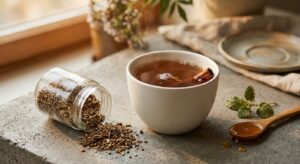
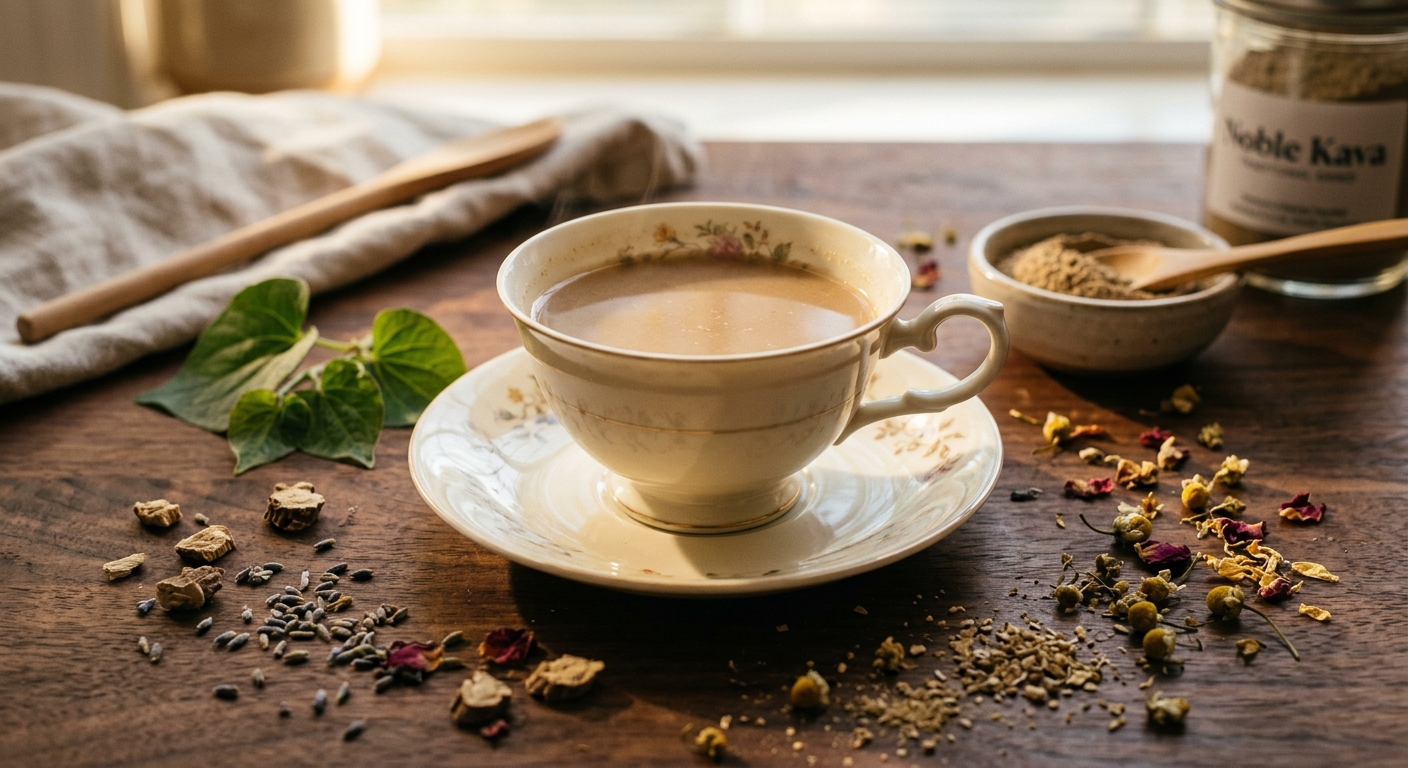
- Lift the bag, squeeze out as much liquid as possible, and discard the spent root material. The resulting liquid should be murky tan to light brown in color. Pour into two cups and serve immediately.
- If desired, add a small splash of full-fat coconut milk before kneading to improve kavalactone extraction, as the fat content helps bind the fat-soluble compounds into the water base. Sip slowly on an empty stomach for best results.
- Measure 4 tablespoons of noble-variety traditional grind kava powder into a muslin strainer bag and tie it closed. Place it in a bowl or wide-mouthed jar and add 480 ml of room-temperature water. The water should not be chilled from the refrigerator for the initial extraction.
- For an active cold extraction, knead and squeeze the bag firmly for 20 to 30 minutes without interruption. This longer kneading time compensates for the lack of heat and draws the kavalactones into the water through sustained mechanical pressure. Traditional Pacific preparation often involves two people alternating this process.
- Alternatively, for a passive cold brew, allow the bag to soak undisturbed in the water for 8 hours at room temperature. After soaking, knead vigorously for 5 to 10 minutes before straining and serving.
- Once extraction is complete, lift and squeeze the bag thoroughly to recover all liquid. The brew will appear lighter in color than a warm extraction but will carry a full kavalactone profile.
- Pour over a few ice cubes in two wide cups or traditional coconut shell bowls. Cold brew kava has a cleaner, earthier flavor with less bitterness and is especially refreshing served chilled. Drink within a few hours of preparation for peak potency.
- Bring a kettle of water to the boil, then allow it to cool to a lukewarm temperature of 30 to 40°C (86 to 104°F). This very gentle warmth maximizes kavalactone extraction while preserving the delicate balance of compounds that gives traditionally prepared kava its smooth, rounded effect.
- Add 5 tablespoons of noble-variety medium grind kava root to a muslin strainer bag for a slightly stronger ceremonial-strength preparation. If using micronized kava, reduce the quantity to 2 tablespoons as it is significantly more concentrated.
- Pour the lukewarm water into a large bowl, then submerge the bag completely. Using both hands, knead the bag in long, firm strokes for a full 15 to 20 minutes, periodically wringing the bag tightly and re-submerging it. The water will progressively deepen in color from pale beige to a rich murky tan.
- Halfway through the kneading process, add a tablespoon of full-fat coconut milk directly to the bowl and continue kneading. The coconut fats act as an emulsifier, binding additional fat-soluble kavalactones into the liquid and softening the bitter edge of the root.
- Remove the bag, squeeze firmly until dry, and discard the spent root. Strain the liquid once more through a fine mesh strainer to remove any remaining fine particles. Serve immediately in small cups or coconut shells for an authentic experience, drinking each cup in one or two measured sips as is customary in Pacific island ceremony.
Health Benefits
Multiple randomized controlled trials have confirmed that kavalactones significantly reduce generalized anxiety, with a 2013 placebo-controlled study published in the Journal of Clinical Psychopharmacology finding kava extract superior to placebo for GAD with a strong safety profile over six weeks of use. Kavain and dihydrokavain act on GABA-A receptors and the amygdala, calming the brain’s stress response without causing dependence.
Kava has been shown to reduce sleep latency and improve overall sleep quality by calming the central nervous system through GABA modulation. Unlike pharmaceutical sleep aids, kava does not suppress REM sleep, meaning users experience more restorative deep sleep and wake without the grogginess associated with benzodiazepines.
Dihydrokavain and dihydromethysticin act as natural muscle relaxants by inhibiting voltage-gated sodium channels in peripheral nerves, reducing the physical tightness and somatic tension that often accompanies psychological stress. This makes kava tea particularly valuable for people who hold stress in their neck, shoulders, or jaw.
Yangonin’s interaction with CB1 cannabinoid receptors and kavain’s modulation of the dopamine system help explain the mild euphoria and improved sociability that kava drinkers reliably report. A 2019 review in Nutrients identified kava as a promising intervention for stress-related low mood and subsyndromal anxiety.
Traditional Pacific medicine has long used kava for toothaches, headaches, and urinary tract discomfort, and research supports a genuine analgesic mechanism. Kavalactones desensitize pain signaling pathways and inhibit cyclooxygenase enzymes in a manner loosely analogous to non-steroidal anti-inflammatory drugs, though far milder in effect.
🧪 Key Bioactive Compounds
The Science Behind Kava
The pharmacology of kava is unlike that of most herbal relaxants because it acts through several complementary mechanisms simultaneously rather than relying on a single compound or pathway. The six major kavalactones in noble kava root each carry distinct neurochemical profiles, but their combined action produces an effect that is greater than the sum of its parts. Kavain and dihydrokavain, the two kavalactones present in highest concentration in quality root, bind to GABA-A receptors in the brain, enhancing the inhibitory signaling that puts the brakes on anxious neural activity. This is a shared mechanism with benzodiazepine medications, but kava achieves it without the same receptor binding that creates tolerance, dependence, or cognitive blunting.
Yangonin’s interaction with CB1 endocannabinoid receptors is particularly intriguing because it represents a mechanism shared with cannabis compounds, helping explain the mood-brightening sociability kava produces. Meanwhile, methysticin and dihydromethysticin block voltage-gated sodium and calcium channels, stabilizing overactive neurons in a manner similar to certain anticonvulsant drugs. This channel-blocking activity is likely responsible for the numbing sensation felt on the lips and tongue immediately after drinking, as the trigeminal nerve endings in the oral mucosa are temporarily desensitized. It also underlies kava’s muscle-relaxing and mild analgesic properties.
The hepatotoxicity concerns that led to regulatory restrictions on kava in Germany and other countries in the early 2000s have since been largely attributed to the use of non-noble kava varieties, aerial plant parts (particularly the stem pith and leaves), acetone or ethanol-based extractions rather than traditional water extraction, and pre-existing liver conditions in affected individuals. A 2015 review in the journal Food and Chemical Toxicology concluded that water-extracted noble kava root consumed in traditional amounts carries an acceptably low risk for healthy adults, and Germany subsequently lifted its kava ban. The fat-soluble nature of kavalactones means that traditional water extraction is inherently self-limiting, preventing the very high-dose exposure associated with concentrated solvent extracts. This is one reason why the traditional preparation method, involving warm water and vigorous kneading through cloth, remains both the most culturally authentic and the scientifically best-supported approach to preparing this remarkable root.
Brewing Tips
- Always buy certified noble variety kava from a reputable supplier and confirm that the product uses only lateral roots, never above-ground plant material. The variety and plant part matter more with kava than with almost any other herbal tea.
- Drink kava on an empty stomach or at least two hours after a meal for maximum absorption. Kavalactones absorb much more efficiently when the digestive system is not occupied processing food, and the onset of effects will be noticeably faster and stronger.
- If you are new to kava and feel little to no effect the first one or two sessions, do not increase your dose immediately. Many first-time users experience a reverse tolerance phenomenon in which the body needs two to four sessions to prime the appropriate receptor pathways before the full effect of kavalactones is felt.