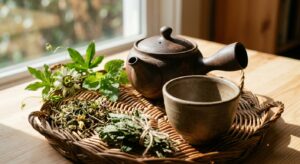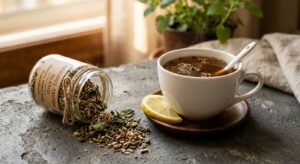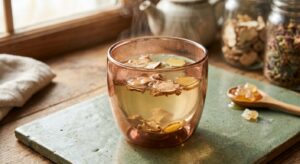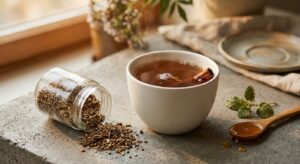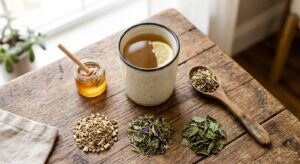
Wood betony (Betonica officinalis, syn. Stachys betonica) is one of those quietly remarkable herbs that once held a place of enormous esteem and has since slipped into near obscurity. In medieval Europe it was considered a near-universal remedy, so highly regarded that the Anglo-Saxon herbalists listed it as a cure for no fewer than forty-seven ailments. Monasteries cultivated it in their physic gardens, and a popular Italian proverb of the era advised, “Sell your coat and buy betony” as a testament to its perceived value. Today, herbalists in the Western tradition are rediscovering it as a deeply restorative nervine, particularly suited to the kind of modern stress that manifests as a tight jaw, a racing mind, and a body that simply cannot unwind.
Native to the grasslands, hedgerows, and open woodlands of Europe, wood betony is a low-growing perennial in the mint family (Lamiaceae), adorned in summer with spikes of deep pinkish-purple flowers. It has a long history of use in both Ayurvedic traditions, where it appears as a tonic for the brain and nerves, and in Western herbalism, where Culpeper and Gerard both praised its virtues for the head, stomach, and liver. Traditional herbalists have consistently used it for tension headaches that arise from stress, digestive upset linked to anxiety, and that wired-but-tired state where exhaustion and overstimulation collide to make sleep elusive.
What makes wood betony particularly special as a tea herb is the way it addresses the whole stress response rather than simply sedating. It is considered a trophorestorative for the nervous system, meaning it nourishes and rebuilds over time rather than just dulling symptoms. The dried aerial parts, especially the leaves and flowering tops, yield a tea that is earthy and faintly bitter with a mild astringency, reminiscent of a gentler black tea but with a grounding, almost rooty quality. Sipped in the evening, it invites the body to soften and the mind to release its grip, making it a cherished ally for those navigating chronic stress and sleep disruption.
2
cups
Ingredients
- 2 tspdried wood betony aerial parts (leaves and flowering tops)
- 480 mlwater (90°C / 194°F)
- —raw honey or a small piece of licorice root to taste (optional)
- —slice of fresh ginger (optional, to complement the earthy base)
How to Brew
Click on an item below to shop for the recommended items for this recipe on Amazon.
As an Amazon Associate, we earn from qualifying purchases.
- Heat filtered water to approximately 90 to 95°C (194 to 203°F). Avoid a full rolling boil, which can degrade the delicate aromatic compounds in the leaf material.
- Add 1 heaped teaspoon of dried wood betony per 240 ml (8 oz) of water to your tea infuser or teapot. The herb should have room to expand and circulate freely in the water.
- Pour the hot water over the herb and immediately cover your cup or teapot with a lid or small saucer. This traps the essential oils and aromatic compounds that would otherwise escape with the steam.
- Steep for 10 to 15 minutes. The longer end of this range produces a more assertively bitter, deeply amber cup with greater therapeutic potency. Start at 10 minutes if you are new to the herb.
- Remove the infuser or strain the tea through a fine mesh strainer. Taste the tea before adding any sweetener, as its mild bitterness is part of its digestive and nervine action. A small amount of raw honey or a drop of licorice root tincture can round out the bitterness without masking it entirely.
- Sip slowly, ideally in a quiet setting 30 to 60 minutes before bed, allowing the tea to work as part of a deliberate wind-down ritual.
- Measure 1.5 to 2 teaspoons of dried wood betony per 240 ml of cold, filtered water. Because cold water extracts more slowly and less aggressively than hot water, a slightly higher herb-to-water ratio compensates for the gentler extraction.
- Combine the herb and cold water in a clean glass jar. Stir briefly to ensure all the plant material is submerged and in full contact with the water. Do not seal the jar airtight; instead, cover it loosely with a clean cloth or a loosely placed lid to allow minimal airflow.
- Leave the jar at room temperature for the first 1 to 2 hours, then move it to the refrigerator for the remainder of the steeping time. Steep for a total of 10 to 12 hours, ideally overnight.
- In the morning, strain the liquid through a fine mesh strainer or cheesecloth, pressing the spent herb gently to extract the last of the liquid. Discard the plant material.
- Transfer the cold brew to a sealed glass bottle and store in the refrigerator for up to 48 hours. Serve over ice or at room temperature. A small swirl of honey stirred in before drinking complements the earthy, smooth profile beautifully.
- If using a root such as valerian root or ashwagandha as a base, combine 1 teaspoon of the dried root per 360 ml of cold filtered water in a small saucepan. Bring to a gentle simmer over medium heat.
- Reduce the heat to low and allow the root material to simmer uncovered for 20 to 25 minutes, reducing the liquid slightly. The decoction base will deepen in color and develop a rich, earthy aroma.
- Remove the saucepan from the heat and allow it to cool for approximately 2 to 3 minutes, dropping the temperature to around 90 to 93°C (194 to 199°F). This brief cooling protects the more volatile constituents of wood betony.
- Add 1 heaped teaspoon of dried wood betony aerial parts directly to the saucepan. Cover the pan with a lid and allow the wood betony to steep in the hot decoction for 10 full minutes without returning it to the heat.
- Strain the blend through a fine mesh strainer into a warmed mug, pressing the plant material firmly to extract all liquid. The resulting tea will be a deep amber-brown with a complex, earthy, slightly bitter warmth.
- Sweeten lightly with raw honey if desired. Drink warm, approximately 45 to 60 minutes before bed, for a pronounced calming and sleep-supporting effect.
Health Benefits
Wood betony has been used for centuries as a nervine trophorestorative, meaning it nourishes and regulates the nervous system over time rather than simply depressing it. Its alkaloids and phenolic compounds are thought to reduce sympathetic nervous system overactivation, helping the body transition from a state of stress arousal into the parasympathetic rest-and-digest mode necessary for quality sleep.
One of wood betony’s most consistent traditional applications is the relief of headaches driven by nervous tension, poor circulation to the head, or digestive sluggishness. Rosmarinic acid contributes anti-inflammatory action, while the herb’s circulatory-stimulating properties may help ease the vascular constriction associated with stress headaches.
Because wood betony acts on both the nervous system and the digestive tract, it is particularly well suited to the common pattern of anxiety-driven gut symptoms such as nervous indigestion, nausea, and stomach tightness. Its bitter diterpenoids stimulate digestive enzyme production, while its nervine action addresses the underlying stress driving the symptoms.
Traditional herbalists describe wood betony as specifically indicated for an overactive, restless mind that cannot stop circling the same thoughts. While dedicated human clinical trials remain limited, its stachydrine content and rosmarinic acid both show promise in preclinical models for reducing neuroinflammation and modulating stress response pathways linked to generalized anxiety.
The concentration of rosmarinic acid, chlorogenic acid, and flavonoids in wood betony gives the tea meaningful antioxidant activity. Stachydrine in particular has attracted research interest for its neuroprotective potential, suggesting that regular consumption of wood betony tea may help protect neural tissue from oxidative stress over time.
🧪 Key Bioactive Compounds
The Science Behind Wood Betony
The scientific understanding of wood betony is still catching up to its long folk medicine reputation, but the compounds identified in Betonica officinalis offer compelling clues. Stachydrine, also known as proline betaine, is among the most researched constituents of the Stachys genus. It has demonstrated neuroprotective effects in cell and animal models, including the ability to reduce neuroinflammation and support recovery from oxidative damage in neural tissue. This aligns closely with the traditional herbalist’s description of wood betony as a restorative for a depleted, overstressed nervous system rather than merely a short-term sedative.
Rosmarinic acid, a compound wood betony shares with many of its Lamiaceae relatives, has been more extensively studied in related herbs such as lemon balm and rosemary. Research consistently demonstrates its capacity to inhibit the enzyme that breaks down GABA, the brain’s primary inhibitory neurotransmitter, effectively prolonging GABAergic signaling and producing a calming effect without the dependency risks associated with pharmaceutical GABA modulators. This mechanism provides a plausible biochemical explanation for the herb’s traditional use in reducing anxiety and promoting restful sleep. Wood betony’s tannins and bitter diterpenoids further contribute by stimulating the vagus nerve through digestive bitter receptor activation, initiating a cascade of parasympathetic nervous system responses that slow the heart rate, reduce cortisol output, and prepare the body for rest.
The phenolic acid chlorogenic acid, found in wood betony alongside its flavonoid complement, adds antioxidant breadth to the herb’s profile. In preclinical studies, chlorogenic acid has shown the ability to modulate blood glucose responses and reduce low-grade systemic inflammation, both of which are physiological factors implicated in chronic stress, poor sleep quality, and mood dysregulation. While large-scale randomized clinical trials specifically on wood betony tea are not yet available, the convergence of its identified compounds with well-documented mechanisms in related phytochemical research provides a strong scientific rationale for what European herbalists have observed empirically for well over a thousand years.
Brewing Tips
- Source wood betony from a reputable herbalist or supplier who can confirm the botanical identity as Betonica officinalis, as the name ‘betony’ is occasionally applied to unrelated North American plants such as Pedicularis species, which have a different safety and action profile.
- For best results, use wood betony as part of a consistent evening routine over several weeks rather than expecting dramatic effects from a single cup. Its traditional reputation as a trophorestorative means it builds its effects gradually, nourishing the nervous system over time.
- Store dried wood betony in an airtight glass jar away from direct light and heat. Properly stored, it retains its potency for 12 to 18 months. Discard any material that has lost its green color and become uniformly pale brown, as this indicates significant degradation of active compounds.