Long before it caught the attention of modern herbalists, passionflower was a revered plant among Indigenous peoples of the American Southeast, who used Passiflora incarnata as a poultice for wounds and a calming tea for restlessness. When Spanish explorers encountered it in the late 1500s, they named it flor de la pasion, seeing symbolic echoes of the crucifixion in its elaborate, crown-like blooms. That name has endured, but the plant’s reputation as a nervous system ally has only grown stronger over the centuries.
Passionflower arrived in European apothecaries by the 17th century and was officially listed in the United States National Formulary from 1916 to 1936 as a reliable sedative herb. Traditional herbalists in Appalachia brewed the leaves and tendrils into a tea for those struggling with nervous insomnia, a racing mind at bedtime, or the kind of anxious tension that sits just below the surface of a busy day. Unlike heavier sleep herbs, passionflower works with a quiet elegance, easing the mind into stillness rather than forcing it into sedation.
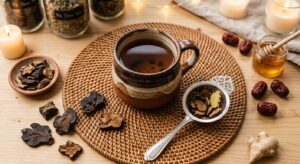
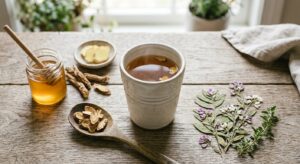
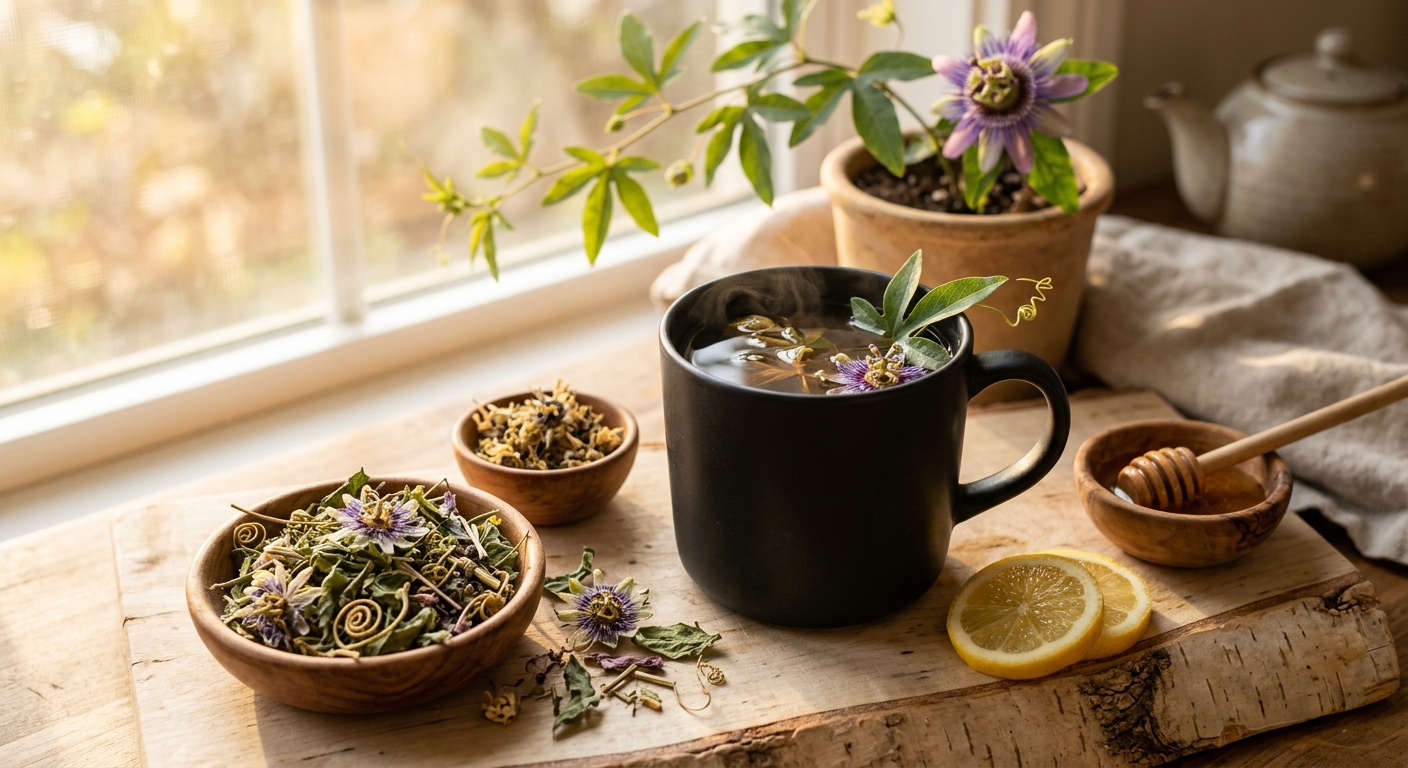
What makes this vine truly special is its unique flavor and its gentle mechanism of action. The brewed tea carries a mildly grassy, subtly floral taste with faint earthy undertones and a soothing warmth that feels almost ceremonial to drink. Its bioactive compounds interact with the brain’s primary calming system in ways that modern neuroscience is only beginning to fully appreciate. Whether you are winding down after a stressful day, managing mild anxiety, or simply seeking a bedtime ritual rooted in plant tradition, passionflower tea offers something rare: effectiveness without harshness, and history without hype.
2
cups
Ingredients
- 2 tspdried passionflower herb (leaves, stems, and flowers)
- 240 mlwater (90°C / 194°F)
- —raw honey or lemon balm honey to taste (optional)
- —a few fresh lemon slices (optional)
How to Brew
Click on an item below to shop for the recommended items for this recipe on Amazon.
As an Amazon Associate, we earn from qualifying purchases.
- Bring filtered water to 90 to 95°C (194 to 203°F). Avoid a full rolling boil, as very high heat can degrade the delicate flavonoids in the dried herb material.
- Place 1 teaspoon of dried passionflower herb per 240 ml of water into a tea infuser or place directly into a warmed ceramic teapot. For two servings, use 2 heaping teaspoons.
- Pour the hot water over the herb, cover the cup or teapot immediately with a lid or small saucer. Covering is important as it prevents the aromatic volatile compounds from escaping with the steam.
- Steep for 10 to 15 minutes. The longer steep time allows the chrysin, vitexin, and other flavonoids to fully extract into the water. The tea will deepen to a warm straw-yellow color.
- Remove the infuser or strain the tea through a fine mesh strainer into your cup. Taste before adding any sweetener, as the natural earthiness pairs well with raw honey if a touch of sweetness is desired.
- Drink 30 to 60 minutes before bed for the best sleep-supporting effect, or at any point in the evening when anxiety or tension needs easing.
- Measure 3 teaspoons of dried passionflower herb for every 480 ml of water. Cold brewing is less efficient than hot brewing, so a slightly higher herb-to-water ratio is needed to achieve full flavor and potency.
- Place the dried herb directly into a clean glass jar. Pour room-temperature filtered water over the herbs, making sure all the plant material is submerged. Stir gently to ensure even saturation.
- Cover the jar with a lid and leave it at room temperature for the first hour to allow initial extraction to begin, then transfer it to the refrigerator.
- Allow the tea to cold brew in the refrigerator for a total of 8 to 12 hours. An overnight steep is ideal. The color will develop slowly into a pale, almost luminescent golden green.
- Strain the infusion through a fine mesh strainer or cheesecloth into a clean glass pitcher or jar, pressing the herb gently to extract the last of the liquid.
- Serve over ice in a tall glass, or gently warm a portion on the stovetop if you prefer it as a warmed evening drink. Add honey or fresh lemon slices if desired. The cold brew will keep refrigerated for up to 48 hours.
- Prepare your herb blend in a small bowl before brewing. Combine 1.5 teaspoons of dried passionflower, 1 teaspoon of dried lemon balm leaves, and 0.5 teaspoon of dried culinary lavender buds per 240 ml of water. Double these amounts for two servings.
- Heat filtered water to 90°C (194°F). Place the blended herbs into a roomy tea infuser or directly into a teapot, giving the herbs space to expand and release their compounds fully.
- Pour the hot water over the blended herbs and cover the vessel immediately. The lavender buds in particular contain volatile aromatic oils that will escape if left uncovered, taking both fragrance and beneficial compounds with them.
- Steep for 12 to 15 minutes, stirring once halfway through. The extra steep time ensures the passionflower’s flavonoids extract fully alongside the rosmarinic acid from the lemon balm and the linalool from the lavender.
- Strain carefully through a fine mesh strainer into a warmed mug. The finished tea should be a soft, warm golden color with a floral, herbaceous aroma that is noticeably more complex than passionflower alone.
- Sweeten lightly with raw honey if desired and drink slowly, ideally as part of a deliberate wind-down ritual 45 to 60 minutes before sleep. Avoid screens while drinking to allow the herbs and the ritual together to signal rest to your nervous system.
Health Benefits
Multiple clinical trials, including a randomized controlled trial published in Phytotherapy Research, found that passionflower tea significantly improved subjective sleep quality in adults compared to placebo. The flavonoids, particularly chrysin and vitexin, modulate GABA-A receptors to reduce the neurological excitability that delays sleep onset.
A double-blind clinical trial compared passionflower extract to oxazepam, a prescription anxiolytic, and found comparable reductions in generalized anxiety disorder symptoms over four weeks. The herb’s GABAergic action calms the nervous system without the cognitive impairment or dependency risk associated with pharmaceutical sedatives.
Research published in the Journal of Clinical Pharmacy and Therapeutics found that passionflower, used alongside clonidine, significantly improved mental symptoms of opiate withdrawal such as anxiety, irritability, and insomnia. Its calming compounds appear to support the nervous system during the acute stress of detoxification.
Preliminary research suggests that passionflower may help modulate autonomic nervous system responses to psychological stress, contributing to modest reductions in heart rate and mild lowering of blood pressure in anxious individuals. These effects are thought to arise from the same GABA-modulating mechanisms responsible for its anxiolytic action.
A clinical study involving menopausal women found that passionflower supplementation significantly reduced symptoms including insomnia, irritability, and depression compared to a control group. The herb’s effect on GABA pathways may help regulate the heightened neurological reactivity common during hormonal transitions.
🧪 Key Bioactive Compounds
The Science Behind Passionflower
Passionflower’s most significant bioactive compounds are its flavonoid C-glycosides, particularly chrysin, vitexin, isovitexin, and orientin. Of these, chrysin has attracted the most scientific attention for its direct interaction with the benzodiazepine binding sites on GABA-A receptors in the central nervous system. GABA (gamma-aminobutyric acid) is the brain’s primary inhibitory neurotransmitter, and when the GABAergic system is adequately active, the nervous system moves from a state of arousal toward one of calm. Chrysin appears to facilitate this shift without the full agonist activity of pharmaceutical benzodiazepines, which is why passionflower produces a gentle sedative effect rather than the profound sedation or dependency risk associated with prescription anxiolytics.
Vitexin and isovitexin appear to contribute to the overall GABAergic modulation through slightly different binding affinities, and animal model studies suggest these compounds work synergistically rather than independently. This points to the concept of the entourage effect in herbal medicine: the whole herb extract tends to outperform isolated single compounds, which may explain why clinical trials using whole passionflower preparations have shown more robust anxiolytic effects than those testing individual flavonoids. Orientin adds another layer by demonstrating meaningful antioxidant and neuroprotective activity, potentially reducing oxidative stress in the brain tissue itself, a factor increasingly associated with anxiety disorders and disrupted sleep cycles.
The presence of trace beta-carboline alkaloids, including harman and harmine, introduces another dimension to passionflower’s pharmacology. These compounds act as weak, reversible inhibitors of monoamine oxidase (MAO), an enzyme responsible for breaking down neurotransmitters such as serotonin and dopamine. By mildly slowing their degradation, passionflower may support a more stable, elevated baseline mood, which complements its direct GABAergic calming action. This dual mechanism, calming excitatory activity while gently supporting monoamine availability, makes passionflower a pharmacologically interesting herb that bridges the gap between nervines and mood-supporting adaptogens. Clinical research to date is encouraging, with human trials supporting its use for generalized anxiety and sleep quality, though larger scale studies are still needed to fully characterize dosing parameters and long-term safety profiles.
Brewing Tips
- Always cover your cup or teapot while steeping passionflower. The aromatic volatile compounds that contribute to both flavor and calming effect escape easily with steam, and a simple saucer as a lid can preserve a meaningful portion of them.
- Source whole herb passionflower (leaves, stems, and small flowers of Passiflora incarnata specifically) rather than generic passion flower blends that may contain Passiflora edulis, the edible passion fruit species, which lacks comparable concentrations of the medicinal flavonoids.
- Steep longer than you think you need to. Compared to more delicate herbs like chamomile, passionflower requires a full 10 to 15 minutes to extract its key compounds. A short steep produces a thin, grassy tea with little therapeutic depth.