Sleep apnea is one of the most disruptive sleep disorders affecting millions of people worldwide, characterized by repeated interruptions in breathing during sleep. While herbal tea is not a replacement for medical treatment or CPAP therapy, a thoughtfully crafted blend of nervine and muscle-relaxing herbs can serve as a meaningful complementary support. Valerian root, passionflower, and skullcap have each been used for centuries across European and Native American healing traditions to quiet an overactive nervous system, ease muscular tension in the throat and airways, and coax the body into a deeper, more sustained state of sleep.
Valerian root, known in medieval Europe as ‘all-heal,’ was prescribed by Hippocrates and later by Galen for insomnia and nervous unrest. Passionflower was adopted into European herbal medicine after Spanish explorers encountered it in Peru in the 16th century, where indigenous healers used it as a sedative and antispasmodic. Skullcap, a member of the mint family native to North America, was revered by the Cherokee and other nations as a powerful nervine tonic, used to calm muscle spasms, twitching, and nervous exhaustion. Together, these three herbs form a synergistic blend that addresses the muscular laxity, nervous tension, and fragmented sleep architecture that characterize sleep apnea.
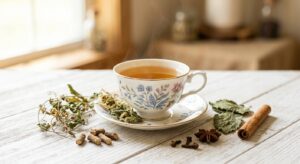
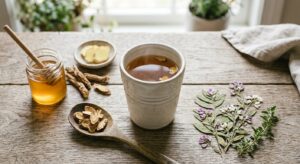
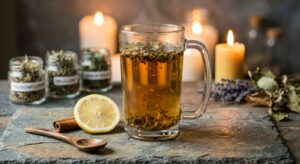
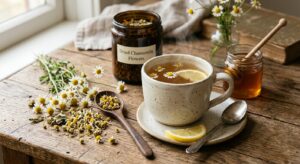
The sensory experience of this tea is earthy and grounding, with the woody depth of valerian softened by the floral sweetness of passionflower and the faintly bitter, clean finish of skullcap. It is a tea meant to be sipped slowly in the hour before bed, as part of a deliberate wind-down ritual. Dimming the lights, setting aside screens, and holding a warm mug of this blend signals to the nervous system that the day is truly over, helping to lower cortisol and prepare the body for the kind of deep, uninterrupted sleep that those with sleep apnea so often struggle to achieve.
2
cups
Ingredients
- 2 tspdried valerian root
- 1.5 tspdried passionflower herb
- 1 tspdried skullcap leaf
- 480 mlwater (90°C / 194°F)
- —raw honey or stevia to taste (optional)
- —a few drops of lemon juice to brighten flavor (optional)
How to Brew
Click on an item below to shop for the recommended items for this recipe on Amazon.
As an Amazon Associate, we earn from qualifying purchases.
- Bring filtered water to 90°C (194°F). Avoid a full rolling boil, as excessive heat can degrade the delicate volatile compounds in passionflower and skullcap.
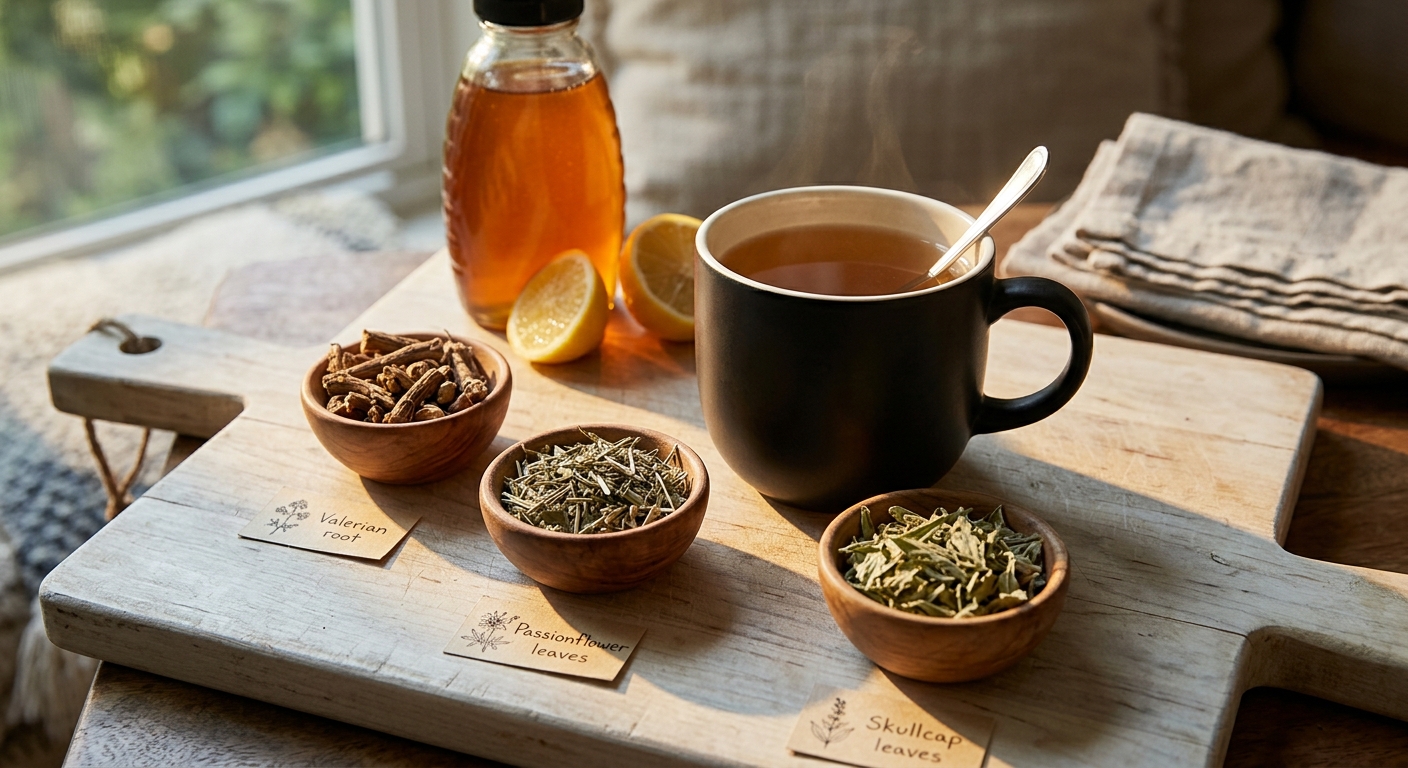
- Combine 2 tsp dried valerian root, 1.5 tsp dried passionflower herb, and 1 tsp dried skullcap leaf in a tea infuser or mesh strainer placed inside a warmed ceramic mug or teapot.
- Pour 240 ml (1 cup) of the heated water per serving directly over the herb blend, ensuring all plant material is fully submerged.
- Cover the mug with a small saucer or lid to trap the volatile aromatic compounds within the steam. This prevents the most beneficial essential oils from escaping into the air.
- Steep for 10 to 15 minutes. Taste at 10 minutes; extend to 15 for a more potent, medicinal brew. The liquid should turn a warm amber to deep golden brown.
- Remove the infuser and gently press the herbs with the back of a spoon to extract the remaining liquid. Sweeten with raw honey or a few drops of stevia if desired. Drink 45 to 60 minutes before bedtime.
- Combine 2.5 tsp dried valerian root, 2 tsp dried passionflower herb, and 1.5 tsp dried skullcap leaf into a clean glass jar. The slightly increased quantity compensates for the slower cold extraction.
- Pour 480 ml of cool, filtered room-temperature water over the herbs. Do not use cold water straight from the refrigerator at this stage, as starting at room temperature helps initiate the extraction process before chilling.
- Stir gently to ensure all herbs are fully saturated, then seal the jar with a lid and let it sit at room temperature for 30 minutes.
- Transfer the sealed jar to the refrigerator and leave it to infuse for 8 to 12 hours, ideally overnight. The slow cold extraction draws out a smooth, earthy brew with noticeably less bitterness.
- When ready, strain the liquid through a fine mesh strainer or cheesecloth into a glass, pressing the herbs gently to release the last of the liquid.
- Gently warm a single cup in a small saucepan over low heat until it reaches a comfortable drinking temperature (do not boil). Add honey or lemon as desired and drink 45 minutes before bed. The remainder keeps refrigerated for up to 24 hours.
- Place 2.5 tsp dried valerian root and 480 ml of cold filtered water into a small stainless steel or ceramic saucepan. It is important to start valerian root in cold water so the heat gradually breaks down the tough root fibers from the very beginning.
- Bring the water and valerian root slowly to a gentle simmer over medium-low heat, approximately 5 to 7 minutes. Do not rush to a boil.
- Once simmering, add 1.5 tsp dried passionflower herb and 1 tsp dried skullcap leaf directly to the saucepan. These more delicate aerial herbs are added midway to prevent overcooking their active flavonoids.
- Maintain a gentle simmer (not a rolling boil) for 15 minutes, stirring occasionally. Keep the saucepan partially covered to retain volatile compounds while allowing some water to reduce, concentrating the brew.
- Remove from heat and allow the decoction to rest uncovered for 5 minutes. The liquid should have reduced slightly and turned a deep amber to dark brown.
- Strain through a fine mesh strainer or cheesecloth into a mug, pressing firmly on the spent herbs. The resulting liquid is highly concentrated; sip a half-cup serving rather than a full cup, diluting with a splash of warm water if needed. Drink 30 to 45 minutes before bed.
Health Benefits
Valerian root’s isovaleric acid and skullcap’s baicalin both exhibit antispasmodic effects on skeletal and smooth muscle. This may help reduce the excessive muscular laxity or tension in the throat and soft palate that contributes to airway collapse during sleep apnea episodes.
Valerenic acid from valerian root inhibits the enzyme GABA transaminase, effectively increasing GABA concentrations in the brain. Higher GABA levels are associated with slower brain wave activity, reduced time to sleep onset, and deeper non-REM sleep stages, all of which are often disrupted in sleep apnea sufferers.
Passionflower’s chrysin and vitexin bind to GABA-A and benzodiazepine receptors, reducing hyperarousal and anxiety that commonly precede poor sleep. A 2011 randomized controlled trial published in Phytotherapy Research found passionflower significantly improved sleep quality scores compared to placebo.
Skullcap’s baicalin and scutellarein have been shown in preclinical studies to increase slow-wave sleep duration and reduce nighttime waking. Restoring proper sleep architecture is particularly important for those with sleep apnea, who frequently experience fragmentation of restorative deep sleep stages.
Chronic sleep apnea is associated with localized inflammation in the upper airway. Baicalin and vitexin both exhibit anti-inflammatory activity by inhibiting pro-inflammatory cytokines such as IL-6 and TNF-alpha, which may help reduce swelling in pharyngeal tissues over time with regular use.
🧪 Key Bioactive Compounds
The Science Behind Valerian Root
The scientific case for this blend centers on its multi-pathway approach to GABA modulation, which is the brain’s primary inhibitory signaling system. Valerian root’s most studied compound, valerenic acid, works by inhibiting GABA transaminase, the enzyme responsible for breaking down GABA in the synaptic cleft. This means that GABA remains active for longer, producing a sustained calming effect on neural firing. What makes this mechanism particularly relevant for sleep apnea is that GABA-ergic activity also influences the hypoglossal nerve, which controls tongue and upper airway muscle tone. There is emerging preclinical evidence that modulating GABA tone may help stabilize upper airway musculature during sleep transitions, reducing the frequency of partial collapse events.
Passionflower compounds chrysin and vitexin operate through complementary but distinct mechanisms. Chrysin has demonstrated affinity for the benzodiazepine binding site of the GABA-A receptor complex in in vitro studies, producing anxiolytic effects similar to pharmaceutical benzodiazepines but without the dependency risk or respiratory depression concerns that make standard sleep drugs problematic for sleep apnea patients. Vitexin’s antispasmodic properties extend to smooth muscle throughout the body, and its flavone structure allows it to cross the blood-brain barrier, where it reduces neuronal excitability in sleep-regulatory circuits. A randomized controlled human trial published in 2011 in Phytotherapy Research demonstrated that passionflower tea significantly improved subjective sleep quality compared to placebo in healthy adults, validating its traditional sedative use.
Skullcap’s primary active flavonoid baicalin is a potent modulator of multiple GABA-A receptor subunits, with particular affinity for those subunits associated with slow-wave sleep induction rather than simply sleep onset. This distinction is clinically meaningful for sleep apnea sufferers: slow-wave sleep (stages N3) is the most restorative sleep stage and the one most severely fragmented by apneic events. Animal studies have shown that baicalin administration significantly increases the percentage of time spent in slow-wave sleep. Additionally, baicalin’s well-documented anti-inflammatory activity, including suppression of NF-kB signaling and reduction of TNF-alpha and IL-6 expression, may address the chronic pharyngeal inflammation that worsens airway collapsibility in obstructive sleep apnea over time.
Brewing Tips
- Drink this tea 45 to 60 minutes before your intended bedtime rather than immediately before lying down, giving the compounds time to cross the blood-brain barrier and take effect before you need to be asleep.
- Store your herb blend in an airtight amber glass jar away from light and heat. Valerian root loses its valerenic acid content relatively quickly when exposed to air, so pre-mixing only a two-week supply at a time preserves potency.
- If you find valerian’s strong, musky aroma off-putting, always cover your mug with a saucer during steeping. Counterintuitively, trapping the steam keeps the more unpleasant sulfurous volatile compounds in the tea rather than letting them diffuse into the air around you, and the brew itself tastes significantly better when these aromatics have not dispersed.