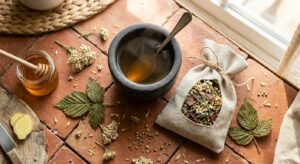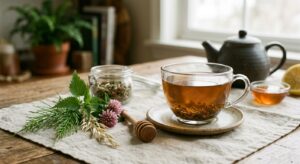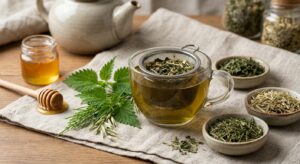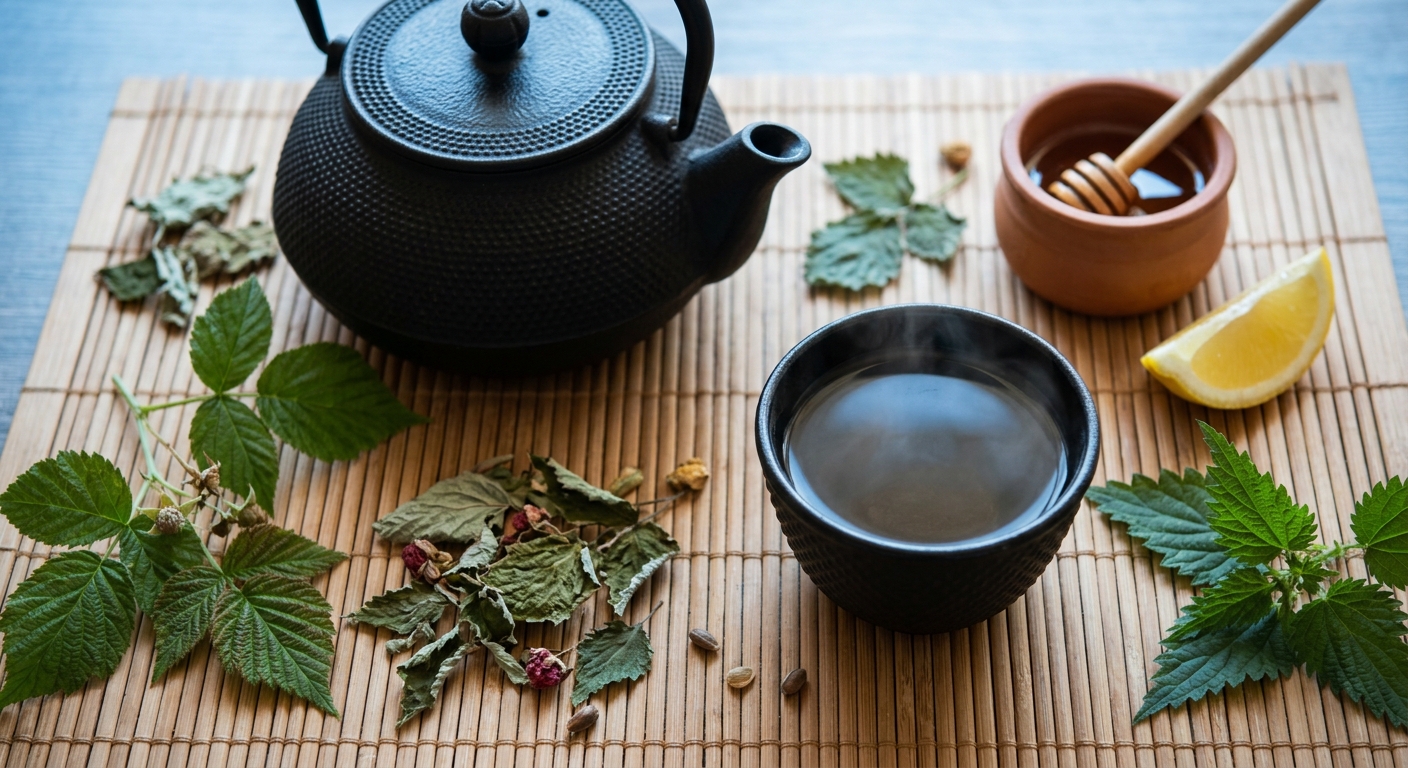
Long before prenatal vitamins lined pharmacy shelves, herbalists and midwives across Europe and North America turned to raspberry leaf and nettle as foundational herbs for women’s health. Raspberry leaf, harvested from Rubus idaeus, earned the nickname ‘the woman’s herb’ through generations of traditional use, particularly in the later months of pregnancy. Nettle, or Urtica dioica, has been prized since ancient times as a nutrient powerhouse, revered in folk medicine from the British Isles to the Himalayas for its extraordinary mineral content. Together, they form a partnership that is both ancient and intuitive.
What makes this blend so compelling is the synergy between its two stars. Raspberry leaf is rich in fragarine, an alkaloid traditionally believed to tone the uterine muscles and support more efficient contractions during labor. Nettle complements this beautifully by contributing a dense supply of bioavailable iron, calcium, magnesium, and vitamins A, C, and K, all of which are in high demand during pregnancy. The resulting tea is not just pleasant to drink but genuinely functional, offering the body meaningful nutritional support in a form that is easily absorbed.
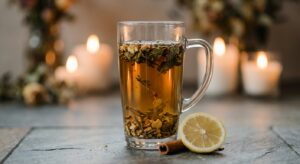
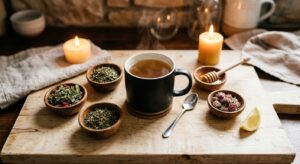
From a sensory standpoint, this is a tea that feels grounding and green. Raspberry leaf offers a gentle, mildly astringent quality reminiscent of black tea without the caffeine, while nettle adds a deep, earthy, almost spinach-like richness. Brewed together with a touch of honey and perhaps a wedge of lemon, the cup becomes something you will look forward to each morning. Whether you are seeking nutritional support during the second and third trimesters, a calming ritual to ease the overwhelm of pregnancy, or simply a wholesome caffeine-free alternative to your morning cup, this tea deserves a place in your daily routine.
2
cups
Ingredients
- 2 tspdried raspberry leaf
- 2 tspdried nettle leaf
- 480 mlwater (95°C / 203°F)
- —raw honey to taste (optional)
- —lemon wedge to taste (optional)
How to Brew
Click on an item below to shop for the recommended items for this recipe on Amazon.
As an Amazon Associate, we earn from qualifying purchases.
- Bring filtered water to 95°C (203°F). If using a standard kettle, allow water to come to a full boil and then rest for 30 seconds before pouring.
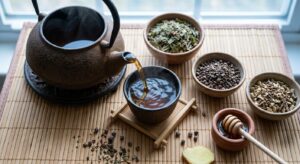
- Add 2 teaspoons of dried raspberry leaf and 2 teaspoons of dried nettle leaf to a roomy tea infuser or directly into a teapot. Using a teapot gives the leaves more room to expand and release their full nutritional content.
- Pour 480 ml of hot water over the herbs, ensuring all plant material is submerged. Cover the teapot or mug with a lid or small saucer to trap the volatile aromatic compounds and prevent heat loss.
- Steep for a minimum of 10 minutes, and up to 15 minutes for a more mineral-rich, deeply colored brew. The longer steep draws out more iron and calcium from the nettle in particular.
- Strain the herbs thoroughly using a fine mesh strainer. Divide between two mugs and sweeten with raw honey if desired. A squeeze of lemon not only brightens the flavor but also increases iron absorption thanks to vitamin C.
- Add 3 teaspoons of dried raspberry leaf and 3 teaspoons of dried nettle leaf to a large glass jar. The slightly higher ratio compensates for the slower extraction that occurs at cold temperatures.
- Pour 480 ml of cold, filtered water directly over the herbs. Do not use hot water at any stage. Stir gently with a long spoon to ensure all plant material is moistened and submerged.
- Seal the jar with a lid and place it in the refrigerator. Allow the herbs to infuse for 8 to 12 hours, ideally overnight. Avoid steeping for longer than 14 hours, as the flavor can turn overly grassy.
- Remove from the refrigerator and strain the liquid through a fine mesh strainer or cheesecloth into a clean jar or pitcher. Press the herbs gently to extract the remaining liquid.
- Serve over ice in tall glasses. Add a slice of lemon and a drizzle of honey if desired. The cold brew can be stored in the refrigerator for up to 24 hours. Shake or stir before each serving.
- Place 4 teaspoons of dried raspberry leaf and 4 teaspoons of dried nettle leaf into a quart-sized glass jar with a tight-fitting lid. The larger quantity of herbs is essential for this method as it is specifically designed to maximize nutrient extraction.
- Bring 960 ml of water to a full boil at 100°C (212°F). Pour the boiling water over the herbs immediately, filling the jar completely to the top. This minimizes the air space inside the jar, which helps preserve heat-sensitive vitamins.
- Stir the herbs briefly with a long spoon to release any trapped air bubbles and ensure all plant matter is saturated. Screw the lid on tightly.
- Wrap the jar in a thick towel or place it inside a folded blanket to insulate it. This keeps the water warm throughout the long infusion period and continues gentle extraction. Allow the jar to sit at room temperature for 4 to 8 hours.
- After the infusion time has elapsed, strain the tea through a fine mesh strainer or cheesecloth into a pitcher. Press the herbs firmly to extract every last drop of mineral-rich liquid.
- Drink 1 to 2 cups throughout the day, either at room temperature or gently reheated on the stovetop. Do not microwave. The remaining infusion can be refrigerated for up to 48 hours. The color will be a deep forest green, which is a sign of its potency.
Health Benefits
Raspberry leaf has been used by midwives for centuries to help tone the uterine musculature. The alkaloid fragarine is believed to act on the smooth muscle of the uterus, potentially supporting more efficient contractions. Most herbalists recommend introducing raspberry leaf from the second trimester onward and increasing intake in the third trimester.
Nettle leaf is one of the richest plant sources of iron available in herbal medicine. During pregnancy, blood volume increases by up to 50 percent, significantly raising iron requirements. Regular consumption of nettle tea, especially alongside a vitamin C source such as lemon, can contribute meaningfully to meeting these elevated needs.
Both herbs in this blend are rich in calcium and magnesium, two minerals essential for fetal skeletal development. Because the developing fetus will draw calcium from maternal stores if dietary intake is insufficient, this tea offers a gentle, food-based way to help maintain maternal bone density throughout pregnancy.
Magnesium deficiency is a common contributor to the painful leg cramps many pregnant people experience, particularly in the third trimester. The magnesium found in both raspberry leaf and nettle can help relax smooth and skeletal muscle, offering natural relief from cramping and restless legs.
The combined polyphenols and flavonoids in this blend, including rutin, quercetin, and chlorogenic acid, provide systemic antioxidant protection at a time when oxidative stress is elevated. Nettle has also been studied for its ability to reduce inflammatory markers, supporting overall immune resilience during pregnancy.
🧪 Key Bioactive Compounds
The Science Behind Raspberry Leaf
The nutritional profile of this blend is genuinely impressive by any measure. Nettle leaf (Urtica dioica) has been analyzed in multiple studies and found to contain iron at concentrations of up to 41 mg per 100g of dried leaf, alongside calcium, magnesium, potassium, and vitamins A, C, and K. Crucially, much of this mineral content is water-soluble and transfers effectively into a tea infusion, particularly during longer steep times. Research published in the Journal of Herbal Medicine confirmed that extended infusion time significantly increases the mineral yield from dried nettle, supporting the traditional practice of long infusions used in folk herbalism.
Raspberry leaf’s bioactive profile centers around fragarine, an alkaloid that has attracted scientific interest for its potential effects on uterine smooth muscle. Laboratory studies have demonstrated that raspberry leaf extracts can cause both relaxation and contraction of uterine tissue depending on its current state of tone, suggesting an adaptogenic or normalizing effect on muscle activity rather than simple stimulation. A clinical study published in the Journal of Midwifery and Women’s Health found that women who consumed raspberry leaf in the final weeks of pregnancy experienced shorter first-stage labor and a reduced need for forceps delivery, though the authors noted that larger trials are needed. The polyphenols present in raspberry leaf, particularly ellagitannins and chlorogenic acid, also contribute meaningful antioxidant activity that supports the body’s defense against oxidative stress during the physiologically demanding process of pregnancy.
The flavonoid rutin, shared by both herbs, plays a particularly valuable role in pregnancy by reinforcing the integrity of capillary walls at a time when blood volume and vascular pressure are significantly elevated. Quercetin, abundant in nettle, has been studied for its ability to inhibit mast cell degranulation and reduce histamine release, which may explain the traditional use of nettle for pregnancy-associated nasal congestion and mild allergic symptoms. Together, these compounds create a tea whose benefits extend well beyond simple hydration, offering a genuinely supportive nutritional and phytochemical foundation during one of the body’s most demanding periods.
Brewing Tips
- Store your dried raspberry leaf and nettle in separate airtight glass jars away from light and heat, and blend them fresh each time you brew. Pre-mixed blends can lose potency faster as the cut surfaces of different herbs oxidize at different rates.
- If the earthy, green flavor of nettle is too pronounced for your palate in the first few weeks of drinking this tea, start with a 3 to 1 ratio of raspberry leaf to nettle and gradually increase the nettle over time as your taste adjusts.
- Prepare a large batch using the long infusion method at the start of each week and store it in a sealed glass jar in the refrigerator. This makes it easy to pour a cup each morning without having to brew from scratch, supporting consistent daily intake throughout pregnancy.