Fennel (Foeniculum vulgare) has been treasured across Mediterranean, Ayurvedic, and Traditional Chinese Medicine traditions for thousands of years. Ancient Egyptian healers prescribed it for digestive complaints, Roman women brewed it to ease monthly cramps, and Ayurvedic practitioners have long valued it as a cooling, balancing herb for the female reproductive system. Its seeds, with their warm, sweet anise-like aroma, carry a remarkable spectrum of plant compounds that speak directly to the rhythms of the female body.
What makes fennel particularly beloved in women’s herbal medicine is its phytoestrogenic activity. The seeds contain a compound called anethole, which behaves similarly to estrogen in the body at a gentle, food-safe level. This mild hormonal affinity helps explain why fennel has traditionally been used to regulate menstrual cycles, reduce cramp intensity, ease the discomforts of PMS, and even support milk production in nursing mothers. Unlike pharmaceuticals, fennel works in a gentle, cumulative way that has earned it a permanent place in women’s wellness apothecaries across cultures.
Beyond its reproductive benefits, fennel seed tea is a genuinely pleasurable drink. The aroma is sweet and almost confectionery, like licorice softened with warmth. The taste is smooth, naturally sweet without any added sugar, and deeply comforting. Whether you sip it hot on a difficult cycle day, cold-brewed for a refreshing afternoon drink, or blended with complementary herbs into a concentrated tonic, fennel tea is as much a sensory experience as it is a healing one.
2
cups
Ingredients
- 2 tspfennel seeds, lightly crushed
- 480 mlwater (95°C / 203°F)
- —raw honey or maple syrup to taste (optional)
- —thin slice of fresh lemon (optional)
How to Brew
Click on an item below to shop for the recommended items for this recipe on Amazon.
As an Amazon Associate, we earn from qualifying purchases.
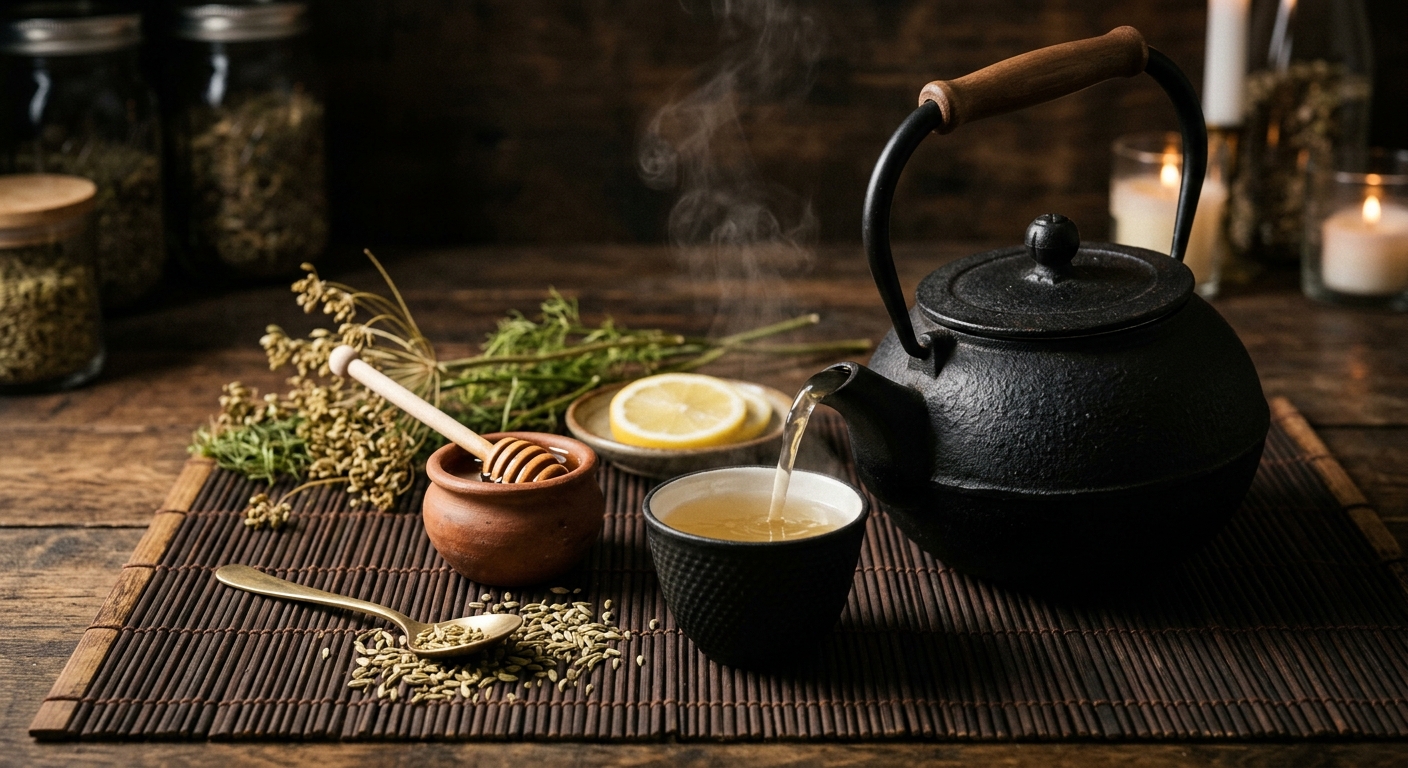
- Measure 2 teaspoons of fennel seeds per 2 cups of water. Place the seeds in a mortar and pestle and crush them lightly – just enough to crack the seed coat without grinding them to a powder. Alternatively, press them firmly with the back of a spoon against a cutting board.
- Heat your water to 95°C (203°F). If you do not have a temperature-controlled kettle, bring water to a full boil and let it rest for 30 seconds before pouring.
- Add the crushed fennel seeds to a tea infuser or directly into a small saucepan. Pour the hot water over the seeds, ensuring they are fully submerged.
- Cover the mug or saucepan with a lid or small plate to trap the volatile aromatic oils as the tea steeps. Steep for 7 to 10 minutes – 7 minutes for a lighter, sweeter cup, and the full 10 minutes for a more robust, therapeutic brew.
- Strain the tea through a fine mesh strainer into your mug. Add raw honey or a slice of lemon if desired. Sip slowly, ideally while warm, to fully experience the digestive and calming benefits.
- Measure 3 teaspoons of fennel seeds for every 2 cups of cold filtered water. Lightly crush the seeds as you would for hot brewing – cracking the seed coat is just as important here to encourage extraction in cold water.
- Combine the crushed seeds and cold water in a clean glass jar. Stir briefly to ensure the seeds are fully submerged. Do not add any hot water – the entire extraction happens cold.
- Seal the jar with a lid or cover it with a small plate. Leave it at room temperature for the first hour to gently begin extraction, then transfer it to the refrigerator.
- Allow the tea to steep in the refrigerator for 10 to 12 hours, or overnight. The long, cool steep draws out the sweeter phenolic compounds while preserving a delicate, fresh quality that hot water methods cannot replicate.
- When ready, strain the tea through a fine mesh strainer or cheesecloth into a glass. Serve over ice if desired. The cold brew keeps well in the refrigerator for up to 48 hours. Sweeten lightly with a few drops of honey stirred in at room temperature, as cold water does not dissolve honey as readily.
- Measure 1 tablespoon of fennel seeds per 2 cups of water. Crush the seeds more thoroughly than you would for a standard infusion – aim for a coarse grind rather than just a crack, to maximize surface area for extraction during the long simmer.
- Combine the crushed seeds and cold water together in a small saucepan. Starting in cold water allows the compounds to begin releasing gradually as the temperature rises, producing a more even extraction.
- Place the saucepan over medium heat and bring the mixture slowly to a gentle simmer, not a rolling boil. Once simmering, reduce the heat to low and maintain a gentle, steady simmer for 15 to 20 minutes. Keep the lid on the saucepan throughout to prevent the volatile aromatic oils from escaping with the steam.
- After simmering, remove the saucepan from the heat and allow the decoction to rest, covered, for an additional 5 minutes. This resting period lets any remaining compounds settle into the liquid.
- Strain the decoction through a fine mesh strainer or muslin cloth into a mug, pressing gently on the spent seeds to extract the last of the liquid. The resulting brew will be noticeably stronger, darker, and more concentrated than a standard hot brew. Dilute with a small amount of hot water if the flavor is too intense, and sweeten with raw honey to taste.
Health Benefits
Fennel’s anethole and fenchone act as antispasmodics on uterine smooth muscle, reducing the intensity of contractions that cause menstrual pain. A randomized controlled trial published in the International Journal of Gynecology and Obstetrics found fennel seed extract to be as effective as mefenamic acid in reducing pain intensity in primary dysmenorrhea.
Trans-anethole, the dominant compound in fennel seeds, weakly mimics estrogen by binding to estrogen receptors in a gentle, modulating way. This phytoestrogenic activity is associated with reduced PMS symptoms, more regular cycle lengths, and traditionally with supporting the transition through perimenopause.
Fennel is a well-documented carminative herb, meaning it relaxes the smooth muscle of the gastrointestinal tract and helps expel trapped gas. This is particularly relevant for women who experience bloating and digestive cramping as part of their premenstrual symptoms, as prostaglandin activity during the cycle can affect gut motility.
Fennel has a long tradition of use as a galactagogue, an herb that supports breast milk production. Its phytoestrogenic compounds are believed to stimulate prolactin activity, and while formal clinical trials are limited, observational and ethnobotanical evidence from multiple cultures supports this traditional use.
The flavonoids quercetin and kaempferol, along with rosmarinic acid, collectively reduce oxidative stress and inhibit pro-inflammatory enzymes such as COX-2. This systemic anti-inflammatory activity may help reduce the broader inflammatory burden associated with hormonal fluctuations throughout the menstrual cycle.
🧪 Key Bioactive Compounds
The Science Behind Fennel Seed
The scientific case for fennel as a women’s herb centers largely on trans-anethole, a phenylpropanoid that accounts for 80 to 90 percent of fennel seed’s essential oil. Trans-anethole has been shown in multiple studies to exhibit selective estrogen receptor modulator (SERM) activity, meaning it can bind weakly to estrogen receptors and produce mild estrogen-like effects in tissues where estrogen levels are low, while potentially moderating estrogen activity where levels are excessive. This nuanced, bidirectional influence is one reason plant phytoestrogens are studied so actively for women’s health applications. A notable randomized controlled trial in AOGS (Acta Obstetricia et Gynecologica Scandinavica) confirmed that a standardized fennel extract significantly reduced primary dysmenorrhea pain scores compared to placebo, with mechanisms attributed to both smooth muscle relaxation and reduced prostaglandin synthesis.
Fenchone, the second major volatile compound in fennel seeds, contributes complementary digestive benefits. Research in gastrointestinal pharmacology has shown that fenchone and anethole together exert spasmolytic effects on intestinal smooth muscle by inhibiting calcium influx into smooth muscle cells, similar in mechanism to some pharmaceutical antispasmodic drugs but far gentler in effect. This explains fennel’s well-established clinical use for irritable bowel symptoms, infant colic, and the bloating and cramping that many women experience in the luteal phase of their cycle when progesterone slows gut motility.
The flavonoid fraction of fennel seeds, particularly quercetin and kaempferol, adds a meaningful anti-inflammatory layer to the tea’s therapeutic profile. Both compounds inhibit cyclooxygenase (COX) enzymes, reducing the production of prostaglandins. Excess prostaglandin E2 and F2-alpha are now well understood to be primary drivers of uterine cramping and systemic inflammation during menstruation. By moderating this pathway through regular consumption, fennel tea may reduce both the severity and duration of menstrual pain over time, a cumulative benefit that distinguishes herbal approaches from acute pharmaceutical pain relief.
Brewing Tips
- Always crush or crack fennel seeds immediately before brewing rather than storing pre-crushed seeds. Crushing exposes the volatile oil-rich interior to oxidation, and the aromatic compounds degrade quickly once the seed coat is broken.
- Cover your mug with a small plate or lid while the tea steeps. Fennel’s most therapeutic volatile oils are water-soluble but also steam-volatile, meaning an uncovered mug allows a significant portion of anethole and fenchone to escape with the rising steam before you can drink them.
- For maximum menstrual comfort support, begin drinking 1 to 2 cups of fennel tea daily in the 3 to 5 days before your period is due rather than waiting until cramps begin. The antispasmodic and anti-inflammatory compounds work best when they are already present in your system at the onset of the cycle.
- Pair fennel tea with a small amount of healthy fat, such as a few nuts or a spoonful of almond butter, when drinking it for hormonal benefits. Many phytoestrogenic and fat-soluble plant compounds have improved bioavailability when consumed alongside dietary fat.
- To make a soothing fennel steam for menstrual discomfort, prepare a strong decoction and allow the steam to rise gently while you hold your face or abdomen over the pot at a safe distance. The aromatic compounds absorbed through inhalation and skin can provide additional relaxing effects beyond what you drink.