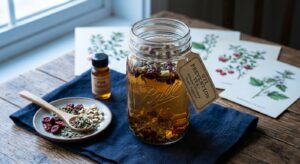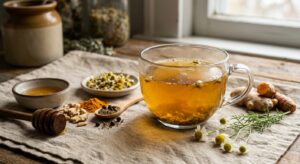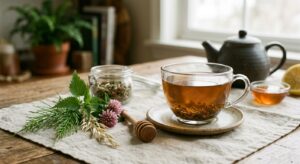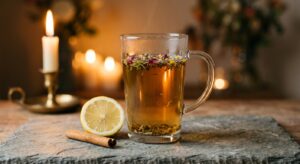
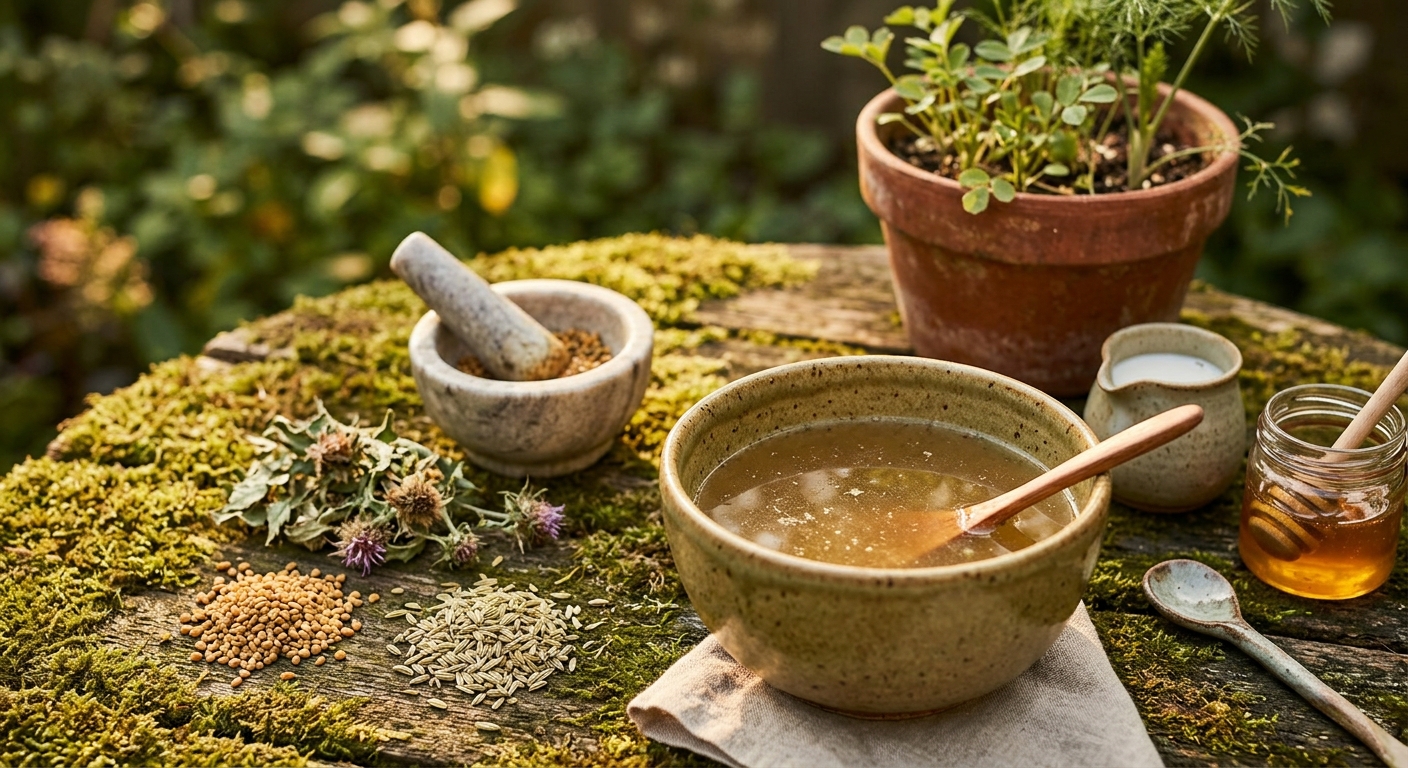
For centuries, mothers across cultures have turned to the plant world for support during the demanding early months of breastfeeding. From the spice markets of ancient Egypt to the herbal apothecaries of medieval Europe, a class of plants known as galactagogues, herbs believed to stimulate and increase milk production, have been passed down through generations of midwives, herbalists, and grandmothers. Fenugreek (Trigonella foenum-graecum), fennel (Foeniculum vulgare), and blessed thistle (Cnicus benedictus) form the backbone of this time-honored tradition, each bringing its own complementary action to support lactating mothers.
Fenugreek is perhaps the most widely studied galactagogue in modern herbal medicine. Its seeds contain phytoestrogens and a rich concentration of saponins thought to stimulate mammary gland secretion, mimicking hormonal pathways involved in milk let-down. Fennel contributes its own phytoestrogenic compounds alongside a pleasant anise-like flavour that softens the earthy intensity of fenugreek, while blessed thistle has been used since at least the 16th century as a digestive tonic and milk-promoting herb. Together, these three plants create a brew that is both medicinally purposeful and surprisingly pleasant to drink throughout the day.
Beyond the science, there is something deeply nourishing about the ritual itself. Taking a quiet moment to brew and sip a warm cup of herbal tea, especially during the early postpartum period, can be an act of self-care that matters as much as the compounds in the cup. This guide will walk you through the best ways to brew this blend, what to expect from its flavour, and what the current research says about each herb’s role in supporting your milk supply.
2
cups
Ingredients
- 2 tspfenugreek seeds (lightly crushed)
- 1 tspdried fennel seeds
- 1 tspdried blessed thistle herb
- 480 mlwater (95°C / 203°F)
- —raw honey or coconut sugar to taste (optional)
- —a splash of oat milk (optional, for a creamier cup)
How to Brew
Click on an item below to shop for the recommended items for this recipe on Amazon.
As an Amazon Associate, we earn from qualifying purchases.
- Lightly crush 2 teaspoons of fenugreek seeds using a mortar and pestle or the back of a spoon. Crushing breaks the seed coat and significantly improves the extraction of active compounds into the water.
- Combine the crushed fenugreek seeds, 1 teaspoon of fennel seeds, and 1 teaspoon of dried blessed thistle in a tea infuser or loose-leaf strainer. Place inside your mug or teapot.
- Heat water to approximately 95°C (203°F), just below a full rolling boil. Pour 480 ml over the herb blend, ensuring all plant material is fully submerged.
- Cover the mug with a small saucer or lid to prevent aromatic compounds from escaping with the steam. Steep for 10 to 15 minutes. Fenugreek benefits from the full 15 minutes to release its saponin content.
- Remove the infuser and stir gently. Sweeten with raw honey if desired and add a splash of oat milk for a creamier, more comforting texture. Sip warm, aiming for 2 to 3 cups per day while breastfeeding.
- Lightly crush 3 teaspoons of fenugreek seeds and combine with 1.5 teaspoons of fennel seeds and 1.5 teaspoons of dried blessed thistle in a clean glass jar. Increase the herb quantity slightly compared to hot brew, as cold water extracts compounds more slowly.
- Pour 700 ml of cold, filtered water over the herbs. Stir gently to ensure all plant material is moistened and no dry herb is floating on top.
- Seal the jar and leave at room temperature for the first 1 to 2 hours to allow initial extraction to begin, then transfer to the refrigerator. Let steep overnight for 10 to 14 hours.
- Strain the cold brew through a fine-mesh strainer or cheesecloth into a clean pitcher or bottle, pressing the spent herbs gently to extract any remaining liquid.
- Serve over ice in a tall glass. Add a thin slice of fresh lemon or a few fresh mint leaves for brightness. Store any remaining cold brew in the refrigerator and consume within 48 hours.
- Add 2.5 teaspoons of whole or lightly crushed fenugreek seeds and 1.5 teaspoons of fennel seeds directly to a small saucepan with 600 ml of cold filtered water. Starting in cold water allows a gradual extraction as the temperature rises.
- Bring the water to a full boil over medium-high heat, stirring once. As soon as it reaches a boil, reduce the heat to a gentle simmer. You should see small, steady bubbles but not a vigorous rolling boil.
- Add 1.5 teaspoons of dried blessed thistle to the simmering pot. Blessed thistle is more delicate and its active bitter compounds are better preserved with shorter heat exposure, so it is added later in the process.
- Simmer uncovered for 20 to 25 minutes. You will notice the liquid deepen in colour to a rich amber and the maple-like aroma of fenugreek will become pronounced. Allow the liquid to reduce slightly.
- Remove from heat and allow to rest for 3 minutes. Pour through a fine-mesh strainer into a mug, pressing the herbs firmly with a spoon to extract the last of the liquid. Sweeten if desired. This decoction can also be cooled and stored in the refrigerator for up to 24 hours, reheated gently before drinking.
Health Benefits
Multiple clinical and observational studies have found that fenugreek supplementation, including as a tea, can increase breast milk production by up to 900ml per day in some mothers within 24 to 72 hours of regular consumption. The effect is attributed to fenugreek’s steroidal saponins which stimulate the mammary glands through phytoestrogenic and prolactin-supporting pathways.
The phytoestrogenic compounds in both fenugreek and fennel, particularly diosgenin and trans-anethole, interact with estrogen receptors in ways that may support the hormonal environment of breastfeeding. These gentle plant-based interactions are distinct from pharmaceutical hormone therapy and are generally considered safe in normal dietary amounts during lactation.
Fennel has a well-documented tradition of use for colic and infant gas, and small amounts of its aromatic compounds, particularly trans-anethole, are known to pass into breast milk. This may help soothe digestive cramping in nursing infants, making fennel a particularly valued ingredient in lactation blends.
All three herbs in this blend have carminative and digestive-supportive properties. Fenugreek’s soluble fibre supports healthy gut motility, fennel relieves bloating and gas, and blessed thistle’s bitter compounds stimulate digestive enzyme production, collectively supporting the digestive demands placed on the body during postpartum recovery and active breastfeeding.
The flavonoid and polyphenol content of this blend, including quercetin and apigenin derivatives, helps reduce systemic inflammation and oxidative stress. For postpartum mothers recovering from the physical demands of birth and the metabolic intensity of milk production, this anti-inflammatory action offers meaningful whole-body support.
🧪 Key Bioactive Compounds
The Science Behind Fenugreek
The galactagogue action of this blend centres primarily on fenugreek’s steroidal saponins, most notably diosgenin. Diosgenin is a phytosterol precursor that binds weakly to estrogen receptors and is hypothesised to stimulate the pituitary gland’s release of prolactin, the primary hormone responsible for milk synthesis. A 2018 randomised controlled trial published in the Journal of Pediatric Sciences found that mothers consuming fenugreek tea showed statistically significant increases in milk volume compared to a placebo group, with effects measurable within the first three days of use. The saponin content also appears to influence oxytocin-mediated milk ejection, supporting not just volume but flow.
Fennel’s primary bioactive compound, trans-anethole, structurally resembles dopamine and interacts with dopamine receptors in ways that may inhibit dopamine’s suppressive effect on prolactin release. Elevated dopamine levels are one of the primary brakes on prolactin production in the brain, so herbs that modulate this pathway offer a meaningful complementary mechanism to fenugreek’s more direct mammary gland stimulation. Additionally, trans-anethole’s known passage into breast milk at low concentrations has been linked in traditional and observational literature to reduced colic symptoms in nursing infants, offering a dual benefit to both mother and child.
Blessed thistle’s contribution is less hormonal and more reflexive. Cnicin, the primary sesquiterpene lactone responsible for its intensely bitter taste, stimulates bitter taste receptors in the mouth and gastrointestinal tract, triggering a cascade of digestive and glandular secretory activity through the vagus nerve. This broad secretory stimulation is thought to include mammary tissue, making blessed thistle a useful synergist to the more targeted actions of fenugreek and fennel. Combined, these three herbs address lactation support from multiple physiological angles, offering a more comprehensive galactagogue effect than any single herb alone.
Brewing Tips
- Crush fenugreek seeds just before brewing rather than buying pre-ground fenugreek, as the volatile aromatic compounds and saponins degrade quickly once the seed coat is broken.
- Drink 2 to 3 cups of this blend daily for at least 3 to 5 days before assessing its effect on your milk supply, as galactagogue herbs typically require consistent use over several days to show measurable results.
- If the earthy bitterness of the blend is too strong, increase the proportion of fennel seeds slightly relative to fenugreek, or add a small cinnamon stick during brewing to add warmth and natural sweetness without reducing the therapeutic content.