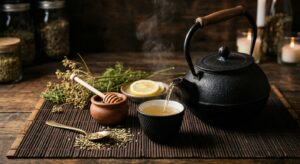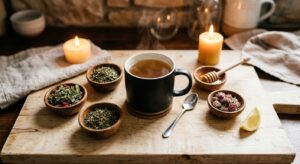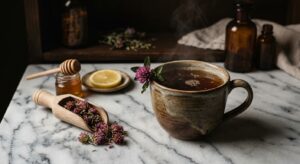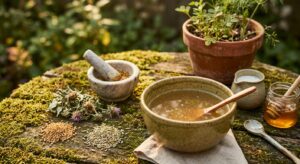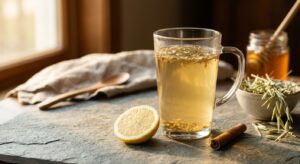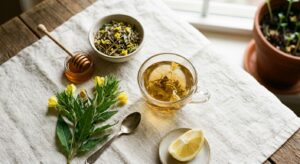
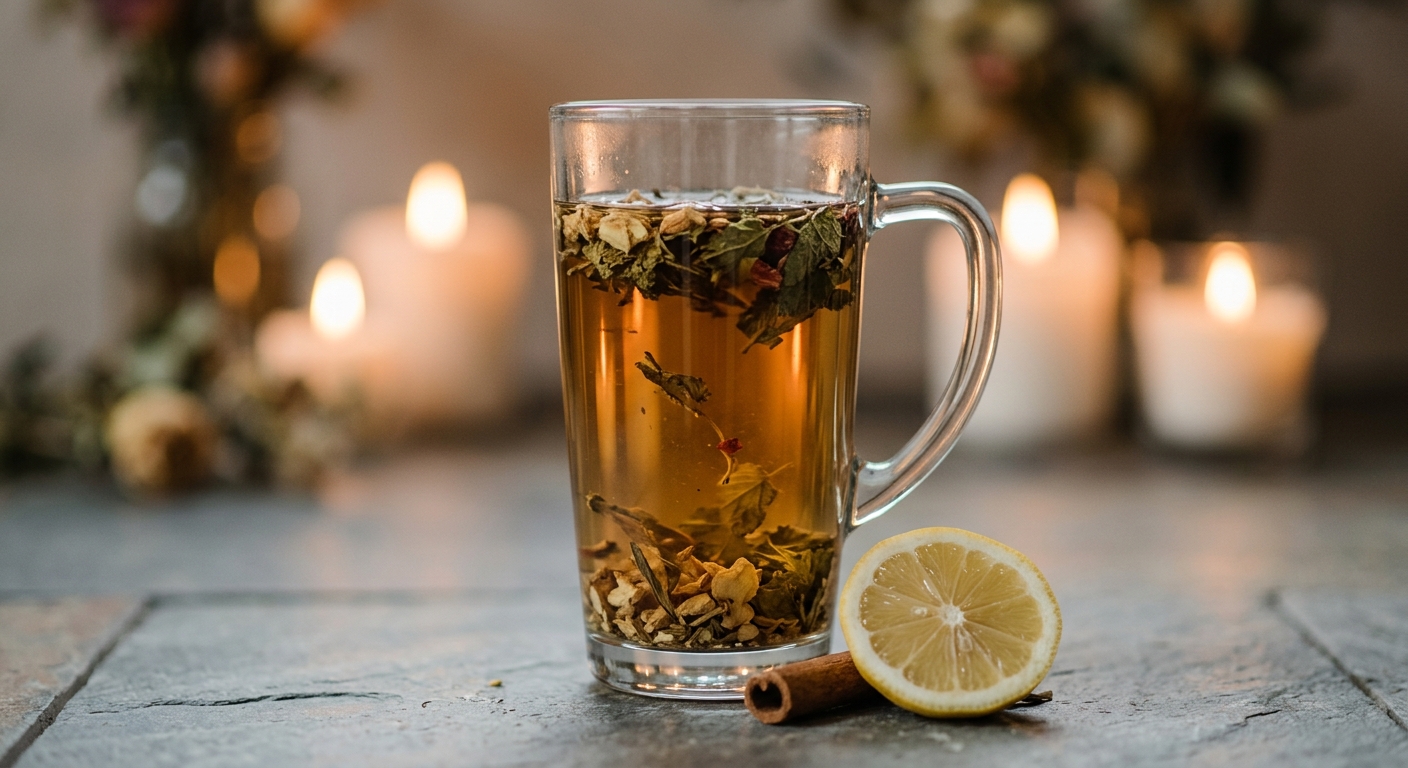
The first trimester of pregnancy is one of the most transformative and challenging periods in a woman’s life. Nausea strikes at all hours, fatigue settles deep into the bones, and the body is quietly performing extraordinary biological work. Long before modern obstetrics, midwives and herbalists across cultures reached for specific plants to ease this passage: ginger root in Ayurvedic and Chinese medicine to calm the stomach, lemon balm in European folk tradition to soothe frayed nerves, and red raspberry leaf in North American and British herbalism to tone and support the uterus. This blend draws on all three traditions to create a tea that genuinely addresses the lived experience of early pregnancy.
The star of this blend is fresh or dried ginger root, whose warming, anti-nausea properties are among the best-studied of any herbal remedy in pregnancy. Supporting it are the gentle nervine qualities of lemon balm, which quiets anxiety and aids sleep without sedating, and a modest amount of red raspberry leaf, traditionally used to nourish the uterine lining and provide a spectrum of pregnancy-supportive minerals including magnesium, calcium, and iron. A small addition of peppermint rounds out the blend with its own anti-nausea properties and bright, refreshing flavor that cuts through the queasiness that so many first-trimester mothers know well.
Importantly, this blend is formulated with first-trimester safety in mind. The herbs are used at moderate, food-grade amounts rather than therapeutic or concentrated doses, and red raspberry leaf is kept at a gentle ratio appropriate for early pregnancy. Every cup is a small act of self-care during a period when the body deserves every bit of gentleness it can receive. As always, it is wise to discuss any herbal tea with your midwife or obstetrician, particularly if your pregnancy is high-risk or if you are taking medications.
2
cups
Ingredients
- 1 tspdried ginger root pieces (or 3 to 4 slices fresh ginger)
- 1 tspdried lemon balm leaves
- 0.75 tspdried red raspberry leaf
- 0.5 tspdried peppermint leaves
- 480 mlwater (95°C / 203°F)
- —raw honey or maple syrup to taste (optional)
- —a thin slice of fresh lemon (optional, for serving)
How to Brew
Click on an item below to shop for the recommended items for this recipe on Amazon.
As an Amazon Associate, we earn from qualifying purchases.
- Measure 1 tsp dried ginger root, 1 tsp dried lemon balm, 3/4 tsp red raspberry leaf, and 1/2 tsp dried peppermint into a tea infuser or small teapot. If using fresh ginger, thinly slice 3 to 4 coins and add them directly to the infuser.
- Heat 480 ml of filtered water to approximately 93 to 96°C (200 to 205°F). If using a standard kettle, bring to a boil, remove from heat, and allow to rest for 60 to 90 seconds before pouring.
- Pour the hot water over the herbs and cover the teapot or mug with a lid or small saucer. Covering traps the volatile aromatic compounds, particularly the menthol in peppermint and the terpene aldehydes in lemon balm, which are responsible for much of the anti-nausea effect.
- Steep for 7 to 10 minutes. For milder ginger flavor (useful if nausea is severe and strong spice feels overwhelming), steep for 7 minutes and remove the ginger first. For a more warming, settling cup, allow the full 10-minute steep.
- Remove the infuser, press gently to release the last of the brew, then sweeten with a small drizzle of raw honey or maple syrup if desired. Add a slice of fresh lemon for brightness. Sip slowly and warmly, ideally before rising in the morning to help pre-empt morning nausea.
- Combine 1.5 tsp dried ginger root, 1.5 tsp dried lemon balm, 1 tsp red raspberry leaf, and 3/4 tsp peppermint in a clean glass jar. Slightly increasing the herb ratio compensates for the slower, cooler extraction.
- Pour 480 ml of cool, filtered water (room temperature, approximately 20 to 22°C / 68 to 72°F) over the herbs. Stir gently to ensure all herb material is submerged, then press down any floating leaves with a clean spoon.
- Seal the jar with a lid and allow it to sit at room temperature for 1 hour to begin extraction, then transfer to the refrigerator to steep overnight, for a total of 8 to 10 hours.
- In the morning, strain through a fine-mesh strainer or cheesecloth into a clean glass. The resulting tea will be pale gold with a gentle ginger presence and noticeable lemon brightness. Sweeten lightly if desired and serve over a few ice cubes. Sip cold throughout the morning to keep nausea at bay.
- Combine 2 tsp dried ginger root, 2 tsp dried lemon balm, 1.5 tsp red raspberry leaf, and 1 tsp peppermint in a small saucepan. For a more pronounced ginger effect, add an additional 2 to 3 slices of fresh ginger root alongside the dried herb.
- Add 480 ml of filtered water and bring to a gentle simmer over medium heat, approximately 96 to 100°C (205 to 212°F). Do not allow it to boil vigorously. Reduce heat to low and maintain a gentle simmer for 15 to 20 minutes, partially covered to prevent excessive evaporation.
- Remove from heat and allow to cool for 5 minutes, then strain through a fine-mesh strainer into a clean glass jar, pressing the herbs firmly to extract all liquid. You will yield approximately 350 to 400 ml of concentrate after evaporation.
- Allow to cool completely before sealing and refrigerating. Label the jar with the date. The concentrate will keep for up to 3 days in the refrigerator.
- To serve, combine 60 to 80 ml of concentrate with 180 ml of hot water, cold water, or sparkling water. Add honey or a squeeze of fresh lemon to taste. Keep a small jar of concentrate on the bedside table diluted in a thermos for immediate morning sipping before getting out of bed.
Health Benefits
Ginger is the most clinically validated herbal remedy for pregnancy-related nausea. Multiple randomized controlled trials, including a 2014 Cochrane review, confirm that 1 to 1.5 g of dried ginger per day significantly reduces nausea and vomiting in the first trimester compared to placebo. The 6-gingerol and shogaol compounds act on serotonin receptors in the digestive tract and brainstem to interrupt the nausea signaling pathway.
Lemon balm has been used as a gentle nervine in European herbal medicine for centuries. Clinical studies show that its rosmarinic acid content modulates GABA pathways in the brain to reduce anxiety and improve mood without causing drowsiness, making it uniquely suited to the emotional turbulence of early pregnancy.
The combination of lemon balm and peppermint in this blend has been studied together as a sleep-supportive pairing, with one randomized trial showing improved sleep quality in adults with mild insomnia. For first-trimester mothers disrupted by nausea and racing thoughts, a warm cup in the evening may help ease the transition to sleep.
Red raspberry leaf is a nutritive herb rich in calcium, magnesium, iron, and vitamins C and E. While these amounts are modest compared to supplemental doses, regular consumption contributes to the micronutrient demands that increase substantially in the first trimester, particularly for iron and magnesium which support early fetal development and reduce leg cramps.
Peppermint and ginger together form a powerful carminative combination that relaxes the lower esophageal sphincter (note: this is generally beneficial in pregnancy when bloating and indigestion are the concern, though those with severe acid reflux should use peppermint with caution). Both herbs reduce intestinal spasm and support motility, helping to ease the constipation and bloating common in the first trimester.
🧪 Key Bioactive Compounds
The Science Behind Ginger Root
The anti-nausea efficacy of ginger is one of the most robustly supported claims in herbal medicine. The phenolic ketones 6-gingerol and shogaol act on multiple biological targets simultaneously: they antagonize 5-HT3 (serotonin) receptors in the gut wall that trigger vomiting, inhibit substance P at NK1 receptors in the brainstem that coordinate nausea signaling, and accelerate gastric emptying by stimulating motilin receptors. This multi-target action explains why ginger outperforms single-mechanism pharmaceutical anti-emetics in some clinical trials. Importantly for pregnancy, shogaol, which forms as fresh ginger dries, appears to be even more bioavailable and potent than gingerol, making properly dried ginger root a particularly effective choice for this tea.
Lemon balm’s calming action is grounded in its inhibition of GABA transaminase, the enzyme that breaks down gamma-aminobutyric acid (GABA) in the brain. By slowing this breakdown, rosmarinic acid effectively increases the resting tone of the GABAergic inhibitory system, producing a reduction in anxiety and neural overactivation without the rebound or dependency associated with pharmaceutical GABA modulators. Research also suggests that lemon balm’s citral and other monoterpene aldehydes modulate acetylcholine receptors, which may explain the herb’s traditional use for improving cognitive clarity and mood. These mechanisms are distinct from sedative herbs like valerian and passionflower, making lemon balm uniquely appropriate during pregnancy when alertness is needed but anxiety is high.
Red raspberry leaf’s role in this blend is primarily nutritive rather than pharmacologically active at the doses used. Its mineral composition, including meaningful amounts of calcium (approximately 15 mg per gram of dried leaf), magnesium, iron, and manganese, supports the dramatically increased micronutrient demands of the first trimester. The alkaloid fragarine, long cited as responsible for the herb’s uterine-toning reputation, has been studied in limited animal and in-vitro contexts with mixed results. A 1999 Australian study found that women who used red raspberry leaf in pregnancy had shorter second-stage labor and fewer forceps deliveries, but no adverse first-trimester outcomes were noted. Current scientific understanding suggests that the doses used in herbal tea preparations are far below any threshold of uterine stimulation, though it remains prudent to use this herb conservatively in the first trimester as a precautionary measure.
Brewing Tips
- Brew the hot version the night before and store in a sealed thermos by your bedside. Drinking a few warm sips before getting out of bed in the morning is one of the most effective strategies for preventing the nausea spike that comes with sudden movement on an empty stomach.
- If the ginger flavor feels too intense during acute nausea, reduce dried ginger to 1/2 tsp and increase lemon balm to 1.5 tsp. The lemon balm will fill the flavor gap beautifully while the ginger still delivers its therapeutic benefit at the lower dose.
- Source your red raspberry leaf from a reputable supplier who can confirm the species as Rubus idaeus (European red raspberry) rather than blackberry or mixed ‘bramble leaf’, as the mineral and phytochemical profile differs significantly between species.