For centuries, mothers across cultures have turned to the plant kingdom for support during breastfeeding. From Ayurvedic kitchens in India where fenugreek seeds were stirred into warming postpartum porridges, to European midwifery traditions where fennel and blessed thistle were brewed into restorative teas, the herbal galactagogue tradition is as old as motherhood itself. These plants were not selected arbitrarily. Generations of herbalists and midwives observed their effects carefully, passing down knowledge through lineages of women who recognized the profound connection between maternal nourishment and milk supply.
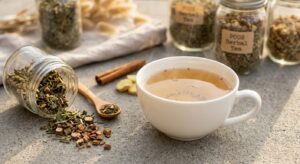
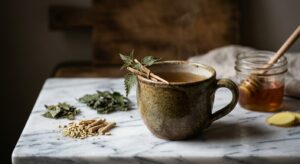
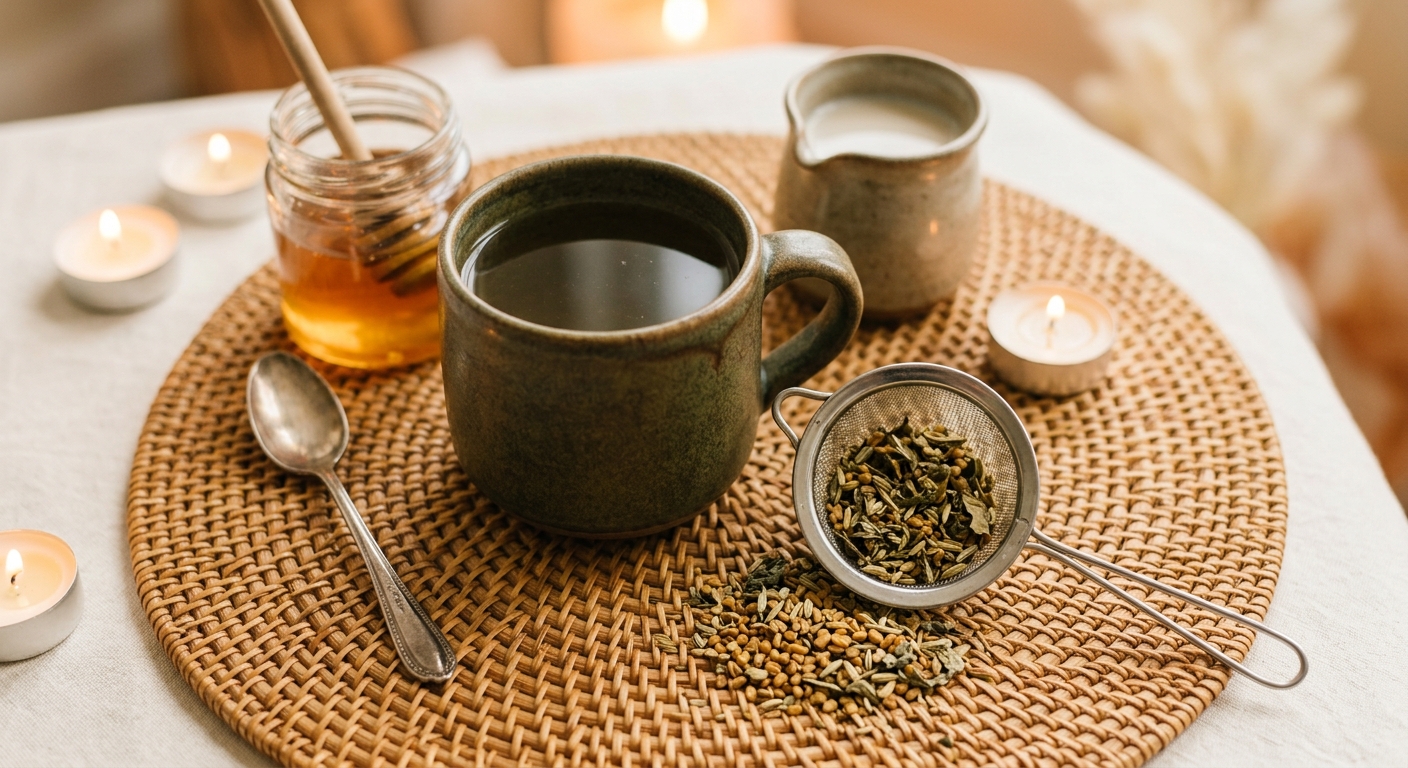
This breastfeeding support blend centers on three foundational herbs: fenugreek seed, fennel seed, and blessed thistle leaf. Fenugreek carries a warm, maple-like sweetness and is the most widely studied herbal galactagogue in modern research. Fennel adds a soft anise note while calming digestive discomfort, a benefit that passes gently through breast milk to soothe colicky newborns. Blessed thistle rounds out the blend with its mildly bitter, activating quality, traditionally used to stimulate circulation and tone the mammary glands. Together, these three herbs create a tea that is both functional and genuinely pleasant to drink throughout the day.
What makes this blend especially appealing for new mothers is its versatility and ease. Whether enjoyed hot on a slow morning, cold-brewed in a pitcher for sipping throughout a busy afternoon of nursing, or simmered as a gentle decoction to draw out the deeper constituents of the seeds, this tea adapts to the rhythm of new parenthood. It is important to note that herbal support works best alongside frequent nursing or pumping, adequate hydration, and rest. Think of this tea as a warm, botanical companion on the breastfeeding journey rather than a stand-alone solution.
2
cups
Ingredients
- 1.5 tspfenugreek seeds (lightly crushed)
- 1 tspfennel seeds (lightly crushed)
- 1 tspdried blessed thistle leaf
- 480 mlwater (95°C / 203°F)
- —raw honey to taste (optional)
- —a splash of oat milk for creaminess (optional)
How to Brew
Click on an item below to shop for the recommended items for this recipe on Amazon.
As an Amazon Associate, we earn from qualifying purchases.
- Lightly crush the fenugreek and fennel seeds using a mortar and pestle or the back of a spoon. This breaks the seed coat and dramatically improves extraction of active compounds.
- Add the crushed fenugreek seeds, crushed fennel seeds, and dried blessed thistle leaf into a tea infuser or directly into a small teapot.
- Heat water to approximately 95°C (203°F). If using a standard kettle, bring to a full boil then allow to rest for 30 seconds before pouring.
- Pour the hot water over the herbs and cover the mug or teapot with a lid or small plate to trap volatile aromatic oils that would otherwise escape as steam.
- Steep for 10 to 15 minutes. The longer end of this range extracts more of fenugreek’s mucilaginous compounds, which support hormonal signaling.
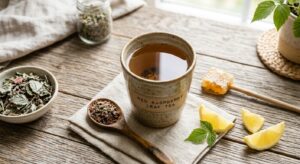
- Strain into your mug, sweeten lightly with raw honey if desired, and sip warm. Aim for 2 to 3 cups per day for consistent galactagogue support.
- Lightly crush 3 teaspoons of fenugreek seeds and 2 teaspoons of fennel seeds, and measure out 2 teaspoons of dried blessed thistle for a larger pitcher batch yielding approximately 4 servings.
- Combine all herbs in a clean glass jar or pitcher. Add 900 ml of cold, filtered water and stir briefly to ensure the herbs are fully submerged.
- Seal the jar or cover the pitcher and allow to sit at room temperature for 1 hour to begin extraction, then transfer to the refrigerator.
- Cold brew for a total of 10 to 12 hours, or overnight. The slow, low-temperature extraction draws out gentle mucilaginous compounds and aromatic fennel oils without releasing harsh bitter tannins.
- Strain the finished brew through a fine mesh strainer or cheesecloth into a clean pitcher, pressing the herbs gently to extract remaining liquid.
- Serve over ice, optionally sweetened with a touch of honey or agave. Store in the refrigerator for up to 48 hours and shake or stir before each serving.
- Measure 2 teaspoons of fenugreek seeds and 1.5 teaspoons of fennel seeds into a small saucepan. There is no need to crush the seeds when using this method, as the prolonged simmering will open them naturally.
- Add 600 ml of cold, filtered water to the saucepan and bring to a gentle boil over medium heat, watching carefully to prevent a rolling boil that could damage heat-sensitive compounds.
- Once the water reaches a simmer, reduce heat to low and add 1 teaspoon of dried blessed thistle leaf. Place a lid on the saucepan slightly ajar to allow a little steam to escape while retaining most of the volatile oils.
- Simmer gently on low heat for 20 to 25 minutes, stirring once or twice. The liquid will deepen in color and the characteristic maple-like aroma of fenugreek will become pronounced.
- Remove from heat and allow the decoction to rest, covered, for an additional 5 minutes before straining through a fine mesh strainer into a mug or heatproof pitcher.
- This method produces a stronger, more concentrated brew. You may dilute with a small amount of warm water or oat milk to taste, and sweeten with honey if desired. This decoction is particularly recommended for mothers seeking maximum galactagogue potency.
Health Benefits
Fenugreek is the most clinically studied herbal galactagogue, with several randomized trials and meta-analyses finding significant increases in breast milk volume compared to placebo. Its steroidal saponins, particularly diosgenin, are believed to act on prolactin pathways and mammary tissue stimulation.
Fennel’s carminative compounds, including anethole and fenchone, pass in small amounts into breast milk and have been shown in clinical studies to reduce colic symptoms and intestinal spasm in breastfed infants, making this a dual-benefit herb for mother and baby.
Fenugreek’s mucilaginous fiber and trigonelline content slow carbohydrate absorption and improve insulin sensitivity. Stable blood glucose is an often-overlooked factor in maintaining consistent milk supply during the postpartum period.
Both fennel and blessed thistle have well-established carminative and digestive tonic properties. Blessed thistle’s bitter compounds stimulate digestive enzyme activity, while fennel relaxes smooth muscle tension in the gastrointestinal tract, reducing bloating and postpartum digestive sluggishness.
Fenugreek seeds are rich in iron, magnesium, and B vitamins, nutrients critically needed during postpartum recovery and lactation. Regular consumption of this tea contributes a modest but meaningful nutritional boost at a time when maternal nutrient stores are heavily drawn upon.
🧪 Key Bioactive Compounds
The Science Behind Fenugreek
The galactagogue activity of this blend is best understood through the lens of hormonal signaling. Fenugreek seeds contain diosgenin, a steroidal saponin that shares structural similarities with estrogen and progesterone precursors. Research suggests diosgenin may stimulate prolactin secretion from the anterior pituitary gland, the primary hormonal driver of milk synthesis. A 2018 meta-analysis published in Phytotherapy Research found that fenugreek supplementation significantly increased breast milk production compared to placebo in several randomized controlled trials, though researchers acknowledge that study sizes remain modest and larger trials are needed. The seed’s mucilaginous polysaccharides also appear to play a supporting role by modulating blood sugar levels, which can influence the hormonal environment of lactation.
Fennel’s primary active compound, anethole, is a phenylpropanoid that demonstrates structural similarity to dopamine. Because dopamine normally inhibits prolactin release, compounds that interact with dopaminergic pathways may indirectly allow prolactin levels to rise. Anethole and its polymers, specifically photoanethole and dianethole, have demonstrated estrogenic activity in animal and in vitro models. Additionally, the antispasmodic action of fenchone on smooth muscle tissue explains fennel’s long clinical use as a carminative remedy. A notable 2003 randomized trial in the journal Alternative Therapies in Health and Medicine found that fennel seed oil emulsion significantly reduced colic symptoms in breastfed infants, validating the cross-feeding benefit of maternal fennel consumption.
Blessed thistle’s contribution to this blend operates through a different mechanism, primarily via its sesquiterpene lactone cnicin. Cnicin stimulates bitter taste receptors in the gastrointestinal tract, triggering a cascade of digestive secretions including bile acids and digestive enzymes. This bitters effect has traditionally been interpreted in herbalism as improving overall circulatory vitality and glandular tone, including in mammary tissue. While rigorous clinical trials on blessed thistle as a standalone galactagogue are limited, it has been a trusted component of professional herbalists’ lactation formulas for generations and its safety profile at typical tea concentrations is well established. The synergy of these three botanicals creates a blend where each herb supports a different dimension of lactation physiology, offering a more comprehensive approach than any single herb alone.
Brewing Tips
- Crush the seeds just before brewing, not in advance. Once the seed coat is broken, the aromatic volatile oils begin to dissipate. Freshly crushed seeds produce a noticeably more flavorful and potent tea.
- Consistency matters more than quantity. Drinking 2 to 3 cups of this tea daily over the course of 1 to 2 weeks is far more effective than drinking large amounts infrequently. Galactagogue herbs work cumulatively alongside regular nursing stimulation.
- If the flavor of fenugreek is too strong for your palate, increase the fennel seed ratio slightly and add a cinnamon stick to the brew. Cinnamon complements fenugreek’s maple-like sweetness beautifully and has its own mild blood-sugar-stabilizing properties beneficial postpartum.
- Store your pre-measured dry herb blend in a small glass jar away from light and heat. Having ready-to-brew portions prepared in advance removes a barrier to consistency on busy days with a newborn.
- Pair this tea with oat-based foods such as oatmeal or oat crackers. Beta-glucan, the soluble fiber in oats, is one of the most broadly recognized dietary galactagogues and creates a powerful synergy with the herbal blend.