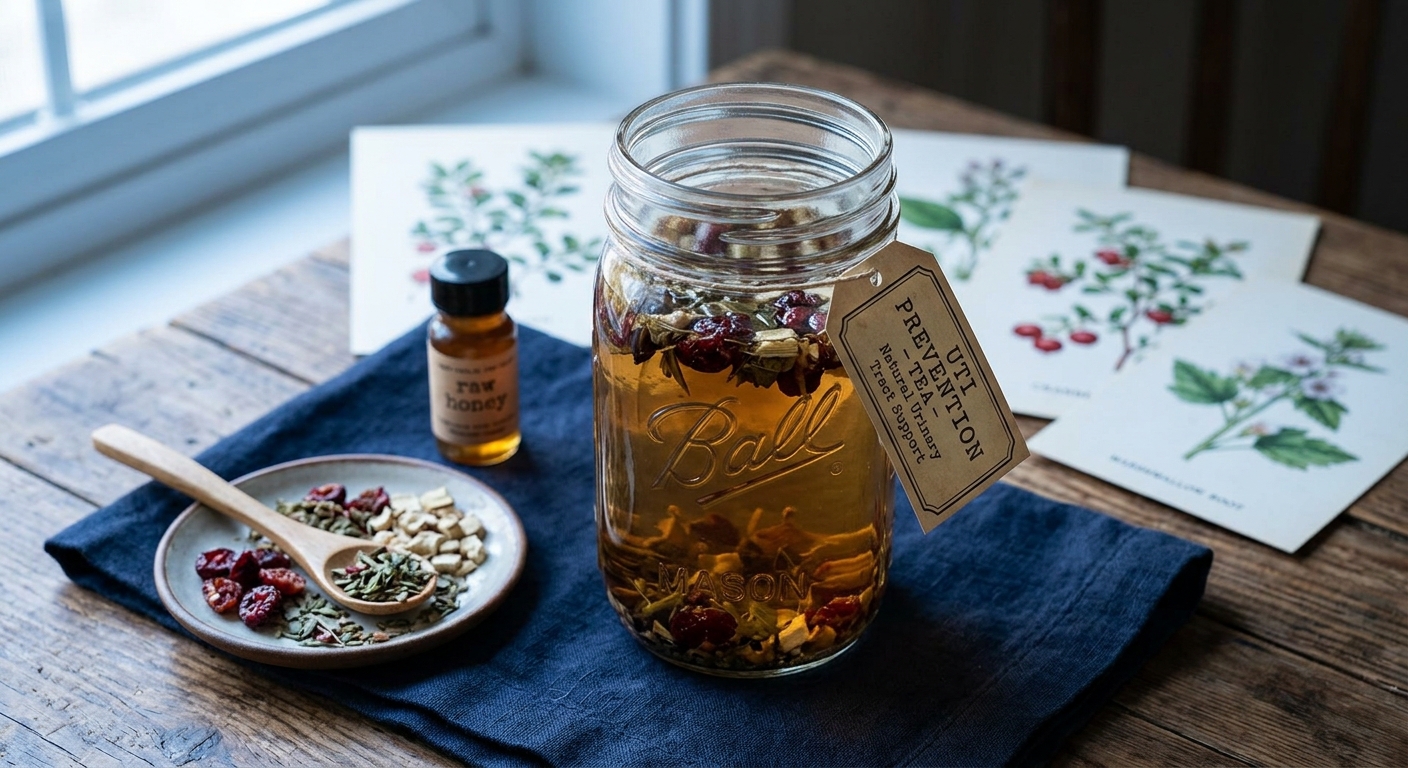
Urinary tract infections affect nearly half of all women at least once in their lifetime, and for many, recurrence becomes a frustrating cycle of antibiotics, disrupted gut flora, and mounting antibiotic resistance concerns. Long before pharmaceutical interventions existed, herbalists across Europe and the Americas were reaching for a trusted group of plants to protect and soothe the urinary tract. Uva-ursi, also known as bearberry, was a cornerstone remedy in Indigenous North American and European folk medicine, prized for its ability to cleanse the bladder and kidneys. Paired with the anthocyanin-rich power of dried cranberry and the deeply demulcent marshmallow root, this blend addresses UTI prevention from multiple botanical angles.
What makes this tea genuinely useful rather than merely comforting is the synergy of its three primary herbs. Uva-ursi delivers arbutin, a compound that converts in the body to hydroquinone, a proven antimicrobial agent active in the urinary tract. Cranberry contributes proanthocyanidins (PACs) that physically prevent E. coli, the bacterium responsible for roughly 85 percent of UTIs, from adhering to bladder wall cells. Marshmallow root coats and calms the mucosal lining of the urinary tract with its rich polysaccharide mucilage, easing the burning discomfort that can accompany early irritation and flushing pathogens along the way. Together, these three herbs form a prevention-focused formula rather than a treatment for active infection.
This tea has deep roots in women’s wellness traditions. Appalachian herbalists combined uva-ursi with cornsilk in teas for “bladder weakness,” while Scandinavian folk healers brewed bearberry leaf tea as a winter staple for kidney health. Today, naturopathic practitioners frequently recommend this exact combination to patients managing recurrent UTIs, and clinical research on both cranberry PACs and uva-ursi arbutin has given this traditional wisdom a modern scientific foundation. Whether you are recovering from a recent infection or simply want to maintain healthy urinary flora, this tea is a gentle, flavorful, and evidence-informed daily ritual.
2
cups
Ingredients
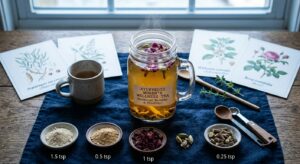
- 2 tspdried uva-ursi (bearberry) leaves
- 1 tspdried cranberry pieces or whole dried cranberries
- 1.5 tspdried marshmallow root
- 0.5 tspdried cornsilk (optional, adds extra demulcent support)
- 480 mlwater (90°C / 194°F)
- —raw honey or stevia to taste (optional)
- —fresh lemon slice to serve (optional)
How to Brew
Click on an item below to shop for the recommended items for this recipe on Amazon.
As an Amazon Associate, we earn from qualifying purchases.
- Heat filtered water to 90 to 95°C (194 to 203°F). Avoid boiling at a full rolling boil, as excessive heat can degrade some of the delicate glycosides in uva-ursi. If using an electric kettle without temperature control, bring water to a boil and allow it to rest for 60 to 90 seconds.
- Combine 2 tsp dried uva-ursi leaves, 1 tsp dried cranberry pieces, 1.5 tsp dried marshmallow root, and the optional 0.5 tsp cornsilk in a fine-mesh tea infuser or place directly into a small teapot.
- Pour 480 ml of the heated water over the herbs, ensuring all plant material is fully submerged. Cover the teapot or mug with a lid or small plate to trap volatile aromatic compounds and prevent heat loss.
- Steep for 10 to 15 minutes. The longer end of this range extracts more arbutin from the uva-ursi and more mucilage from the marshmallow root. Taste at 10 minutes and steep longer if you prefer a more robust, medicinal character.
- Strain thoroughly into two mugs. Add raw honey or stevia if desired. The tea is quite astringent on its own, and a small touch of sweetener helps balance the tannins from the uva-ursi. Add a lemon slice for brightening the flavor and adding a mild dose of vitamin C, which supports urinary tract health.
- Drink one to two cups daily as a preventive measure. Always accompany each cup with an additional full glass of plain water to assist the flushing action of the herbs through the urinary tract.
- Measure 2 tsp dried uva-ursi leaves, 1 tsp dried cranberry pieces, 1.5 tsp dried marshmallow root, and optional 0.5 tsp cornsilk into a clean glass jar. No heat is needed, so you can prepare this at any time of day.
- Pour 480 ml of cool filtered water directly over the herbs. Stir gently with a long spoon to ensure all plant material is saturated. Notice immediately how the marshmallow root begins releasing a slightly viscous, slippery mucilage into the water.
- Seal the jar with a tight-fitting lid and transfer to the refrigerator. Allow the herbs to infuse for a minimum of 8 hours, ideally overnight for 10 to 12 hours. Avoid steeping longer than 14 hours as the uva-ursi can become overly bitter.
- When ready to serve, strain the infusion through a fine-mesh strainer or cheesecloth into a pitcher or directly into glasses filled with ice. The finished cold brew will have a noticeably silkier texture compared to the hot version, a hallmark of high mucilage content.
- Sweeten lightly with a few drops of liquid stevia or a small amount of honey dissolved into a little warm water before adding. Serve over ice with a slice of fresh lemon or a few fresh or frozen cranberries as garnish. Consume within 24 hours and keep refrigerated.
- In a small stainless steel or enamel saucepan, combine 1.5 tsp dried marshmallow root with 600 ml of cold filtered water. Starting with cold water and marshmallow root together before applying heat maximizes the release of its polysaccharide mucilage. Allow the marshmallow root to soak in the cold water for 5 minutes before turning on the heat.
- Bring the marshmallow root and water to a very gentle simmer over medium-low heat, targeting 85 to 90°C (185 to 194°F). You want small, lazy bubbles rising to the surface, not a vigorous boil. Add the 2 tsp dried uva-ursi leaves and 1 tsp dried cranberry pieces to the simmering water.
- Maintain the gentle simmer with the lid slightly ajar for 20 minutes, stirring occasionally. Watch the color deepen to a rich red-amber as the cranberry and uva-ursi release their pigments and active compounds. Add a splash of additional water if the volume reduces too much.
- After 20 minutes of simmering, remove the saucepan from the heat entirely. Add the optional 0.5 tsp cornsilk to the hot liquid now, cover with a lid, and allow the whole blend to rest and infuse for an additional 10 minutes. This resting stage is ideal for the cornsilk, which is more delicate and extracts best in hot but not actively simmering water.
- Strain the decoction through a fine-mesh strainer lined with cheesecloth, pressing the plant material gently with the back of a spoon to extract all the mucilaginous liquid. You should obtain approximately 400 to 450 ml of a rich, thick, ruby-colored decoction.
- Pour into two warmed mugs and sweeten with raw honey if desired. Drink slowly and warm. Because this preparation is significantly more concentrated than the hot brew, limit use to once daily and always drink at least two additional glasses of plain water throughout the day to support kidney function and urinary flushing.
Health Benefits
The Type-A proanthocyanidins in cranberry have been demonstrated in multiple clinical trials to prevent E. coli, responsible for the vast majority of UTIs, from anchoring to bladder epithelial cells. Without successful adhesion, bacteria are flushed out of the urinary tract rather than establishing an infection.
Arbutin from uva-ursi is absorbed from the gastrointestinal tract and excreted via the kidneys, where it is hydrolyzed into hydroquinone directly within the urine. At the mildly alkaline pH of urine, hydroquinone has been shown in vitro and in early clinical studies to inhibit multiple urinary pathogens, including E. coli, Staphylococcus aureus, and Proteus mirabilis.
Marshmallow root’s abundant mucilage forms a slippery, gel-like coating over the inflamed mucosal lining of the bladder and urethra. This demulcent action reduces the burning and irritation associated with early-stage UTI symptoms and creates a physical environment less hospitable to pathogen colonization.
A landmark study published in the American Journal of Obstetrics and Gynecology found that cranberry extract significantly reduced UTI recurrence rates in premenopausal women with a history of recurrent infections. Regular consumption of cranberry PACs, as delivered in this tea, is now recommended by several urological associations as a non-antibiotic preventive strategy.
Both cranberry and uva-ursi are rich in quercetin, anthocyanins, and other polyphenolic antioxidants that neutralize reactive oxygen species generated during inflammation and bacterial infection. This antioxidant activity helps protect bladder cells from oxidative damage during infection cycles and supports long-term tissue integrity.
🧪 Key Bioactive Compounds
The Science Behind Uva-Ursi (Bearberry Leaf)
The science behind this UTI prevention blend centers on three distinct but complementary mechanisms targeting the same pathogen: Escherichia coli. The most extensively studied compound in the formula is arbutin, a phenolic glycoside concentrated in uva-ursi (Arctostaphylos uva-ursi) leaves. Once ingested, arbutin travels through the gastrointestinal tract largely intact and is absorbed into the bloodstream, where it circulates to the kidneys and is filtered into the urine. In the mildly alkaline environment of urine, intestinal and urinary beta-glucosidase enzymes cleave the glucose molecule from arbutin, releasing free hydroquinone directly into the urinary tract. In vitro studies and early phase clinical trials have confirmed hydroquinone’s capacity to inhibit the growth of multiple uropathogens, including E. coli, Proteus mirabilis, and Staphylococcus aureus. The alkaline pH dependency of this conversion is clinically important: uva-ursi loses much of its antimicrobial efficacy when consumed alongside urinary acidifiers such as high-dose vitamin C.
Cranberry’s contribution to urinary tract health is governed by a unique class of condensed tannins called Type-A proanthocyanidins (PACs). Unlike the more common Type-B PACs found in most other fruits, cranberry’s Type-A PACs contain an unusual double-bonded linkage that creates a rigid, three-dimensional molecular structure. This structure has been shown in both laboratory and clinical settings to physically interfere with the fimbriae (hair-like adhesion appendages) on the surface of uropathogenic E. coli, preventing the bacteria from anchoring to the uroepithelial cells that line the bladder and urethra. Without successful adhesion, bacteria cannot replicate effectively within the urinary tract and are cleared with normal urinary flow. A 2016 Cochrane Review, which analyzed 24 randomized controlled trials, found that cranberry products significantly reduced the incidence of UTIs in women with recurrent infections compared to placebo, particularly at doses providing 36 mg or more of PACs daily.
Marshmallow root (Althaea officinalis) completes the formula with a completely different mode of action: physical and biochemical mucosa protection. The root contains 25 to 35 percent by dry weight of high-molecular-weight polysaccharide mucilage, primarily composed of arabinogalactans, glucuronans, and rhamnogalacturonans. When hydrated, these polysaccharides form a viscous gel that adheres to the mucosal surfaces of the urinary tract, creating a protective barrier between irritated epithelial cells and the harsh, bacteria-laden urine environment. This demulcent coating reduces the physical irritation that allows bacteria to gain an initial foothold, soothes the inflammation that makes UTI symptoms painful, and may physically assist in sweeping pathogens toward the bladder exit. Additionally, allantoin found in marshmallow root has been shown to stimulate cell proliferation and support the regeneration of damaged mucosal tissue, suggesting that this herb not only relieves symptoms but actively supports tissue recovery after infection episodes.
Brewing Tips
- Alkalinize your urine while using this tea by eating potassium-rich foods like bananas and leafy greens and avoiding high-dose vitamin C supplements, since arbutin from uva-ursi requires an alkaline urinary pH to convert to its active antimicrobial form.
- Source your uva-ursi from a reputable supplier that provides a standardized arbutin content of at least 8 percent, as the potency of bearberry leaf varies significantly depending on harvest season, growing conditions, and processing methods.
- For maximum effectiveness as a preventive measure, drink this tea consistently for a defined period such as two to three weeks following a UTI or before and after any activity that historically triggers recurrence for you, rather than drinking it sporadically.