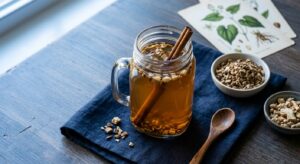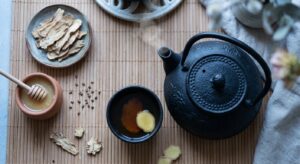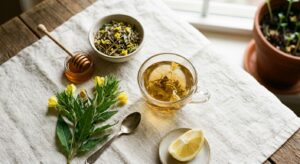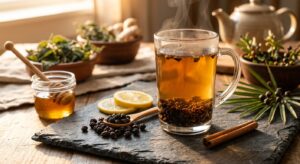
Long before pharmaceutical hormone therapy existed, women across cultures turned to plants to navigate the rhythms of their cycles. From the raspberry leaf preparations of European midwives to the dong quai tonics of Traditional Chinese Medicine and the vitex berries documented in ancient Greek texts, the botanical world has always offered a rich toolkit for menstrual support. This cycle-syncing tea draws from all three traditions, weaving together herbs that work on distinct but complementary pathways to bring balance, comfort, and nourishment to each phase of the menstrual cycle.
What makes this blend genuinely compelling is the intentionality behind each ingredient. Red raspberry leaf tones and strengthens the uterine muscle, making it especially valuable in the late luteal and menstrual phases. Dong quai, often called the female ginseng, promotes healthy circulation to the pelvic region and has been used in TCM for over two thousand years to regulate the menstrual cycle and relieve cramping. Vitex agnus-castus, or chaste tree berry, acts more slowly and systemically, gently nudging the pituitary gland to balance the ratio of luteinizing hormone to follicle-stimulating hormone, which in turn supports healthy progesterone levels in the second half of the cycle.
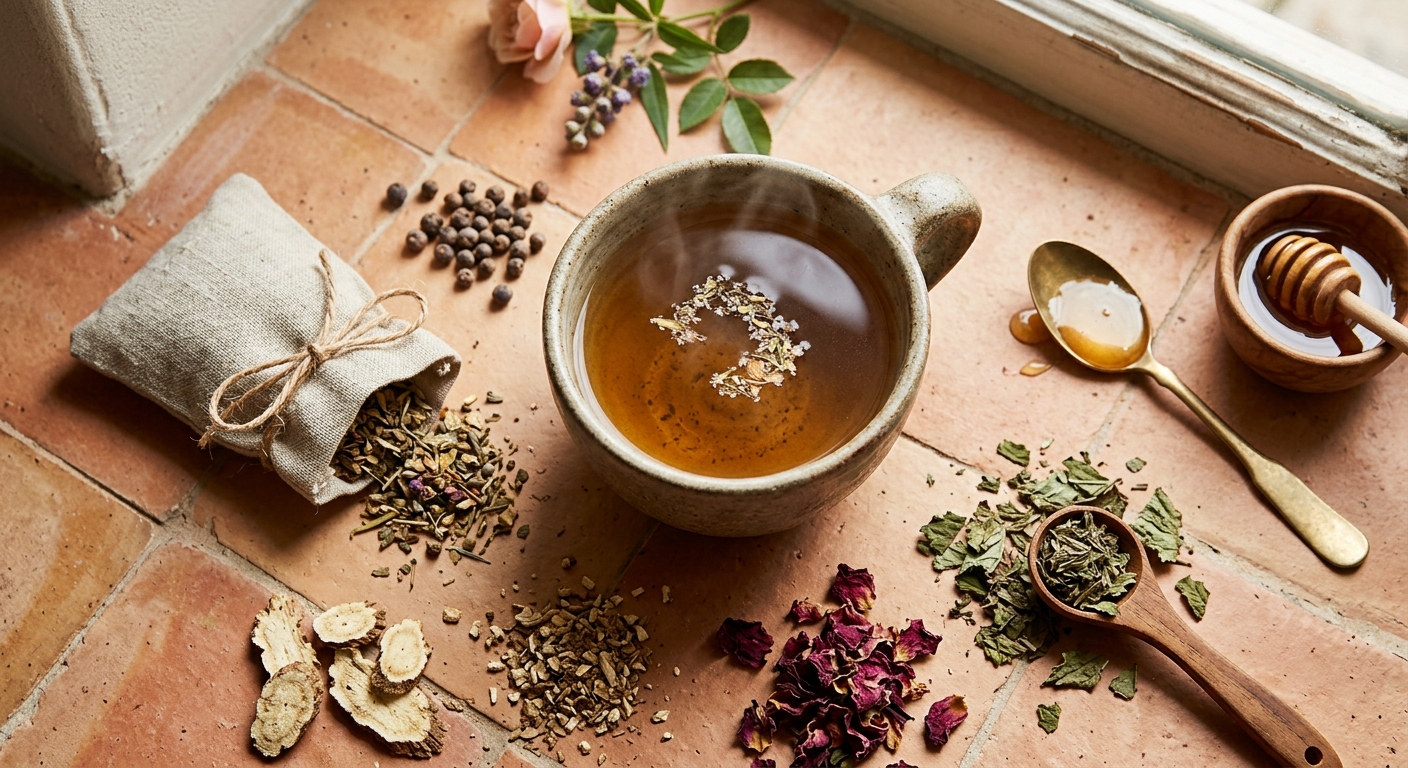
The sensory experience of this tea is grounding and warming, with an earthy, slightly astringent base from the raspberry leaf, a faintly spiced and sweet undertone from the dong quai, and a subtle peppery, herbal note from the vitex berries. It is a tea that asks you to slow down and pay attention to your body, making it a meaningful ritual as much as a therapeutic preparation. Brewed consistently over several cycles, many women report measurable improvements in cycle regularity, premenstrual mood, and the intensity of cramping.
2
cups
Ingredients
- 2 tspdried red raspberry leaf
- 1 tspdried dong quai root (sliced or coarsely ground)
- 0.5 tspdried vitex berries (lightly crushed)
- 0.5 tspdried rose petals (optional, for flavor and uterine support)
- 480 mlwater
- —raw honey to taste (optional)
- —a slice of fresh ginger (optional, for warmth and circulation)
How to Brew
Click on an item below to shop for the recommended items for this recipe on Amazon.
As an Amazon Associate, we earn from qualifying purchases.
- Combine 2 tsp dried red raspberry leaf, 1 tsp dong quai root, and 0.5 tsp lightly crushed vitex berries in a tea infuser or small teapot. Add rose petals now if using.
- Bring filtered water to a full boil at 95 to 100°C (203 to 212°F). These robust herbs require near-boiling water to extract their full range of tannins, volatile oils, and phytochemicals.
- Pour 480 ml of boiling water over the herbs. Cover the teapot or mug with a lid or small plate immediately to trap the volatile aromatic compounds and prevent heat loss.
- Steep for 10 to 15 minutes. The longer end of this range produces a stronger, more therapeutic brew. A 10-minute steep yields a lighter, more pleasant daily-drinking cup.
- Remove the infuser or strain the tea through a fine mesh strainer into two mugs. Press gently on the spent herbs to release any remaining liquid.
- Add a thin slice of fresh ginger or a small drizzle of raw honey if desired. Sip slowly and warm, ideally in the evening or at a time of deliberate rest.
- Place 2.5 tsp dried red raspberry leaf, 1.5 tsp dong quai root, and 0.5 tsp crushed vitex berries into a clean glass jar. The slightly increased quantities compensate for the slower cold extraction.
- Pour 500 ml of cold, filtered water directly over the herbs. Stir gently with a long spoon to ensure all plant material is fully submerged.
- Cover the jar with a lid or cheesecloth secured with a rubber band. Allow the blend to steep at room temperature for 1 hour before transferring to the refrigerator.
- Refrigerate for 12 to 16 hours (overnight is ideal). The slow, cold extraction draws out a gentler spectrum of compounds with less tannin bitterness than a hot brew.
- Remove the jar from the refrigerator and strain the liquid through a fine mesh strainer or cheesecloth into a clean pitcher or bottle, pressing gently on the herbs.
- Serve over ice or chilled as-is. Add a few slices of cucumber or a sprig of fresh mint for a refreshing follicular-phase drink. Refrigerated cold brew keeps well for up to 48 hours.
- Measure 1.5 tsp dong quai root slices into a small saucepan. Add 600 ml of cold filtered water and allow the root to soak for 10 minutes before turning on the heat. This pre-soak begins the softening process and improves extraction.
- Bring the water to a gentle simmer over medium heat at 85 to 95°C (185 to 203°F). Do not allow it to reach a rolling boil, as excessive heat can degrade some of dong quai’s volatile phthalides.
- Once simmering, add 2 tsp dried red raspberry leaf and 0.5 tsp crushed vitex berries directly to the saucepan. Reduce heat to maintain a steady, gentle simmer.
- Simmer uncovered for 20 to 25 minutes. The liquid will reduce by roughly one quarter, concentrating the active compounds. Stir occasionally and watch the heat to prevent boiling.
- Remove from heat, cover the saucepan with a lid, and allow the blend to rest and continue infusing for an additional 5 minutes.
- Strain the decoction through a fine mesh strainer or cheesecloth into a mug, pressing firmly on the spent herbs. Expect a rich, dark amber liquid with a noticeably stronger, more complex flavor than the hot brew. Sweeten with raw honey if needed and sip slowly.
Health Benefits
Dong quai’s z-ligustilide and ferulic acid work synergistically to relax uterine smooth muscle and inhibit the production of prostaglandins, the inflammatory compounds primarily responsible for the pain of primary dysmenorrhea. Clinical studies on dong quai extracts have shown statistically significant reductions in cramping severity compared to placebo.
Vitex agnus-castus acts on the pituitary gland to increase luteinizing hormone production and reduce excess prolactin, which supports a healthier ratio of progesterone to estrogen in the second half of the cycle. Multiple randomized controlled trials have found that vitex significantly reduces PMS symptoms including mood changes, breast tenderness, and bloating after two to three months of consistent use.
Red raspberry leaf has been used as a uterine tonic in European herbalism for hundreds of years. Its fragarine content is thought to improve the tone of the pelvic floor and uterine musculature, and its high concentration of magnesium, potassium, and iron provides nutritional support that is especially relevant during the menstrual phase when mineral loss is highest.
Vitex’s dopaminergic action, mediated through its binding to D2 receptors in the pituitary, reduces excess prolactin secretion, which has been linked to premenstrual irritability, anxiety, and depression. Studies by Schellenberg and colleagues published in the British Medical Journal found significant improvements in irritability, mood swings, and anger in women taking vitex standardized extract over three menstrual cycles.
The combined phenolic content of raspberry leaf, dong quai, and rose petals delivers a meaningful antioxidant load that helps counteract the oxidative stress associated with the inflammatory prostaglandin cascade of menstruation. Reduced systemic inflammation is associated with less severe menstrual symptoms overall.
🧪 Key Bioactive Compounds
The Science Behind Red Raspberry Leaf
The science behind this cycle-syncing blend centers on three distinct but complementary mechanisms of action. Dong quai’s primary bioactive compound, z-ligustilide, has been extensively studied for its effects on smooth muscle tissue. Research published in the American Journal of Chinese Medicine demonstrated that z-ligustilide produces a biphasic effect on uterine muscle, initially stimulating a brief contraction and then inducing sustained relaxation. This relaxation effect reduces the spasmodic cramping associated with primary dysmenorrhea by counteracting the action of prostaglandin F2-alpha, the primary chemical driver of uterine contractions during menstruation. Ferulic acid, dong quai’s secondary phenolic constituent, compounds this effect through its capacity to inhibit cyclooxygenase enzymes, reducing prostaglandin synthesis at the source.
Vitex agnus-castus operates on an entirely different axis. Its iridoid glycosides, particularly agnuside, and its flavonoids bind to dopamine D2 receptors in the anterior pituitary gland. This binding mimics dopamine signaling, which suppresses the overproduction of prolactin. Elevated prolactin in the luteal phase has been directly correlated with the cluster of symptoms known as premenstrual syndrome, including breast tenderness, bloating, irritability, and low mood. By normalizing prolactin levels, vitex creates space for a more stable ratio of progesterone to estrogen in the second half of the cycle. A landmark double-blind, randomized controlled trial published in the British Medical Journal in 2001 found that a standardized vitex extract reduced PMS symptom scores by 52 percent compared to 24 percent in the placebo group, with the greatest improvements seen in irritability, mood swings, anger, and breast fullness.
Red raspberry leaf’s contribution is less dramatic but deeply supportive. Its fragarine compound, a unique alkaloid-adjacent molecule found almost exclusively in Rubus idaeus leaves, has long been credited with a toning effect on uterine musculature, though clinical trials isolating this compound remain limited. What is better documented is raspberry leaf’s exceptional mineral profile: it is a rich source of bioavailable magnesium, a mineral that independently reduces uterine cramping by acting as a natural calcium channel blocker in smooth muscle cells. A Cochrane-reviewed study found that magnesium supplementation significantly reduced the severity and duration of dysmenorrhea. The ellagitannins in raspberry leaf further contribute anti-inflammatory activity by scavenging reactive oxygen species generated during the prostaglandin cascade, reducing the collateral inflammatory damage that amplifies menstrual pain.
Brewing Tips
- Vitex is a slow-acting herb that requires consistent daily use over two to three full menstrual cycles before its hormone-balancing effects become measurable. Brew and drink this tea daily, not just around your period, for best results.
- Source dong quai from a reputable supplier who tests for heavy metals and authenticates the species as Angelica sinensis. Adulterants are common in the commercial dong quai market and may lack the key z-ligustilide content.
- If you find the taste of the full blend too earthy or astringent, reduce the steep time to 8 minutes for the hot brew and add a teaspoon of dried spearmint or a cinnamon stick to brighten and sweeten the flavor without interfering with the therapeutic compounds.