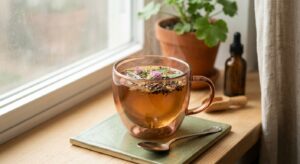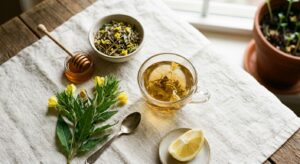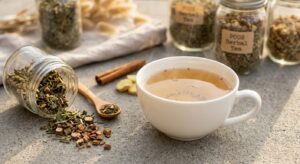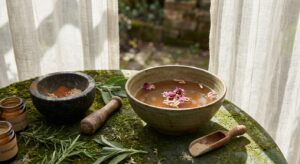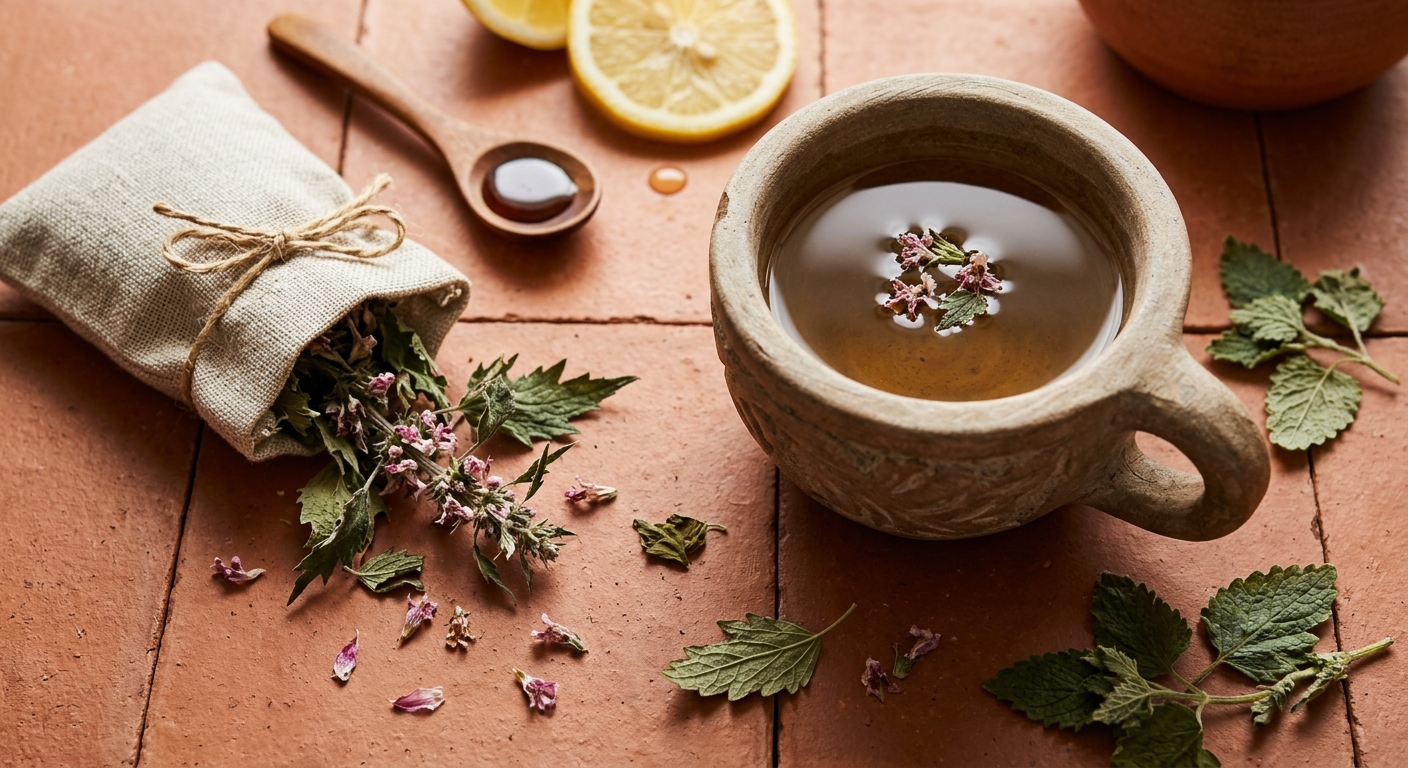
Motherwort has been a cornerstone of women’s herbal medicine for over two thousand years. Ancient Greek physicians prescribed it to ease childbirth anxiety, while medieval European herbalists nicknamed it the ‘mother herb’ for its profound affinity with the female reproductive system. Nicholas Culpeper, the seventeenth-century English botanist, wrote that there was no better herb for ‘making mothers joyful and settling the womb,’ a sentiment echoed across centuries of midwifery tradition. In Traditional Chinese Medicine, the closely related Leonurus japonicus, known as Yi Mu Cao or ‘benefit mother herb,’ remains one of the most widely used plants for menstrual regulation and postpartum recovery.
What makes motherwort genuinely remarkable is its rare dual action on both the uterus and the heart. The plant contains alkaloids and iridoids that address two of the most common complaints women experience during hormonal fluctuations: irregular or painful periods and the racing heart, palpitations, and anxious tension that can accompany PMS, perimenopause, and menopause. It acts as a uterine tonic, helping the uterus contract and release more efficiently during menstruation, while simultaneously calming the nervous system and mildly slowing the heart rate. Few single herbs address this mind-body-cycle connection so elegantly.
Motherwort belongs to the mint family, Lamiaceae, and its flavor reflects that lineage with a distinctly bitter, slightly aromatic profile. It is not a tea you drink for pleasure alone, but one you drink with purpose. The bitterness itself is part of the medicine, stimulating digestive secretions and liver function, which play an important role in hormone clearance. Brewed thoughtfully and paired with a touch of honey or a sweeter herb like lemon balm, motherwort becomes a meaningful daily ritual for women seeking plant-based support during cyclical and transitional moments in life.
2
cups
Ingredients
- 2 tspdried motherwort aerial parts (leaves and flower tops)
- 480 mlwater (90°C / 194°F)
- —raw honey or maple syrup to taste (recommended to balance bitterness)
- —fresh lemon slice (optional, brightens flavor)
- —dried lemon balm leaves (optional, for a gentler, sweeter cup)
How to Brew
Click on an item below to shop for the recommended items for this recipe on Amazon.
As an Amazon Associate, we earn from qualifying purchases.
- Heat fresh filtered water to 90 to 95°C (194 to 203°F). If you do not have a temperature-controlled kettle, bring water to a full boil and allow it to rest for 60 to 90 seconds before pouring.
- Measure 1 teaspoon of dried motherwort aerial parts per 240 ml of water. Place the herb directly into a tea infuser, muslin bag, or small teapot strainer basket.
- Pour the hot water over the motherwort. Cover the mug or teapot with a lid or small plate to trap the volatile aromatic compounds and prevent heat loss during steeping.
- Steep for 10 to 15 minutes. The longer end of this range produces a more medicinally potent cup with pronounced bitterness. Start at 10 minutes if you are new to motherwort.
- Remove the infuser and stir in raw honey, maple syrup, or a slice of fresh lemon to balance the intensity. If desired, add a pinch of dried lemon balm before steeping to naturally sweeten the brew.
- Sip slowly and mindfully. Drink one to two cups per day, ideally during the luteal phase or the days leading up to menstruation for cyclical support.
- Measure 1.5 teaspoons of dried motherwort aerial parts per 240 ml of water for the cold brew, as the cold extraction is less efficient than hot water and benefits from a slightly higher ratio of herb to water.
- Add the dried motherwort to a clean glass jar. Pour cold, filtered room-temperature water over the herb, ensuring all plant material is submerged. Stir gently with a long spoon.
- Seal the jar with a lid and leave at room temperature for 30 minutes to allow the extraction to begin. Then transfer the jar to the refrigerator.
- Refrigerate for 8 to 12 hours. Overnight is ideal. The slow cold extraction gently draws out bitter compounds without releasing harsh tannins, yielding a rounder, more approachable flavor.
- Strain the brew through a fine mesh strainer or cheesecloth into a clean glass or pitcher. Press the herb gently against the strainer to release the remaining liquid.
- Serve over ice with a squeeze of lemon or a ribbon of orange peel. Sweeten with a light honey simple syrup if preferred. Cold brew motherwort keeps refrigerated for up to 48 hours.
- Prepare a custom herb blend in a small bowl: combine 2 teaspoons of dried motherwort aerial parts, 1 teaspoon of dried lemon balm leaves, and 1 teaspoon of dried rose petals for 480 ml of water. Lemon balm softens the bitterness and adds anxiolytic synergy, while rose petals support emotional wellbeing and add a floral note.
- Place the blended herbs into a ceramic or glass teapot with a fitted lid. Heat filtered water to 90 to 95°C (194 to 203°F).
- Pour the hot water over the herb blend directly in the teapot. Immediately place the lid on the teapot to fully seal in volatile aromatic compounds and essential oils that evaporate quickly with steam.
- Steep covered for 15 to 20 minutes. This extended infusion allows the deeper extraction of iridoid glycosides from the motherwort while fully opening the gentler aromatics of rose and lemon balm.
- Strain through the teapot spout into warmed mugs. The brew should appear a warm golden-amber with a subtle rosy hue if rose petals are included.
- Sweeten with raw honey and serve with a thin slice of lemon. This blend is particularly well-suited for evening use during the premenstrual phase, perimenopause, or moments of heightened stress and tension.
Health Benefits
Motherwort’s primary alkaloid, leonurine, stimulates uterine smooth muscle and promotes efficient contractions, reducing the spasmodic cramping associated with slow or stagnant menstrual flow. Traditional use across European and Asian herbal systems consistently supports its role as an emmenagogue, and modern research on Leonurus japonicus has confirmed uterine stimulating activity in pharmacological studies.
The flavonoid apigenin and iridoid compounds in motherwort interact with GABAergic pathways in the central nervous system, producing measurable anxiolytic effects without the sedative heaviness of stronger herbs like valerian. A 2011 study published in Phytotherapy Research found that motherwort extract significantly reduced anxiety and depression scores in participants compared to a control group.
Motherwort has been used as a cardiac tonic for centuries, and modern research has begun to validate this traditional use. Stachydrine and other alkaloids demonstrate negative chronotropic effects, meaning they mildly slow a racing or irregular heartbeat, making motherwort particularly useful for the heart palpitations and cardiovascular tension that frequently accompany menopause and acute anxiety episodes.
Clinical research from Russia and Eastern Europe, where motherwort remains a formally recognized phytomedicine, has demonstrated its effectiveness in reducing the frequency of hot flashes, night sweats, mood swings, and sleep disturbances in perimenopausal women. Its combined action on the uterus, nervous system, and cardiovascular tone addresses several of the most disruptive menopausal symptoms simultaneously.
As a bitter herb, motherwort stimulates bile production and supports liver detoxification pathways, which are essential for efficiently metabolizing and clearing excess estrogen from the body. This hepatic support may contribute to its broader role in maintaining hormonal balance, particularly in conditions associated with estrogen dominance such as PMS, fibroids, and heavy menstrual bleeding.
🧪 Key Bioactive Compounds
The Science Behind Motherwort
Motherwort’s medicinal reputation rests on a well-characterized set of bioactive compounds that act on the uterine, nervous, and cardiovascular systems. The most studied are its alkaloids, particularly leonurine and stachydrine. Leonurine acts directly on uterine smooth muscle by modulating calcium ion channels and oxytocin receptor sensitivity, producing the gentle but consistent uterotonic effects that have made motherwort a staple of women’s herbal medicine for millennia. In vitro studies have confirmed its ability to promote uterine contractility, lending scientific support to centuries of empirical midwifery use.
The cardiovascular effects of motherwort are primarily attributed to stachydrine, which has been shown in multiple studies to inhibit platelet aggregation, reduce myocardial oxidative stress, and exert mild negative chronotropic effects on the heart. This means it can help calm a rapid or irregular heartbeat without significantly lowering blood pressure, making it a nuanced cardiac herb rather than a crude sedative. Research published in the Journal of Ethnopharmacology and various Chinese pharmacological journals has also documented stachydrine’s ability to protect cardiac cells from ischemic damage and reduce markers of cardiovascular inflammation. These findings explain why motherwort is used in both European and Chinese medical traditions for heart conditions that coexist with nervous system dysregulation.
Motherwort’s anxiolytic effects are mediated through flavonoids, particularly apigenin, which binds to benzodiazepine receptor sites on GABA-A ion channels in the central nervous system. This partial agonist activity gently enhances inhibitory neurotransmission, reducing excitability without producing the dependence or cognitive dulling associated with pharmaceutical anxiolytics. The iridoid glycosides present in the herb further contribute anti-inflammatory activity and support the bitter digestive and hepatic actions that facilitate estrogen metabolism. Together, these compounds explain why clinical observations and emerging research consistently describe motherwort as addressing the full mind-body-hormonal triad that defines many women’s cyclical health experiences.
Brewing Tips
- Always cover your cup or teapot while steeping motherwort. The medicinal volatile compounds are sensitive to heat loss and evaporation, and a covered steep preserves both the aroma and the therapeutic content of the brew.
- If the bitterness of straight motherwort tea is too intense, try a 50/50 blend with lemon balm or spearmint. This is a common approach in traditional European herbalism and does not significantly reduce the therapeutic potency of the motherwort.
- For cyclical support, consider drinking one cup of motherwort tea daily during the week before your period is due (the late luteal phase) rather than continuously throughout the month. Cyclical use mirrors the body’s own rhythms and may be more effective than constant daily consumption for menstrual-related complaints.
- Source dried motherwort from a reputable supplier that provides organically grown or wildcrafted leaf and flower tops, not just stem material. The aerial parts harvested at or just before flowering contain the highest concentration of leonurine and flavonoids.