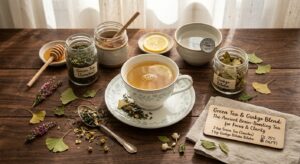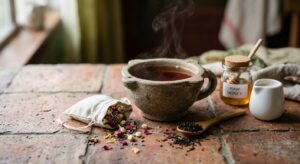
Competitive swimmers and recreational lap swimmers alike know the familiar ache that settles into the shoulders, lats, and core hours after a hard session in the pool. Unlike land-based sports, swimming demands near-constant engagement of the upper body while the cold water masks exertion in the moment, often leaving athletes surprised by delayed-onset muscle soreness the next morning. For centuries, herbalists in Ayurvedic, Traditional Chinese, and Indigenous Pacific traditions have turned to warming roots and antioxidant-rich botanicals to ease the body after strenuous physical work, and many of those same plants are now backed by modern sports science research.
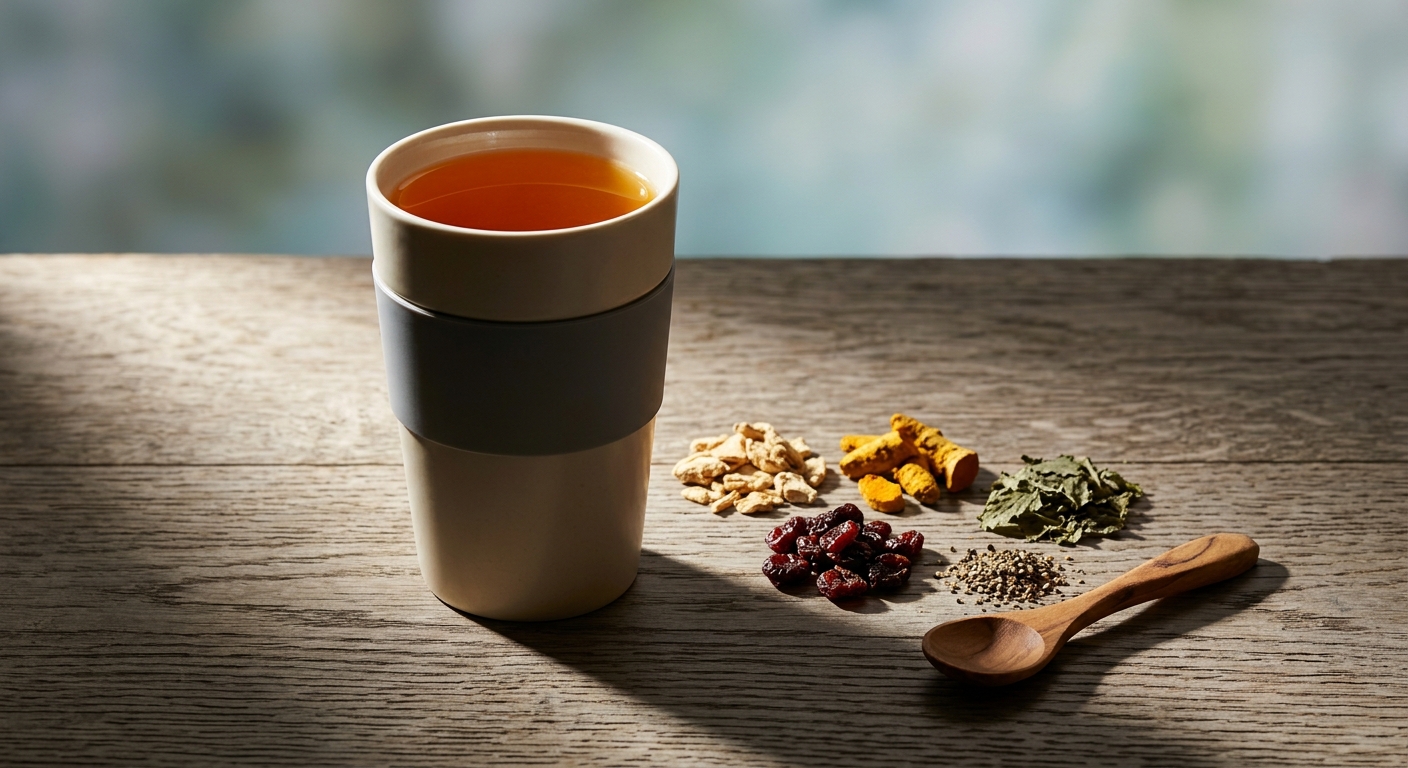
This Swimmer Recovery Tea is built around three powerhouse ingredients: ginger root for its COX-2 inhibiting gingerols, turmeric root for its curcuminoid anti-inflammatory action, and tart cherry for its remarkable concentration of anthocyanins that target muscle oxidative stress. Alongside these, a touch of black pepper provides piperine to dramatically increase curcumin bioavailability, while lemon balm adds a calming note to support the nervous system recovery that matters just as much as muscular repair. Together they form a synergistic blend that addresses inflammation, oxidative damage, and the cortisol spike that follows intense training.
Beyond its functional benefits, this tea is a genuine sensory pleasure. The sharp warmth of ginger softens into the earthy depth of turmeric, and the ruby-red tartness of cherry creates a color in the cup as vivid as a summer swim meet. Whether you brew it hot to warm up after a cold pool, chill it in a cold brew for a post-afternoon practice refresher, or concentrate it for an athlete’s recovery shot, this blend has a version for every swimmer’s routine.
2
cups
Ingredients
- 2 tspdried ginger root pieces or fresh sliced ginger
- 1.5 tspdried turmeric root or ground turmeric
- 2 tspdried tart cherry pieces (Montmorency variety preferred)
- 1 tspdried lemon balm leaves
- 0.25 tspcracked black pepper
- 480 mlwater (95°C / 203°F)
- —raw honey or maple syrup to taste (optional)
- —squeeze of fresh lemon to finish (optional)
How to Brew
Click on an item below to shop for the recommended items for this recipe on Amazon.
As an Amazon Associate, we earn from qualifying purchases.
- Bring 480 ml of filtered water to a near-boil, targeting 95 to 100°C. If using fresh ginger, slice 4 to 5 thin coins from a peeled knob. If using dried ginger root pieces, measure 2 teaspoons.
- Add ginger, turmeric, tart cherry pieces, lemon balm, and cracked black pepper directly to a small saucepan or a large tea infuser placed in a heatproof teapot. The cracked black pepper is not optional for therapeutic use, as piperine increases curcumin absorption by up to 2000 percent.
- Pour the near-boiling water over the herbs and cover the vessel immediately. Covering is important because volatile aromatic compounds in ginger and lemon balm will escape with the steam if left open.
- Steep for 10 to 12 minutes. For athletes recovering from a hard session, lean toward the full 12 minutes to maximize compound extraction. For a lighter everyday cup, 10 minutes is sufficient.
- Strain through a fine mesh strainer into two mugs. The liquid should be a deep ruby-amber color. Add honey or maple syrup if desired, then squeeze a small wedge of lemon into each cup to brighten the flavor and add a small dose of vitamin C.
- Combine ginger, turmeric, tart cherry pieces, lemon balm, and cracked black pepper in a clean glass jar. Use slightly more of each ingredient than you would for hot brew, as cold extraction is less efficient: increase each measured ingredient by roughly half a teaspoon to compensate.
- Pour 600 ml of filtered room-temperature water over the herbs. Stir gently to ensure all plant material is submerged. Place the lid on the jar loosely to allow any mild off-gassing.
- Let the jar sit at room temperature for 45 to 60 minutes, then transfer to the refrigerator. This initial room-temperature phase allows the volatile ginger aromatics to begin releasing before the cold slows extraction.
- Refrigerate for 10 to 14 hours. Overnight is the most convenient schedule: prepare before bed, strain in the morning. Shake the jar gently once or twice during the steeping period if you remember.
- Strain through a fine mesh strainer or cheesecloth into a pitcher or directly into two tall glasses filled with ice. The color will be a translucent deep ruby. Add honey dissolved in a small amount of warm water first if sweetening, as cold liquid does not dissolve raw honey easily. Finish with a lemon slice on the rim.
- Double all herb quantities for this method since you are making a concentrate. Combine ginger, turmeric, tart cherry, lemon balm, and black pepper in a small saucepan with 700 ml of cold filtered water. Starting in cold water allows the cell walls of the roots to open gradually as the temperature rises, improving extraction.
- Bring the mixture to a full boil over medium-high heat, stirring once. As soon as boiling begins, reduce heat to the lowest simmer setting. You want to see small, steady bubbles, not a vigorous rolling boil.
- Simmer uncovered for 20 to 25 minutes, stirring occasionally. The liquid will reduce by roughly 30 percent, concentrating the flavors and bioactive compounds. Watch for a deepening color shift from light amber toward a rich dark ruby-brown.
- Remove from heat and allow to cool for 5 minutes. Strain through a fine mesh strainer lined with cheesecloth into a glass jar or heatproof pitcher, pressing the spent herbs firmly to extract all remaining liquid.
- To serve immediately as a hot concentrate shot, pour 60 to 80 ml into a small mug and add honey to taste. To serve as a full cup, dilute 1 part concentrate with 2 parts hot water or sparkling water over ice. Store remaining concentrate in a sealed glass jar in the refrigerator for up to five days.
Health Benefits
Gingerols and shogaols in ginger root inhibit both COX-2 and 5-LOX inflammatory pathways simultaneously, a dual-action mechanism similar to pharmaceutical NSAIDs but without the gastric side effects associated with ibuprofen. A 2015 randomized trial published in the Journal of Pain found that ginger supplementation significantly reduced muscle pain following eccentric exercise.
Tart Montmorency cherries contain one of the highest anthocyanin concentrations of any fruit, with cyanidin-3-glucoside as the primary active compound. Research from Northumbria University found that tart cherry consumption reduced muscle damage markers, strength loss, and soreness in athletes following intense exercise, with swimmers showing particularly favorable responses due to the full-body nature of aquatic training.
Curcumin from turmeric downregulates NF-kB, the master inflammatory regulator responsible for joint swelling and connective tissue degradation. Competitive swimmers who perform high volumes of shoulder and hip rotation are especially vulnerable to cumulative joint inflammation, and regular curcumin intake has been shown in multiple clinical trials to reduce joint pain scores comparably to low-dose NSAIDs.
High-intensity swim training triggers significant cortisol release that can persist for hours post-session, impairing sleep quality and recovery. Lemon balm’s rosmarinic acid and flavonoids have been shown in clinical trials to reduce cortisol levels and self-reported anxiety, helping athletes transition from sympathetic to parasympathetic nervous system dominance more efficiently.
The combination of tart cherry (a natural source of melatonin precursors), lemon balm (a mild nervine), and ginger (which reduces inflammatory pain that disrupts sleep) creates a mild sleep-supportive effect without sedation. A body of research on tart cherry juice specifically has shown improvements in sleep duration and quality in both older adults and active individuals.
🧪 Key Bioactive Compounds
The Science Behind Ginger Root
The science behind this recovery blend centers on two interconnected physiological processes that every swimmer battles after training: inflammatory cytokine cascades and reactive oxygen species (ROS) accumulation. When muscle fibers are stressed during swimming, particularly during hard interval sets, they sustain microscopic damage that triggers the body’s innate immune response. Prostaglandins and cytokines flood the affected tissue, causing the swelling and pain that characterize delayed-onset muscle soreness (DOMS). Ginger’s gingerols and shogaols interrupt this process at the enzymatic level, inhibiting both cyclooxygenase-2 (COX-2) and 5-lipoxygenase (5-LOX), the two enzymes most responsible for producing inflammatory mediators in damaged muscle. This dual-pathway inhibition is notably more comprehensive than aspirin, which only targets COX enzymes.
Turmeric’s curcumin operates further upstream, suppressing the NF-kB transcription factor that acts as the master switch for inflammatory gene expression. Without active NF-kB signaling, the cell’s production of interleukin-6, tumor necrosis factor-alpha, and other pro-inflammatory cytokines is substantially reduced. The challenge with curcumin has always been its poor oral bioavailability, since it is rapidly metabolized in the liver before reaching systemic circulation. This is precisely where black pepper’s piperine becomes essential: piperine inhibits the CYP3A4 and glucuronidation enzymes that break curcumin down, allowing significantly more of it to pass into the bloodstream intact. Studies consistently show that adding just a small amount of piperine to curcumin preparations increases absorption by 1500 to 2000 percent, which is why the black pepper in this recipe is not merely a flavoring agent.
Tart cherry’s anthocyanins, particularly cyanidin-3-glucoside and cyanidin-3-rutinoside, address the oxidative stress side of the recovery equation. High-intensity aerobic exercise like competitive swimming dramatically increases oxygen consumption and mitochondrial activity, generating free radicals as metabolic byproducts. These reactive oxygen species damage cell membranes, impair muscle protein synthesis, and delay recovery if not neutralized. Anthocyanins are among the most potent free radical scavengers found in food plants, and their concentration in Montmorency tart cherries is exceptionally high. Multiple randomized controlled trials in athletic populations have demonstrated that tart cherry supplementation reduces blood markers of both oxidative stress and inflammation after exercise, with some studies showing swimmers and endurance athletes recovering to baseline strength levels significantly faster than placebo groups.
Brewing Tips
- If using fresh ginger instead of dried, increase the quantity to 6 to 8 thin slices per serving, as fresh ginger has a higher water content and lower gingerol concentration per gram than dried root.
- Turmeric will stain everything it touches, including your mugs, infuser, strainer, and countertop. Use older equipment or dedicated tea tools for this blend, and rinse all items immediately after use with cold water before washing.
- Prepare a batch of the decoction concentrate on Sunday evening and portion it into an ice cube tray. Freeze the cubes and drop two to three into a glass of water or sparkling water immediately after any training session for an instant, effortless recovery drink all week long.